Startup Culture in Uzbekistan: What Is Still Missing from the Ecosystem
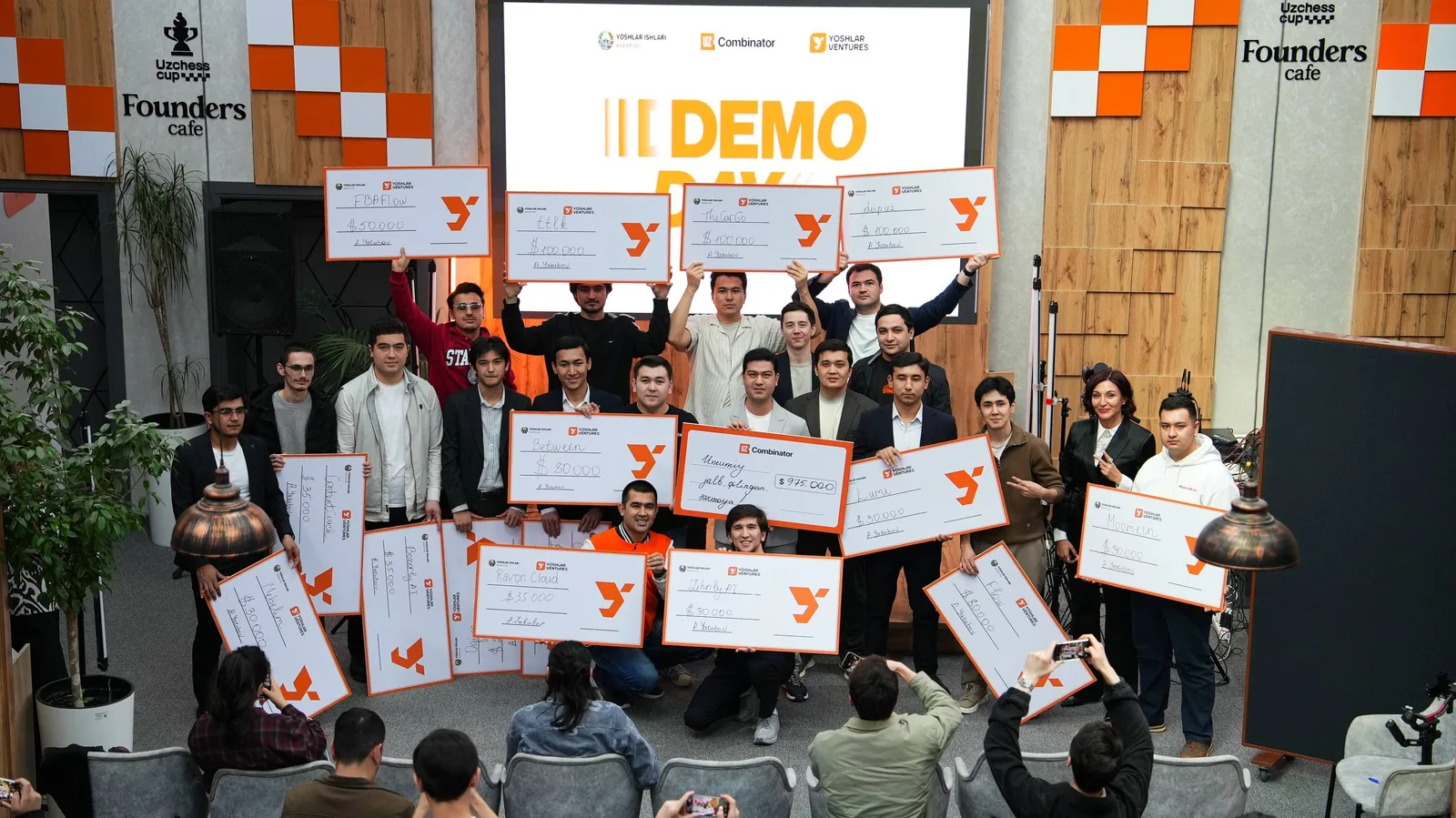
Meet the new author of Tech'ning — Abdulaziz Yakubov, CEO of Youth Ventures. In his first article, he discusses how the startup ecosystem is evolving in a rapidly changing world and why supporting young entrepreneurs is an investment in the future.
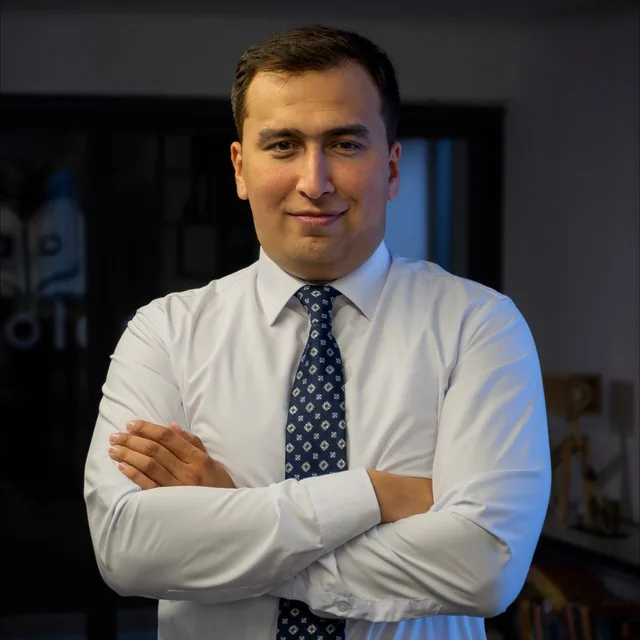
Abdulaziz Yakubov, Tashkent, CEO of Yoshlar Ventures, LinkedIn
How do sectors rich in uncertainty develop in a rapidly changing world? Today, the world of startups, characterized by financial flows and differences from five years ago, defines the era we live in. Imagine that founders of unicorn companies worldwide are 40 years old and above, yet why does the Yoshlar Ventures venture fund support those taking their first steps in the startup sector, namely young people?
Looking back at the history of venture capital, one can compare the nature of venture investment to that of early maritime explorers. For example, Portuguese sailors ventured into unknown territories that no one else dared to enter, creating their own strategic maps. At that time, many believed that rounding the "Cape of Good Hope" was extremely dangerous and impossible, and old maps exaggerated this fear. However, the Portuguese took the risk and discovered that this seemingly difficult path was actually quite easy and full of opportunities. These newly discovered maps, kept secret, gave them a significant strategic advantage over others.
In today's venture world, every fund faces a choice: follow a ready-made, popular map owned by someone else, or blaze a trail into the unknown. We, like those brave explorers, are taking risks by investing in new startups that the world has not yet seen and that others are afraid to trust and invest in. Our goal is not to walk along paths drawn by others, but to create our own strategic map of the innovation world.
We strive to consider a 20-25 year outlook when making decisions. Thus, when we invest in an 18-year-old founder, we look at him with an eye toward the future. Today, he may be young, perhaps just entering the field as a specialist, but how can we know how high he can fly if we do not give him wings?
Uzbekistan is the most populous country in Central Asia, with a population of 39 million, more than half of whom are under 30 years old, and 9.5 million of them are young people aged 14 to 30. In an era characterized by aging populations and declining birth rates among states, this is our strong suit.
When studying global venture experience, we observe that states that have implemented this strategy have achieved significant results. Trust in young people serves not only as a boost for them but also attracts foreign investors. This is precisely the role of state funds.
Let us substantiate the above thoughts with numbers. In recent years, the period with the highest investment in startups in world history has arrived. According to calculations by the international agency "RISE Research," the venture fund reached $320 million, setting a record high. Most importantly, since 2022, the indicator for Uzbekistan has grown 11-fold. In our region, out of every 100 startups launched, approximately 19 successfully find their investors and turn into real businesses. Note that this indicator is significantly higher than the results of European and Southeast Asian countries.
One fact illustrates how much the startup ecosystem is developing in our region. Last year, a 12-year-old boy from Nukus came to our program with his project. Despite the complex ecological situation in the region, his deep understanding of technological development around him and his proposal of solutions to these changes served as an important signal for all of us. Imagine what kind of strong entrepreneur this participant will become at 22? And at 32?
So, why are young people becoming the main pillar of this growth? Many believe that investors look for error-free businesses perfectly drawn on paper. In reality, this is not the case. In the startup ecosystem, investors value those who quickly test their ideas rather than those who deliberate for a long time. Young entrepreneurs fit exactly into this category; they act faster, make mistakes faster, and most importantly, they draw conclusions from these mistakes and do not stop acting.
A young founder who tests three different hypotheses in a year and a half, learns what doesn't work, and can quickly change his strategic direction is much more trustworthy to an investor than someone who clings to a single idea and spends three years on it. Of course, in this arduous process, the role of the team alongside the founder is also significant.
Our own experience has taught us exactly this. Based on the 24 startups we have supported so far, we have become absolutely certain that over time, the idea changes, the product changes, and even both may be completely renewed several times. However, the only constant force that works during the hardest turns and crises, saving the project, is the team. At the earliest stage where we invest, both the product and the idea are still very raw. In such an uncertain situation, the only support you can fully trust and guarantee is a strong team.
It should also be noted that Yoshlar Ventures is a project aimed at building the foundation of the future economy. We are currently creating an environment, essential as water and air, using state funds, which is not yet fully formed across Central Asia but will allow private investors to operate freely tomorrow. When startups reach maturity, there should remain a generation of strong entrepreneurs capable of attracting millions of dollars in private investments and ready to enter the international arena.
So, despite the positive indicators above, what is currently lacking in the ecosystem? First of all, the lack of clear "Exit" strategies. How does an investor recover his investment? Currently, the culture of large corporations acquiring successful startups or the practice of entering large open markets has not yet fully formed in our region. There are many young people bringing ideas to the product level, but the mechanism to logically conclude the venture cycle by having large businesses acquire these products remains one of the main tasks we need to work on.
Nevertheless, at present, we are attracting accelerator programs along with qualified founders to improve the startup ecosystem. For example, we are cooperating with founders who have completed the Y Combinator program to visit our country, support the startup ecosystem, and conduct mentorship lessons. The main goal of such and similar projects is to strengthen the foundation of the startup ecosystem and bring it to a global scale.
The ultimate goal of all projects undertaken is one: we are not just preparing a safe space; we are giving wings to the bold ideas of Uzbek youth and preparing them to conquer the wider world. Like those brave sailors, we are among the first to enter unknown territories. After all, this region is the future of the startup ecosystem, and this is our map.
The Tech on Telegram Follow The Tech on Telegram
Keep up with the latest technology and startup news.
Related reading


More from this author

Article Useful
How to protect your accounts from hacking: 8 settings you should check today
The Tech

Article Useful
500 Global: How the Accelerator Works and Who Can Receive Investments
The Tech

Article Interviews
Game Development in Central Asia: Arkady Moldavski on Developing Reverb and the Growth of the Industry
The Tech

Article Useful
Google, Tesla, BlackRock, and the IMF: Where to Apply for an Internship in Fall 2026
The Tech

News IT
Tesla unveiled the flying electric car Roadster
The Tech

News IT
Intero Biosystems startup won the Startup Battlefield at TechCrunch Disrupt 2026
The Tech