How a doctor from Astana created an AI platform that united patients, doctors, and clinics
ZhanCare.AI emerged from the practical experience of doctors during the COVID-19 pandemic, when providing medical care to patients at home required manual coordination. Today, the team is developing a unified digital platform for patients, doctors, and clinics, implementing AI tools, and preparing a pilot program for patient follow-up after an ambulance call. Adilkhan Ashimov, CEO of ZhanCare.AI, shared how the project evolved from an initiative by a few doctors into a medical startup.

The Tech AI
Get the key points in seconds - a short summary from The Tech AI.
Adilkhan Ashimov created ZhanCare.AI, combining online consultations and diagnostics. The platform has over 1200 users and three commercial clinics. The team won the Enactus World Cup in 2025 and reached the TechCrunch finals in 2026. Plans include developing AI assistants and piloting ZhanCare 103 for post-emergency care support.
Adilkhan Ashimov, city — Astana, general practitioner, emergency physician, and CEO of ZhanCare.AI, Instagram
How It All Started
The idea for ZhanCare did not emerge from a startup competition or while searching for a promising niche. It grew out of my work in a hospital during the COVID-19 pandemic. At that time, I saw how limited the hospital’s capacity was: there were many patients, but not enough beds. Meanwhile, people in the wards were worried not only about themselves. At home, there were sick parents, children, brothers, and sisters who also needed care.
For me, this was a concrete problem. You have a patient receiving care, but they are constantly thinking about their loved ones left at home. A simple explanation that the hospital lacks space was not enough for such a family.
I assembled a team of doctors and nurses. Doctors consulted patients remotely via Zoom and WhatsApp, assessed their condition, and provided prescriptions. Nurses, in their free time from primary duties, went to patients’ homes in personal protective equipment, collected samples, and carried out doctors’ orders.
According to our estimates, more than 3,000 people received care during the pandemic. This was not yet the ZhanCare platform, but rather organized work by medical specialists using available communication tools.
After the pandemic, I wondered why such a pathway should exist only in emergency situations and depend on manual coordination. Patients had to separately find a doctor, arrange a consultation, send test results, and figure out where to go next. Thus, the idea arose to combine all these actions into one service: online consultations, appointment scheduling, diagnostics, medical documents, and interaction with clinics.
We did not start with the desire to implement AI in medicine. We wanted to make it easier for people to receive care. Technology became the means to solve this problem.
The Team
When the idea took shape, I brought it to my friends. The first to support me was Adilan Akhramovich — co-founder and Chief Technology Officer of ZhanCare.AI. I had clinical experience and an understanding of patient problems, while he had technical expertise and the willingness to turn the idea into a working system.
Later, Alisher Ibraev, Tomiris Sadykova, and Diyar Zhakizhanov joined us — general practitioners who are continuing their residency in traumatology and orthopedics, endocrinology, and cardiology. The medical part of the team formed around Astana Medical University.
It was important for us that the product was created with the direct involvement of doctors. We discussed real situations: how consultations take place, where information is lost, and at what stage patients become confused about what to do next.
Later, we met participants from the university’s Enactus team — Zhandos Batyrbekov and Adilkhan Muzulmanbekov. Together, we prepared the project for Enactus Kazakhstan National Expo 2025. The Astana Medical University team took first place and earned the right to represent Kazakhstan at the world championship. The preparation helped us look at the product more broadly and consider not only its benefit to patients but also its future development model. Later, Zhandos and Adilkhan focused on their own directions and ended their participation in the project. Their contribution to the early stage of ZhanCare remains an important part of our history.
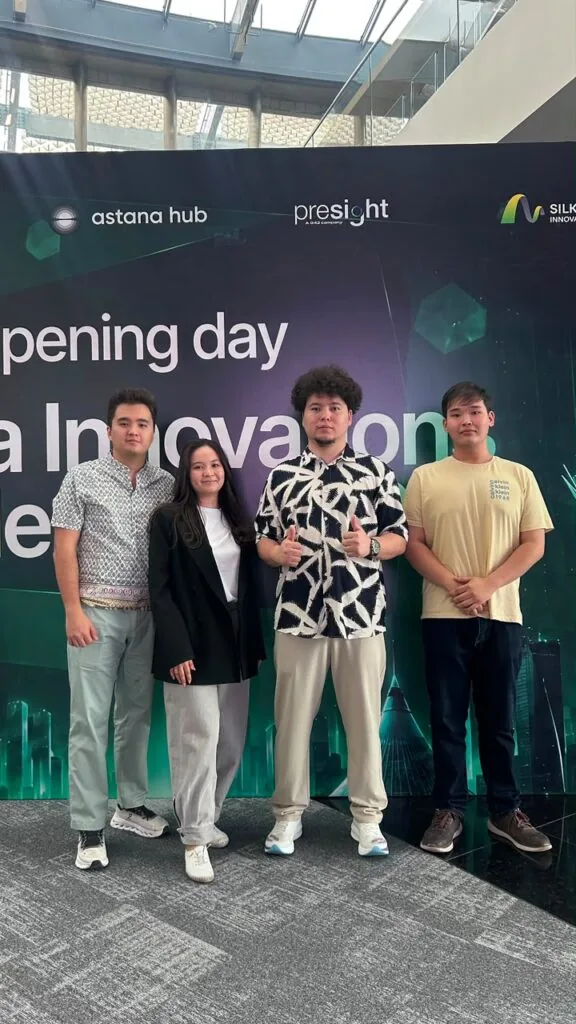
The next team expansion occurred during IRA Tashkent. There, we met Anuar Kappar, who initially worked with us as a tracker. He has over ten years of experience in IT, telecommunications, MedTech, EdTech, and Smart City. Over time, the collaboration went beyond the accelerator, and Anuar joined us as co-founder and Chief Strategy Officer.
Thus, three directions came together in the team: clinical practice, technical development, and product strategy.
Target Audience
ZhanCare.AI has three main user groups: patients, medical professionals, and healthcare organizations. We strive to solve their tasks together because a convenient service for patients is impossible without tools for doctors and administrators.
The platform helps patients navigate the entire journey: describe symptoms, choose a specialist, schedule an online or in-person consultation or diagnostic test, pay for the service, and save documents in their personal account. Remote communication with a doctor is also important when it is difficult for a person to visit in person or when they need to discuss further steps after examinations.
For doctors, we offer tools to reduce manual work. For example, the AI assistant transcribes consultations and helps prepare a structured draft of medical documentation, which the doctor reviews and approves. It is important to us that the technology assists the specialist rather than making clinical decisions on their behalf.
Healthcare organizations receive appointment scheduling, CRM, telemedicine, online payments, analytics, and AI agents for handling inquiries, all within a single platform. We are developing the solution not only for private but also for state healthcare organizations.
According to the team’s latest internal data, the platform has more than 1,200 users, and three clinics have already paid for work with ZhanCare.AI. We separately track pilot connections and commercial clients, as interest in the product and willingness to pay for it are different stages.
In an interview in March 2026, Dinara Shcheglova, Deputy Minister of Science and Higher Education, also mentioned the use of ZhanCare.AI in BN CLINICA and Dariger Plus, including work under commercial contracts.
Incubation Programs
A significant experience for the team was participation in IRA Tashkent 2.0 — Investment Readiness Accelerator, a program to prepare technology startups for investment attraction and scaling, developed by MOST C-Space Hub, MOST Business Intelligence, and SQB Ventures.
Working with trackers helped us move beyond the medical perspective on the project. A doctor understands why the service is useful for patients, but building a business requires defining the buyer, the decision-making process, implementation costs, and results that confirm the product’s value. It was in this program that we met Anuar Kappar. Therefore, one of the main outcomes was not only the development of the business model but also the appearance of a new co-founder.
Another direction is the Astana Innovations Accelerator. Within the framework of the program, we are working on applying ZhanCare in the city’s healthcare system, including digital support for patients after calling an ambulance. Here, it is necessary to agree on the medical pathway, participant responsibilities, data transfer, and pilot evaluation criteria.
The project’s development was supported by several organizations. We received grants of 2 million tenge from Yandex Cloud and 2 million tenge from Pro-Data Tech. The Yandex Cloud grant was also noted in a publication by Astana Medical University.
As part of the Road to TechCrunch Startup Battlefield 2026, we received $10,000 in OpenAI API credits. This is not a monetary investment but a resource for using AI services, provided to finalists who did not make it into the top three winners.
Additionally, we signed memorandums with Astana Medical University and the S.D. Asfendiyarov Kazakh National Medical University. For us, this is the foundation for further cooperation with the medical and educational community.
Support is important, but it does not replace a working business model on its own. Therefore, in parallel, we are developing paid cooperation with clinics and learning to turn pilot implementations into long-term platform usage.
Challenges
One of the main difficulties is translating real medical work into a digital process without making it more complicated. On paper, it is simple: the patient schedules an appointment, the doctor conducts a consultation, and the document is saved. In reality, appointments may be rescheduled, specialists may be busy, patients may not immediately understand the interface, and doctors have to clarify information. It is these details that determine whether the system will be convenient for daily use.
Another task is to find a common language between medicine and development. A medical specialist explains what they need, and the technical team turns this into a clear and reliable feature. Our experience on both sides — as doctors and product creators — helps here.
We are also learning to maintain focus. When you see many problems in healthcare, you want to solve them all at once. However, a large number of features does not guarantee convenience. It is more important that a specific scenario works completely: from the patient’s inquiry to the consultation and further recommendations.
A separate topic is trust in AI. Our approach is to clearly define the boundaries of its role. AI can help gather information, prepare text, and draw attention to changes, but the medical decision must remain with the specialist.
Illustrative experience appeared even before the startup. During the pandemic, we were already able to connect patients with doctors via familiar messengers. This meant the problem was not just about video calls. It was necessary to organize the entire process: transfer information, coordinate care, and maintain contact with the person after the consultation. This is exactly the task we are now solving in the product.
To aspiring founders, I would advise first figuring out how people solve the problem today, and only then choosing the technology. It is important to talk not only with managers but also with those who will use the system daily.
And it is also important not to confuse winning a competition with market readiness. Competitions bring attention and useful connections, but then you still need to return to users and check if the product helps them enough to continue using it.

Achievements
The first major external recognition was the victory of the Astana Medical University team with the ZhanCare project at the Enactus Kazakhstan National Expo 2025. It gave us the opportunity to represent Kazakhstan at the world stage.
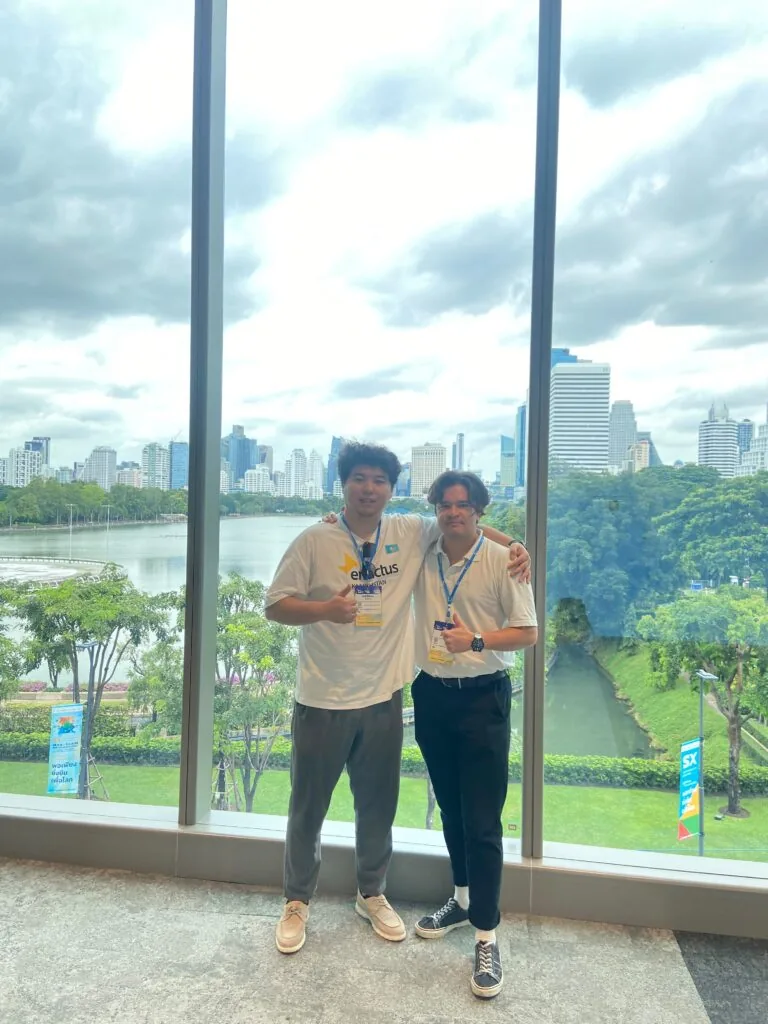
In September 2025, our team reached the semi-finals of the Enactus World Cup and entered the top 16 teams in Bangkok. This was an important experience: we saw that the problem we are working on is understood not only in Kazakhstan.
The next achievement was winning the “Best AI Project in Healthcare” nomination at AI-Sana Leaders. The award ceremony took place on October 30, 2025. For us, recognition specifically in the medical field, at the intersection of professional training and technological work, is particularly valuable.
In 2026, ZhanCare.AI entered the list of 22 finalists of the regional Road to TechCrunch Startup Battlefield competition. Among other results, the team reached the finals of alem.ai battle 2026, the finals of E*5 Global KAIST, and took first place at the Ministry of Healthcare forum in the medical projects competition.
However, achievements for me are not limited to competitions. When a clinic starts using the platform and is willing to pay for it, this is another important form of recognition. It means that the product’s value was seen not only by experts but also by its direct users.
Our task is to turn attention to ZhanCare into sustainable product operation. Awards help open doors, but further trust must be confirmed with every implementation.
Plans
By the end of 2026, we want to focus on three areas: product development, expanding work with clinics, and preparing a city medical pilot.
In the product, the priority is to make main scenarios convenient and interconnected. It should be clear to the patient how to receive care, to the doctor how to conduct a consultation and document it, and to the manager how to see what is happening in the organization. We will continue to develop AI agents and the doctor’s AI assistant, but we will evaluate them not by the number of features but by practical utility.
In working with clinics, we want to increase the number of commercial implementations and make onboarding more predictable: clear setup, employee training, support, and result evaluation. We also plan to develop cooperation in Kazakhstan and Uzbekistan and prepare the project for investment attraction.
A separate priority is ZhanCare 103, digital support after calling an ambulance. We are working on a scenario for selected patients who, after an in-person examination by a brigade, remain at home and may need further contact with a medical specialist. The idea is that a person can report their well-being, and the doctor has access to data from the previous examination and subsequent dynamics. If necessary, the patient should receive a clear further pathway. The conditions of such a pilot, inclusion criteria, and response procedures must be agreed upon with the healthcare organization.
We do not consider this service as a replacement for emergency care or an in-person doctor. We want to check if it can improve continuity of care after the call is completed. And only after evaluating safety, demand, and results will we discuss scaling.
For me, this is a continuation of the very story that started during the pandemic. Back then, we tried to help people who were left at home and did not know who to turn to. Now we want to make such contact more organized and accessible.
In the long term, we want ZhanCare to help a person not just schedule a consultation, but understand their next step in receiving medical care.
The Tech on Telegram Follow The Tech on Telegram
Keep up with the latest technology and startup news.
Related reading






More from this author

Article Useful
How to protect your accounts from hacking: 8 settings you should check today
The Tech

Article Useful
500 Global: How the Accelerator Works and Who Can Receive Investments
The Tech

Article Interviews
Game Development in Central Asia: Arkady Moldavski on Developing Reverb and the Growth of the Industry
The Tech

Article Useful
Google, Tesla, BlackRock, and the IMF: Where to Apply for an Internship in Fall 2026
The Tech

News IT
Tesla unveiled the flying electric car Roadster
The Tech

News IT
Intero Biosystems startup won the Startup Battlefield at TechCrunch Disrupt 2026
The Tech