How to find an investor. Naila Shodorova on how JAS Venture Studio supports startups

The Tech AI
Get the key points in seconds - a short summary from The Tech AI.
Nailya Shodorova, CEO of JAS Venture Studio in Astana, works with DeepTech projects at the idea or prototype stage. The studio helps researchers from Nazarbayev University create companies: from team formation to market validation. Initial funding is around 3 million tenge, with subsequent investments ranging from $50,000 to $150,000.
What if you could invest even before a startup exists? JAS Venture Studio works precisely with such projects — scientific developments and technologies that are still at the idea or prototype stage. Together with researchers, the team validates the market, builds a business model, assembles a team, and helps turn technology into a company. In an interview with The Tech CEO, Nailya Shodorova explained how this model works, which DeepTech projects interest investors, and why a smaller check at the early stage is sometimes more important than large-scale funding.
Nailya Shodorova, City — Astana, CEO of JAS Venture Studio, LinkedIn
How it all began
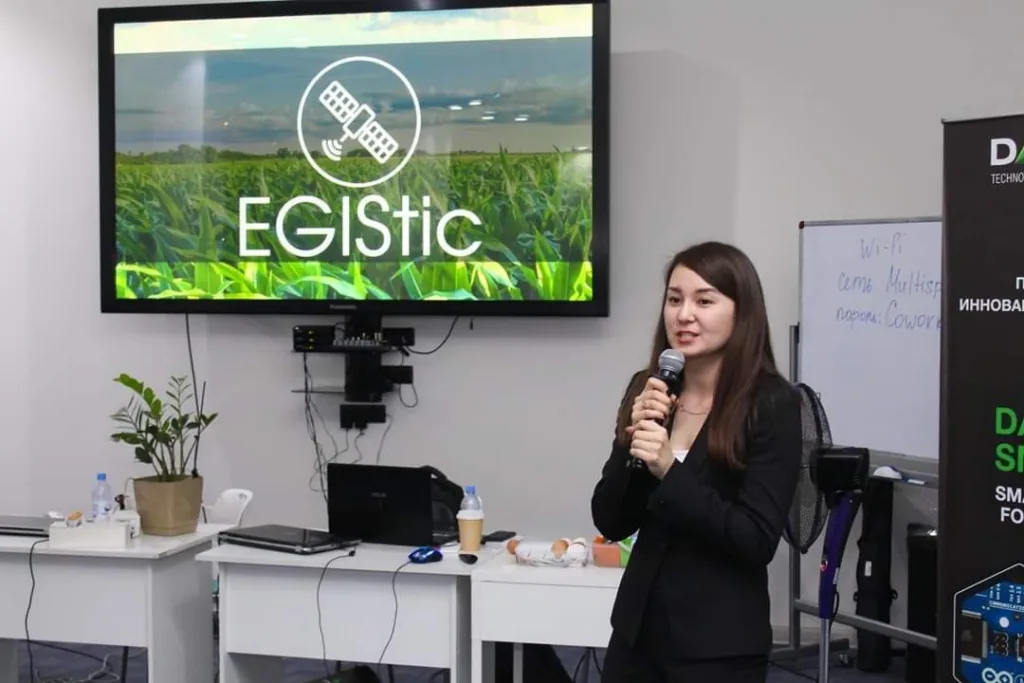
My journey into venture capital did not begin in the financial sector, but in entrepreneurship. I was a co-founder of the AgriTech startup EGISTIC. We went from idea to product, raised grant and investment funding, built sales, and grew the business. EGISTIC was a graduate of the NURIS incubation program, and for me, it was a powerful school of entrepreneurship. Through my own experience, I saw how strongly early support, the right experts, and access to the ecosystem can impact a startup’s development.
Later, I moved to the ecosystem side and began working on the development of innovation and entrepreneurship at Nazarbayev University. It was here that the NU Impact Foundation ecosystem emerged. It combines several complementary structures that create opportunities for the development of science, innovation, entrepreneurship, creative industries, and social initiatives.
If we talk specifically about the technological and entrepreneurial direction, one of these structures is NU STeP, the Nazarbayev University Science and Technology Park. This is a platform for startup development, technology transfer, and interaction between researchers and technology teams with the industry.
There is also SITF — the Sustainable Innovation and Technology Foundation. This is a non-profit foundation working on the development of the technological and innovation ecosystem, combining various tools to support technology projects.
There is also an investment direction. JAS Ventures Limited is a licensed management company that manages several venture funds and provides startups with access to venture capital.
However, I would not view all these structures as a rigid sequence that every project must necessarily go through. Rather, they are different tools of a single ecosystem. Depending on the stage the team is at, they may need infrastructure, expertise, acceleration, access to international markets, or investment.
Working within this system, I gradually realized that I was interested not only in investing in existing companies. I was much more interested in getting involved earlier, when there is a strong technology or scientific development, but the company itself does not yet exist.
That is how I came to Venture Studio. Here, we work on a venture building model and can get involved in a project at the very earliest stage: together with researchers and entrepreneurs, we assess the technology’s potential, shape the product and business model, assemble the team, and create a company capable of entering the market.
In this system, the university’s corporate fund — NU Impact Foundation — plays an important role. The fund helps attract partners and resources, supports entrepreneurial, student, and social initiatives, develops infrastructure, and creates opportunities for projects within the university to grow further.
About investments
We look primarily at teams that solve a real problem and have the potential to build a large business. We are particularly interested in DeepTech and technology projects with the ability to reach the global market. However, our model differs from classic VC. We can work with a project even before the full startup stage — sometimes starting from a researcher’s idea. We help form the team, validate the problem, build a prototype, conduct customer discovery, define the business model, and determine whether there is commercial potential.
In the next stage, JAS Ventures Capital can already invest in more prepared projects.
JAS Venture Studio focuses on innovative projects emerging from the laboratories of Nazarbayev University — from professors, postdocs, and PhD researchers. We can get involved at the idea stage and help navigate the path from technology to a full-fledged business: team, prototype, market validation, business model, and preparation for investment.
Many of these projects go through the Founders School and NURIS incubation programs. And we see that teams that undergo systematic entrepreneurial training are usually much better prepared to work with the market and investors.
Therefore, for us, it is more important not just the number of companies, but the pipeline of future ventures. My experience evaluating over 1,000 startups in Kazakhstan and international programs helps me understand which projects have the potential to go from idea to scalable business.
At the very earliest stage, within JAS Venture Studio, we can start with approximately three million tenge — funding for creating a prototype and validating the initial hypothesis. Then, if the project passes validation and becomes investment-ready, JAS Ventures Capital considers investments of approximately $50,000 to $150,000.
For me, the principle is important: the check size should correspond to the level of project uncertainty. At the idea stage, it is not always necessary to invest large amounts of money immediately. Sometimes the right small check and a strong venture building team provide much more information for the next investment decision.
Women in the VC world
For me, the most difficult part of entering the industry was changing my own understanding of what investment is. When you work with early-stage startups, it becomes clear that there is a significant distance between a scientific idea, a prototype, a company, and an investment-attractive business. This is especially true for DeepTech. A researcher may have a strong technology, a patent, or a scientific result, but to create a company, you need a team, a business model, customer understanding, market validation, and access to capital.
Therefore, I came to the conclusion that investment alone does not solve the problem. At the early stage, you first need to create an investment-attractive asset. That is why we build ecosystem + venture building + capital as an interconnected system.
A good investor must be able to assess risk, make complex decisions, and say “no,” regardless of gender.
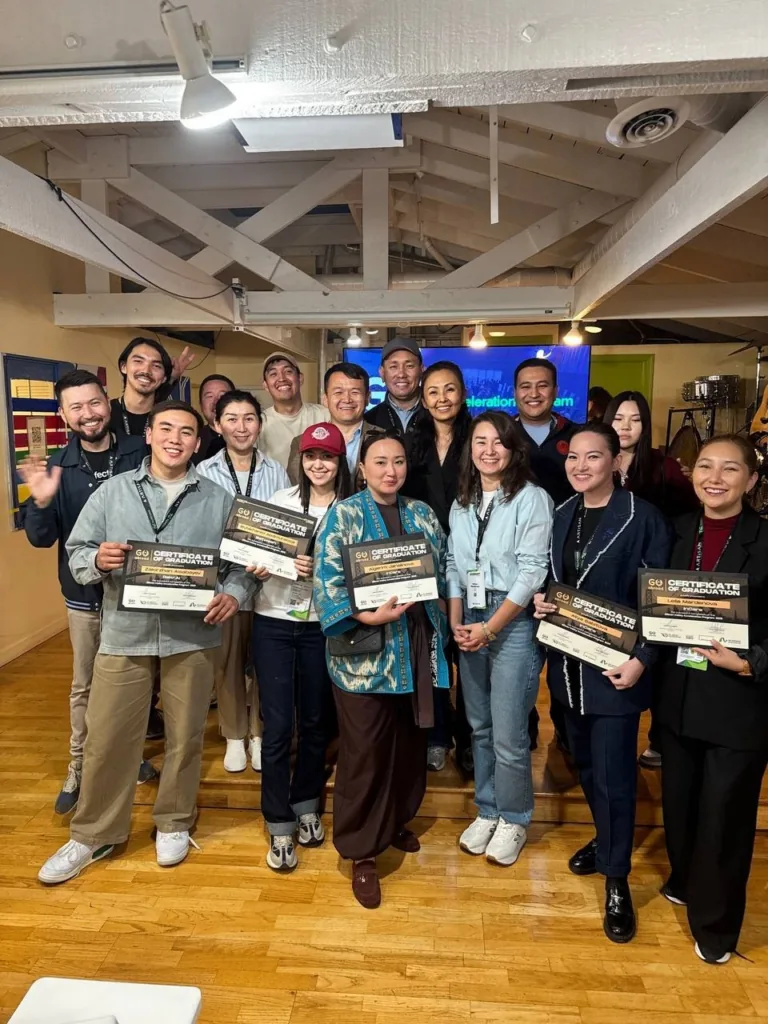
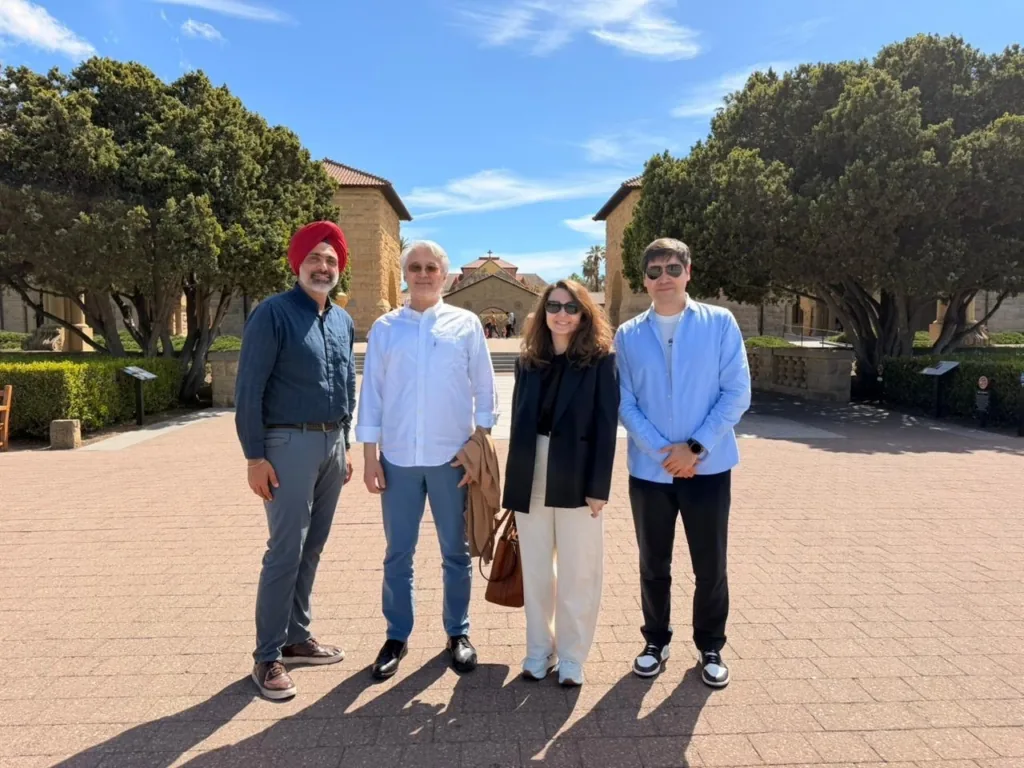
At the same time, I believe we need more women among those who make capital decisions. And here, my personal experience is particularly important. I completed educational programs at Stanford, including a program related to venture building, where one of the key role models for me was a female leader of a venture fund. I also completed the Women Leadership Program. And it was through such programs that I further understood something I have observed for many years: as long as women stand behind strong projects but remain in the shadows, we will not create a sufficient flow of female founders, investors, and leaders.
We need not only women who build good companies. We need women who are visible — founders, investors, fund managers, ecosystem leaders. Because visibility creates role models, and role models change the next generation’s perception of what they can become.
Women in Central Asia are often able to manage multiple processes simultaneously, build relationships, and find non-standard solutions. But I would not want to romanticize the necessity of “doing everything myself.”
In the next stage, we need to move from resilience to capital, networks, and scale.
Women already have entrepreneurial potential. Now we need to ensure them access to capital, international markets, strong teams, and investment networks.
How to start a path in investments
I would not start with the question of the minimum amount. I would start with expertise. An investor first needs to learn to understand business: the market, the team, the technology, unit economics, competitors, and risks.
Even if a person does not yet have significant capital, they can start by analyzing startups, joining angel communities, syndicates, engaging in startup scouting, and developing their own expertise.
My main advice is not to wait for permission to take your place at the table where decisions are made. Start studying startups, analyzing investment cases, talking to founders, participating in scouting and startup selection. And definitely seek opportunities to gain practical entrepreneurial experience.
For me, it was the experience of my own startup, EGISTIC, that became an important school. And the experience of building the NU innovation ecosystem allowed me to see the systemic picture — from research and startup creation to scaling and capital.
And I would also say to girls: do not stay behind the scenes. If you have created a company — talk about it. If you are investing — take on that role publicly. If you are building an ecosystem — show what exactly you are creating.
Because we need not only successful women, but visible women who become role models for others.
I believe that the next stage for Central Asia is the emergence of more women not only among founders, but also among investors, venture builders, fund managers, and ecosystem leaders.
The Tech on Telegram Follow The Tech on Telegram
Keep up with the latest technology and startup news.
Related reading



More from this author

Article Useful
How to protect your accounts from hacking: 8 settings you should check today
The Tech

Article Useful
500 Global: How the Accelerator Works and Who Can Receive Investments
The Tech

Article Interviews
Game Development in Central Asia: Arkady Moldavski on Developing Reverb and the Growth of the Industry
The Tech

Article Useful
Google, Tesla, BlackRock, and the IMF: Where to Apply for an Internship in Fall 2026
The Tech

News IT
Tesla unveiled the flying electric car Roadster
The Tech

News IT
Intero Biosystems startup won the Startup Battlefield at TechCrunch Disrupt 2026
The Tech