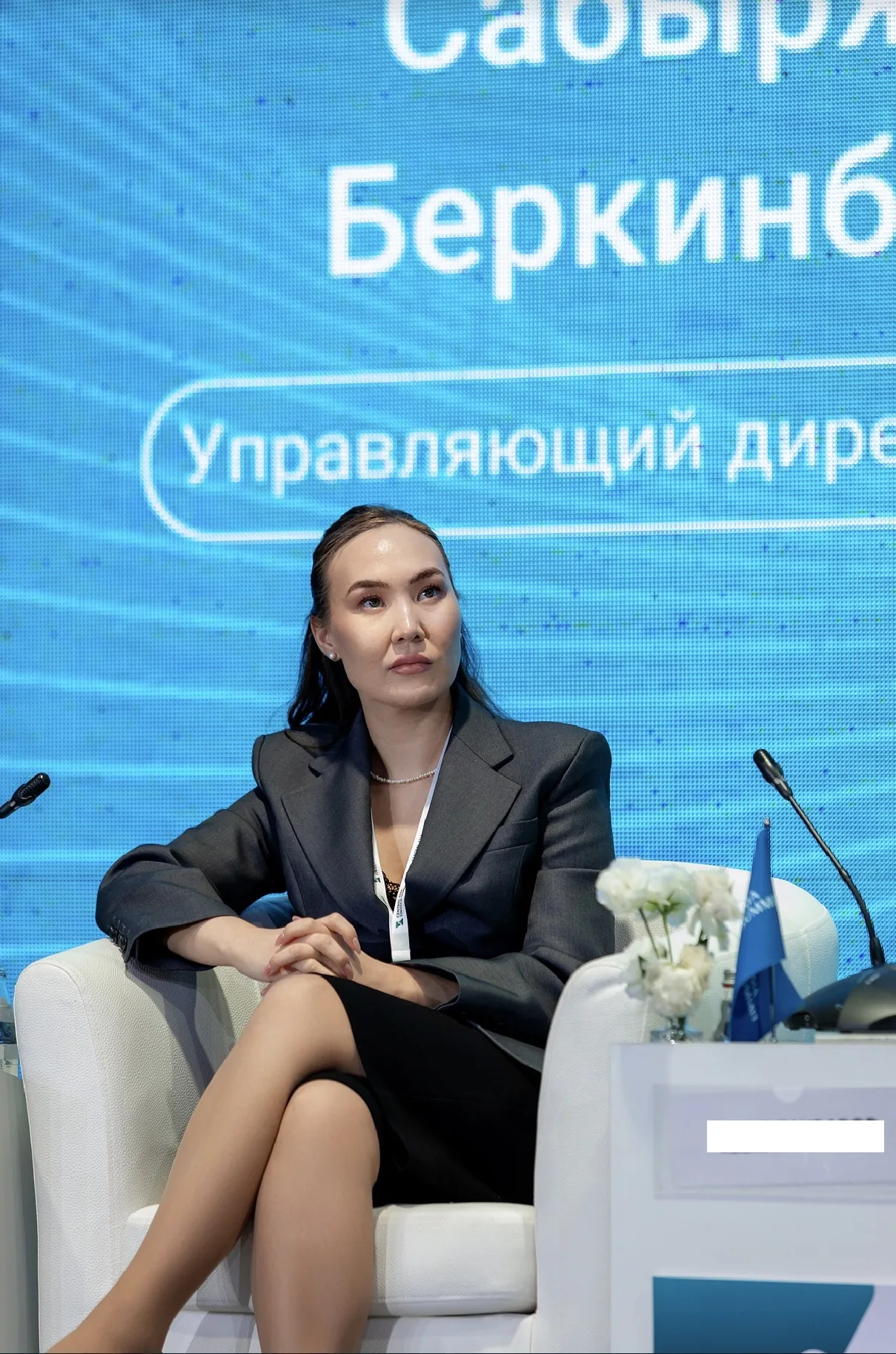
Zhanar Samaeva on women's leadership in FinTech and the creation of digital financial sovereignty
Digital transformation in finance is not just a trend, but the architecture of the future, where technology becomes a conduit for security, speed, and convenience. Kazakhstan confidently holds its place among the leading digital economies, and behind the scenes of these processes are the people who create the FinTech ecosystem. One such figure is Zhanar Samayeva.
Author - Mansur Ismagulov
The Tech AI
Get the key points in seconds - a short summary from The Tech AI.
Zhanar Samaeva, Chair of the Board of the National Payment Corporation of Kazakhstan, leads key digital infrastructure projects: Digital ID, an anti-fraud center (which prevented theft of over 1.8 billion tenge), Open Banking, and the Digital Tenge. Through the NPC infrastructure, more than 350,000 transactions are processed daily. Her goal is to ensure the digital sovereignty and independence of the country's financial system.
Digital ID, the anti-fraud center, open banking, and the digital tenge — all these projects have become milestones on the path to Kazakhstan’s sovereign financial infrastructure. How does an engineer with an analytical mindset manage to combine technocratic precision with managerial strategy? Why did the financial sector become the main professional arena? And what does digital sovereignty mean in an era where data has become the new oil? Zhannar Samaeva, Chairman of the Board of the National Payment Corporation, answered these questions.
Zhannar Samaeva, 34 years old, city — Almaty, Chairman of the Board of the National Payment Corporation
About herself and education
Any complex mechanism is a balance of details interacting delicately with one another. Life is the same: to build large-scale national projects, it is important not only to understand the technical nature of systems but also to be able to see them in a broad perspective.
Since childhood, I was interested in how the world works, what patterns govern technologies, and why some solutions work while others do not. The realization that knowledge is a tool for real change became defining for me.
In 2008, after graduating from the Kazakh-Turkish Lyceum in Astana, I enrolled in the foundation program at Asia Pacific University of Technology and Innovation in Malaysia. This stage gave me a basic understanding of infrastructure technologies, but I wanted more — I wanted to see how fundamental engineering principles are applied in global technological ecosystems.
Thus, I ended up at the University of Birmingham, one of the leading universities in the United Kingdom, where I studied Electronics and Communications Engineering. By that time, I already understood: if you want to develop systems that not only work but change reality, engineering alone is not enough. You need to be able to design processes, manage risks, and implement innovations into existing models.
Therefore, upon returning to Kazakhstan in 2014, I entered the master’s program at Nazarbayev University in Engineering Management. This became a turning point: I saw how technological projects go beyond blueprints and become part of the economy.

About the beginning of her career
My professional journey began in the laboratories of Nazarbayev University, where I worked on technological projects and mentored students in their learning process. Later, there I was involved in creating and developing the university’s first incubation program for startups, supporting students’ innovative ideas at their formative stage. However, the starting point that led me first to digital infrastructure and then to FinTech was the Digital ID project.
In 2020, we launched the Digital ID remote identity verification solution as part of the BTS Digital team. The pandemic required instant solutions, and on March 30, 2020, the first electronic digital signatures (EDS) were issued without visiting Citizen’s Halls (COH). This was a revolution: previously, EDS were issued only on USB flash drives at branch offices. Kazakhstani habits changed, and remote identity verification technology quickly became commonplace. After this, the market realized that identity verification would become a standard mandatory for user experience and the integration of banking products and government services. There is no longer a need to spend time on visits and processes that used to take weeks or months. This solution became not just a technology, but a new foundation for the digital economy.
Later, I also participated in the Ashyq project, which helped minimize infections and restore the operation of 370,000 jobs. This project was not only technological but also an economic solution that helped businesses survive the crisis. Participation in these projects gave me an understanding that large-scale FinTech projects require synergy with the state. The private sector brings innovation, while government structures provide scaling and trust. Only together can we create solutions that not only work but become the new norm.
In 2021, I was offered the position of Deputy Chairman of the Center for the Development of Payment and Financial Technologies of the National Bank of Kazakhstan (CDPFT). CDPFT acted as a research and analytical center in the field of financial and payment technologies. Here, advanced initiatives such as Open Banking, the Digital Tenge platform, and other initiatives driving the FinTech industry forward were born and tested.
About working at the National Payment Corporation
In 2023, I became Deputy Chairman of the National Payment Corporation, and in 2024, I became Chairman of the Board of the NPC.
Today, the NPC is the technological foundation of Kazakhstan’s financial system, responsible for processing all payments in the country. More than 350,000 transactions pass through our infrastructure daily, and users do not even think about this process — for them, everything happens instantly. But behind this speed and convenience lies large-scale work to ensure the stability, security, and efficiency of financial operations.

In addition to processing payments, we are developing key infrastructure solutions:
1. Anti-fraud center — a centralized database aimed at detecting and preventing fraudulent operations. The project has been operating since July 2024 and has already prevented the theft of more than 1.8 billion tenge.
2. Open API — an IT platform for instant processing of interbank payments and transfers in 24/7 mode.
3. Open Banking allows banks to give third parties access to their clients' data with client consent to improve convenience and service speed.
4. Interbank Payment Card System (IPCS) — a national infrastructure platform ensuring routing, processing, and settlement of all domestic card operations in Kazakhstan.
5. Digital Tenge — the third, digital form of money, which possesses properties of both cash and non-cash funds.
6. FinID — a service for two-factor authentication of the client's identity. The basis for identity verification, ensuring confidentiality and data protection.
Our task is not only to ensure uninterrupted operation of the payment system but also to form a reliable digital infrastructure that makes finance accessible, secure, and independent.
About Kazakhstan and personal benchmarks
Digital technologies blur borders, but the homeland is always a point of support. I studied in different countries, immersed myself in global practices, but with each return, I realized: this is where my zone of maximum influence lies.
With the transition to the NPC, I moved to Almaty. This city lives at its own pace, and perhaps it is here that I finally found a balance between dynamic work and internal recharge. Mountains, hiking, skiing — nature literally reminds us that technology always needs balance with real life.

The same principle applies to leadership: strong solutions are born not only in the flow of data and algorithms but also in the ability to see wider, feel deeper, and combine rationality with intuition. In this sense, women’s leadership in the technology sector is not just a matter of equal opportunities but a powerful catalyst for unconventional thinking. When you bring not only logic and analytics but also intuition, empathy, and the ability to see connections where others do not, — that very multi-layeredness of solutions emerges, which defines successful innovations.
The future of FinTech in Kazakhstan
Today, 82.5% of all transactions in Kazakhstan are conducted in non-cash format. The country has already entered the top 10 global leaders in the level of financial accessibility of digital services.
But FinTech is not only payment systems but also a wide range of technologies that transform the financial industry. It is about smart algorithms, anti-fraud analytics, resilience to cyber threats, and an ecosystem where data works in the interests of citizens and businesses.
My goal is to create solutions that are not only convenient but also ensure the independence of Kazakhstan’s financial system. After all, digital financial sovereignty is not just a slogan but a strategic course that determines the country’s future. And it starts here and now.
The Tech on Telegram Follow The Tech on Telegram
Keep up with the latest technology and startup news.
Related reading







More from this author

News
zypl.ai begins operations in Japan and focuses on next-generation risk models
Mansur Ismagulov

News
Elon Musk's net worth has exceeded $700 billion for the first time
Mansur Ismagulov

Article Interviews
"Central Asian countries should build a joint ecosystem," — Bekhzod Ismoilov on the development of AI in the region
Mansur Ismagulov

Article Interviews
Bloom's Taxonomy and Engineering Levels: A Practical Growth Model
Mansur Ismagulov

Article Useful
How the IT industry in Azerbaijan developed in 2025: key events
Mansur Ismagulov

News
Tajikistan has become a new member of the regional innovation alliance Central Asian Innovation Hubs
Mansur Ismagulov