"Central Asian countries should build a joint ecosystem," — Bekhzod Ismoilov on the development of AI in the region
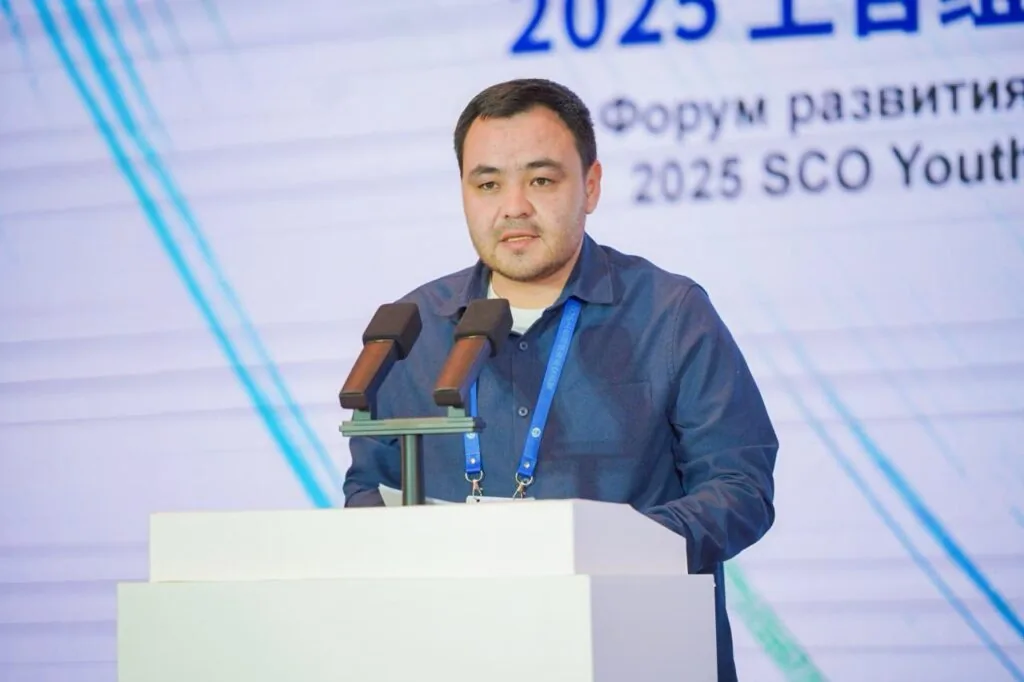
AI is transforming business and social processes worldwide, but startups in Central Asia face challenges in scaling and collaborating. Bekhzod Ismoilov, Executive Director of the Central Asia AI Association, spoke with The Tech about startup support, promising sectors, and the need for a unified regional ecosystem.
Author - Mansur Ismagulov

Behzod Ismoilov, City — Tashkent, Executive Director of the Central Asian Artificial Intelligence Association, LinkedIn
About the Central Asian Artificial Intelligence Association
I am the Executive Director of the Central Asian Artificial Intelligence Association. The Central Asian Artificial Intelligence Association (AICA) was founded by Vladimir Imamovich Norov, a former two-time Minister of Foreign Affairs of Uzbekistan and former Secretary General of the Shanghai Cooperation Organization (SCO). Two years ago, he initiated the creation of the Association to develop the artificial intelligence ecosystem in the region.
Today, the Association includes more than 40 residents—companies and startups developing AI solutions. The Association’s main activity is focused on supporting these residents: we strive to increase the value of participation and provide practical assistance to companies.
One of the key tasks is building interaction between startups, government structures, and large businesses. In addition, education remains one of the Association’s priority areas of work.
With the development of artificial intelligence technologies, many new questions and challenges arise. Our goal is to raise awareness and conduct educational activities in the field of AI to support the growth and competencies of the ecosystem.
Development of AI in Central Asian Countries
As a Central Asian Association, we constantly analyze the market, track key processes, and strive to understand what is happening in each country in the region. Today, Kazakhstan and Uzbekistan are the most active in AI development. Over the past year, significant resources have been directed toward the development of artificial intelligence—both state funding and foreign investments.
As bright examples, we can note the opening of the AI Excellence Center — Alem AI in Astana. This project has become a real breakthrough for the region, and there should be significantly more such organizations. Another indicator of progress is Higgsfield AI, a unicorn from Kazakhstan, whose emergence testifies to serious shifts in the development of technologies in the country.
Uzbekistan is also actively developing AI. Recent decrees and resolutions of the President demonstrate the state’s strategic interest: the launch of the “5 Million Prompters” program, the construction of large data centers, and the identification of 86 priority projects for government agencies related to the implementation of AI. All of this represents the first steps toward full-scale development and implementation of AI technologies in the country.
Kyrgyzstan and other countries in the region, such as Tajikistan and Turkmenistan, are also making noticeable strides. In Tajikistan, the AI Council initiative at the Ministry of Industry and New Technologies is developing the ecosystem and infrastructure for AI. In Kyrgyzstan, AI is actively being implemented in the work of law enforcement agencies and the judicial system, and AI academies are being opened actively.
As for Turkmenistan, there is less information. Several pilot projects have been implemented in industry and education, but it is still premature to speak of large-scale and systematic development.

Main Barriers to AI Development
When talking about barriers to the development of artificial intelligence in Central Asia, the first thing to note is the shortage of qualified personnel. AI requires specific technical competencies: data analysts, data scientists, and machine learning specialists. To date, there are very few such specialists in the region.
In response, many educational programs are being launched in Kazakhstan and Uzbekistan. Large companies such as Yandex and TBC are creating their own schools and educational centers focused on data work and machine learning. On the part of the Association, we cooperate with Alpha Education, MAAB Academy, and School 21 centers, where training is conducted in Data Science and Machine Learning. Nevertheless, the shortage of specialists remains a key barrier not only for individual countries but for the entire region. Where technological giants with strong teams are present, such as TBC Bank, large-scale and noticeable AI projects are implemented.
The next important barrier is the lack of infrastructure, primarily computing power, including GPU resources necessary for training models. Most startups are forced to use foreign cloud platforms, such as Amazon Web Services and others, which creates additional difficulties.
In addition to technical and personnel barriers, there is the human factor. Often, owners and founders support the implementation of AI, but at the implementation stage, employee resistance appears due to the need to digitize processes and provide data. AI is associated with transparency, which is perceived as a threat: data is delayed, processes are prolonged, and the value of the project becomes less obvious. The reason is fear and distrust of the technology, including concerns about control or job cuts.
It is important to understand that AI is a helper tool aimed at optimizing and improving work efficiency. With the formation of the right approach, the number of barriers is significantly reduced.
If we talk about barriers for startups when scaling, the key problem often lies in the mind of the founder themselves. Many startups at the idea stage do not build in the potential for scaling and are created as narrow specialized solutions for a specific region, city, or district, which limits their growth.
Another barrier is the lack of innovation hubs connecting Central Asian startups with global markets, such as the United States or China. Examples of successful hubs in Kazakhstan—Khan Tengri Innovation Hub and Silkroad Innovation Hub—show how such structures help startups through acceleration programs, mentoring, and training in key skills. There should be more such organizations.
Agriculture, social sphere, and healthcare are the most promising areas for AI application. So far, startups rarely choose these industries due to high costs, long implementation times, and the need for access to quality data.
Nevertheless, in Central Asian countries where agriculture and industry are developed, the implementation of AI in these industries and production processes can significantly increase efficiency, optimize costs, and increase labor productivity.
Risks of AI Application
We work deeply with artificial intelligence technologies and startups, and one of the main risks remains bias and unreliable information. Large language models—ChatGPT, Gemini, Grok—can provide inaccurate data. Using them in presentations, research, or reports reduces the quality of the information obtained.
According to an MIT study, about 90% of AI implementation projects in business are unsuccessful, and 65% of companies creating internal AI teams do not complete projects successfully. The main reason is the lack of qualified specialists, which is particularly acute in our region.
The application of AI can affect human rights. For example, in Kazakhstan, the AI law requires model openness and explanation of algorithm logic. In practice, this is important: there is a case of bank scoring: a client received a loan of 10 million and paid it off in full. Upon reapplication, the AI model may refuse, considering him “unprofitable,” which effectively restricts consumer rights. In medicine and other critical spheres, improper use of AI also carries risks—for example, simply asking ChatGPT for medical advice can be dangerous.

Need for Regional Cooperation
I also see a risk that Central Asian countries will not cooperate and will begin to build separate ecosystems instead of a joint one. As the Executive Director of the Central Asian Artificial Intelligence Association, I would like to see at least in the fields of IT and financial technologies the countries begin full-scale cooperation.
The Tech on Telegram Follow The Tech on Telegram
Keep up with the latest technology and startup news.
Related reading







More from this author

News
zypl.ai begins operations in Japan and focuses on next-generation risk models
Mansur Ismagulov

News
Elon Musk's net worth has exceeded $700 billion for the first time
Mansur Ismagulov

Article Interviews
Bloom's Taxonomy and Engineering Levels: A Practical Growth Model
Mansur Ismagulov

Article Useful
How the IT industry in Azerbaijan developed in 2025: key events
Mansur Ismagulov

News
Tajikistan has become a new member of the regional innovation alliance Central Asian Innovation Hubs.
Mansur Ismagulov

Article
Tech forecast for 2026: Tesla and Oracle stocks, and the growth of cybersecurity
Mansur Ismagulov