Zhan Karsybayev on venture risks, trends, and prospects in Central Asia
Author - Mansur Ismagulov
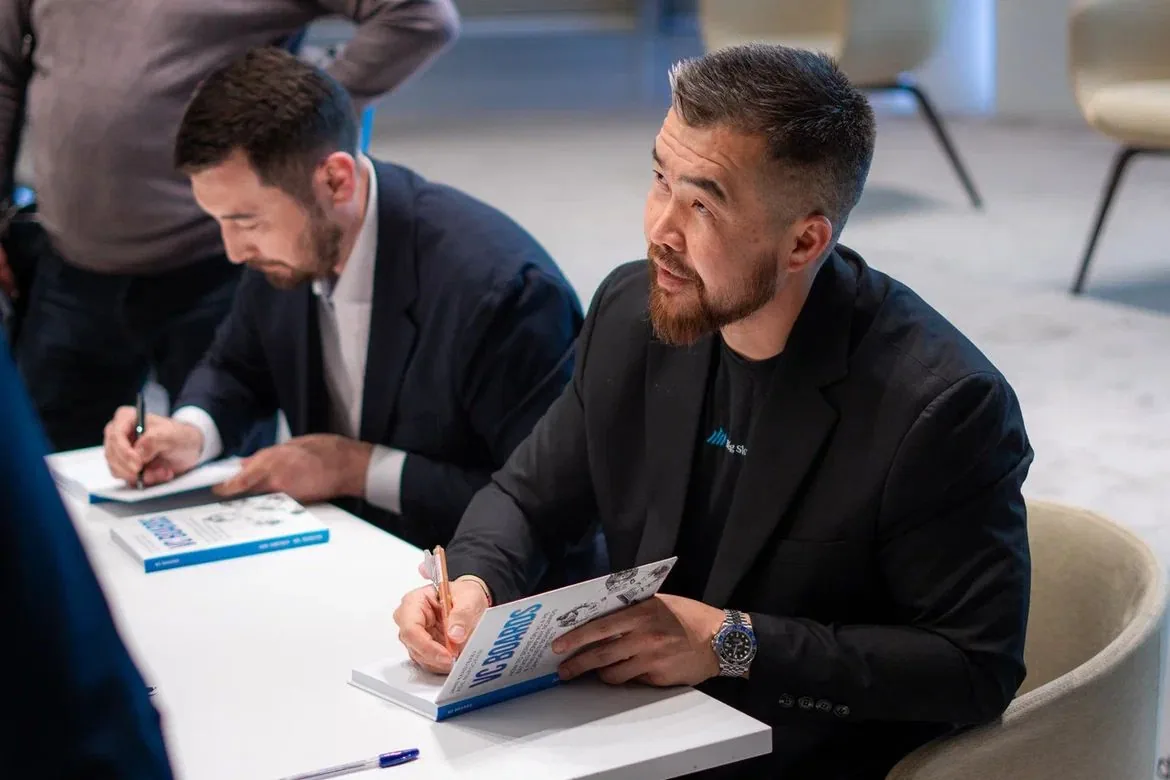
Jean Karsybaev, Managing Partner at Big Sky Capital, shared the strategy of the first fund, discussing key trends in AI and B2B, the prospects for startups from Central Asia, and the risks of venture investing.
Jean Karsybaev, City — Almaty, Managing Partner at Big Sky Capital
How 2025 began
Our first fund, Big Sky Capital, is almost fully deployed: out of $20 million, we have built a portfolio of 31 companies. Investments were distributed roughly evenly across three regions — Southeast Asia, Central Asia, and the United States.
About 10 startups are located in Malaysia and Singapore, and an equal number are in Kazakhstan. Recently, we also invested in the Uzbek company TASS Vision. Another 10 projects in the portfolio are American startups.
Our main investment focus is B2B SaaS and AI solutions for the corporate segment. There is the most activity currently in FinTech and HealthTech, but we do not limit ourselves to a single industry. Our priority is any strong corporate products based on artificial intelligence.
Geography and trends
We invest at early stages, primarily in founders who are capable of building solutions for small markets — such as Kazakhstan — and then scaling them to larger ones, including the US market. This is precisely the key value of our fund: finding such entrepreneurs and helping them grow.
In the last two to three years, we have observed active growth in Kazakhstan's startup ecosystem. The quality of solutions and the technological level of teams have improved significantly. More strong teams, trained in the post-Soviet mathematical and engineering school, are entering the market, which is particularly noticeable in AI projects. Additionally, there are more funds in the region now — about 70 in total, indicating the growing attractiveness of Central Asia for foreign investors.
Activity in Uzbekistan is even higher: there are already two or three fund-of-funds operating there, which invest not only in IT but also in other sectors, including banking. This is critical for the ecosystem — startups that have passed early stages will be able to attract subsequent rounds more easily, and growing funds will provide a sustainable channel for support and scaling.
Regarding trends, we try not to generalize the AI field — it is everywhere today. Many solutions are technologically superficial and represent merely wrappers around existing LLMs, GPTs, or cloud services. However, there are teams that create their own models and deeply develop technologies — these are the ones that truly interest us.
Projects that solve real problems for top executives and IT departments in large companies are particularly promising for us, including those that increase the productivity of engineers and developers. Simple solutions may be useful for juniors, but we focus on products capable of scaling and solving complex infrastructure and strategic tasks.
We are also actively looking at HealthTech — an industry that is technologically lagging behind, so even relatively simple tools can have a noticeable impact. Some teams are already developing medical solutions with the potential to enter large markets, including the US. At the same time, founders' willingness to work in Central Asian markets is growing, although there are still areas for development. For us, teams that are capable of building scalable products and entering more mature markets are important.

Strategy and portfolio
Our strategy remains the same, despite numerous trends and hype in the market. The foundation remains high-tech solutions for the corporate sector, especially in the field of artificial intelligence. The key factor remains the founder's ability to clearly and convincingly convey the value of the product to executives of large companies.
One of the main current priorities is working with portfolio companies of the first fund. We provide comprehensive support to startups in areas such as fundraising, business development, sales, and product. It is important for us that the investment is perceived not as a financial contribution, but as a full-fledged partnership. We always recommend founders to prepare carefully, study the market, and consult with other funds. Early-stage investing is a long-term interaction that requires a balanced and thoughtful approach.
This year, I was particularly inspired by several projects that I would like to highlight. The first is the Malaysian startup BoomGrow, operating in the AgroTech sector. The company engages in container-based green production using data and artificial intelligence, thereby enabling the development of ingredients and recipes of any complexity. Currently, BoomGrow collaborates with hospitals that require complex recipes for treatment. The market is developing dynamically, and recently we invited the project to Kazakhstan, as the region's climate is favorable for such solutions. It is particularly interesting that for many Kazakh cases, entering international markets remains rare.
Another notable project is Hero's Journey by Ilyas Isataev. We have invested twice in his main business. This is a Fitness Tech, longevity, and healthy nutrition direction, which is currently actively developing on a global level. Entering a large market simultaneously presents both a challenge and inspiration, making this case particularly interesting.
About the future
From the perspective of the future and risks for startups and investors, it is worth noting that attracting new funds remains a difficult task, especially in the context of the ongoing venture winter. Capital availability is decreasing, and investors in high-risk segments must diversify their portfolios. Therefore, a creative approach and the use of tools that truly distinguish a fund from others are required now.
We are actively developing internal AI-based algorithms for project analysis, which allows us to evaluate their effectiveness several times faster and more accurately than manually. This reduces risks and helps make more informed decisions.
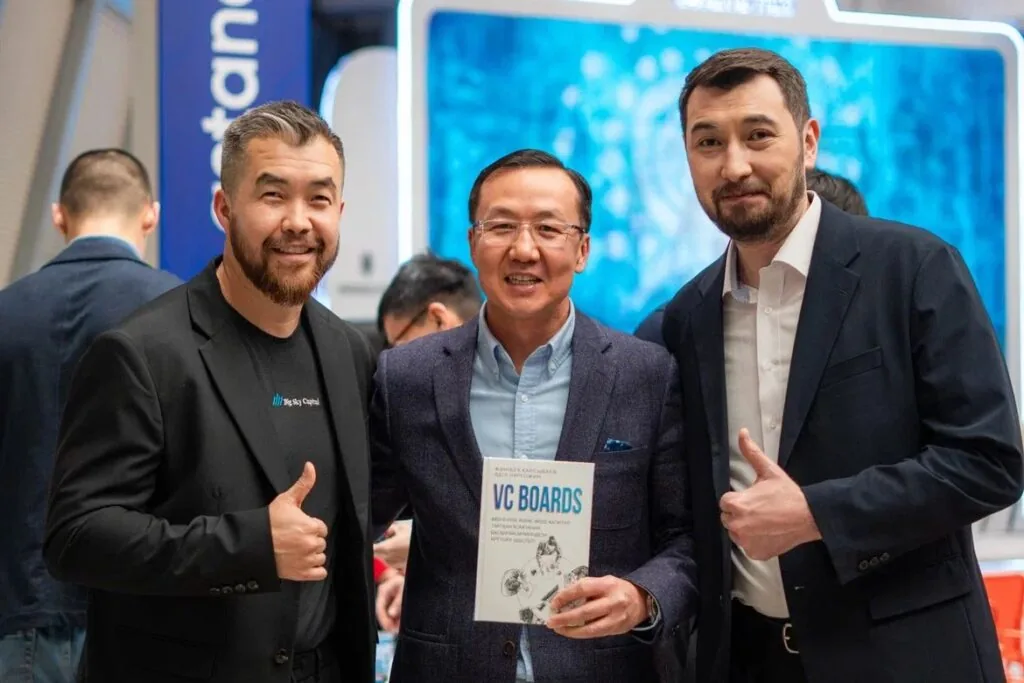
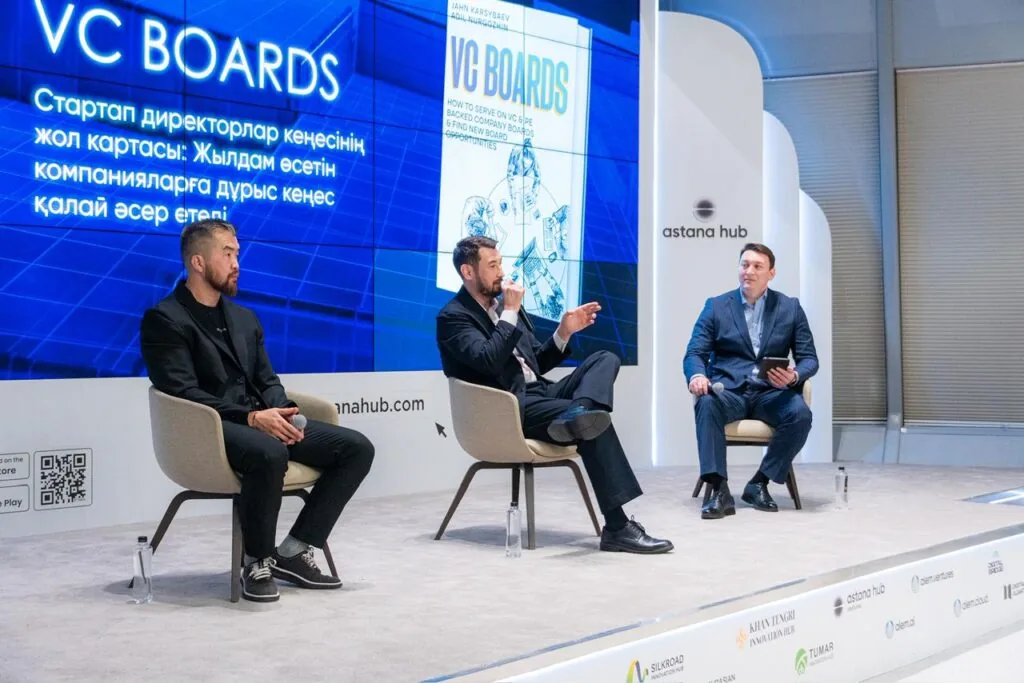
Another area is working with startup boards. We participate in them and support companies in fundraising, business development, sales, and product strategy. Recently, we published the book VC Boards, in which we detail practical cases, board formation, and effective interaction with them.
Advice for founders starting to raise investments: do not succumb to the hype around trendy topics, but focus on the specific problem the startup solves. It is important to understand its relevance and determine who is willing to pay for it. Building relationships with investors is a long process that requires constant work and trust. Investors should be viewed as partners, not just as a source of capital. This strategic approach helps achieve long-term success.
The Tech on Telegram Follow The Tech on Telegram
Keep up with the latest technology and startup news.
Related reading







More from this author

News
zypl.ai begins operations in Japan and focuses on next-generation risk models
Mansur Ismagulov

News
Elon Musk's net worth has exceeded $700 billion for the first time
Mansur Ismagulov

Article Interviews
"Central Asian countries should build a joint ecosystem," — Bekhzod Ismoilov on the development of AI in the region
Mansur Ismagulov

Article Interviews
Bloom's Taxonomy and Engineering Levels: A Practical Growth Model
Mansur Ismagulov

Article Useful
How the IT industry in Azerbaijan developed in 2025: key events
Mansur Ismagulov

News
Tajikistan has become a new member of the regional innovation alliance Central Asian Innovation Hubs.
Mansur Ismagulov