WomenInTech. "Women often tend to hide in the shadow of their male colleagues," — young women from Central Asia discuss the barriers women face in IT
Girls from Almaty and Dushanbe shared their career paths in the IT field and provided valuable recommendations.
Author - Mansur Ismagulov
The Tech AI
Get the key points in seconds - a short summary from The Tech AI.
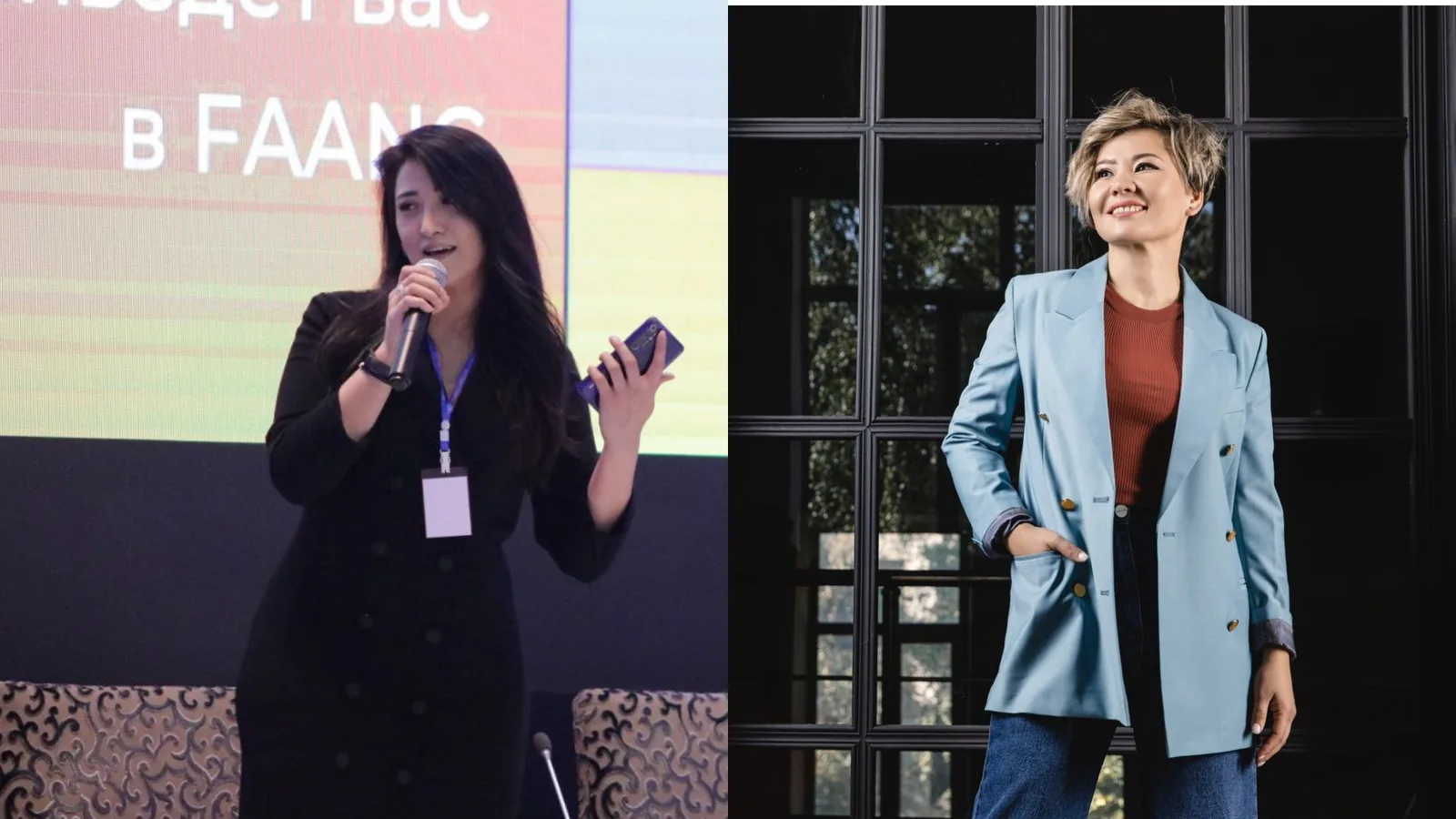
Zaituna Saidullaeva (Dushanbe) — a tech consultant, partner of the ZHIWJ brand, and project leader supporting women in IT. Zhanargul Izimova (Almaty) — a leader of the strategic consulting practice for financial institutions at Strategy& (a PwC network). Both experts share their experiences of entering the IT field, overcoming gender stereotypes, and offering advice for aspiring professionals.
Zaytuna Saidulloeva, city — Dushanbe, tech-consultant, @zaytunads
About Me
I am involved in the development of the Central Asian clothing brand ZHIWJ as a business development partner. One of my favorite tasks is creating and supporting projects aimed at supporting women in IT.
My work is a synergy of technology and creativity, aimed at creating opportunities for women in our region.
How I entered the IT profession
My career path began after returning from maternity leave. At first, I tried myself in different fields — from volunteering to business — to gain experience.
I started my journey in IT by working at the Association for Innovations, where I was involved in implementing e-government elements and organizing technological ecosystem events with international players such as CRDF Global, Techstars, and Google.
While organizing and reshaping the IT and tech industry, I realized that I wanted to invest my time in this field. It was a period of intensive growth and learning.
Then began a chapter on the development of IT specialists within the Ilmhona coding school. I headed the development and tech projects department, which later led me to a leadership position at the outsourcing and outstaffing company Beehive. Our team provided IT services not only locally but also internationally.
The decision to enter the IT sector was driven by the desire to do more than just work from 08:00 to 17:00 in an international organization, which was offered to me at the beginning of my career.
Over time, I delved deeper into topics such as IT parks, e-government, and raising a digital nation. I started with small steps: participating in hackathons and other large-scale events aimed at shaping youth mindset, transforming the perception of entrepreneurship, and understanding the technological world. One of the most memorable moments was organizing a hackathon where young developers created solutions for real social and environmental problems and effective financial instruments.
Looking back and evaluating current progress, I see colossal work.
About Stereotypes
Throughout my career, I have encountered various stereotypes, especially those related to gender prejudices. For example, at one international event, I heard doubts about my abilities simply because I am a woman.
Years later, I always tell my mentees: it is important to develop your own growth plan and not pay attention to stereotypical remarks or jokes. They should be perceived as external noise that does not concern you. As a young professional, you should be concerned with the progress of knowledge and skills, as well as only constructive criticism of your work and competencies.
Barriers for Women in IT
One of the main difficulties for women in IT is the need to constantly prove their competence and ability to handle tasks on par with men. It is also worth noting that salary depends on the employee's gender.
Women need to be able to balance work and personal life — moms will understand me. I have not managed to find a harmonious balance: it is like a sprint where you constantly juggle work and household chores, prioritizing accordingly.
In both cases, well-developed emotional intelligence and the ability to negotiate, both at work and in personal life, help. There is no simple "happy pill" for such issues.
Recommendations for Those Just Starting Their Path
Do not be afraid to accept challenges and constantly strive for self-improvement. Work on developing emotional intelligence and critical thinking. This will help you adapt in the IT sector and solve problems more effectively.
Find a mentor who can share their experience and support you during difficult times. The main thing is to believe in yourself and your strength. Love your failures and mistakes, despite all stereotypes. They make you stronger.
Take a break when you feel burnout. Always remember: sometimes a person needs to stop and conduct a retrospective of their personal and professional goals to not miss what is truly important.
Zhanargul Izimova, city — Almaty, Leader of the Strategic Consulting Practice for Financial Institutions, Strategy&, part of the PwC network, @zhanara.izimova
About Me
I am a top manager and expert in the field of career and female leadership. For over 20 years, I have built my career in management in the financial industry, banking business, and for over 8 years — in business digital transformation.
Currently, I lead the strategic consulting practice for financial institutions at Strategy& in the Eurasia and Caucasus region. My team helps banks and FinTech companies grow their business through the development of growth strategies, change management, entering new markets, or optimizing current operations.
I am a graduate of the University of Glasgow with a degree in Economics, Banking and Finance, and a scholarship recipient of the "Bolashak" program. I am also a graduate of IMD Business School and INSEAD with a certification in Digital Transformation. Additionally, I completed a professional internship in Silicon Valley as part of the Techwomen program by the U.S. Department of State. I am also a mentor for programs supporting girls and women in STEM, Technovation and Techgirls, and a facilitator of Google's #IAmRemarkable training.
Outside of work, I enjoy coaching, playing tennis, and love organizing trips for my family and friends.
How I entered the IT profession
I started my professional journey in Aktobe in 2003. At that time, I found a newspaper ad for interns at the local branch of "Kazkommerzbank." Later, I headed the department for card products and acquiring sales. At the age of 27, I became the head of retail business at the bank branch. During this period, I became interested in organizational behavior, management, and digital services. I managed to visit Raiffeisen Bank International in Vienna, and I saw how human-centric and digital service could be. In 2011, I was invited to work at "Sberbank" in Kazakhstan to develop and implement a retail strategy.
I came to IT from sales management, as it was necessary to automate sales and customer service processes and bring services online. We were the first to implement Agile practices in the bank. By then, I was already managing cross-functional teams, including developers and analysts.
About Stereotypes
Women striving for career growth in IT often face stereotypes that can hinder their advancement. Unlike "heavy industries" such as manufacturing or construction, where discrimination is more obvious, in the IT industry, it usually does not manifest explicitly. However, there is a tendency for women to often hide in the shadow of their male colleagues, which reduces their visibility and opportunities for career growth.
Barriers for Women in IT
I myself have encountered unconscious bias. During my internship in Silicon Valley, I learned about a study stating that the role of men is to take responsibility, while the role of women is to care. And this is not because we are all misogynists. It's just that male responsibility and female care are things we encounter throughout our lives. And the brain completes the rest, unconsciously directing us toward familiar perception patterns.
In CIS countries, Soviet stereotypes continue to dominate, which can hinder women from actively moving forward. For example, it is considered improper to negotiate, show initiative in promoting one's own potential, or demand a salary increase. These beliefs create a wage gap between men and women.
At the same time, there are stereotypes about differences in work approaches between men and women. Men are generally focused on quick results, concentrating on innovation and achieving the final effect, while women often show more emotionality and care for the team's mood. Nevertheless, women are known for their consistency and responsibility, making them valuable specialists for performing routine tasks and entry-level positions that require high perseverance.
In recent years, there has been a trend toward eliminating gender imbalance in IT, especially in marketing, sales, product development, and interface design roles. Leadership positions in IT companies are becoming accessible to women as well, as confirmed by numerous successful examples of female leaders in Kazakhstan.
The IT industry is attractive to women due to its open culture and opportunities for career growth based on competencies, rather than biases and stereotypes.
Recommendations for Those Just Starting Their Path
1. Do not be afraid to turn on the microphone. The issue is not what women leaders become, but how they are perceived.
2. Make your partner a true partner. Housework is the hardest job in the world, and it is meant for people of both genders. Studies show that households with equal earnings and equal responsibilities have half the divorce rate. I think this is great motivation!
3. Do not drop out of the race too early. Keep your foot on the gas pedal until the very day you need to leave to take a break for your child, and then make decisions.
My generation will probably not change the statistics on the number of women in government and corporate leadership, which are slowly moving.
We are unlikely to reach a figure of more than 50% women at the top of any industry, but I hope that future generations will be able to do so. I think that a world where women lead half of our countries and half of the companies on Earth will be a better world.
I have three children: a daughter and two sons. I want my sons to know how to contribute to both the professional development of society and the household, and for my daughter to have the opportunity to be successful and see that her achievements are encouraged by those around her.
The Tech on Telegram Follow The Tech on Telegram
Keep up with the latest technology and startup news.
Related reading







More from this author

News
zypl.ai begins operations in Japan and focuses on next-generation risk models
Mansur Ismagulov

News
Elon Musk's net worth has exceeded $700 billion for the first time
Mansur Ismagulov

Article Interviews
"Central Asian countries should build a joint ecosystem," — Bekhzod Ismoilov on the development of AI in the region
Mansur Ismagulov

Article Interviews
Bloom's Taxonomy and Engineering Levels: A Practical Growth Model
Mansur Ismagulov

Article Useful
How the IT industry in Azerbaijan developed in 2025: key events
Mansur Ismagulov

News
Tajikistan has become a new member of the regional innovation alliance Central Asian Innovation Hubs.
Mansur Ismagulov