WomenInTech. "Growth always begins with movement," — how girls from Kazakhstan build careers in IT
We share inspiring stories of women from Kazakhstan who have built careers in IT and support beginners with their example.
Author - Mansur Ismagulov

The Tech AI
Get the key points in seconds - a short summary from The Tech AI.
Irina Sulimenko, director of "KAS Consulting" in Astana, has been working in IT since 1999 and leads a group of companies that export solutions to Kazakhstan and Austria. Yekaterina Shevchenko from Almaty is a Lead Security Testing Engineer at EPAM Kazakhstan, heads the offensive security team, and was a finalist for the Cybersecurity Woman of the Year award.
Irina Sulimenko, city — Astana, director of “KAS Consulting”, Instagram
About me
I am an entrepreneur and a mother of two daughters. I have been working in IT since 1999: I started as a programmer, and at the moment I lead a group of companies and the IT Association of Kazakhstan.
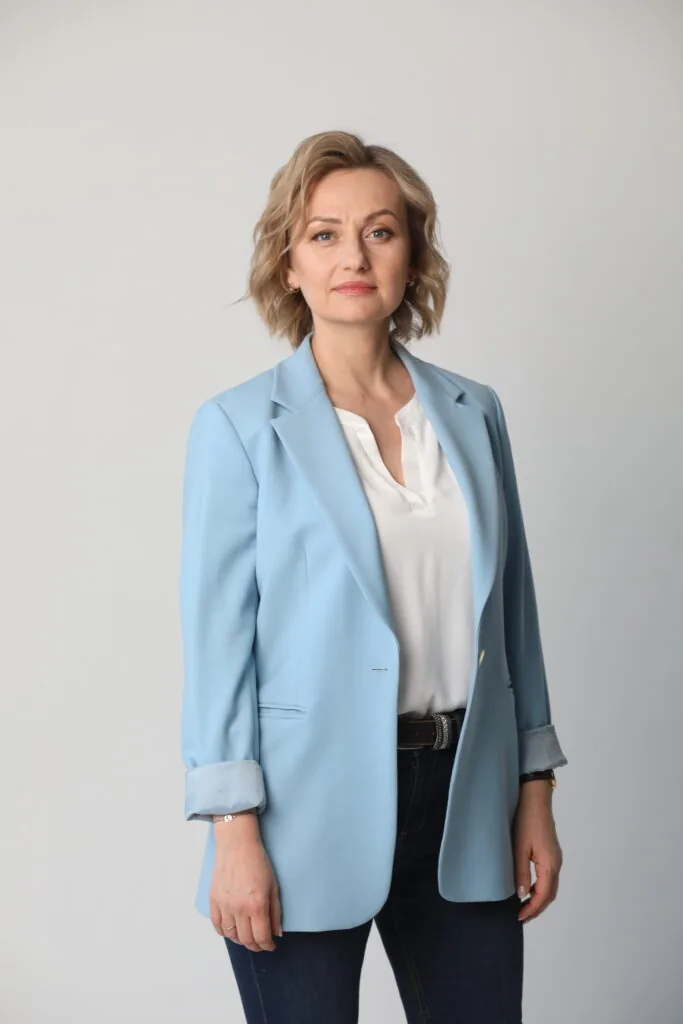
There is one common idea in my projects: to make complex things understandable and processes transparent. I believe that good technology is not about effect, but about efficiency. And this is exactly what we do: we simplify management, bring order to accounting, reduce losses — and all this through automation.
Today, my companies operate both in Kazakhstan and in Austria. We do not just export IT solutions — we transfer a holistic approach to building systems, adapting it to a new environment. In our Vienna office, they speak German, Russian, and English, and we give our clients the most important thing — clarity and control.
How I came to the IT profession
I studied in a linguistics class, loved literature and the German language, but I was the best in programming at school. My mom joked that everything was predetermined: when she was pregnant with me, she was doing an internship at a computing center. So you could say — the choice was fate.
After the birth of my second daughter, I taught at a university and worked as a sole proprietor. At some point, I realized: I can’t handle everything alone. I wanted a team to move forward together. That’s how my journey in business began.
Risk management is my lesson. There was an incident that forever taught me the importance of systems and protection: once we were robbed. There was no alarm system or security. I recovered for a long time — both morally and financially. Since then, I know for sure: business is not only about growth, but also about protection. Especially if you are responsible not only for yourself, but also for your team.
Why Austria? I have had long-standing partnership relations with Austria. And one day I decided: what if I try? There were few contacts, the language barrier was serious, the system was completely different. But we started because if we don’t try, nothing will happen.
Now I know: the European market is open to new approaches, but trust is earned slowly here. However, if you are a reliable partner — it is for a long time.

About stereotypes
I never felt strong pressure as a woman. Perhaps because accounting automation is precisely the area where women have long been leaders. There were moments of surprise, especially among foreign partners: “You opened a company abroad?” — but rather with respect than with doubt.
I do not argue with stereotypes. The main thing is not to prove, but to do your job well. And if it is done well, then fewer questions arise about who you are and where you are from.
Learning helps me move forward. I am constantly learning: at the moment — in the MBA program in Vienna. Secondly — public activity. I represent the Austrian agglomerate in Kazakhstan, and this helps build real business ties between countries.
And, of course, the team helps. My Kazakhstani team is my pride. We represent our country decently in the external market and earn in foreign currency, preserving jobs at home. This is about export created by the hands — and the head — of our specialists.
Living in two homes is not a vacation, but constant movement. Studies, meetings, flights, projects. It became easier when I established a regime, added sports, nutrition, and learned to recover.
Recommendations for those who are just starting their journey
Try. Do not be afraid of “unfeminine” — nowadays it is less and less about gender, and more and more about your inner strength and skills. Do not be afraid to talk about your goals and seek support. Find mentors, but choose them consciously. At the moment, there are many options — it is important to find those who really provide value.
And most importantly — do not wait for someone to say that you can. Just start. Because growth always begins with movement. Even if it is a little scary.
If someone had told me 20 years ago that I would build a business in two countries, study in Vienna, and represent the Austrian cluster in Kazakhstan — I would just have smiled. Then all this seemed something completely not from my story.
But one day I just started doing. Sometimes — it is scary, often — without ideal conditions, just with what was at hand. And then, step by step, confidence and opportunities came, and most importantly — a team.
I believe in the power of experience, in honest work, and in the fact that we, women, can grow — with respect for ourselves, for others, and with interest in our path.
And also — I was lucky with family support. This is not always visible from the outside, but it is precisely the rear that gives that very support to continue. Especially when you live and work between two countries.

Ekaterina Shevchenko, city — Almaty, Lead Security Testing Engineer, EPAM Kazakhstan, Linkedin
About me
I work in the field of information security and check how well companies are protected from cyberattacks: where systems may have weaknesses and how they could be used in a real attack. This is called penetration testing and Red Team assessments.
At the moment, I hold the position of Lead Security Testing Engineer at EPAM Kazakhstan. I lead a team that specializes in offensive security ─ we model the actions of attackers and help clients prevent security threats.
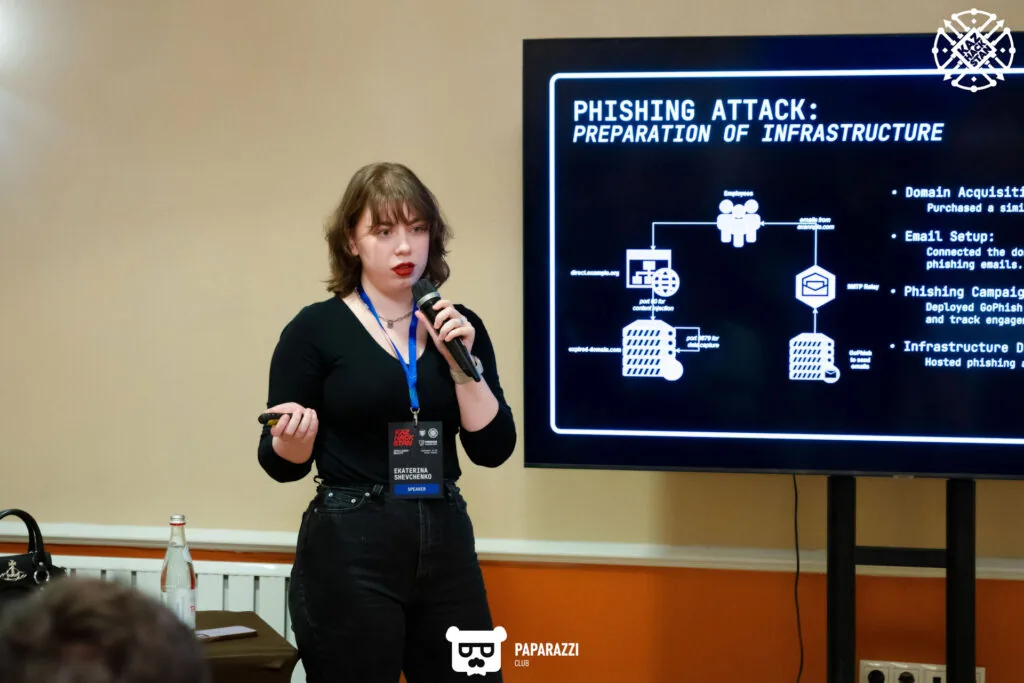
In addition to my main job, I participate in the life of the professional community: I speak at specialized conferences, share my experience on LinkedIn ─ I write posts with practical advice, thoughts, and observations from my daily work. For me, this is not only a way to pass on knowledge, but also an opportunity to maintain contact with people who are also passionate about security, like me.
How I came to the IT profession
Since childhood, I was interested in technology and everything related to computers. In high school, I began to look for a profession in which logic, creativity, and variability of tasks would be combined. I wanted every working day to be a little different. That’s how I came to information security and entered IITU with the specialty “Information Security Systems”.
My third and fourth courses fell during the quarantine period, when there was almost no practice and internships. I decided to take the initiative into my own hands: I completed practical assignments on online platforms, participated in CTFs, analyzed real attacks, and kept a blog in which I documented my research.
Thanks to these materials, I was noticed and invited to my first internship at the Center for Analysis and Investigation of Cyberattacks — CARKA. This was a busy and exciting stage in my life ─ everything was new then. I was engaged in web application testing, infrastructure analysis, conducting security assessments, and participating in social engineering projects.
At EPAM, I continued to develop in offensive security ─ this is my main professional passion. We have the opportunity in the company to work with clients from different countries and domains. I like that I can research security issues in different contexts: from healthcare to automotive.
In addition to my technical skills, I am developing managerial skills: I lead a project and a team. This gives me the opportunity to look at tasks on a larger and more comprehensive scale. At the same time, I am still interested in being “in the field”: to find vulnerabilities myself, analyze, check hypotheses. At this moment, a real research zeal turns on in me.
Parallel to this, I passed several international certifications. They helped structure knowledge and confirmed my qualification at the international level. I also like to speak at conferences: to participate in mutual exchange with colleagues. This fills me with energy and inspiration.
This year, I received important professional recognition for myself and in a certain way confirmation that I am moving in the right direction — I made it to the finals of the international Cybersecurity Woman of the Year award in the Hacker of the Year category. This moment was especially special because I was the only finalist from Kazakhstan, it was pleasant to represent the country at such a prestigious venue.
About stereotypes
In the early stages, I sometimes encountered gender stereotypes. At the very least, there was surprise that I was dealing with technical things and doubts about my qualifications based solely on gender. But in general, I tried to focus on work and results.
At the moment, such situations are practically absent in my daily work. Colleagues and managers evaluate professionalism, not gender. I think a lot depends on the culture within the team and the company.
For example, we have a special Code of Conduct at EPAM, which, among other things, states that discrimination on the basis of gender, race, religion, or any other characteristic is prohibited in the company.
I am glad that we have such a culture and would like it to be supported in every company, creating an atmosphere where every person feels comfortable, regardless of differences.
Obstacles for women in IT
When I was just starting, I noticed a lack of examples and role models, especially in technical directions where there are still few women. Sometimes it is difficult to imagine how to move forward when you do not see those who have already gone this path.
It is also important to be able to build self-confidence. It happens that even experienced specialists doubt their strength, despite a high level of training. This can hinder growth, especially at transitional stages.
Participation in professional communities helped me a lot. The opportunity to communicate with colleagues, ask questions, and simply hear that you are not alone on this path gives confidence.
Over time, I also began to share my experience. I do not consider myself an expert in everything, but I try to be the support that I myself lacked at the beginning. Sometimes even a simple story about your own path can become a support for someone else.
Recommendations for those who are just starting their journey
1. Do not be afraid to seem “not experienced enough.” Everyone goes through the beginning stage: with questions, uncertainty, and first attempts. This is absolutely normal. The main thing is to maintain interest and allow yourself to learn from practice.
2. Continue to learn. At the moment, there is a huge amount of open resources available. There are platforms where you can practice practical skills and move at your own pace. This is a good way to understand what you are really interested in and gain confidence.
3. Do not wait for the perfect moment or someone’s approval to start. If you want to figure out a topic — try it. Create your own small projects, learn from practice. Confidence comes with time, but in order for it to appear, you need to take the first step.
4. Doubt is normal. Many doubt themselves, even with good training. This is especially true for those who take the matter seriously and responsibly. Sometimes it is useful to simply allow yourself to be a beginner.
5. Do not compare yourself with others. Everyone has their own path, their own speed, their own circumstances. It is better to look at your yesterday self and track where you have already become stronger. Your path will be your own, and it does not have to be the same as anyone else’s.
The Tech on Telegram Follow The Tech on Telegram
Keep up with the latest technology and startup news.
Related reading







More from this author

News
zypl.ai begins operations in Japan and focuses on next-generation risk models
Mansur Ismagulov

News
Elon Musk's net worth has exceeded $700 billion for the first time
Mansur Ismagulov

Article Interviews
"Central Asian countries should build a joint ecosystem," — Bekhzod Ismoilov on the development of AI in the region
Mansur Ismagulov

Article Interviews
Bloom's Taxonomy and Engineering Levels: A Practical Growth Model
Mansur Ismagulov

Article Useful
How the IT industry in Azerbaijan developed in 2025: key events
Mansur Ismagulov

News
Tajikistan has become a new member of the regional innovation alliance Central Asian Innovation Hubs.
Mansur Ismagulov