WomenInTech. "I didn't choose IT; IT chose me," — inspiring stories of girls from Uzbekistan and Tajikistan
Successful women from Uzbekistan and Tajikistan shared their career stories and the challenges they faced along the way.
Author - Mansur Ismagulov

The Tech AI
Get the key points in seconds - a short summary from The Tech AI.
Aziza Abdurakhmonova (Tashkent) is a software engineer at EPAM Systems, a Women TechMakers ambassador, and co-founder of Microsoft Developers Community in Uzbekistan. Malika Nurmataeva (Dushanbe) is a frontend developer at Ayan Capital LTD. Both professionals share their experiences of transitioning into IT, overcoming stereotypes, and providing advice for women beginning their careers in technology.
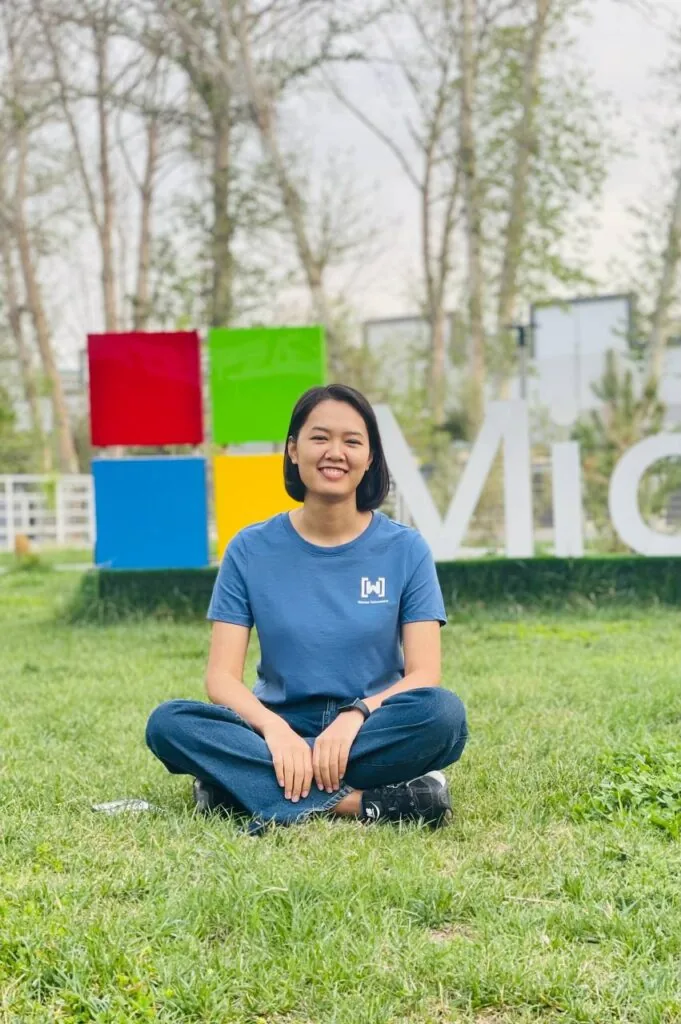
Aziza Abdurakhmonova, city — Tashkent, software engineer at EPAM Systems, LinkedIn , Instagram
About me
I am a software engineer, currently working at EPAM Systems, where I focus on backend development. Beyond my professional activities, I actively advocate for increasing the number of women in STEM fields. As a Women TechMakers ambassador for Google and co-founder of the Microsoft Developers Community in Uzbekistan, I mentor and inspire women to build careers in technology.
How I entered the IT profession
It wasn’t that I chose IT; IT chose me! Inspired by my father’s work as an engineer, I wanted to pursue engineering from a young age. One day, my dad brought a computer home, and I must admit, I became a bit of a gamer. Computer games introduced me to the digital world and sparked my interest in how things work “behind the scenes.” Since then, my passion for computers has only grown, ultimately leading me to a career as a software engineer.
After finishing high school, I earned a degree in Information and Communication Engineering, and then I enrolled at Inha University in Tashkent, where I studied “Computer Science and Software Development.” During my university years, I gained practical experience through backend development internships. A key moment in my career was participating in the “Nagaoka Summer School for Young Engineers 2019” in Japan, where I deepened my knowledge in machine learning and information retrieval. After graduating from university, I began my professional career at Korea Development Bank, and later moved to EPAM Systems, where I have been working as a software engineer since January 2022.

About stereotypes
I have encountered stereotypes, particularly the belief that the IT field is dominated by men and that women are less capable of technical roles. However, I used these moments as motivation to prove that women can thrive in IT and play a key role in the development of this field.
Barriers for women in IT
One of the main challenges for women in IT is the lack of mentorship. It is difficult to envision yourself as successful when there are so few role models. There is also a tendency to underestimate women’s technical abilities, which can limit career growth opportunities. To overcome these obstacles, I actively sought mentors, built a support network, and always strived to improve my skills. I also founded a community to train women developers, helping them address similar issues.

Advice for those just starting out
My advice is to embrace challenges and never shy away from opportunities that push you out of your comfort zone. In the IT field, it is important to maintain curiosity, keep learning, and show persistence. Seek out mentors and build a support network among colleagues who will help you grow. And most importantly, believe in yourself and your ability to make a significant contribution, despite stereotypes or barriers. Success in IT is not about fitting in, but about standing out and offering a unique perspective.
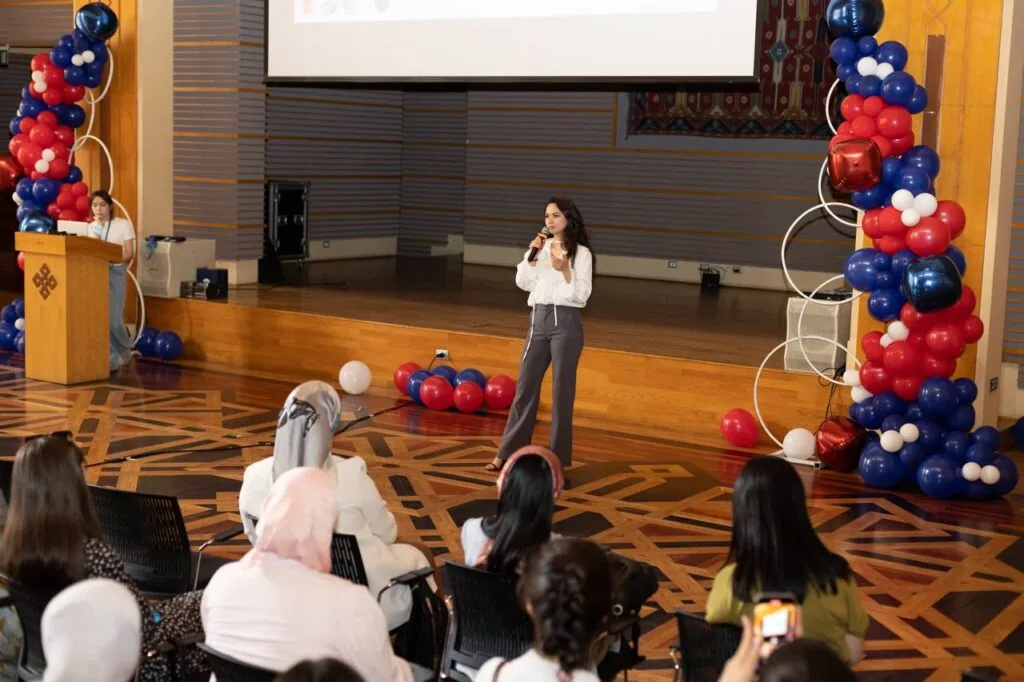
Malika Nurmatoва, city — Dushanbe, frontend developer at Ayan Capital LTD, Instagram
About me
I work as a frontend developer at Ayan Capital LTD, a British tech startup. Our company provides Islamic financing for individual entrepreneurs and legal entities operating in the private passenger transport sector.
Together with the technical team, we work to make our website as intuitive and user-friendly as possible, as well as optimize it for search engines. Additionally, we are developing a CRM system that automates routine tasks and simplifies employees’ work, speeding up and streamlining processes. Our overall goal is to create interfaces that not only save time but also allow users to focus on more important aspects of their work.
When I decided to enter IT, I approached it thoroughly. I needed to clearly understand what professions exist in this field and which one would suit me best. I made a list of IT specialties, studied each one—what specialists do, what their daily work looks like, what growth prospects exist, and salary levels. I organized all this into an Excel spreadsheet to clearly see the big picture and make an informed choice.
To gain a realistic understanding of the professions, I started talking to people who were already working in IT. After compiling a list of acquaintances, I arranged meetings and calls with them to ask important questions. These conversations were not always easy, as everyone offered their own advice, which was sometimes confusing, but ultimately helped me better understand what was important to me.
The first step was taking the CodeGirls courses at Alif Academy, where I started creating my first web pages. This gave me the confidence that development was indeed what I wanted to do. Next, I continued my studies online on the Norwegian platform Scrimba, where I could learn at my own pace by solving real-world tasks.
Later, I took more in-depth courses at the Ukrainian school FoxMinded, where I worked with a mentor and participated in team projects that simulated real work processes. Then I completed an advanced course on JavaScript and React at HumoLab and interned at Neobis and FoxMinded, working on real projects.
This experience showed me that the key to success is not just theory, but constant practice and a systematic approach to learning. I dedicated four to five hours a day to studying and projects, and this rhythm helped me move forward. I also realized that offline courses suit me better: live communication with classmates and sharing experiences help not only my personal growth but also our collective development.

How I entered the IT profession
After high school, I enrolled in the Business Administration faculty in Cyprus. Upon returning to Dushanbe, I began working at an international organization, where I gained diverse experience over five years, performing duties in the humanitarian sector. At that time, I saw prospects for myself in project management, and to deepen my knowledge, I went to Barcelona for a master’s degree in project management. It seemed that this path would open new horizons for me.
However, as I delved deeper into project management, I began to realize that this field did not meet my expectations. Project management required constant interaction with technical teams, partners, and clients—constant meetings, negotiations, and process coordination. Despite my love for communication, I realized that this amount of interaction was draining me.
While in Barcelona, I noticed that many of my acquaintances in IT could work from anywhere in the world. This inspired me to consider IT as an opportunity not only for professional development but also for a lifestyle I had always liked—the ability to travel and explore new countries.
While studying IT fields in parallel, I became increasingly fascinated by development, which combined both creativity and technical skills. The ability to create something new and see the results of my work was inspiring. This became a turning point—I realized that IT was not just a job, but a chance to realize my ambitions and gain the flexibility I had dreamed of.
About stereotypes
When I was first considering IT as a possible career, I often heard that this field is for mathematicians and programmers who have been at computers since childhood. It seemed that if I was not an expert in mathematics or coding, I would not have a chance.
But as I delved deeper, I realized that IT is much more than just code. There is a place here for those who love creative tasks and for those who are passionate about technical details. I saw many examples of people with different backgrounds who transitioned into IT and built successful careers. This changed my perception of who can thrive in this field.
Today, I try to break these stereotypes by showing through my own example that IT is accessible to everyone. The main thing is the desire to learn and develop, regardless of initial knowledge and experience.

Barriers for women in IT
Luckily, in my career, I have not faced discrimination or stereotypes related to gender or age. In the company where I work, there is an atmosphere of equality and respect for every employee. At Ayan Capital, everyone is treated equally, and each person’s growth is determined solely by their competencies and contributions to the work. It is comfortable to be here, work, grow, and develop, and this is inspiring.
But I understand that stereotypes exist in the market, for example, that IT is not a female field, or that women’s career growth is evaluated differently. Questions about family plans and children are often asked, and many women face additional pressure while trying to balance career and personal life.
I was lucky to work in a place where professionalism and work quality matter, not biases or stereotypes. It is important to find a company that values your contribution and creates a healthy work environment. Family support also plays a huge role. I have a supportive family, especially my husband, who always supports my growth and development. This allows me to feel confident and move forward with focus.
I believe that for women striving for success in IT, it is important to seek out companies and environments that support equality and create conditions for personal and professional growth. Stereotypes may exist, but the right environment and support can make this path much more pleasant and productive.
Advice for those just starting out
If you are just starting your journey in IT, do not be afraid to try new things. It may seem difficult, but everyone starts from scratch. Here are a few tips that helped me:
1. Choose consciously. Before diving into a specific area, study what directions exist in IT and choose the one that appeals to you. When you do what truly interests you, learning becomes easier.
2. Study regularly. Even if you only have a few hours a day, try to dedicate them to learning. Regularity helps maintain motivation and gradually achieve success.
3. Practice as much as possible. Do not be afraid to take on small projects or participate in internships. Practice is what helps you understand how theory works.
4. Do not be afraid to ask for help. Find mentors or people who can give advice. This will accelerate your progress and help you avoid many mistakes.
5. Develop soft skills. Technical knowledge is important, but so are communication, teamwork, and problem-solving skills. These abilities are highly valued in IT.
6. Seek a healthy work environment. Your surroundings matter greatly. Find a company that will support you and value your contribution.
The Tech on Telegram Follow The Tech on Telegram
Keep up with the latest technology and startup news.
Related reading







More from this author

News
zypl.ai begins operations in Japan and focuses on next-generation risk models
Mansur Ismagulov

News
Elon Musk's net worth has exceeded $700 billion for the first time
Mansur Ismagulov

Article Interviews
"Central Asian countries should build a joint ecosystem," — Bekhzod Ismoilov on the development of AI in the region
Mansur Ismagulov

Article Interviews
Bloom's Taxonomy and Engineering Levels: A Practical Growth Model
Mansur Ismagulov

Article Useful
How the IT industry in Azerbaijan developed in 2025: key events
Mansur Ismagulov

News
Tajikistan has become a new member of the regional innovation alliance Central Asian Innovation Hubs.
Mansur Ismagulov