WomenInTech. "The best way to break stereotypes is through professionalism," — stories of women who inspire
In the WomenInTech section, successful women share the challenges they faced in their careers and how they managed to prove their value and competence in the tech world.
Author - Mansur Ismagulov
The Tech AI
Get the key points in seconds - a short summary from The Tech AI.
Nazgul Seralina, a business analyst at Bukhta and a lecturer at KBTU, began her career in 2008, working at Asiacom Technology, Temirbank, Kaspi (2011–2021), and VTB Bank. Olga Egorova, an HR Business Partner with 12 years of experience, entered the IT industry through a recruitment agency in 2013 and later worked at KPMG. Both specialists emphasize the importance of expertise, overcoming stereotypes, and continuous skill development for successful career growth in the industry.
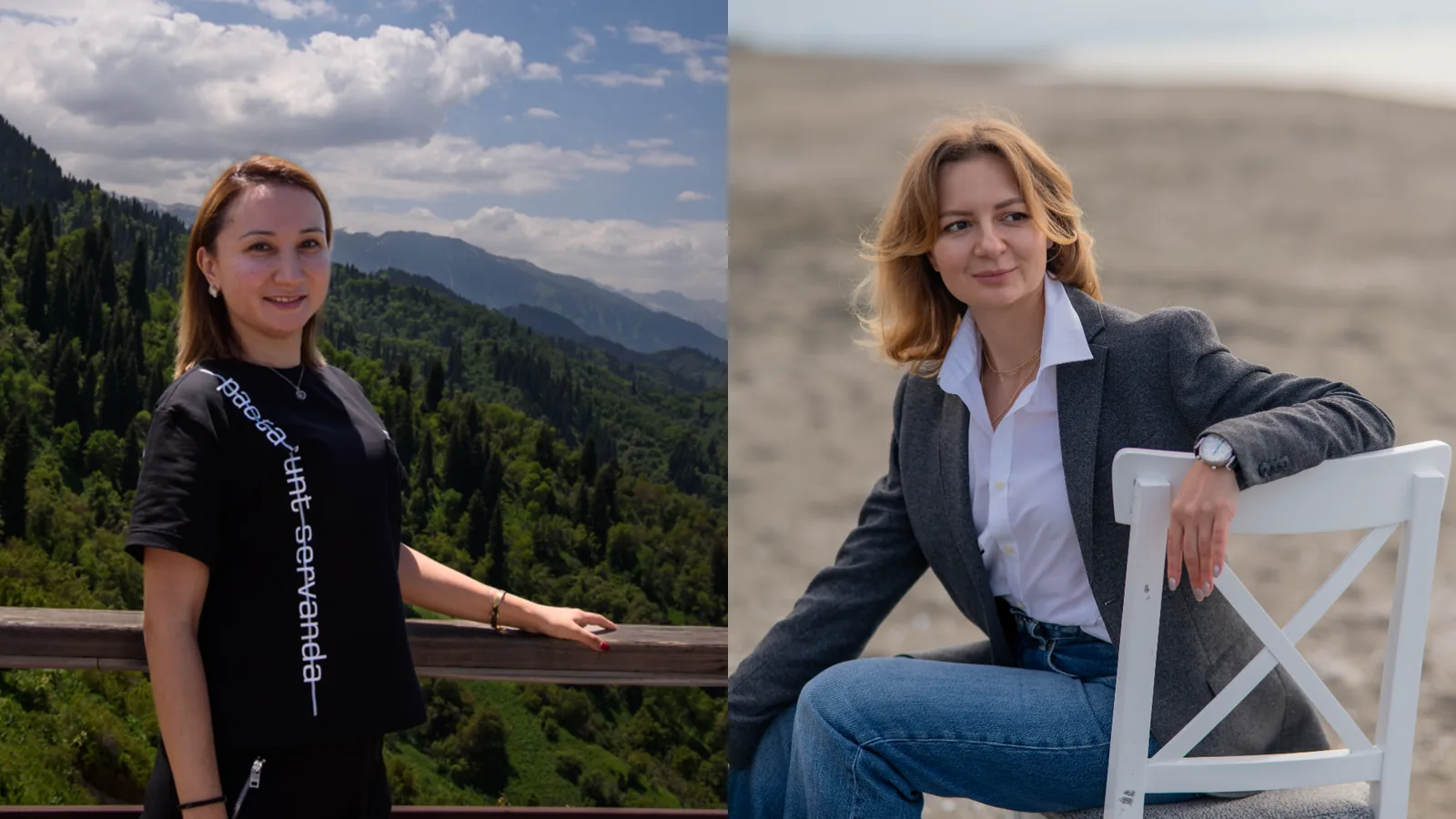
Nazgul Seralina, city — Almaty, Business Analyst at Kazakh FinTech company “Bukhta”, LinkedIn
About me
I am a translator between business and technology. My mission is to make the complex simple and the useful accessible. I love studying Big Data, finding non-obvious patterns, and publishing scientific articles.
Today, I combine two roles:
- Business Analyst at “Bukhta” — together with the team, we create and implement digital products that simplify the lives of entrepreneurs and improve their businesses.
- Data Scientist at KBTU — I work as a senior lecturer at the School of Information Technologies and Engineering at KBTU, teaching students and master’s degree candidates.
How I entered the IT field
My journey in IT began with winning a school math olympiad. Teachers noticed my interest and suggested I participate in conferences and olympiads. Thus, from the eighth grade, I found myself in the world of algorithms and programming.
For me, IT is not just code. Even in school, I realized that mathematics and programming are a real superpower that can change reality. Therefore, I chose KBTU and the Faculty of Information Technologies because I wanted to surround myself with people who think big and are as passionate about technology as I am.
When I started, the IT sector in Kazakhstan was just forming. Today, the industry has changed beyond recognition, but my passion has not. It’s just that now, instead of Pascal, there is AI, Big Data, Data Science, and ambitious projects.

My career path
My path is a story of how an intern’s curiosity grew into the expertise of a product business analyst.
2008 — Start in China
At Asiacom Technology, I tested ATMs — “feeding” them banknotes to check their currency recognition capabilities. This experience taught me the most important lesson: technology must work flawlessly under any conditions.
2008-2011 — Digital banking at “Temirbank”
I worked on the first versions of internet banking. We were translating familiar banking processes online; at that time, it was a revolution.
2011-2021 — A decade of innovation at Kaspi
I progressed from senior to chief analyst. I participated in launching products that everyone knows today. I was part of the team that created innovative products: Kaspi Gold, “Credit Card,” “Cash Loan,” “Purchase Loan.”
2021-2022 — VTB Bank
I worked on automating card products and integrations with Visa, Qiwi Kazakhstan. I realized that the best analytics is when technology creates a seamless customer experience.
2023-present “Bukhta” and a new chapter
I am implementing all my accumulated experience in interesting projects:
— Integration with Alatau City Bank, “Bank CenterCredit”
— “Bukhta” directories: banks, COGD, KBC, units of measurement
— Documentation in Jira, tax payments to the budget, and others.
About stereotypes
When I started working in 2008, I heard the following about myself:
“You’re a girl — you should go into HR or marketing,” “Are you really interested in banking integrations?” or “Maybe you should work on interfaces instead of the system core?”
But I turned these questions into challenges:
1. Proof through results
When we launched Kaspi Red, there were doubts that a “female analyst” could handle IBM BPM, Jira, Soap UI, Postman, CFT, and others. Three months later, our product became the market standard.
2. An unconventional view of the world as a superpower
My “female” attention to detail helped find critical bugs during the issuance of the Kaspi Red card and improve the user experience in credit products.
3. Stereotypes are broken not by words, but by completed projects
When you prove your competence through action, gender ceases to matter. Currently, at “Bukhta,” people come to me for expertise — everyone looks at experience, knowledge, and results. This is professional recognition.
Obstacles for women in IT
1. “Are you sure you understand technology?”
At the start of my career in 2008, I was often automatically labeled as “incompetent.” Therefore, at Asiacom Technology, I deliberately delved into the technical details of ATMs more deeply than required, as I was also personally interested in it.
Advice: Build a portfolio with several cases where you solved technically complex tasks.
2. “Maternity leave = out of the profession”
A real story. In 2021, I received a call from “VTB Bank” in Kyzylorda — they offered me a position as a card systems analyst. At that time, I was on maternity leave, and my daughter was only five months old. I informed them about this. In response, I heard: “We will wait. Find a nanny — we are interested in you specifically.”
What worked:
- Reputation — I was recommended as a specialist in card products, thanks to Kaspi.
- Honesty — we agreed on a remote work format. My KPI is solving tasks, not being present in the office.
- Preparation — during maternity leave, I improved my knowledge of Qiwi and Visa APIs.
Conclusion: Maternity leave is not an obstacle, but an opportunity to refresh skills.
Advice: Use maternity leave for professional development. I studied at the doctoral school of KBTU: at the School of Information Technologies and Engineering.
Recommendations for those just starting their journey
- Keep learning — technology changes rapidly.
- Find mentors — this opens new horizons.
- Don’t be afraid of difficulties — they form expertise.
- Believe in yourself and your ideas — persistence always works.
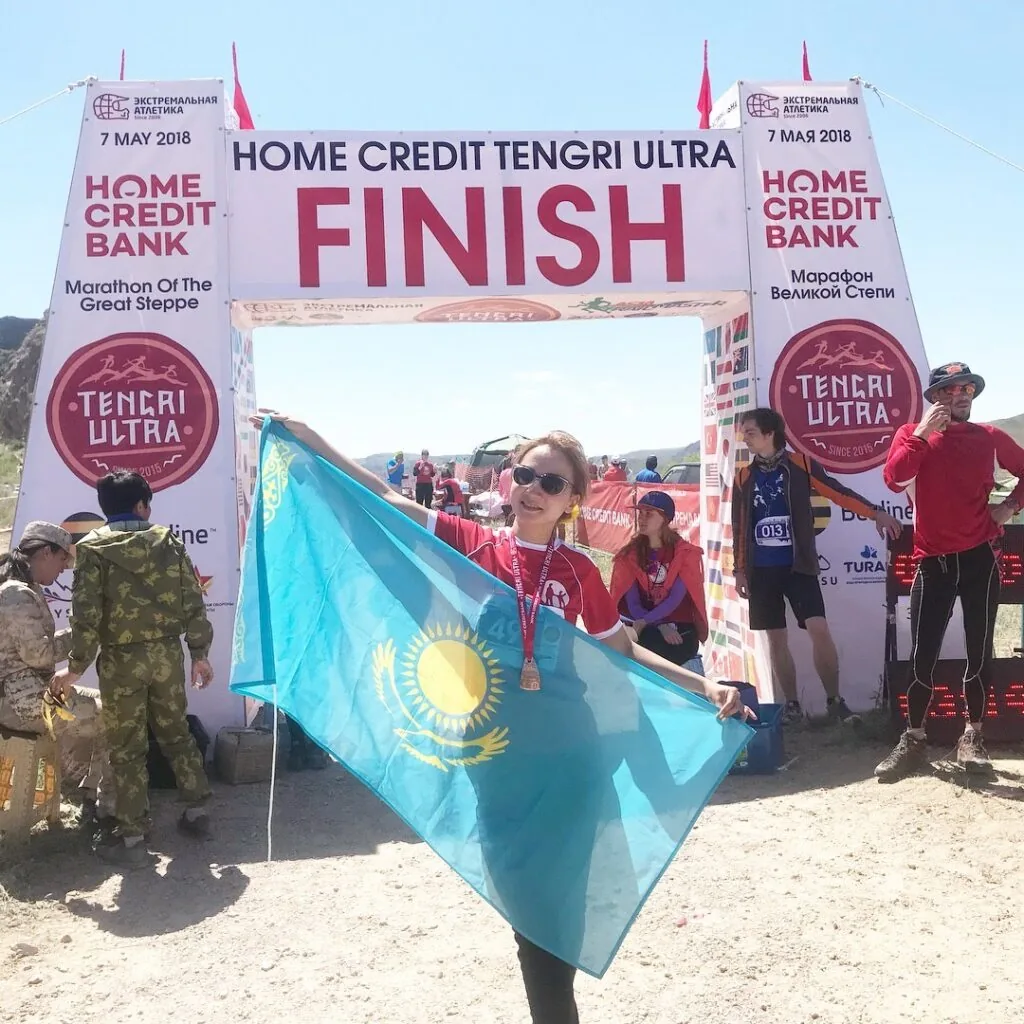
- Run marathons — in my case, literally. After a marathon, the best ideas come to my mind.
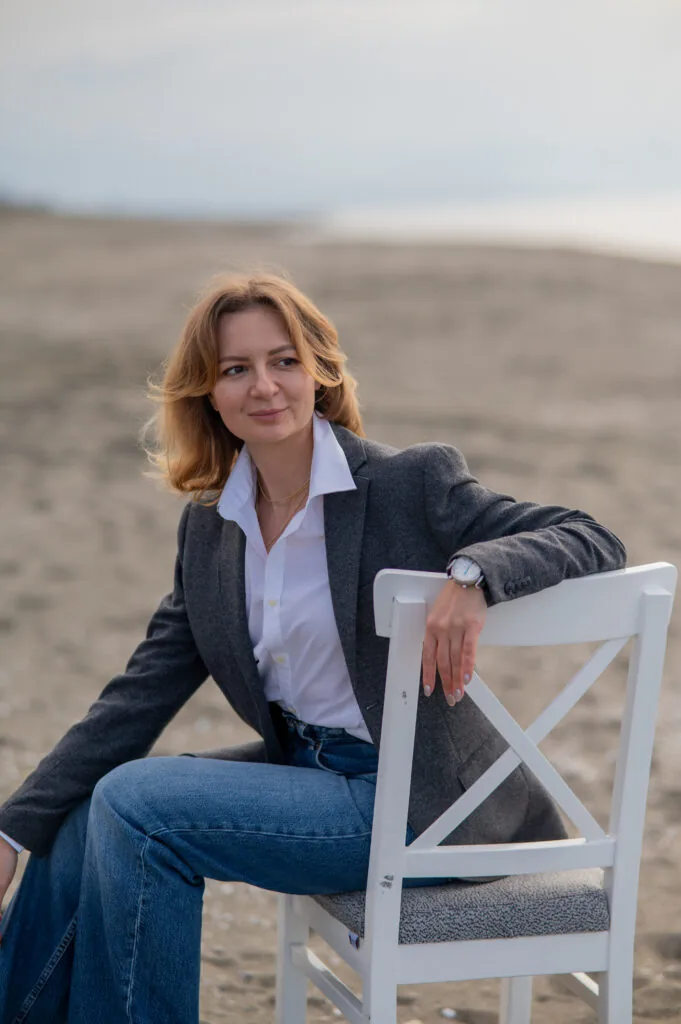
Olga Egorova, city — Batumi/Almaty, HR Business Partner/Talent Acquisition Partner, LinkedIn
About me
I am an HR specialist with 12 years of experience. In the company, my position is designated as senior HR manager, but in essence, my work is closer to the role of HR business partner or Talent Acquisition partner. I am responsible for the full cycle of team management — from hiring and onboarding to employee development, offboarding support, and managing internal projects.
My main expertise is IT recruitment, which I have been doing since 2018, including a year working in the global market at an international outsourcing company. I am also strong in onboarding: I build processes that help newcomers, teams, and managers effectively integrate into the company.
Currently, the focus is on employee development: I help create growth plans, train managers to work with A-level candidates, combining recruitment with management.
Until 2022, I actively engaged in HR marketing: I collaborated with universities, developed the graduate recruitment direction, worked on the company’s HR brand, and organized offline events. With the transition to remote work, the role changed slightly — currently, I mostly support internal cultural initiatives in the office.
How I entered the IT profession
My career began even in my third year when I worked part-time in the administrative department of Philip Morris International. It was then that I became interested in how business works from the inside. One case stayed with me for a long time: I wanted to take a book from the internal library, but later learned that one of the managers expressed dissatisfaction — saying that I was not quite an employee. This amazed me. I already then felt how important respectful treatment is regardless of status, and I began to pay attention to corporate culture and internal processes.
I studied accounting with a focus on economics and was interested in corporate finance. But after university, I realized: accounting is not for me. I decided that I wanted to work with people and business. By a friend’s recommendation, I ended up in a career holding company and began my path in HR. Later, I moved to “Anchor Central Asia,” which worked with Philip Morris International — thus, in 2013, my immersion in IT and Hi-Tech began.
At the same time, the movie about Steve Jobs came out, I read his biography — and I became truly fascinated by IT. Working in a recruitment agency gave me broad exposure: I understood how the market works, what different companies do, how integrators and vendors operate, and what their differences are.
Two years later, I realized that I wanted to see how candidates develop after being hired and to find work within the business. Thus, I ended up at KPMG — I was attracted by its culture: openness, respect for employees, and accessibility of partners. At KPMG, I engaged in HR marketing: I participated in job fairs, launched internships, including in IT consulting, worked with universities, and developed the employer brand.
About stereotypes
Collaboration with Wonder Woman Hub and Sheryl Sandberg’s book “Lean In” had a strong influence on me. Thanks to it, I realized that much of what seemed normal before was not.
In recruitment and Talent Acquisition, it is important to be able to justify your choice to the business — especially if you work with strong managers. You need not just insist, but clearly prove your position. At the same time — dispel the myth that HR is only a support function. We are business partners, and my task is to find, adapt, and develop people so that the team works better.
I had to prove that a young girl could also influence decisions. I learned this at KPMG, working with management consulting: first, you had to earn the right to be heard by showing your value.
In working with candidates, I realized: you don’t need to try to “understand code” to build trust with a programmer. It is enough to listen, ask the right questions, and show business logic. Therefore, I paid a lot of attention to understanding the product, technology, and business language.
Then I didn’t call it “working with stereotypes,” but that’s exactly what it was. The best way to break them is professionalism.
And one more important insight: just working well is not enough. Earlier, I believed that efforts themselves would lead to growth. But no — you need to talk about your goals. Directly: “I want such-and-such a position,” “I want to discuss a raise.” No one will offer more just because you are trying hard. Sheryl Sandberg’s book also teaches this — and I now openly talk about it with colleagues and especially with women in the profession.

Obstacles for women in IT
Our Wonder Women research highlighted the problem well: there are enough female managers at entry-level positions, but at the top level — CMO, CPO — there are almost none. We concluded that the main reason is internal barriers. Many women do not believe they can hold such a position or think it is “not for them.” The second reason is the lack of quality preparation for management roles. It all comes down to personal initiative: if you want to grow, take responsibility and act.
In IT, I do not see systemic barriers — in six years of working with top managers, I most often encountered adequate partners. Moreover, male managers often played a key role in the career growth of women, supporting and involving them.
It is also important to break the stereotype that women are good managers only due to “natural empathy.” In fact, empathy is not about nature, but about a skill available to everyone. I have seen empathetic men and women whose empathy developed through experience. It all depends on maturity and willingness to develop, not on gender.
In our market, this is a bit more difficult because we are closer to Eastern culture, where there are more traditional expectations. In Europe, where I also worked, everything depends on the country. For example, in Poland and Portugal, I did not notice strong stereotypes. Also, in working with teams from Moscow or St. Petersburg — perhaps thanks to the legacy of Soviet feminism, where women traditionally held strong positions, for example, in engineering.
Overall, I do not feel strong external pressure. It all comes down to internal readiness: to take responsibility, learn, show yourself, and seek support. This is the key to growth — in maturity and initiative.
Recommendations for those just starting their journey
It is important to regularly ask yourself: why am I doing this? Often, the argument is that IT offers high salaries. But a good income is possible in any field — it all depends on your expertise. Inspiration and growth are only possible with internal motivation. External stimuli, such as salary, quickly become habitual and stop driving progress.
It is important to know your strengths and rely on them when choosing a profession — especially in IT, where continuous learning has become the norm. Even with company support, without internal motivation, growth will not happen. Therefore, it is important to consciously choose a field and be ready to constantly improve skills.
Beginners should immerse themselves in the professional environment in advance: attend events, follow specialists on LinkedIn, delve into their work.
AI is already changing the market: it can replace junior specialists, especially in design, and in the future, it will affect programming. To remain in demand, it is important to use AI as a tool, not a competitor — enhance your skills, not rely on automation.
AI gives businesses more flexibility — projects can be launched without a team. This lowers the entry barrier but requires specialists to have technical flexibility and strategic thinking.
For those just starting, it is important to be realistic. The market for junior specialists is not easy. There is no need to wait for the “ideal” company — it is better to look for real projects. In Kazakhstan, there are businesses ready to work with beginners. The main thing is to start, take responsibility, and accumulate experience. Everything else will come with time.
The Tech on Telegram Follow The Tech on Telegram
Keep up with the latest technology and startup news.
Related reading







More from this author

News
zypl.ai begins operations in Japan and focuses on next-generation risk models
Mansur Ismagulov

News
Elon Musk's net worth has exceeded $700 billion for the first time
Mansur Ismagulov

Article Interviews
"Central Asian countries should build a joint ecosystem," — Bekhzod Ismoilov on the development of AI in the region
Mansur Ismagulov

Article Interviews
Bloom's Taxonomy and Engineering Levels: A Practical Growth Model
Mansur Ismagulov

Article Useful
How the IT industry in Azerbaijan developed in 2025: key events
Mansur Ismagulov

News
Tajikistan has become a new member of the regional innovation alliance Central Asian Innovation Hubs.
Mansur Ismagulov