WomenInTech. A career in IT without stereotypes — the experience of Sergek Group
Three engineers from Sergek Group share how corporate culture, flexible schedules, and equal opportunities help them grow in IT, balance work with personal life, and achieve professional success.
Author - Mansur Ismagulov
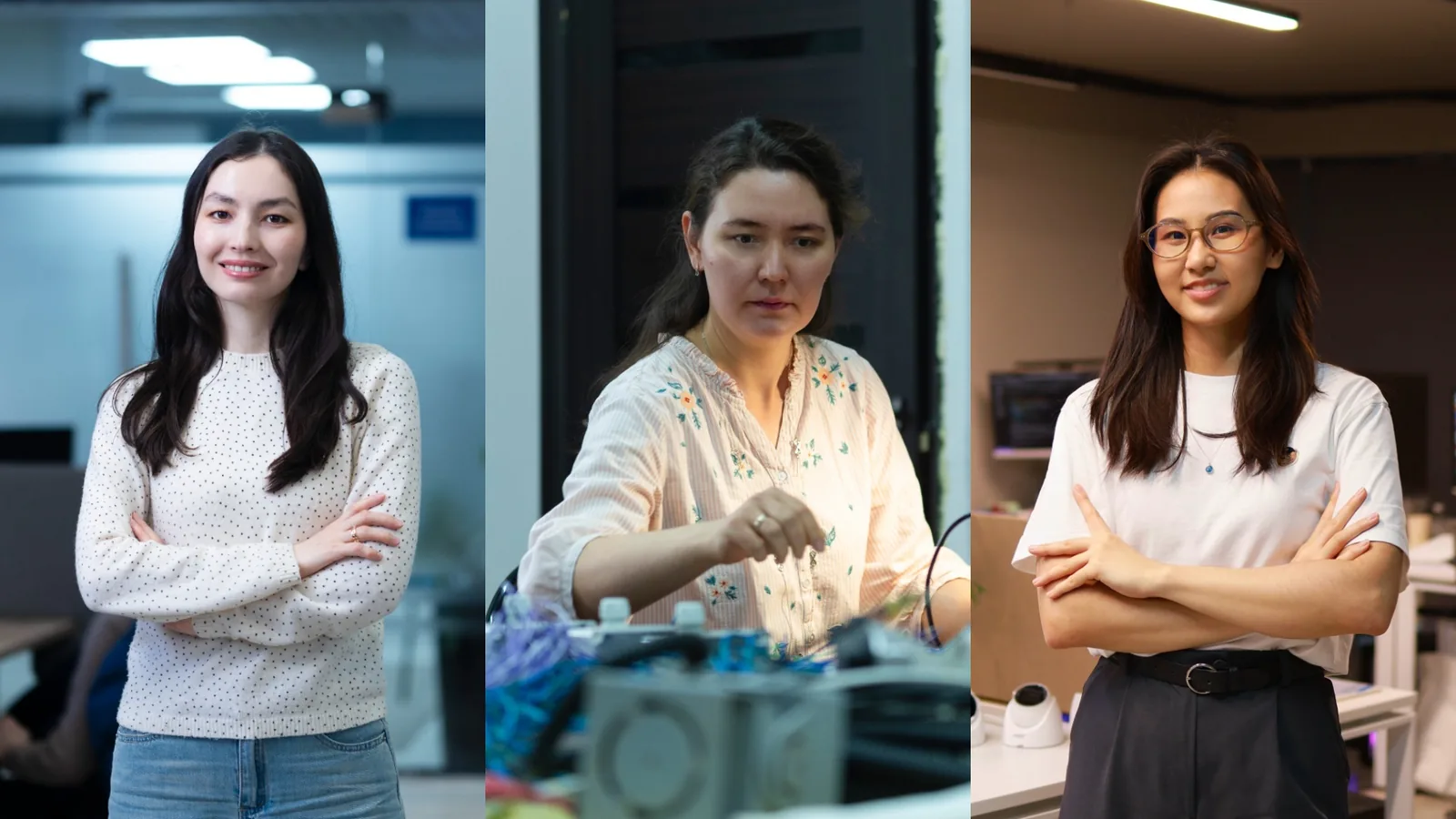
Azharqyn Izbasarova, city — Astana, Lead CV Engineer
About Me
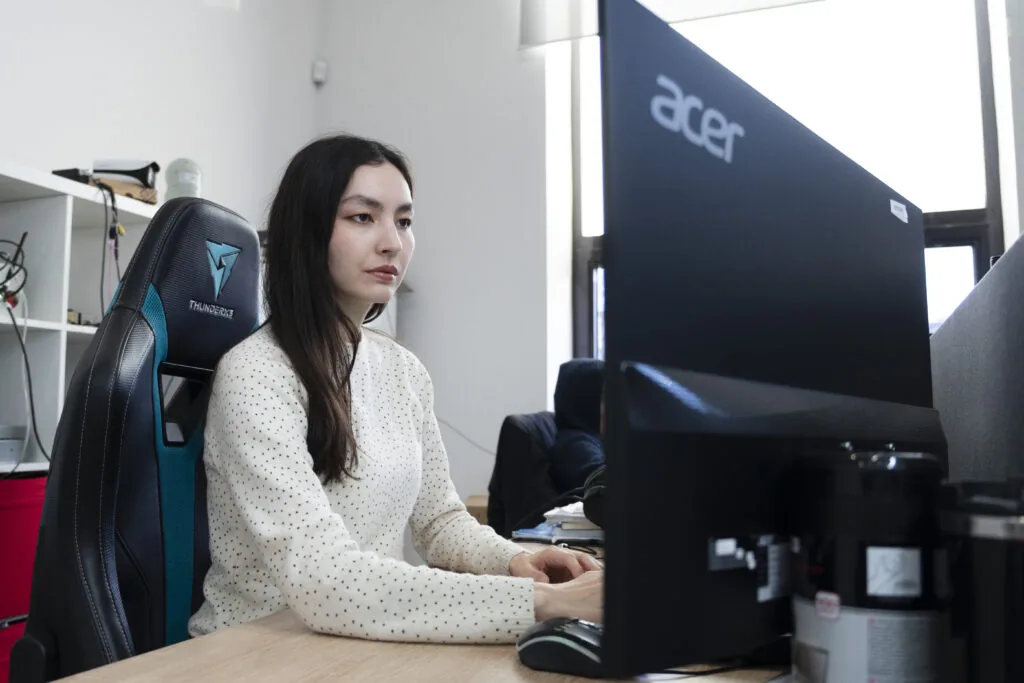
I am a Lead Computer Vision Engineer and Team Lead for the Sergek Patrol team. I handle CV tasks, write code, train models, assign tasks to developers, and plan the team's work.
How I Entered the IT Field
After university, I joined Sergek Group as a Junior CV Engineer. In the beginning, the team was small, so I performed various tasks: not only those related to CV, but also coding, dataset preparation, camera setup, testing, and participating in calls with other teams. Over time, I grew professionally, and after three years, I was offered the role of Team Lead. Currently, my department includes three software engineers, one CV engineer, a technical support specialist, and a systems analyst.
At university, I studied Electrical and Electronic Engineering and earned both a bachelor's and a master's degree. After my bachelor's, I tried project management, but it didn't suit me. During my master's studies, I set a goal to become a developer: working with hardware, coding, and experiments led me to the profession of a CV engineer.
On Stereotypes
Stereotypes were encountered at the initial stage: there is a belief that women are worse at working with electronics or code. However, I did not encounter overt bias.
One incident occurred during an interview for a managerial position: I was told that I could stay at work late, "because I am not married." This showed that some employers pay attention to a woman's marital status.
Obstacles for Women in IT
Women face obstacles such as maternity leave: during this time, there is a break, and since IT develops rapidly, there is a risk of falling behind colleagues. After marriage, household responsibilities arise, making it harder to stay late at work, which can slow down career growth. Often, men advance faster precisely because they can spend more time at work.
I took a maternity leave for one and a half years. Before returning, I spent a month refreshing my skills with programs and code to get back into the work rhythm faster. This helped me overcome the difficulties associated with a career break.
On the Company's Role in Supporting Women
Company culture is important for supporting women. Flexible schedules and the ability to take a day off help balance work and childcare, especially when a child is sick. The absence of overtime and weekend calls also makes it easier to balance work and home life.
Career support plays a role: when a woman's successes are recognized and promotions are offered regardless of gender, it is motivating. Equal working conditions and salaries compared to men also significantly help.
Recommendations for Those Just Starting Their Path
Don't be afraid to try new things. If after six months you realize it's not for you, feel free to change direction. IT is diverse; it is important to try different areas to find what truly inspires you. When you find your niche, work will bring joy and energy for projects.
Aliya Almyrzayeva, city — Almaty, CV Engineer
About Me
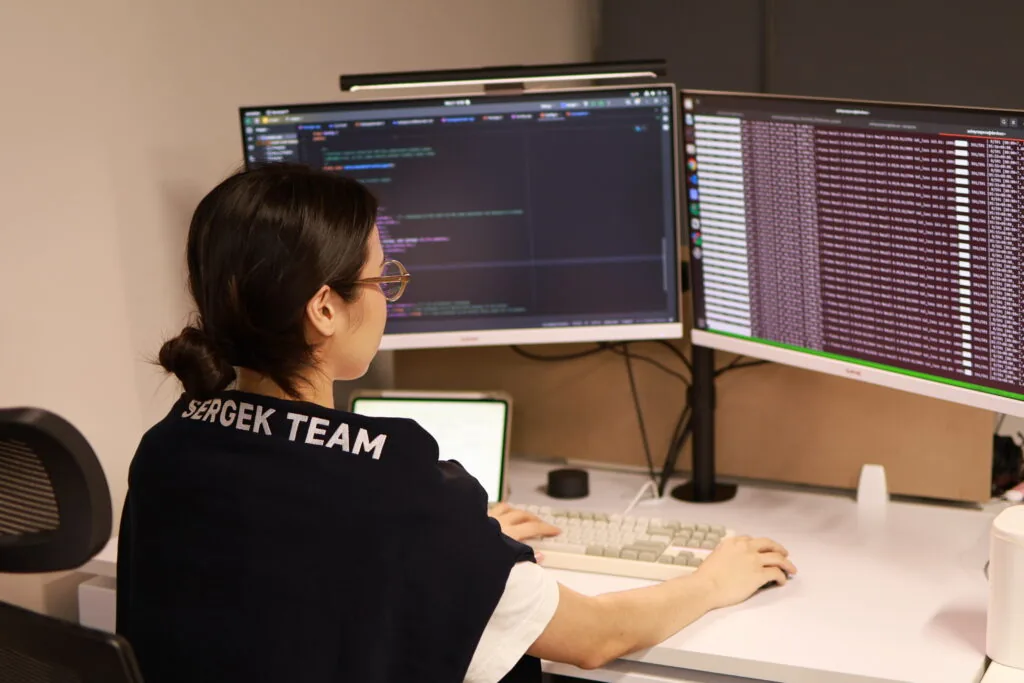
I am a middle engineer in the field of computer vision. I work in the sphere of artificial intelligence and computer vision, developing solutions to improve safety on roads and in cities, as well as automating complex processes.
How I Entered the IT Field
My path unfolded naturally: I was born into a family of engineers and continued in a technical direction, enrolling in Bauman Moscow State Technical University in "Applied Mathematics." Later, I began scientific research work at a Moscow startup in the Internet of Things sector, where I first encountered tasks combining academic theory, experiments, and real engineering practice. This experience taught me to deeply understand technologies and apply knowledge in real projects.
On Stereotypes
Sometimes people are surprised to see a woman in a technical role. But more often, this is not a manifestation of negative attitude, but simply a stereotype or bewilderment that quickly disappears when it becomes clear: you are a professional, you can be entrusted with complex tasks, and you will deliver results.
Obstacles for Women in IT
Most barriers are based on a combination of several factors. First, we still live in a society where patriarchal attitudes persist, and women often have to additionally prove their competence—especially in technical teams where men have historically dominated.
Second, there is a persistent bias: the expectation that women are "less interested" in technology or that they find it "harder to cope" with engineering tasks. These stereotypes can affect trust, responsibility, role distribution, and the pace of career growth.
The third factor is the need for a constant balance between high professional workload and personal life. Women are still often expected to bear the majority of household and family responsibilities, which complicates work in fields requiring concentration, long task cycles, and continuous learning.
On the Company's Role in Supporting Women
Corporate culture plays an important role. In companies where processes are opaque, where decisions are made "through connections" or based on subjective expectations, it is indeed harder for women to shine. Where expertise, transparency, and results are valued, barriers become significantly fewer.
Recommendations for Those Just Starting Their Path
- Choose the direction that truly excites and ignites your passion, the one that makes your eyes light up. It is this that gives you the energy to learn, develop, and not stop.
- Don't be afraid of complex tasks. It is through confronting challenges that you become an expert. By facing difficulties, you gradually gain confidence and depth of knowledge in your chosen field.
- Create a network of professional contacts, for example on LinkedIn. This really helps with development, receiving advice, and exchanging experience. Don't be afraid to ask, don't be shy to ask for help. Don't wait for the perfect moment to start—learning never ends, and a career is built step by step through actions.
Also, it is important to support each other, especially in the IT environment. We, women, are still few in number, so it is so valuable when we share experience and help each other. Girls power!
Dinara Kamalova, city — Astana, Engineer
About Me
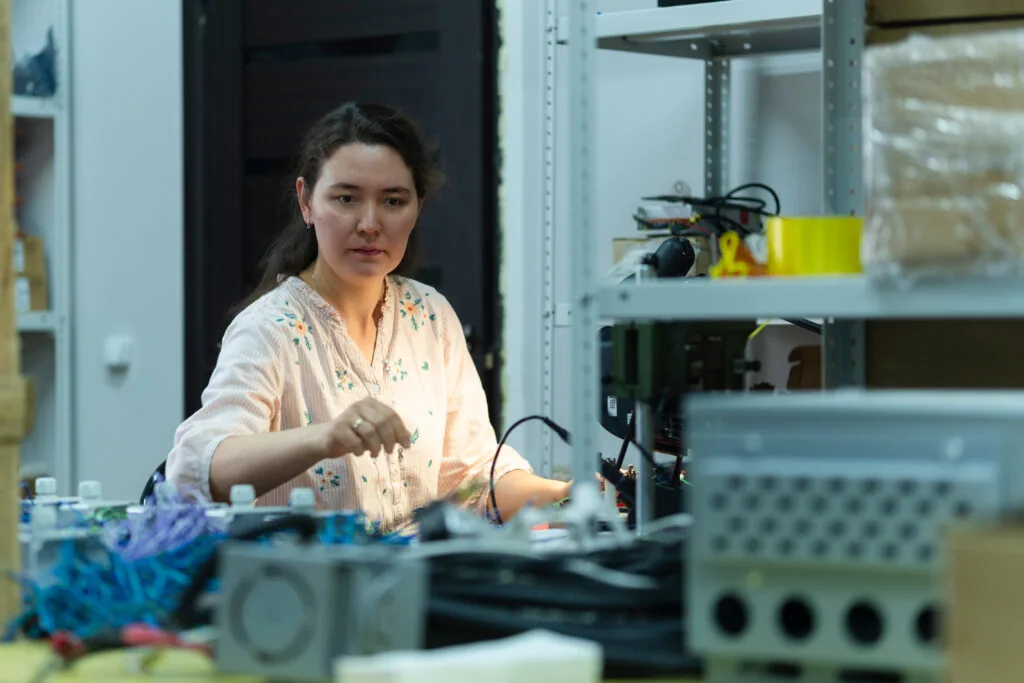
I work as an engineer in the Sergek company department. My work involves developing technical processes for assembling devices and cabinets; sometimes I draw functional diagrams, assemble and test devices, design printed circuit boards (PCBs), and do some 3D modeling.
How I Entered the IT Field
I graduated with a bachelor's and a master's degree from Tomsk State University of Control Systems and Radioelectronics, majoring in "Electronics and Nanoelectronics," with a specialization in "Industrial Electronics and Microprocessor Technology."
After receiving my diploma, I sent my resume to Sergek Group and received an interview invitation. I prepared: I reviewed Ohm's and Kirchhoff's laws, consulted with friends and a younger female classmate. During the interview, my future boss asked about my studies, design experience, and interests, and told me about the company's work and projects—this inspired me, and I said I wanted to try everything.
After the interview, I sent my diploma works and received a test task—to write a program for calculating battery capacity in MatLab.
During the first month of my probation period, I performed small tasks: selecting components, redrawing schematics, and designing boards. Gradually, I got the opportunity to lead my own project from scratch: creating a test stand for checking Specto A devices—from schematics and component selection to assembly, programming, and testing. Currently, about a thousand devices have been checked through my test stand.
Later, I participated in other projects involving board creation, cabinet assembly, writing technical processes, and also worked on the Sergek-Patrol project, dealing with the layout of electronic units, selecting mounts, and connectors.
For me, IT became a natural continuation of studying electronics: at university, I studied circuit design, and at Sergek Group, I was able to apply my knowledge in practice—by assembling and testing devices, designing boards, and participating in engineering projects.
On Stereotypes
Sometimes there is a stereotype that girls choose IT "to find a husband" and do not work in their field. From my experience, this is not the case: many work in their specialty or in IT, and some continue their education and develop further.
During my studies, there were few of us girls—two in my group, one in the parallel course, and three to four in the younger year. Even then, it was noticeable that women were less common. Sometimes, from older men, there was a slight sense of distrust or ignoring, but nothing sharp. Now, in our department, I am the only girl, and this adds interesting experience in interacting with colleagues.
In my experience, the main issues were moments of being underestimated. At university, I was treated more gently than the guys: even with the same questions, explanations were calm, whereas my male classmates might have received a sharp reaction.
At work, I more often encounter not obstacles, but care from men—so that I don't carry heavy things, like cabinets or batteries. I perceive this as ordinary human support, not as an attempt to limit me.
On the Company's Role in Supporting Women
Corporate culture plays a big role in creating a comfortable and interesting atmosphere at work. At Sergek Group, professional qualities and the desire to learn are valued, regardless of gender. It is pleasant that colleagues and management listen, help, and give the opportunity to try something new—this makes work exciting.
Recommendations
Don't be afraid of new things and boldly ask questions. Even simple tasks provide experience and help you understand how everything works faster. Observing colleagues, learning through practice, and not being afraid of mistakes is the most reliable way to develop.
The Tech on Telegram Follow The Tech on Telegram
Keep up with the latest technology and startup news.
Related reading







More from this author

News
zypl.ai begins operations in Japan and focuses on next-generation risk models
Mansur Ismagulov

News
Elon Musk's net worth has exceeded $700 billion for the first time
Mansur Ismagulov

Article Interviews
"Central Asian countries should build a joint ecosystem," — Bekhzod Ismoilov on the development of AI in the region
Mansur Ismagulov

Article Interviews
Bloom's Taxonomy and Engineering Levels: A Practical Growth Model
Mansur Ismagulov

Article Useful
How the IT industry in Azerbaijan developed in 2025: key events
Mansur Ismagulov

News
Tajikistan has become a new member of the regional innovation alliance Central Asian Innovation Hubs.
Mansur Ismagulov