WomenInTech. How successful young women from Bishkek are breaking stereotypes and building careers in IT
In another episode of WomenInTech, heroines from Kyrgyzstan shared their journey in the world of technology and offered their perspectives on the obstacles women face in the industry.
Author - Mansur Ismagulov

The Tech AI
Get the key points in seconds - a short summary from The Tech AI.
Vera Mengel (Bishkek, middle frontend developer at GP "Kyzmat") and Tatyana Kim (Bishkek, project manager at NUR Telecom LLC) share their experiences of transitioning into IT. Mengel started with a JavaRush course, overcoming burnout and a lack of practical knowledge, and worked on projects for the "Great Heritage of Nomads" holding and the Kumtor camp. Kim entered the profession through Java Backend courses, becoming a PM after an internship; over two years, she implemented the InWork, TenderSmart, and RedPay projects. Both women emphasize the importance of perseverance, team support, and combining theory with practice, rejecting the stereotype that programming is exclusively a male domain.
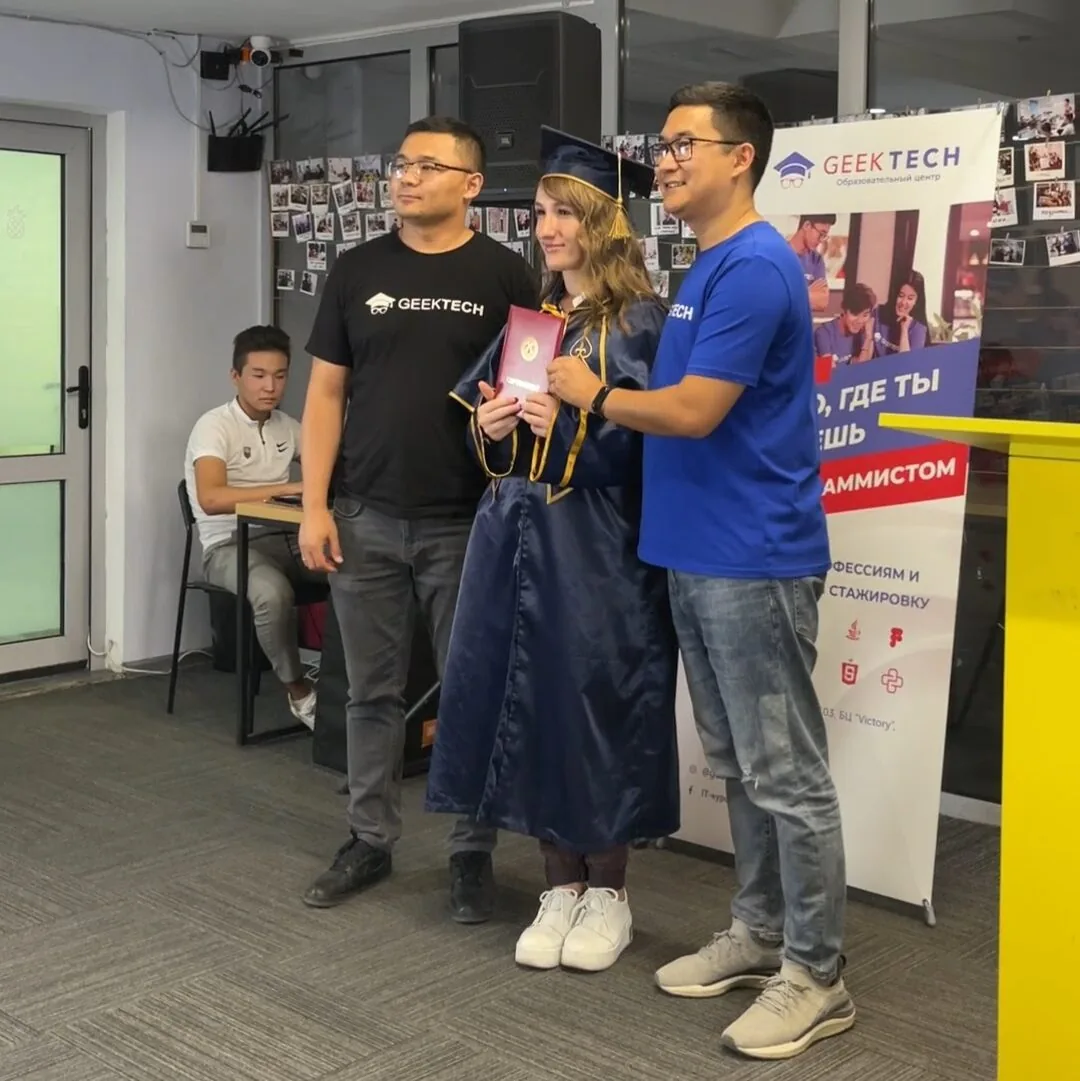
Vera Mengel, city — Bishkek, middle frontend developer, LinkedIn
About me
Currently, I work as a frontend developer at GP "Kyzmat". My main activities are related to the development and maintenance of projects on Vue and Angular. I participate in both supporting existing solutions and creating new products, striving not only for technical quality but also for user convenience.
How I came to the IT profession
Initially, I planned to build a career in mathematics and physics. But the university I intended to enter did not have such a major. Before the final exams, I met the JavaRush website — that’s when I truly fell in love with coding. This inspiration shaped my choice: I decided to go into IT, keeping an inclination towards mathematics and logic, which have always been close to me.

{"sha1":"3be2e15ee09f63fb5627467dec53be79e9736b9d","ext":"jpg"}
One of the main challenges was the lack of modern practical knowledge at the university. During my first internship at an IT company, I realized how much real-world skill I was missing: I had to literally stay up all night learning new things to meet requirements. That’s also when I first encountered professional burnout. Later, after a short break, I restored my motivation through programming courses and active mentoring.
My career developed through perseverance and continuous self-education. After the courses, I became a mentor, conducted masterclasses on Java, which helped me better understand learning processes and communication. Later, I passed an interview at the "Kumtor" company, where my path as a professional programmer began. There, I grew into a frontend developer, actively mastering new technologies and applying them in real projects that helped companies solve important business tasks.
I am particularly proud of projects like the website for the "Great Heritage of Nomads" holding, the booking system for the "Kumtor" camp, and the "Adal" certificate issuance system. These projects allowed me not only to deepen my technical skills but also to see the real impact of my work on business development and user convenience.
The most important skills for me were adaptation and self-realization. The ability to quickly integrate into new processes and independently find solutions helped me work effectively in different teams and projects. Communication skills also played a significant role: in IT, it’s important not only to write code but also to be able to negotiate, discuss solutions, and understand the needs of the team and clients.
About stereotypes
Luckily, fate spared me from stereotypes. Along my path, I met people who, on the contrary, supported my choice of profession and inspired me not to stop. Such support played a big role in my professional growth.
Recommendations for those just starting their journey
Don’t give up. If you feel that IT is for you, go all the way. Women have always been in this field, and their numbers are growing every year. Don’t pay attention to stereotypes that programming is a “male profession.” Success is determined only by your perseverance, knowledge, and desire to develop.
I would recommend combining theoretical learning with practice. Online platforms, internships, participation in real projects and professional communities — all this helps not only to gain knowledge but also to find like-minded people. It is at the intersection of theory and real tasks that true growth begins.
It is important to show success stories — women’s participation in IT conferences, publishing their stories and achievements. When girls see real opportunities, they get inspired to move forward. It is also necessary to develop communities where you can exchange experience, support each other, and grow together.
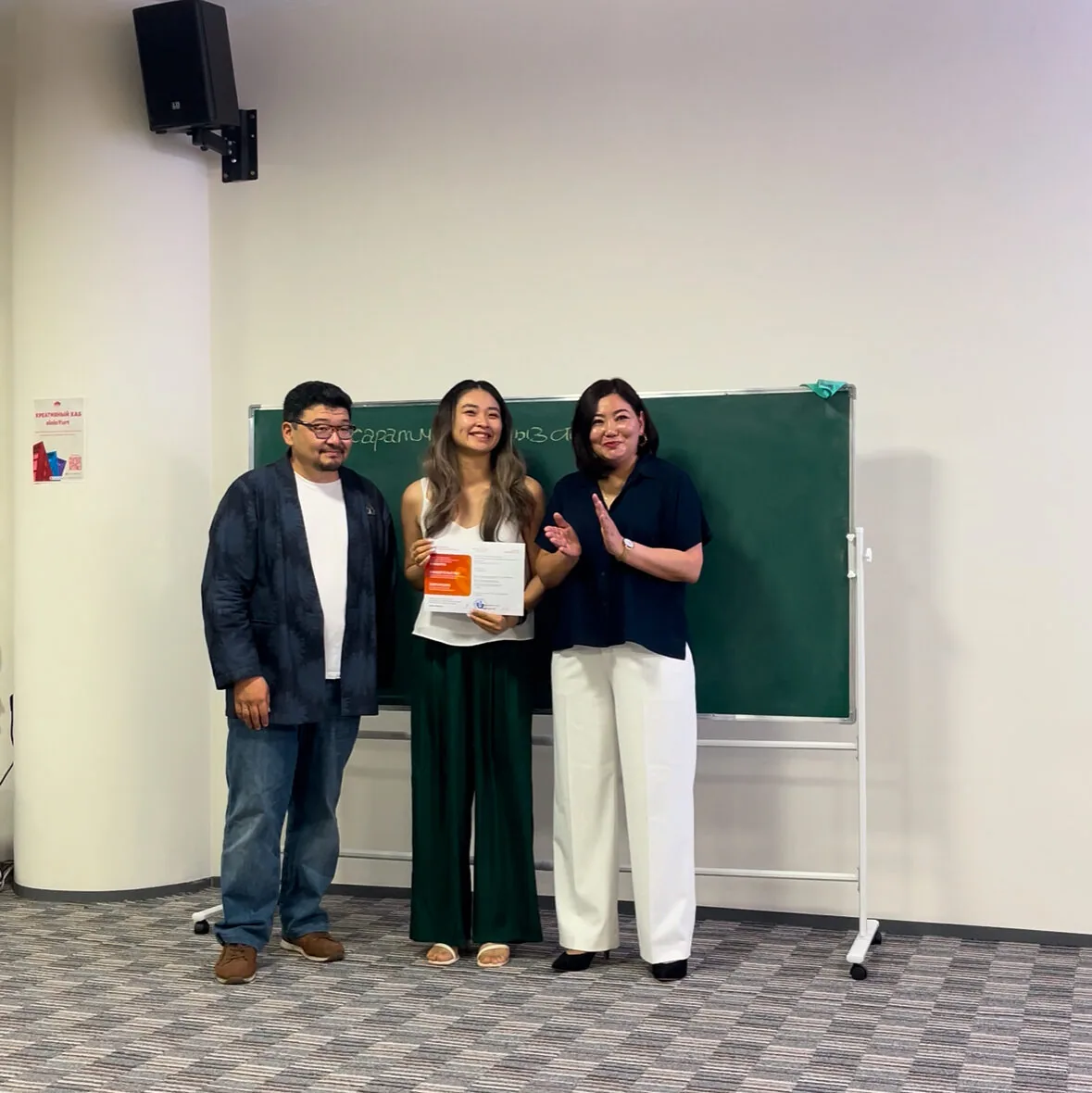
Tatiana Kim, city — Bishkek, project manager

About me
Currently, I work as a project manager at LLC "NUR Telecom". Many think that a PM is just someone who walks back and forth and passes information. Partly — this is true, but there is work that remains behind the scenes. JIRA, Notion, Trello, Figma, Confluence, and nerves — this is my standard work set.
The key task of a project manager is to turn an idea into a clear, understandable, and executable task. It is the PM who interacts with developers, understands what information they need to pass and in what format. Not everything the business wants can be implemented quickly — and sometimes it is simply impossible. In such cases, it is important that there is a person who can explain this to both sides — in their language and without distortion.
The main skills for a project manager are communication, task analysis, the ability to see the big picture, and finding an individual approach to everyone. Because you constantly interact with different people. And it is important to be able to speak their “language” so that everyone understands each other.
I developed soft and hard skills already in practice, through mentoring and constant feedback from the team. The main thing is not to be afraid of mistakes, calmly accept constructive criticism, and analyze the process: what went wrong, where it can be improved, what needs to be strengthened.
How I came to the IT profession
I have been in IT for only two years. My story began with Java Backend courses, but I never became a developer. The courses lasted four months, and at that time I had already been on maternity leave for three years. Then I seriously wondered: “What do I really want?”
I always liked mathematical and logical tasks, and everyone around me was talking about programming. Honestly, I was scared: “This is only for men,” “I don’t have that much time,” “It’s too hard,” “You’re not patient enough, it’s probably not for you.” But I decided to try.
After finishing the courses, it turned out that there are many graduates, but finding an internship is not easy. One of the companies offered me to try myself as a project manager. Then I thought: I’ll start with PM, and then — gradually move into development. A naive thought, but it was from there that my path began. At this moment, I know for sure: it was the right decision. Working with people is my element, and I can’t imagine myself without it. And programming courses helped me integrate into the new role faster and understand developers in one language.
The experience of working in startups and corporations is different: in startups, decisions are made lightning fast, tasks appear on the principle of “deadline was yesterday,” and you find yourself in a whirlpool of ideas, meetings, reports, and plans. Here you learn to adapt on the fly and improve hard skills in combat conditions. This is a great school, but there is also the other side — burnout. Therefore, the ability to rest here is not just desirable, but vital.
A corporation is a different rhythm. More processes, bureaucracy, but also more time for immersion, self-development, and analysis. Work becomes calmer. However, if you are used to a fast pace, then at first even such silence can be anxiety-inducing.
Over these two years, I would highlight five major projects:
- InWork — a service for tracking working hours.
- TenderSmart — a platform where all tenders in Kyrgyzstan were collected.
- TvoiZaryad — a domestic power bank rental service.
- RedPay — a mobile application for a large gas station.
- “My O!” — this is a service of the O! mobile operator.
About stereotypes
I haven’t heard any pronounced stereotypes directed at me. I was lucky with teams: everyone I worked with was understanding and supportive. I think it also depends on the specialty.
Of course, the background noise still sounds: “Programming is for men.” I look at my team and see how girls cope perfectly in both technical roles and management. So everything is possible, the main thing is desire and belief in yourself.
Obstacles for women in IT
The first difficulty was that I couldn’t go to the office — my son was still with me. But my family saw my enthusiasm and sincere desire to work, and supported me. When my son went to kindergarten, I finally could start my path. Relatives are still nearby, supporting and helping — for this I am immensely grateful to them.
The second is the consequences of a long maternity leave. Due to the lack of constant communication, it was difficult for me to formulate thoughts, build sentences. Sometimes even simple communication seemed something tense, and “Blue Tractor” played in my head.
The third difficulty came already during work, when responsibilities began to increase. A lot of new things, all at once, constantly need to dig in. But it was so interesting that I understood — it was worth it. Time, energy, effort — I was ready to invest.
And probably the most important thing — insecurity, fatigue, and the first signs of burnout. The team helped me with this. I am incredibly grateful to the guys for support, understanding, and for always being nearby when I just needed to breathe out and gather myself again.
Recommendations for those just starting their journey
Understanding the technical side in IT doesn’t necessarily have to be deep, but basic knowledge greatly facilitates work. For example, I brush up on my technical base on metanit.com — everything there is clear and accessible. When something is unclear or just interesting, I’m not shy to ask developers. I improve my project and product management skills using ChatGPT — it’s an excellent tool that helps structure information, offers approaches, examples, and even gives advice in difficult situations.
Don’t get bogged down in theory. Learn by practice — it’s the best way. Did it, got feedback, improved. IT is for those who dared to try despite fear and stereotypes.
I myself have never encountered IT. At most — OIVT lessons at school. And now I am a project manager. I found myself. Yes, it’s sometimes difficult, there are setbacks, tears, misunderstandings. But there are also victories, confidence, a team, projects, and you.
If you want to grow in IT, there is a simple way: open vacancies for a level higher — if you are a junior, look at what is required from a middle. Thus, you will understand what skills you lack and what you should learn.
My advice to those just starting their journey in IT: if you really like what you do, don’t stop. And remember: everything that doesn’t kill you adds a line to your resume.
The Tech on Telegram Follow The Tech on Telegram
Keep up with the latest technology and startup news.
Related reading







More from this author

News
zypl.ai begins operations in Japan and focuses on next-generation risk models
Mansur Ismagulov

News
Elon Musk's net worth has exceeded $700 billion for the first time
Mansur Ismagulov

Article Interviews
"Central Asian countries should build a joint ecosystem," — Bekhzod Ismoilov on the development of AI in the region
Mansur Ismagulov

Article Interviews
Bloom's Taxonomy and Engineering Levels: A Practical Growth Model
Mansur Ismagulov

Article Useful
How the IT industry in Azerbaijan developed in 2025: key events
Mansur Ismagulov

News
Tajikistan has become a new member of the regional innovation alliance Central Asian Innovation Hubs.
Mansur Ismagulov