WomenInTech. How female professionals are digitizing banks and industrial enterprises
Author - Mansur Ismagulov

The Tech AI
Get the key points in seconds - a short summary from The Tech AI.
Aigerim Kilybaeva (COO of the Almaty IT Community) and Laura Salamat (Enterprise Architect at NNEF) shared their experiences. Kilybaeva highlights barriers such as imposter syndrome, pay inequality, and work-life balance with family. Salamat points to changing stereotypes within the industry. Both recommend believing in oneself, developing skills, participating in projects, and not being afraid to change career paths to achieve professional success.
Women working in the IT field shared career development advice for those just starting their journey.
Aigerim Kilybayeva, city — Almaty, COO of the “Almaty IT community” community, @aigerim.kilybayeva
About herself
I am a mother of two wonderful children, Executive Director of the Almaty IT Community, and an expert at “Bank CenterCredit”.
I started my career in direct sales at a bank. This field provides valuable life lessons in a short period. Thus, I learned that whoever finds the “path to the customer’s heart” will control the market.
During my time working in five banks, I climbed every rung of the career ladder: from field manager to expert at the head office. In between, I managed to dedicate attention to developing my own online furniture store.

How I entered the IT profession
In 2021, I was the head of the credit department. At that time, I was struck by the cosmic growth in the share of credit product sales through online channels. I immersed myself in the logic of digital products, took courses in analytics, digital products, and management. Now, this knowledge helps me implement projects on the bank’s digital platform.
About stereotypes
On my career path, leadership positions were often given to representatives of the opposite sex. There were cases where a colleague with the same responsibilities, background, and expertise was paid more, negotiating this behind the scenes, “like brothers.”
Obstacles for women in IT
The first obstacle I faced was “imposter syndrome.” It prevents you from speaking up, makes you doubt your own knowledge and skills. It seems that you need to “level up” a little more, and so on infinitely, until your supervisor notices your potential. Taking various trainings and courses gives me confidence.
The second is the responsibilities of caring for children and household chores. This does not allow allocating more time for development and thematic events. In such moments, I try to participate in online formats, which does not provide the same amount of knowledge, skills, and networking that I could gain offline. At the same time, spending all your energy carries the risk of burnout. A woman has to constantly balance on the edge.
From my observations, women are underestimated. When thinking about future leaders and successors, emphasis is placed on men. Often due to the stereotype of excessive female emotionality. However, according to company research, those with women on their boards achieve greater success in the market.
Through my actions and cases, I believe I am changing people’s mindset, thanks to which we will someday achieve equality between women and men.
Recommendations for those just starting their journey
The key advice is to believe in yourself and your own strength, to highly value your skills and abilities. Work on self-esteem and “imposter syndrome.” Convince yourself that everyone around is just like you, and you are no worse, and in some ways even better.
In terms of family, share responsibilities with your spouse. Ask relatives to spend time with the children.
Development is an endless process. Attend events, meet people, participate in projects, and improve professionally.
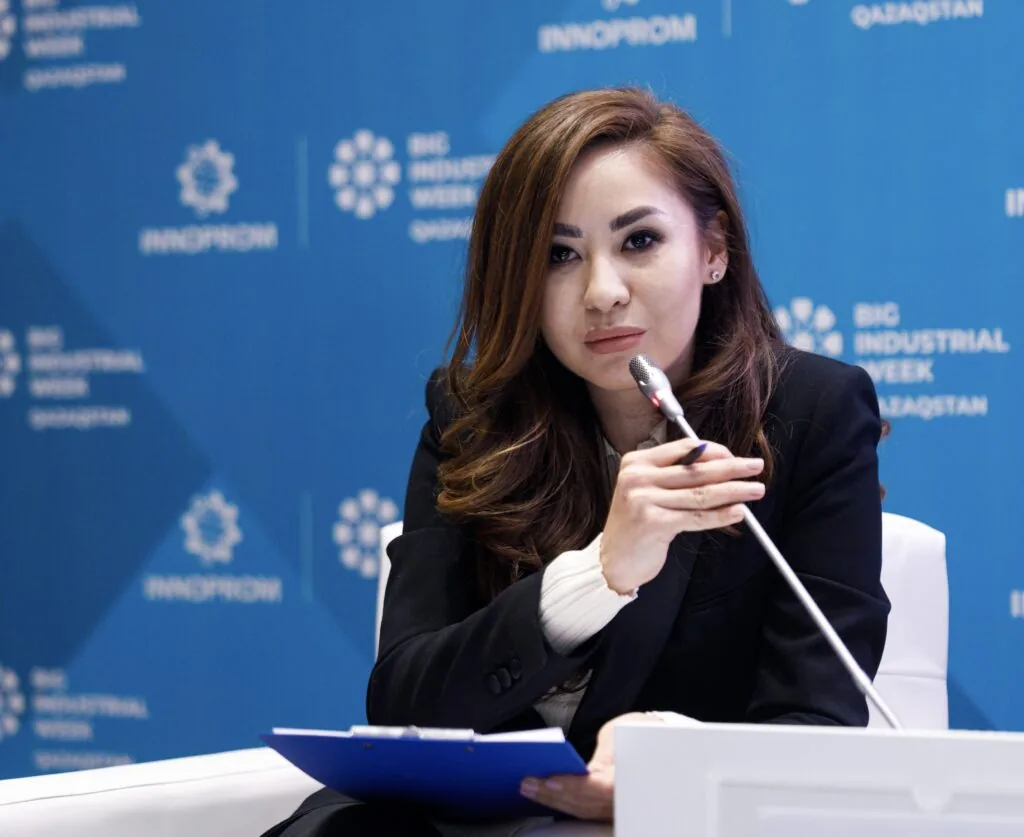
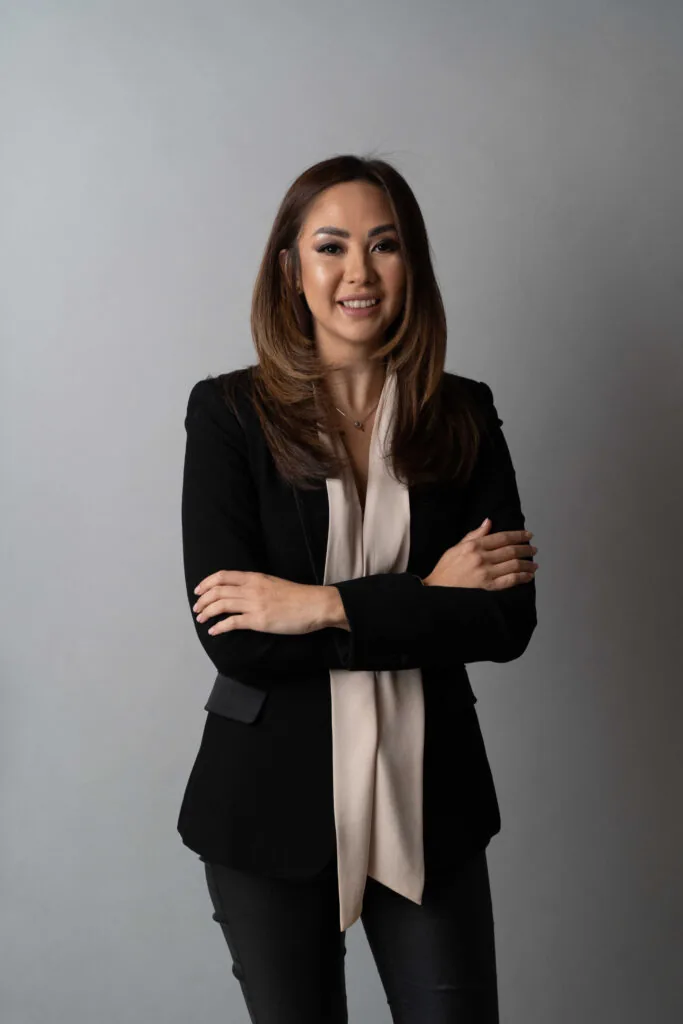
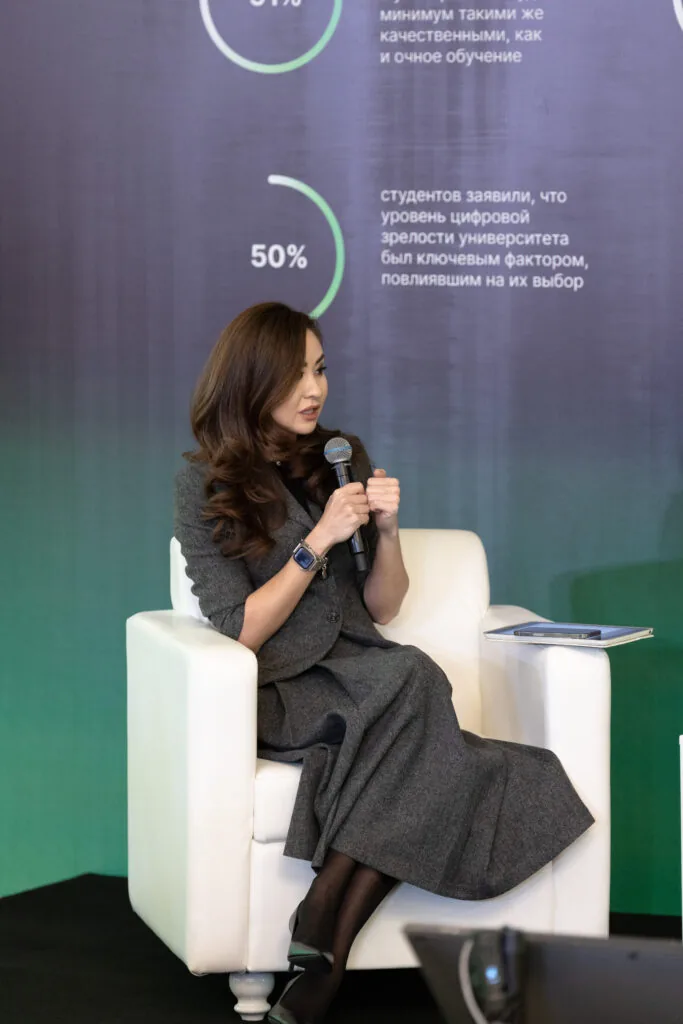
Laura Salamat, city — Astana/Almaty, Enterprise Architect, expert in EdTech and Industry 4.0., CDTO at NNEF, @lsalamat
About herself
I am the head of the digital transformation program at the public educational foundation NNEF. Our digital ecosystem is engaged in training personnel for nurseries, kindergartens, schools, and universities.
I am also a certified IT architect. I have been working in the industrial sector for over seven years. I also have expertise in the digital transformation of industrial enterprises and methodology for assessing the maturity of such enterprises.
In 2017, I worked with MIT on translating Scratch into Kazakh. It was important for us that children with Kazakh as the language of instruction could also learn to program.
How I entered the IT profession
I entered the IT field after graduating from KazGUU. Later, I received specialized education at the International University of Information Technologies.
I started my career at Zerde. At that time, it was the only state holding company engaged in developing the industry in Kazakhstan. After six months of internship, I was offered a permanent position. And five years later, I became the Director of the Department for the Development of Digital Skills.
In 2017, we launched an initiative to teach children IT skills. We developed a programming program for children starting from the second grade. Although the ICT subject was introduced in Kazakhstan from the first grade, we wanted to show that a computer is not a toy, but a tool on which you can create animations, games, and so on. The experimental program was implemented in School No. 27 in Astana, and then rolled out.
In 2020, I headed the Center for Industrial Digital Transformation. We created a methodology in the industry from scratch. At the same time, I am engaged in the transformation of industry.
About stereotypes
At the recent Digital Almaty 2024, one of the speakers — Dinara Shukizhanova, head of two factories — said that professionalism does not depend on gender and age. It seems to me that such a stereotype existed 10 years ago. Especially it was strong in industry, which was considered a male sector.
Now there are more women in industry. If you are a professional with expertise, no one looks at your gender. On my path, I often meet female leaders in their fields who are making history.
Obstacles for women in IT
Everyone is amazed by Eastern female leaders who show results in their careers and succeed in their family lives. I did not have difficulties with this. I met many good mentors who taught me. Thanks to them, I became who I am now and lead several directions.
The only thing is that there is not always enough time, because you want to achieve and do even more.
In 2016, we organized trips to the regions together with the company Love2Code. We conducted educational events for schoolchildren, introducing them to IT specialties. At that time, few people realized how many directions exist for girls in IT. Children had a stereotype: IT specialists are boys in glasses who do not talk, sit at computers, and program. After our talks, many girls became interested in the field.
Recommendations for those just starting their journey
First of all, you need to choose your path. It is nothing terrible if you make a mistake in your first choice. Do not be afraid to change direction — whether at 20 or at 30. The most important thing is that your activity brings joy, success, and pleasure.
The Tech on Telegram Follow The Tech on Telegram
Keep up with the latest technology and startup news.
Related reading







More from this author

News
zypl.ai begins operations in Japan and focuses on next-generation risk models
Mansur Ismagulov

News
Elon Musk's net worth has exceeded $700 billion for the first time
Mansur Ismagulov

Article Interviews
"Central Asian countries should build a joint ecosystem," — Bekhzod Ismoilov on the development of AI in the region
Mansur Ismagulov

Article Interviews
Bloom's Taxonomy and Engineering Levels: A Practical Growth Model
Mansur Ismagulov

Article Useful
How the IT industry in Azerbaijan developed in 2025: key events
Mansur Ismagulov

News
Tajikistan has become a new member of the regional innovation alliance Central Asian Innovation Hubs.
Mansur Ismagulov