"Personal qualities helped more than education in getting a job," — Alexander Baitev on the beginning of his career in IT
Alexander Baitev detailed the difficulties and rejections he encountered while searching for his first job in IT.
Author - Mansur Ismagulov
The Tech AI
Get the key points in seconds - a short summary from The Tech AI.
Alexander Baitev, a territorial manager at BAKOTECH from Almaty, began his IT career in 2011 after working as a courier and in the oil industry. He points out the gap between employers' expectations and graduates' experience, as well as criticizing prolonged interviews. Baitev recommends developing hard and soft skills, knowledge of English, and flexibility for successful employment.
Alexander Baitov, city — Almaty, Territory Manager BAKOTECH, Linkedin , Instagram, Telegram
About Me
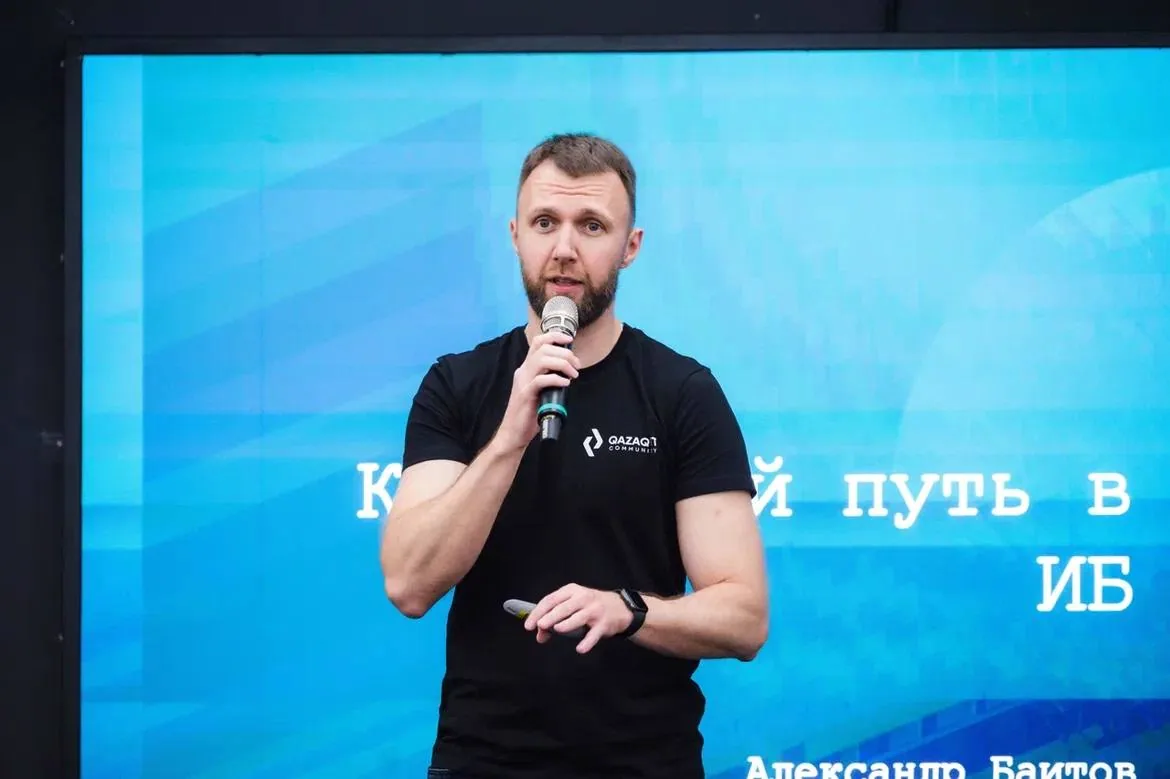
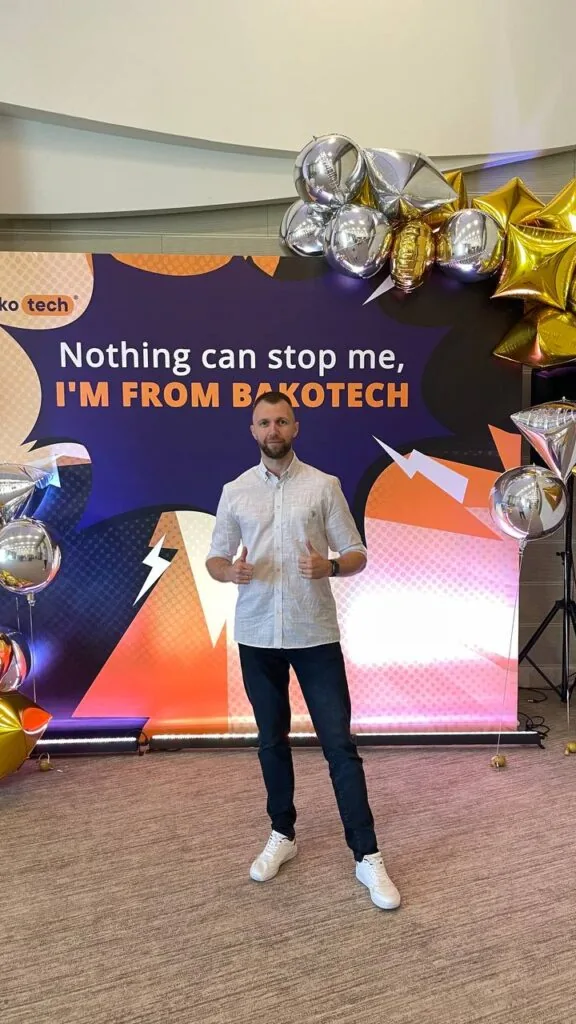
I am a territory manager at the distribution company BAKOTECH. This is an international distributor of information security technology. By education, I am an economist-manager. While in school or university, my attitude toward IT was always superficial. I never had a deep understanding or desire to work specifically in this field.
My journey into IT began in 2011 through technology sales. My path to IT was diverse: I worked as a courier for DHL, and then I worked in the oil industry. When I transitioned into the IT sector in 2011, I became interested in hardware, including servers and computers. Gradually, I immersed myself in working with software and SATA technologies.
About My First IT Job
I found my first job through acquaintances. Honestly, I didn't think much about choosing a specific field. I was simply tired of working in the oil industry and wanted to work in my own city. When I started looking for a job, my resume accidentally ended up at a small IT integrator in the city of Aktobe. They needed people for their sales department, and they offered me a chance to try. I thought, why not, and so my journey in IT began with the position of a computer hardware sales manager.

Personal qualities helped me get hired more than my education. Because at university, I acquired basic skills that do not always correspond to labor market requirements. There was no long interview for my first job. We discussed my responsibilities and what was expected of me. We signed a contract in just 15 minutes.
Later, while working in the field of technology integration, I gained valuable experience in sales and implementing technologies for clients. In 2022, I moved into distribution. There, the interviews were more substantive, high-quality, and targeted. That is, companies understood what kind of person they wanted to hire, what background and experience should be, and so on. They considered the skills I had acquired over years of practice in integration, such as knowledge of IT products, information security products, technology, the market, and understanding how to sell these solutions.
About Difficulties
When I started working in IT, I did not encounter any particular difficulties. Because I did not have a specific goal to work specifically in an IT company. Then my goal was simple — to find a job. But I was always looking for something interesting and new. I wanted to work in a field that could be useful for society, people, and companies in Kazakhstan.
I noticed that companies face certain difficulties when searching for specialists. They often prefer entry-level specialists, juniors who have just graduated from university. They are willing to invest resources and time in training such specialists. However, if a graduate does not have sufficient work experience, their diploma is not always valued as highly, especially in financial terms.
On the other hand, there are graduates who are willing to work for free or for a symbolic payment, just to gain experience. But sometimes companies put them through a whole series of interviews and tests before offering them a junior position. And then a dissonance arises when companies say: "We can't find adequate specialists in the market." And young people say: "We can't get in because you have multi-level interviews."
I and my friends received rejections, just like everyone else. It is strange that sometimes the employer understands that you are not a fit but does not say so directly. They postpone the answer, saying they need to think about it. This creates unnecessary tension. I have encountered companies that openly stated exactly where your weaknesses were and why they could not hire you. I always appreciate such frankness. They did not waste their time or mine.
However, this does not affect my motivation at all. I went through several interviews. If I received rejections with explanations, it helped me understand in which direction to develop. There was an inner drive to move forward. It is important to seek feedback and understand where exactly you can improve. Even if you are not hired for one position, you can consider other vacancies within the same company.
3 Tips to Help You Find a Job in IT
One of the main tips is to develop not only hard skills but also soft skills. This includes the ability to communicate effectively with colleagues, showing empathy and understanding of their problems, even if they are not in your field of expertise. It is important to learn how to talk to people. When there is mutual understanding, everything becomes much easier. Processes within the company begin to function more efficiently and quickly. Digitalization within the company will proceed faster and more correctly. Today, many companies face difficulties when they are looking for someone who knows how to work in a team. That is, if you are a great IT specialist, developer, or security expert, but you cannot work in a team, your competitiveness in the market decreases.
Another important point is knowledge of the English language. English is the language of IT, cybersecurity, and technology. You need to constantly practice and improve it. When you have knowledge of English and know how to work in a team, you are a highly competitive specialist. Your salary level may also depend on this.
The third tip is to be not only persistent and goal-oriented but also flexible. Because different situations arise in life, both within the company and outside. It is important to have an understanding and stick to your internal guidelines, but at the same time, be flexible regarding external influences and requirements. It is not necessary to absorb everything, nor is it necessary to take everything at face value.
Also, have critical thinking. Do not give up. You must always move forward, no matter how difficult it is.
The Tech on Telegram Follow The Tech on Telegram
Keep up with the latest technology and startup news.
Related reading







More from this author

News
zypl.ai begins operations in Japan and focuses on next-generation risk models
Mansur Ismagulov

News
Elon Musk's net worth has exceeded $700 billion for the first time
Mansur Ismagulov

Article Interviews
"Central Asian countries should build a joint ecosystem," — Bekhzod Ismoilov on the development of AI in the region
Mansur Ismagulov

Article Interviews
Bloom's Taxonomy and Engineering Levels: A Practical Growth Model
Mansur Ismagulov

Article Useful
How the IT industry in Azerbaijan developed in 2025: key events
Mansur Ismagulov

News
Tajikistan has become a new member of the regional innovation alliance Central Asian Innovation Hubs.
Mansur Ismagulov