TechWomen: How the program helps women develop their careers and leadership skills
TechWomen — an initiative of the U.S. Department of State aimed at enhancing professional opportunities for women in STEM. The program collaborates with leading companies in San Francisco and Chicago, offering participants mentorship and career advancement. Applications for the next cohort of the TechWomen 2025 program are now available via the link.
Author - Mansur Ismagulov
The Tech AI
Get the key points in seconds - a short summary from The Tech AI.
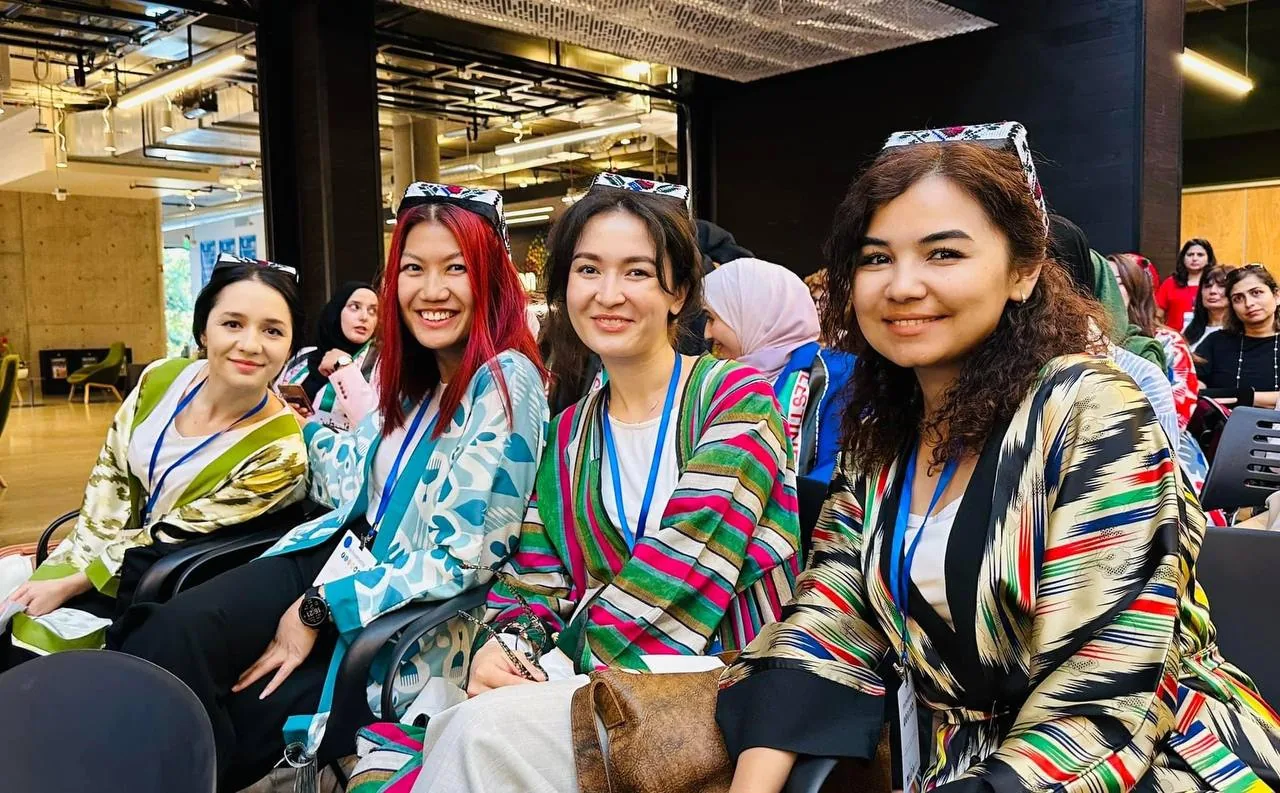
Participants in the TechWomen program from Kazakhstan, Turkmenistan, Uzbekistan, Kyrgyzstan, and Tajikistan shared their internship experiences at companies such as Google, Meta, Tesla, and others. The women implemented social projects: EcoLoop for waste recycling in Kazakhstan, a childcare website in Turkmenistan, the Bolajonim project for autism diagnosis in Uzbekistan, and a digital skills course for teenagers in Tajikistan. Recommendations include early essay preparation, developing leadership qualities, and leveraging professional mentorship experiences from companies like Salesforce and Marvell Technology.
In our article, participants shared their experiences, explained how to apply, and described what this international program has offered them. Read more below.
Shugla Sagnbekova, PR consultant for IT companies, startup tracker in incubation programs at Astana Hub, Terricon Valley, Most Business Intelligence, Kazakhstan
Gulnara Tayzhanova, eco-activist, professional mentoring company: Jacobs Engineering & San Leandro, Turkmenistan
Dilbar Umarova, Junior Data Analyst at Uzum, professional mentoring company: Marvell Technology, Uzbekistan
Kamila Akylbek, entrepreneur, professional mentoring company: SalesForce, Kyrgyzstan
Sakina Mammadshoeva, analytical chemist at the Central Asia Ecology and Environment Research Center. Professional mentoring company: Jacobs Engineering, Tajikistan
About the Program
Sakina. The TechWomen program provides women with unique opportunities for professional and personal growth. It includes internships at leading technology companies, participation in training sessions, workshops, and networking events, as well as establishing international connections with women leaders in the technology sector. The main goal of the program is to help women from developing countries, enhance their qualifications, and develop leadership skills in the technology field, enabling them to make significant contributions to innovation development and solving global challenges.
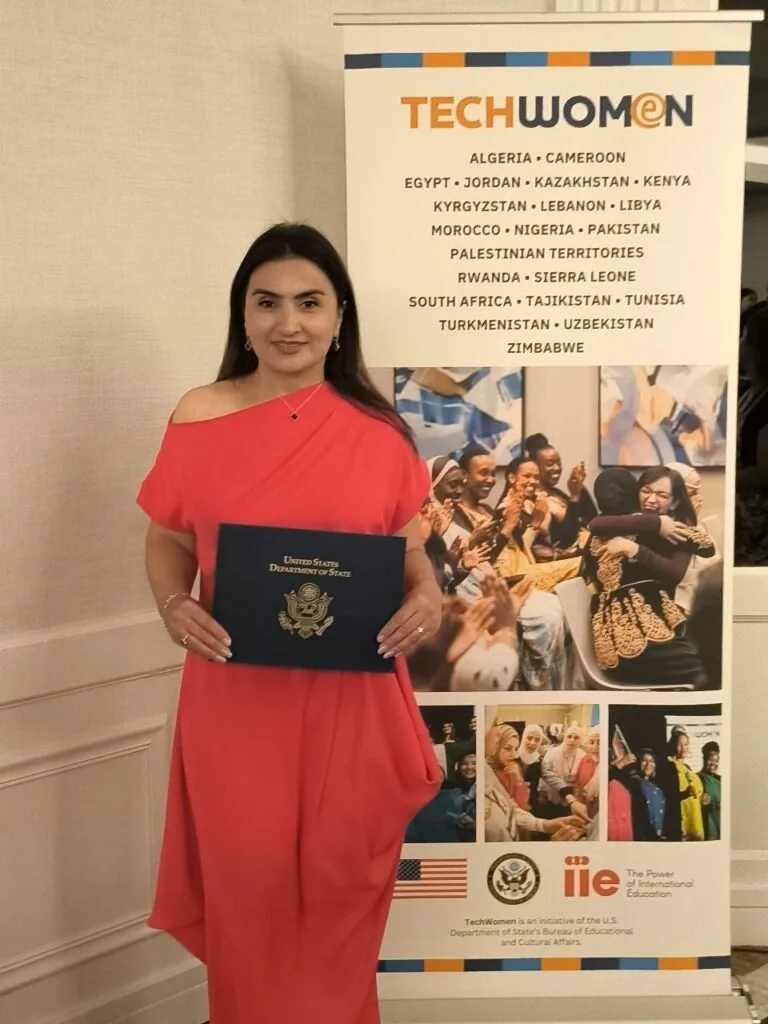
Gulnara. First, we submitted applications on the website in the format established by the organizers, after which we went through an in-person interview at the US Embassy.
Kamila. The selection process was strict: applicants were required to write detailed essays and undergo interviews with embassy representatives and program alumni. In our country, the selection might be somewhat easier because not everyone has a sufficient level of English, which automatically reduces competition. However, in many African countries, many candidates already speak the language, making the competition more intense. Some apply to the program for years.

Dilbar. The training sessions within the program were intensive and beneficial. We studied innovative approaches to project management—from idea to implementation, visited laboratories where scientific breakthroughs in IT are created, and even managed to develop our own social project. As part of the program, we also visited leading companies such as Google, Meta, LinkedIn, Tesla, Marvell Technology, Chime, Salesforce, and others, which provided a unique opportunity to see their internal processes and innovation culture. These experiences gave me a huge amount of inspiration, plenty of fresh ideas, and a couple of cool tools for my work.
About Teamwork and the Project
Kamila. Working with participants from different countries, I looked at myself and my capabilities in a new light, and the diversity of perspectives and values gave me a powerful stimulus for development.
During the program, each country had to present a project that benefits society. Our project aimed to support women in e-commerce. We sought to help women who work offline, for example, in markets, but do not know how to scale their businesses. Our goal is to teach them the basics of business and help bring their products to the international market.
Shugla. The main insight throughout the program period was that while distances separate us, shared problems unite us. The program included those who do not simply give up in the face of problems but, on the contrary, face them head-on, turning problems into tasks and solving them. This gave me hope that now we will be united by common solutions to problems.

The Kazakhstan team presented the EcoLoop project idea—the formation and dissemination of a waste recycling culture in Kazakhstan by bringing together individuals and waste recycling plants through a comprehensive mobile application. The idea was proposed by Asemgul Tuyakbaeva, co-founder and CTO of the Sagi startup.
Gulnara. Our project was aimed at reducing child mortality. In Central Asia, unfortunately, we have the highest rate, and one of the reasons is considered to be the lack of information in the Turkmen language. Our solution was the creation of a website where doctors’ articles would be published on how to properly care for children in their first years of life, how to feed them correctly, when to raise the alarm and see a doctor. It would also publish dates for necessary vaccinations and check-ups. Additionally, as part of the project, psychological assistance from volunteer specialists would be available, as well as donated used items.
Dilbar. As part of the program, we worked on the Bolajonim project, aimed at increasing parents’ awareness of autism spectrum disorders and early diagnosis of autism in children. The screening method proposed by our team will be available on Telegram and will help parents identify autism risks in their children.

Sakina. Our project was called Digital Skills for Teenagers of Rural Tajikistan. It was aimed at teaching teenagers from rural areas of Tajikistan digital skills. Within this project, I was responsible for organizing and conducting training courses, developing educational materials and methodological guidelines for trainers. My role also included teaching teenagers the basics of working with computer programs and managing digital projects, as well as participating in the organization of online courses and webinars.
Recommendations
Shugla. As Nike says—just do it! And start writing your essays early. The story goes: “What’s the big deal, an essay, I’ll just format it in ChatGPT and that’s it”—that won’t work! I say this as someone who has been earning money writing texts in English for the past four years. ChatGPT is a great editor and assistant, but it cannot replace your authenticity and experience. So start as early as possible! Submit your application even if you don’t get selected this year—you will succeed next time.
Gulnara. Definitely apply for the program and don’t doubt yourself! Information about the program is available on the embassy website in three languages, and I would recommend contacting someone from previous participants to gain insights and advice.

Sakina. Develop your technical and leadership skills. TechWomen is focused on women with experience in technology, science, or engineering who want to develop their leadership qualities and deepen their knowledge.
It is important to present your professional achievements, such as project descriptions, research, publications, awards, and diplomas. Recommendations from teachers, colleagues, or supervisors who can confirm your potential and readiness to participate in the program also play an important role.
The Tech on Telegram Follow The Tech on Telegram
Keep up with the latest technology and startup news.
Related reading







More from this author

News
zypl.ai begins operations in Japan and focuses on next-generation risk models
Mansur Ismagulov

News
Elon Musk's net worth has exceeded $700 billion for the first time
Mansur Ismagulov

Article Interviews
"Central Asian countries should build a joint ecosystem," — Bekhzod Ismoilov on the development of AI in the region
Mansur Ismagulov

Article Interviews
Bloom's Taxonomy and Engineering Levels: A Practical Growth Model
Mansur Ismagulov

Article Useful
How the IT industry in Azerbaijan developed in 2025: key events
Mansur Ismagulov

News
Tajikistan has become a new member of the regional innovation alliance Central Asian Innovation Hubs.
Mansur Ismagulov