Rustam Sharapov, Head of IT at GEOMOTIVE, on why people are more important than any technology
Author - Mansur Ismagulov

Strategy, technology, team. In our new column, Head of IT at GEOMOTIVE shares his experience in building a modular team, managing large-scale infrastructure, working with digital out-of-home advertising, and his perspective on technological leadership.
Rustam Sharapov, City — Tashkent, Head of IT at GEOMOTIVE
About the company and role
I hold the position of Head of IT at the company. My responsibilities include supporting the entire development block. Together with the team, we ensure the operation of the DSP system, integrations with external contractors, and data processing. My department is responsible for the full development cycle within the company.
My journey in development began with a managerial role. My initial experience included a wide range of tasks: ASO, SEO, development, management, and content work. This approach provided a basic understanding of processes and became the foundation for my sequential growth within development.
The technical team is organized modularly, without a vertical management structure. Cross-functional units are formed for each product, consisting of a backend and frontend developer, QA, and PM. Analytics and DevOps teams are separate. Since we host our own infrastructure and services, the DevOps team is responsible for system stability.
Our management approach is based on technical involvement: when hiring managers, we look for specialists with a deep understanding of the product who can verify hypotheses, test functionality, or write auxiliary scripts. This is not shifting responsibility from developers but rather a principle of shared technical engagement.
My role as Head of IT includes strategic, architectural, and leadership components. My time is balanced between working with the business team, which develops product solutions and constraints, and architectural activities, which remain my most interesting area. We work with large volumes of data and complex infrastructure, so architectural design is a critical part of development.
About 40% of my time is dedicated to working with the team and participating in operational activities. In top management, we maintain practical involvement in development to stay in the process and objectively evaluate tasks. This helps in forming product solutions: many ideas emerge precisely during the execution of work tasks.
The key directions for the technological development of our company are system scaling and connecting more surfaces and countries. The company is growing actively, so entering new markets remains a constant priority. The focus is on data work, infrastructure development, and simplifying the user experience for both clients and internal users.
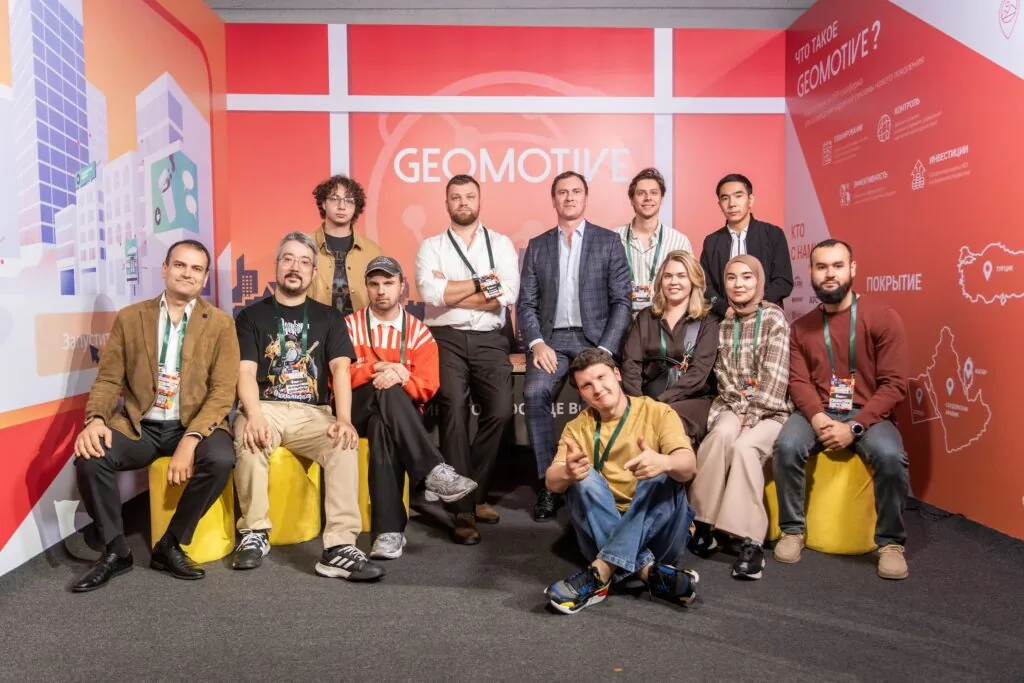
About challenges and innovations
The main technological challenge is the heterogeneity of the outdoor advertising market. Different players have different data protocols and formats, so unifying integrations remains a significant challenge. This heterogeneity applies to both companies in the market and external data. Our services are based on big data, including analytics and data from mobile devices, and providers often transmit them in various formats. The key task is data unification, both analytical and integration-related.
The most difficult aspect is assembling a strong team. It is not easy to find specialists who simultaneously understand the specifics of AdTech, possess high technical expertise, and fit the corporate culture. Therefore, significant attention is paid to employee development, onboarding, and retention. This helps form a team that is strong both technically and communicatively.
It is precisely such a team that allows for the creation of complex technological products. All necessary tools exist, and technical tasks are solvable. The main success factor is having specialists with whom these solutions can be implemented.
About the team and culture
Independence and responsibility are important in the team, as we oppose micromanagement and excessive bureaucracy. Regular dailies and calls should only occur when necessary, not for the sake of procedure or formal compliance with a framework. Therefore, we expect developers to be self-driven.
A technical foundation is mandatory; an engineer must also be able to make decisions and understand the entire process—from the business and sales aspects to the product launch.

About the path and leadership
My career began with a linear position—I joined as a manager assistant at one of the local service companies. My duties included all tasks: from development to communicating with clients and the team. This experience proved useful as it allowed me to get acquainted with different processes and aspects of the company's work.
Later, I worked in outsourced development and was the operations director at a company developing mobile applications and services. Here, I had to combine technical work and managing a team of more than 40 people. The experience of management, choosing a technical stack, and evaluating tasks in outsourcing—over five years, there were several hundred such tasks—greatly helped in my professional growth.
Later, I joined GEOMOTIVE in a manager role, which quickly transformed into a developer role, as about 80% of my time was spent on technical tasks. This allowed me to deeply get to know the various services and numerous modules of the company.
The most valuable skill I acquired is the combination of depth and breadth of development. For a Head or high-level manager position, it is important to understand how all components work.
This took about six years of work in a specific field. For beginners and managers, it is important not to rush for a leadership position but to go through the entire path and gain experience. A true manager is someone who understands processes and tasks, not just someone moving cards in project management systems. This path lays the foundation for effective management and strategic vision.

About the future and vision
The key trend is market unification and digitization. In our field, more players and screens are going digital. Market development is also linked to privacy: countries will pay more attention to protecting user data. It is important for players who comply with restrictions and use legal methods of data processing, quickly implementing them in programmatic advertising. Integration with external measurement providers is critical, as trust in data, including socio-demographic indicators, determines market development.
The role of Head of IT or CTO in the future is that of an architect of change. The main focus shifts to making decisions about connecting external services and using data and technologies in a way that enhances product value and trust in the platform. Any changes must work towards system scalability and transparency without creating additional risks.
A strong technology company is defined by its product focus: technologies should solve business tasks and goals, not be used for the sake of trends or novelties. Our team spends time monitoring new services, approaches, and tools, and the introduction of new functionality always occurs with a balance of speed and quality, preferring proven solutions.
Speed and predictability of change delivery are important, as is the ability to quickly implement innovations without disrupting stability. On our market, it is critical to work efficiently with a large number of external integrations and data. We value the ability to quickly find, process, and analyze information—often this is more important than current knowledge. Flexibility and readiness to restructure architecture when necessary are key qualities for working in a modular team solving set tasks.
The Tech on Telegram Follow The Tech on Telegram
Keep up with the latest technology and startup news.
Related reading







More from this author

News
zypl.ai begins operations in Japan and focuses on next-generation risk models
Mansur Ismagulov

News
Elon Musk's net worth has exceeded $700 billion for the first time
Mansur Ismagulov

Article Interviews
"Central Asian countries should build a joint ecosystem," — Bekhzod Ismoilov on the development of AI in the region
Mansur Ismagulov

Article Interviews
Bloom's Taxonomy and Engineering Levels: A Practical Growth Model
Mansur Ismagulov

Article Useful
How the IT industry in Azerbaijan developed in 2025: key events
Mansur Ismagulov

News
Tajikistan has become a new member of the regional innovation alliance Central Asian Innovation Hubs.
Mansur Ismagulov