A Python lead from Samarkand on working for Europe, honest salaries, and the development of the local industry
Nozirkh Tuktamurodov was born in Samarkand, progressed from an intern to a Python Tech Lead, earned a PhD degree, and currently works on a European FinTech project. In an interview with IT Park Uzbekistan and The Tech, he shares why he is building an international career, what challenges hinder the growth of local teams, and what young developers need to do not just write code, but create products.
Author - Mansur Ismagulov

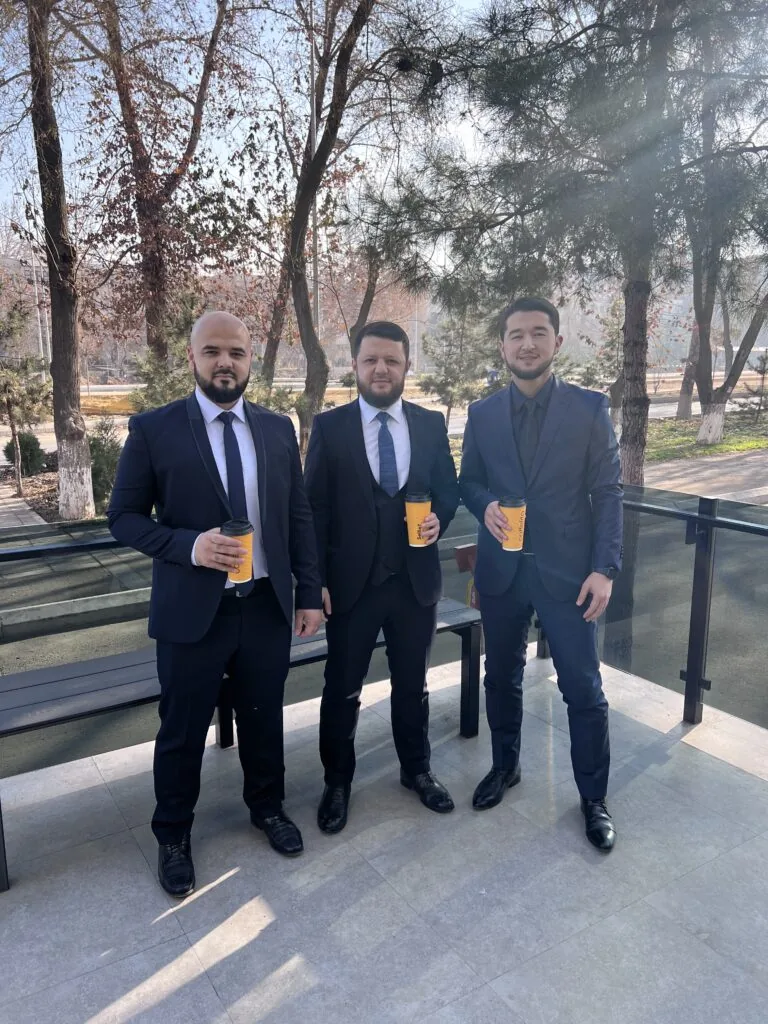
Nozir Tukhtamurodov, city — Samarkand, Python Tech Lead at Pointspay, LinkedIn
About Me
I studied at Samarkand State University: first for a bachelor’s degree in “Applied Mathematics and Computer Science,” where I learned the fundamentals of programming, and then for a master’s degree in “Information and Multimedia Technologies.” At the university, we focused more on theory, but I wanted practical experience, so I independently studied Python development through YouTube and programming books. I became interested in programming during my studies, completed internships, and by my second year of master’s studies, I had already secured my first paid position as a Junior Software Engineer.
I took my first steps at a research institute — for almost no pay. Then I joined UPAYNET, and later tried my hand as a system administrator at the state Fiscal Institute. But there was too much bureaucracy, unclear processes, and “tanish-bilish” (nepotism) — so I left quickly.
However, the next stage was a GameDev company, Vronica, where I started working in the EdTech direction. Later, I moved to MarsIT — and it was there that my team and I created, in my opinion, one of the best gamified EdTech platforms in the country for teaching IT to children. The platform is still running: it has about 3,000 active students and over 10,000 graduates.
I studied at the Institute for the Development of Digital Technologies and Artificial Intelligence in Tashkent and earned a PhD degree for research on the topic: “Data Mining Algorithms in Conditions of Singularity.”
About International Work
I briefly joined the startup MigorskiyAI.
Currently, I work as a Python Tech Lead on the Pointspay project — this is a FinTech product from Switzerland that allows customers to pay for online purchases using bonus points from various loyalty programs. I work through EPAM, but my entire focus is on the Pointspay product.
The platform allows users to pay with accumulated bonus points at thousands of international online retailers, while companies can expand their audience reach by integrating with loyalty programs. Pointspay is part of the Loyalty Prime AG holding, one of the leaders in the loyalty management sector.
We are building a scalable loyalty system: architecture, backend, integrations, microservices in Python. Sometimes I also get involved in Data Engineering and DevOps — it all depends on the task.
What’s nice is that we have a strong CTO, a person with experience at Meta, who truly understands programmers. The workflow is clearly structured: if you handle it — great; if you don’t — no one pressures you. On the contrary, they come and say: “Let’s do it together.” Everything is very human here. The team and culture are about results, not control.
The difference between foreign and local work culture is huge. At Pointspay, they value results, not hours spent in front of a screen. In Uzbekistan, many companies still operate six days a week, while in Europe they are discussing transitioning to a four-day workweek. Five working days is already the standard, not a privilege.
In Uzbekistan, people often look at hours, not results. In European companies, it’s the opposite: if you want to complete a task in three hours? Great. The rest is your business. The main thing is that the task gets done. This is an approach where trust is more important than control.
Everything is decided not only by skills — but by how you talk about them.
I chose an international company because it means:
— strong technology stacks
— flexible schedule
— no micromanagement
— growth towards Big Tech
— decent salary.
I am convinced that much in life is by the will of the Almighty. If something is truly meant for you, the path will definitely be found. But, of course, practical things also played a role: good hard skills, confident English, and the willingness to constantly learn.
It’s not enough to just write code — it’s important to understand the product itself, be able to explain your point of view, and propose solutions that work. You need to think broader — like a product owner, not just as a developer: ask yourself why you are writing this code, what problem it solves, and how the user will perceive it.
And also — don’t be afraid to speak out loud, share ideas, even if they seem not fully thought through. Many stay silent for fear of looking foolish, but one timely idea can change the entire project. International teams value exactly those — those who think not only as engineers but also as product creators.
I started learning English back in Samarkand — at the language school FastFluency, which is now called Millennium. At first, I was a student, and then — already during my bachelor’s studies — I started teaching IELTS and grammar myself. This helped a lot: when you teach others, you start to understand the language more deeply yourself. It wasn’t easy, but over time I got into the flow, and the language became my tool, not an obstacle.

Work Features
Remote work gives me what is often lacking in local companies — a healthy work-life balance. You don’t waste time commuting, don’t stand in traffic jams, don’t get tired already in the morning. And most importantly — there is flexibility in unforeseen situations.
Sometimes you urgently need to solve a family issue, for example, a child gets sick. In our reality — this is almost always “vacation” or formalities. But here you just write to the manager: “I won’t be available right now, I’ll make up the hours later” — and that’s it. No pressure, just trust. They respect that you have a family and a life outside of work.
But, of course, there are those who abuse this — and such stories end quickly. In such teams, discipline is built not on control, but on mutual respect — and if you let the team down, you are simply let go. Everything is fair.
The minus, perhaps, is only one: lack of face-to-face communication. It’s important to meet in person sometimes. That’s why I love gathering with friends and going hiking, combining communication and solitude with nature.
I don’t see any difficulties in competing with foreign developers. The main thing is language and communication. Technically, our guys are strong, but often cannot articulate their thoughts properly. When you improve this — everything becomes possible.
Western employers treat IT specialists absolutely normally. They don’t care where you are from, what your religion is, or how you look. The main thing is that you are reliable, know how to work in a team, and deliver results.
About Salaries and the Market
Salaries for all specialists are different. Someone earns $500, someone $7000+. It all depends on the level, experience, position, and the company itself. The main thing is to know your worth and understand where you fit in this range.
We live in such a time when you don’t need to leave to build a strong career. Today, it is quite realistic to work for international companies without leaving Uzbekistan. I do it myself. The main thing is to build a professional profile, develop, and know how to find opportunities.
I currently work for foreign companies, and I like it. But in the future — I want to launch something of my own here, in Uzbekistan. Perhaps it will be FinTech or a product for developers.
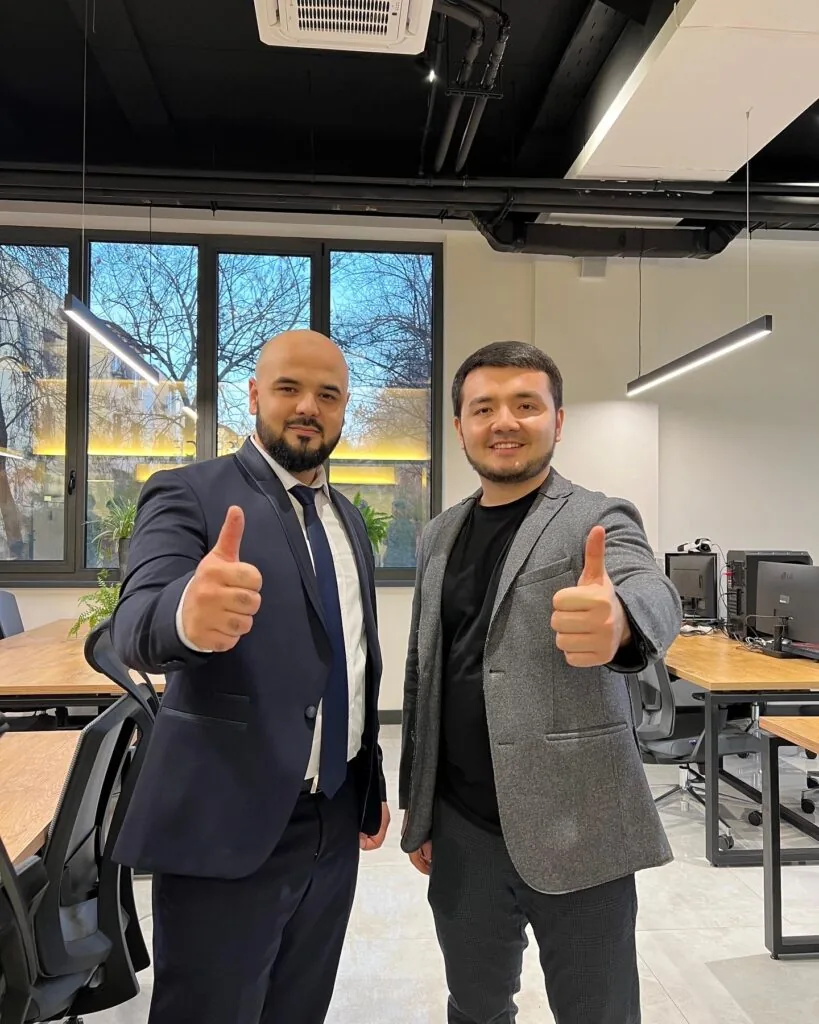
“Remote work is real. The main thing is not to give up.”
Recommendations
Advice for young developers who want to work for international companies:
- Learn languages — English first.
- Gain experience in the local market.
- Don’t be afraid to work on freelance or in outsourcing — it’s a stepping stone.
- Participate in projects, create a portfolio.
- And don’t give up. The world is huge — there is a place for you in it.
The Tech on Telegram Follow The Tech on Telegram
Keep up with the latest technology and startup news.
Related reading







More from this author

News
zypl.ai begins operations in Japan and focuses on next-generation risk models
Mansur Ismagulov

News
Elon Musk's net worth has exceeded $700 billion for the first time
Mansur Ismagulov

Article Interviews
"Central Asian countries should build a joint ecosystem," — Bekhzod Ismoilov on the development of AI in the region
Mansur Ismagulov

Article Interviews
Bloom's Taxonomy and Engineering Levels: A Practical Growth Model
Mansur Ismagulov

Article Useful
How the IT industry in Azerbaijan developed in 2025: key events
Mansur Ismagulov

News
Tajikistan has become a new member of the regional innovation alliance Central Asian Innovation Hubs.
Mansur Ismagulov