The QA Engineer Profession: How to Master a New Specialty and Transition from Another Field
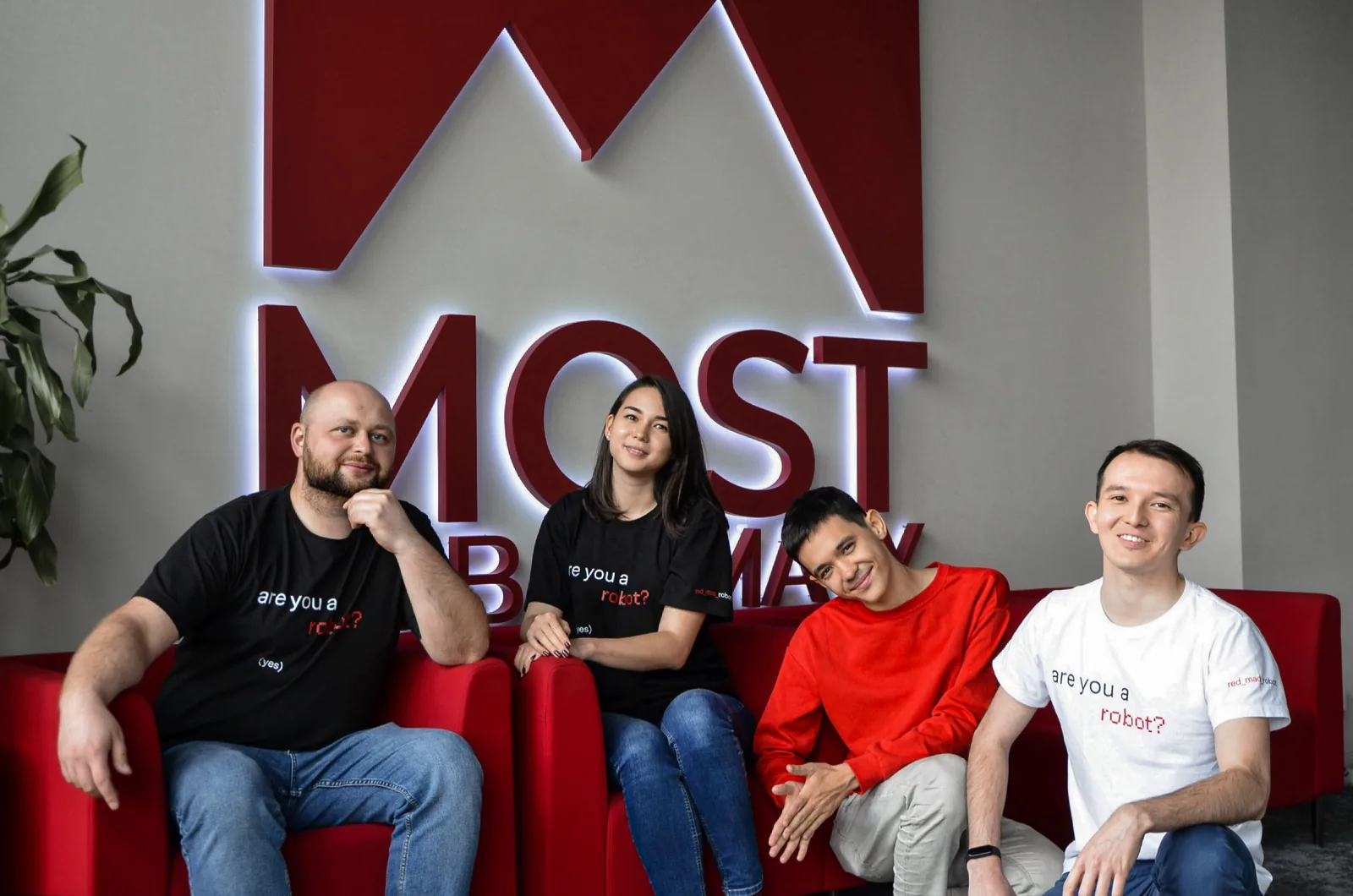
In February 2023, red_mad_robot Central Asia conducted a bootcamp for aspiring IT specialists. It lasted eight weeks, and the best participants received job offers from the company. We asked the participants to share their experiences about the bootcamp and their transition into the IT field. Here are their stories.
Author - Mansur Ismagulov
The Tech AI
Get the key points in seconds - a short summary from The Tech AI.
Danyar Bekayev, Elena Tusupzhanova, and Danil Kim became middle QA engineers at red_mad_robot Central Asia after completing the bootcamp. Bekayev switched careers from manufacturing by studying Python and books; Tusupzhanova transitioned from banking and call centers, training on Practiqa.kz courses; Kim, with prior support experience, learned through Astana Hub. All three successfully passed the selection process, worked on applications for locating ATMs and government services, as well as the digital bank for SMEs, while continuing to develop their skills in testing and programming.
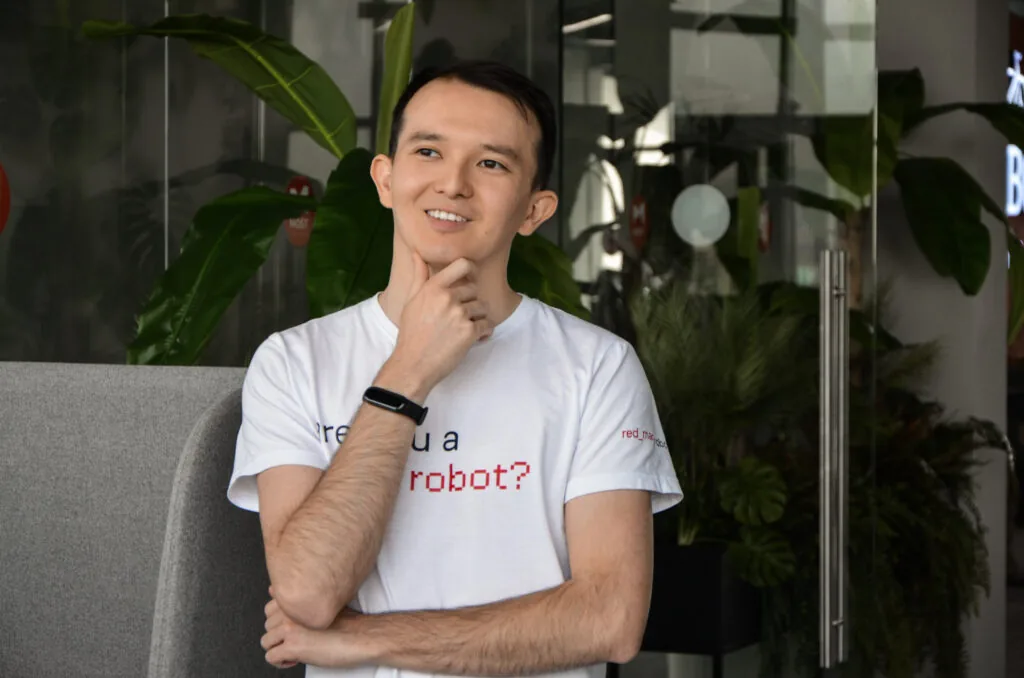
Daniyar Bekayev, Middle QA Engineer at red_mad_robot Central Asia
Before transitioning to testing, I worked as an engineer at an international FMCG company. My tasks varied: together with the team, I improved filter production, monitored quality, and handled engineering projects related to equipment.
I worked in tobacco production for seven years, but in recent years I realized that I was standing still and there were no prospects: to achieve high positions in production, you need to work for decades.
I graduated from the Faculty of Mathematics and Mechanics, and many of my university friends worked in IT. Therefore, I decided to take a closer look at this field. By nature, I am a bit of a perfectionist: I love order and want everything to work as intended. In production, I worked in the quality department, and my tasks were very similar to what a QA engineer does. So I decided to learn testing.
I had a financial cushion that lasted for six months. For four months, I studied calmly: I completed a course on automation in Python from Google, read the book "Testing Dot Com" by Roman Savin and "What is Testing. A Young Fighter's Course" by Olga Nazina. I also watched many videos on YouTube that my friends recommended.
I learned about the bootcamp by chance: I came to the Digital Almaty forum, and there was a booth for red_mad_robot Central Asia. I decided to apply and passed the selection. We were divided into teams: my team was developing an application for finding ATMs on a map.
At first, it was difficult to coordinate with the team, but then we established processes. It turned out that the second tester in the team was weakly involved in the work, and I had to take on his tasks. The workload increased, but this helped me improve my skills in practice.
After the bootcamp, I was offered a job at red_mad_robot. I accepted it because during the bootcamp I became attached to the team's atmosphere and what they do. Six months later, I became a lead QA streamer: I work as a tester myself and distribute tasks among other QA engineers. In the future, I want to expand my expertise in different areas. Maybe I'll start learning programming.
To everyone who wants to switch to IT, I wish patience and perseverance. Each year, the demands for juniors are growing, and you need to put in more effort. It may not be easy, but if you believe in yourself and work hard, everything will work out.
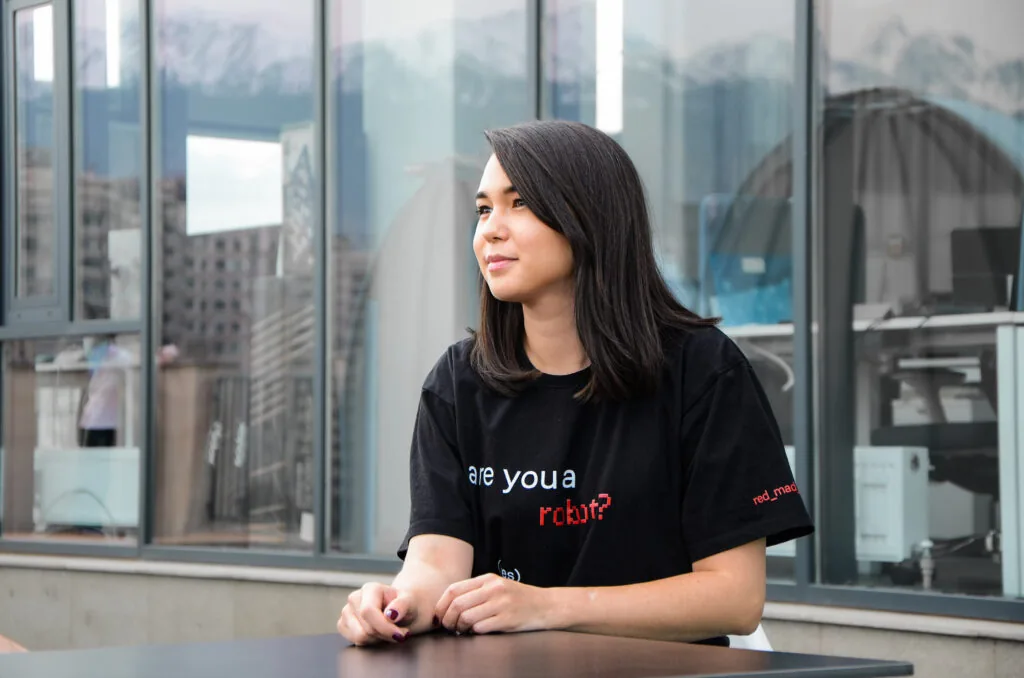
Elena Tusupzhanova, Middle QA Engineer at red_mad_robot Central Asia
I studied finance and after graduation went to work in a bank. Over seven years, I progressed from a cashier to a corporate client manager. It was good experience: I understood how mid-sized and large businesses operate, I enjoyed communicating with clients and watching how and what decisions they make. But eventually, I hit a ceiling. I could have grown into a managerial role, but I didn't want to.
Soon, I went on maternity leave and got a job at a call center of an IT company. The difference in jobs was noticeable: in the bank, everyone strives to please the client, and the employee is just a cog in a large system. In the new place, everything was the opposite: they helped me integrate into the processes and cared for me. I loved this atmosphere and decided to switch to IT.
I have always liked finding and fixing errors. While working in the bank, I invented a game for myself: I imagined I was Sherlock Holmes and looked for discrepancies in receipts and documents. Thus, work became not a routine but a challenge.
During maternity leave, I got hooked on videos by the YouTube blogger Marmok. He found many bugs in games and analyzed them. I enjoyed watching this and wanted to try doing the same. So I decided to learn testing, and career aptitude tests also indicated that this profession suited me.
I took courses from Practiqa.kz. There were excellent practicing teachers who provided knowledge without fluff and taught only what would be useful in work. I still use the course materials.
The course teachers suggested going to the bootcamp. I passed the test assignment and was selected. My team was developing an application for providing government services. It was a great experience of immersing in the IT environment: we worked according to Agile, held dailies, and set tasks for sprints.
Also, we probably annoyed our mentor. We asked questions, often had calls, discussed all problems—from team communication to "what to download and install so everything works." But he always supported us and helped—that was great.
At the end of the bootcamp, I received an offer from the company, and I have been working here for six months already. In the first days, I was a bit panicked: it seemed that I should know everything right away. But I was gently onboarded: a development plan was built, progress was checked, and feedback was given.
The best part of the work is seeing the result. You first test something, and then the product is launched and brings benefit to thousands of people. This is inspiring.
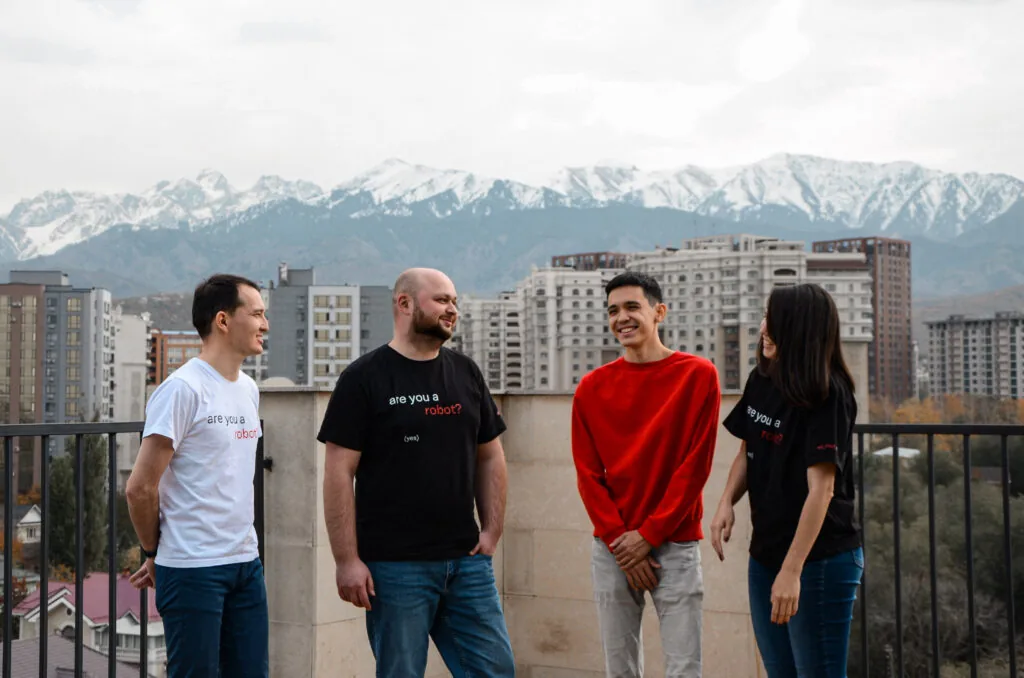
Danil Kim, Middle QA Engineer at red_mad_robot Central Asia
I graduated from college with a degree in "Computing Technology." It is related to IT, but the knowledge provided was basic. I started studying programming on my own and simultaneously got a job as a content manager in a large group of IT companies. Then I transferred to a support specialist position in the monitoring department.
I liked figuring out the requests written by users and wanted to understand how to eliminate these errors at the technical level. When I started thinking about where to move next, I decided to try testing and began studying on a QA course from Astana Hub.
Friends who worked in IT advised me to go to the bootcamp. I thought I knew too little, but I decided to try. Even in case of failure, it would have been a great experience and a cool case of working on a product. But everything worked out, and I passed the selection.
My team and I worked on an application for providing government services. Alongside the bootcamp, I worked and continued taking the testing course. But I had enough energy, and I liked everything.
At the end of the bootcamp, during the interview at red_mad_robot, I was nervous. I thought I answered completely wrong and incorrectly. But it turned out that I answered well for my level.
Now I work on a digital bank for SMEs, responsible for testing the seller's personal account. Alongside, I am learning automated testing and studying Java—this helps me communicate with developers in the same language. Every day I understand that there is never enough knowledge, and I try to learn more.
For beginner testers, I have one piece of advice—do not be afraid of difficulties. They will always be there. But it is important to learn to overcome them and move forward.
The Tech on Telegram Follow The Tech on Telegram
Keep up with the latest technology and startup news.
Related reading







More from this author

News
zypl.ai begins operations in Japan and focuses on next-generation risk models
Mansur Ismagulov

News
Elon Musk's net worth has exceeded $700 billion for the first time
Mansur Ismagulov

Article Interviews
"Central Asian countries should build a joint ecosystem," — Bekhzod Ismoilov on the development of AI in the region
Mansur Ismagulov

Article Interviews
Bloom's Taxonomy and Engineering Levels: A Practical Growth Model
Mansur Ismagulov

Article Useful
How the IT industry in Azerbaijan developed in 2025: key events
Mansur Ismagulov

News
Tajikistan has become a new member of the regional innovation alliance Central Asian Innovation Hubs.
Mansur Ismagulov