Why Hong Kong is the best "fast track" for tech startups to enter China
Hong Kong today is one of the most convenient entry points into China for technology companies that think globally but act pragmatically. For startups in Central Eurasia, it is not an abstract "Asian megacity," but a concrete tool: to test a product in a mature market, structure intellectual property in a reliable jurisdiction, gain access to capital, and gradually expand into mainland China and the Greater Bay Area.
Author - Mansur Ismagulov
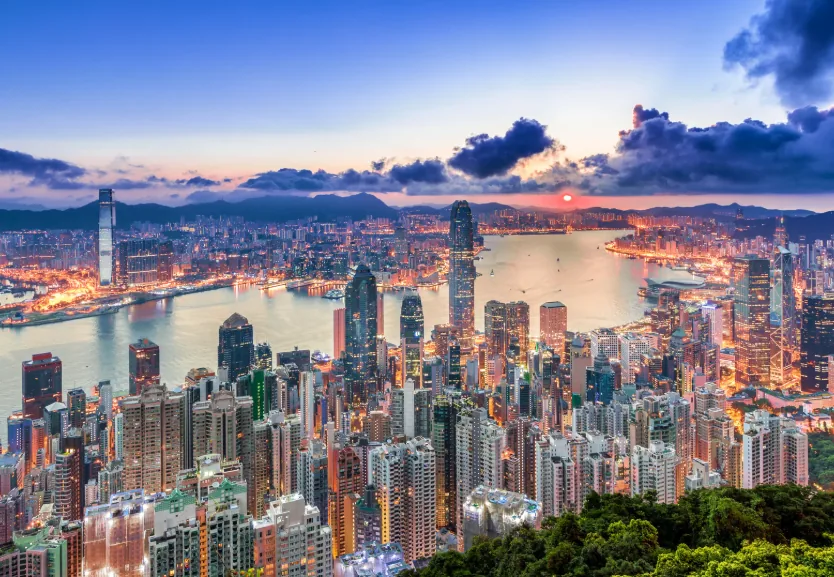
This article launches a series of materials on the country’s key innovation hubs — Hong Kong, Shanghai, Shenzhen, Beijing, and leading technology parks. We will examine Hong Kong as the key “gateway” to the world’s second-largest economy, which is why the first article in our series on Chinese innovation centers is dedicated to this city.
Lazzat Borankulova, Founder of Khan Tengri Innovation Hub
Khan Tengri Innovation Hub aims to raise awareness among the Central Eurasian startup community about opportunities in China and to support founders from Central Eurasia in seeing the true scale of opportunities, rather than just stereotypes about the complexity of the Chinese market.
I. Why Hong Kong is a logical point for fundraising and entering China
Hong Kong has a population of 7.53 million and a GDP of approximately $407.3 billion in 2024. More than 93.5% of the GDP is generated by the service sector, making the city one of the most service-oriented economies in the world.
In essence, it is a highly concentrated business hub where banks, funds, corporate headquarters, technology companies, and developed infrastructure are “packaged” together.
In 2023, more than 9,000 foreign companies were registered in Hong Kong, of which over 1,330 used the city as a regional headquarters to develop business in mainland China, Asia, and beyond.
For startups, this means:
— access to global and regional corporate clients
— the ability to build partnerships with international businesses present in Hong Kong
— using the city as a platform and “staging ground” for further expansion into mainland China, the Greater Bay Area (GBA), Southeast Asia, and global markets.
Capital: UHNWIs, family offices, and venture infrastructure
One of the key reasons founders should pay close attention to Hong Kong is the concentration of capital.
Hong Kong is the #1 city in Asia for the number of ultra-high-net-worth individuals (UHNWIs): 12,545 such individuals reside here, along with more than 2,700 single family offices managing large private capital pools.
The city is also:
— the largest offshore wealth management hub in Asia
— one of the largest private equity markets outside mainland China
— the largest APAC and world’s #2 hub for raising funds for BioTech companies, after New York
— a place where more than 70 of the top 100 global banks operate, and the local stock market is one of the most liquid and active in terms of IPO and secondary offerings.
For startups, this means not only the availability of capital but also the opportunity to find the “right” type of investor: from angel investors and family offices to late-stage funds and strategic investors.
It is important not only that there is a lot of capital, but also that it is structured: one can progress from the early stage to pre-IPO without leaving the Hong Kong ecosystem.
Legal system and intellectual property protection
For a tech startup, jurisdiction is not just about taxes, but also about law and IP.
Hong Kong is one of the freest economies in the world, with a simple tax regime, free movement of capital, open trade, and a predictable common law legal system. Common law — a legacy of the British legal tradition — is understandable to international investors and corporations.
The city ranks in the top 10 most competitive jurisdictions for intellectual property protection and is considered a key platform for IP trading and a “showcase” for technologies in the Greater Bay Area.
For a tech startup, this means:
— the ability to register and structure IP in a reliable jurisdiction
— comfortable collaboration with international investors who traditionally trust Hong Kong law
— fewer risks and greater predictability when building partnerships, resolving conflicts, M&A, and technology licensing
— the ability to structure operations through a Hong Kong “headquarters” with a clear jurisdiction.
If you value not just the market but also long-term capitalization through IP, Hong Kong provides a very solid foundation.
II. Hong Kong’s Startup Ecosystem: Numbers Important for Founders
Scale and Dynamics
According to the InvestHK Startup Survey 2024, there are 4,694 startups in Hong Kong, creating 17,651 jobs and utilizing the infrastructure of 137 incubators, accelerators, and coworking spaces.
Between 2020 and 2024, the number of startups grew from 3,360 to 4,694 — an increase of approximately 40%, while employment in startups rose from 10,688 to 17,651 — a growth of about 65%.
Hong Kong remains attractive to international founders: about 28% of startups are founded by non-local founders, including those from mainland China, the UK, the US, France, Australia, and other countries.
Not coincidentally, the Global Startup Ecosystem Report 2024 ranked Hong Kong first in the Asia-Pacific region and third in the world among emerging startup ecosystems.
This shows that even against the backdrop of global turbulence, Hong Kong remains a vibrant, growing startup ecosystem, not just a financial center.
Sectors: From FinTech to MedTech and Green Tech
The top 5 startup sectors in Hong Kong are: FinTech — 13%, Information, Computer & Technology — 11%, E-commerce — 9%, Education & Learning — 9%, Data Analytics — 7%.
Additionally, the Health & Medical — 6% and Sustainable / Green Tech — 5% segments are growing actively.
The financial sector is one of the pillars of Hong Kong’s economy, and it is here that FinTech has become a “showcase” of technological progress. As of July 2024, more than 1,100 FinTech companies operate in the city, including:
— 198 companies in the wealthtech segment
— 175 players in blockchain applications and software
— 122 companies in payments and transfers
— 111 companies in the digital assets and cryptocurrency segment.
Hong Kong’s FinTech sector is supported not only by the market but also by proactive government policies: since 2015, a comprehensive set of measures to support FinTech has been implemented, including regulatory “sandboxes,” special programs, and significant budget investments in innovation.
What this means for Central Eurasian startups
Hong Kong is an excellent “testing ground” for FinTech and B2B solutions that can then be scaled in China and Southeast Asia:
— successful cases of FinTech unicorns such as Airwallex, HashKey Group, WeLab, and others demonstrate that the ecosystem knows how to scale startups to a global level
— high interest in solutions in green fintech, wealthtech, insurtech, regtech, and AI-driven services opens a window of opportunity for teams from our region.
III. Innovation Infrastructure: HKSTP, Cyberport, and HSITP
Hong Kong Science and Technology Park (HKSTP)
HKSTP is Hong Kong’s largest science and technology park and one of the key entry points for hardware, deeptech, and R&D startups, providing a full cycle of startup support: from the idea stage to scaling. HKSTP programs include grants ranging from approximately $13,000 to $2.75 million, as well as:
— financial support in the form of grants, targeted funds, and rental subsidies
— business support such as mentoring, investment matching, and GTM (Go-To-Market) support
— infrastructure such as offices, coworking spaces, tech incubation centers, and laboratories
— technical support such as prototyping, testing, consulting, and industrial pilots.
Key technological clusters of HKSTP: biomedicine, new materials, electronics, robotics, ICT, green and clean technologies.
If you are developing a complex product at the intersection of hardware/AI/industrial solutions, HKSTP is a natural partner and entry point into China’s engineering and manufacturing base. This is a way to “land” in a safe and understandable environment for international founders, gain access to world-class laboratories and R&D infrastructure, and faster adapt the product to the requirements of the Chinese and regional markets.
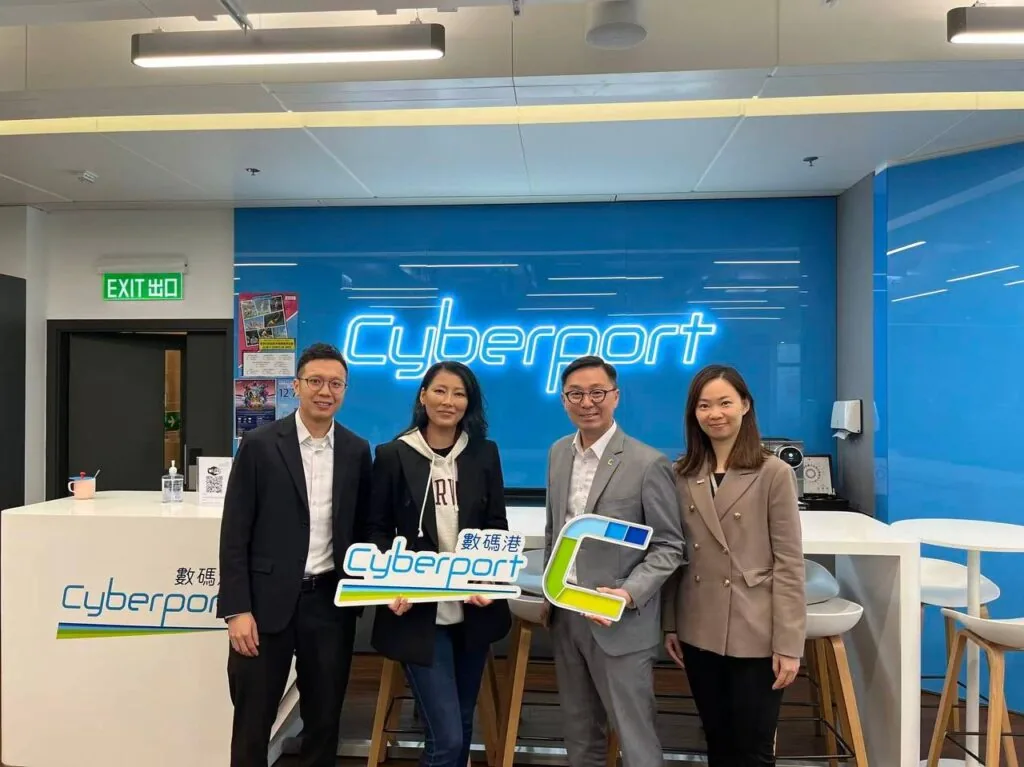
Cyberport: Digital Technologies, AI, Blockchain
Cyberport is a digital innovation center specializing in ICT and digital services. It provides grant support at various stages: from the Cyberport Creative Micro Fund, approximately $12,000, to the Incubation Programme, up to $64,000, and additional market development programs.
Cyberport’s key technological directions are artificial intelligence and big data, blockchain, Web3, cybersecurity, and digital services.
For SaaS teams, FinTech, Web3, edtech, and digital media, Cyberport is an environment where it is easy to find peers, mentors, and early-adopter clients.
Hong Kong–Shenzhen Innovation and Technology Park (HSITP)
The Hong Kong–Shenzhen Innovation and Technology Park (HSITP) in Lo Ma Chau is Hong Kong’s largest new I&T cluster, being created in a “One Zone, Two Parks” format in collaboration with Shenzhen.
In the first phase of HSITP development, three key functional zones are designated:
— Life and Health Technology Area — technologies in medicine, BioTech, and health
— Artificial Intelligence and Data Science Area — AI, data analysis, high-performance computing
— New Technology and Advanced Manufacturing Area — new materials, intelligent manufacturing, high-tech industry, robotics.
For startups, this means the opportunity to: build R&D teams at the intersection of Hong Kong and Shenzhen, utilize a unified space between Hong Kong’s R&D potential and Shenzhen’s manufacturing capabilities. This is a chance to combine development and scaling within a single “proving ground,” work in close proximity to the manufacturing and engineering resources of mainland China, and use the park’s status as a “bridge” between jurisdictions for a flexible development model.
Khan Tengri Innovation Hub will follow up with a detailed article on HSITP and the proposed incubation and acceleration programs.
IV. Khan Tengri Innovation Hub Series on China: What’s Next
This publication on The Tech is the first in a series of articles by Khan Tengri Innovation Hub on the opportunities offered by Chinese innovation hubs for startups from our region. In future materials, we will detail:
— Shanghai — as a global center for AI, biotechnology, “smart” industry, and finance
— Shenzhen — as a “hardware” and robotics hub, as well as an “innovation factory”
— Beijing — as a research capital with strong universities and a DeepTech cluster
— online pitching to venture investors in Hong Kong and mainland China
— leading technology parks and innovation zones in China that are already open to startups from Central Eurasia.
Our approach is simple: remove the information barrier, show specifics, and provide a clear tool for market entry — via online pitching, and then through programs and partnerships on the ground.
The Tech on Telegram Follow The Tech on Telegram
Keep up with the latest technology and startup news.
Related reading







More from this author

News
zypl.ai begins operations in Japan and focuses on next-generation risk models
Mansur Ismagulov

News
Elon Musk's net worth has exceeded $700 billion for the first time
Mansur Ismagulov

Article Interviews
"Central Asian countries should build a joint ecosystem," — Bekhzod Ismoilov on the development of AI in the region
Mansur Ismagulov

Article Interviews
Bloom's Taxonomy and Engineering Levels: A Practical Growth Model
Mansur Ismagulov

Article Useful
How the IT industry in Azerbaijan developed in 2025: key events
Mansur Ismagulov

News
Tajikistan has become a new member of the regional innovation alliance Central Asian Innovation Hubs.
Mansur Ismagulov