Pleep — a startup that creates AI assistants for businesses in less than 2 hours
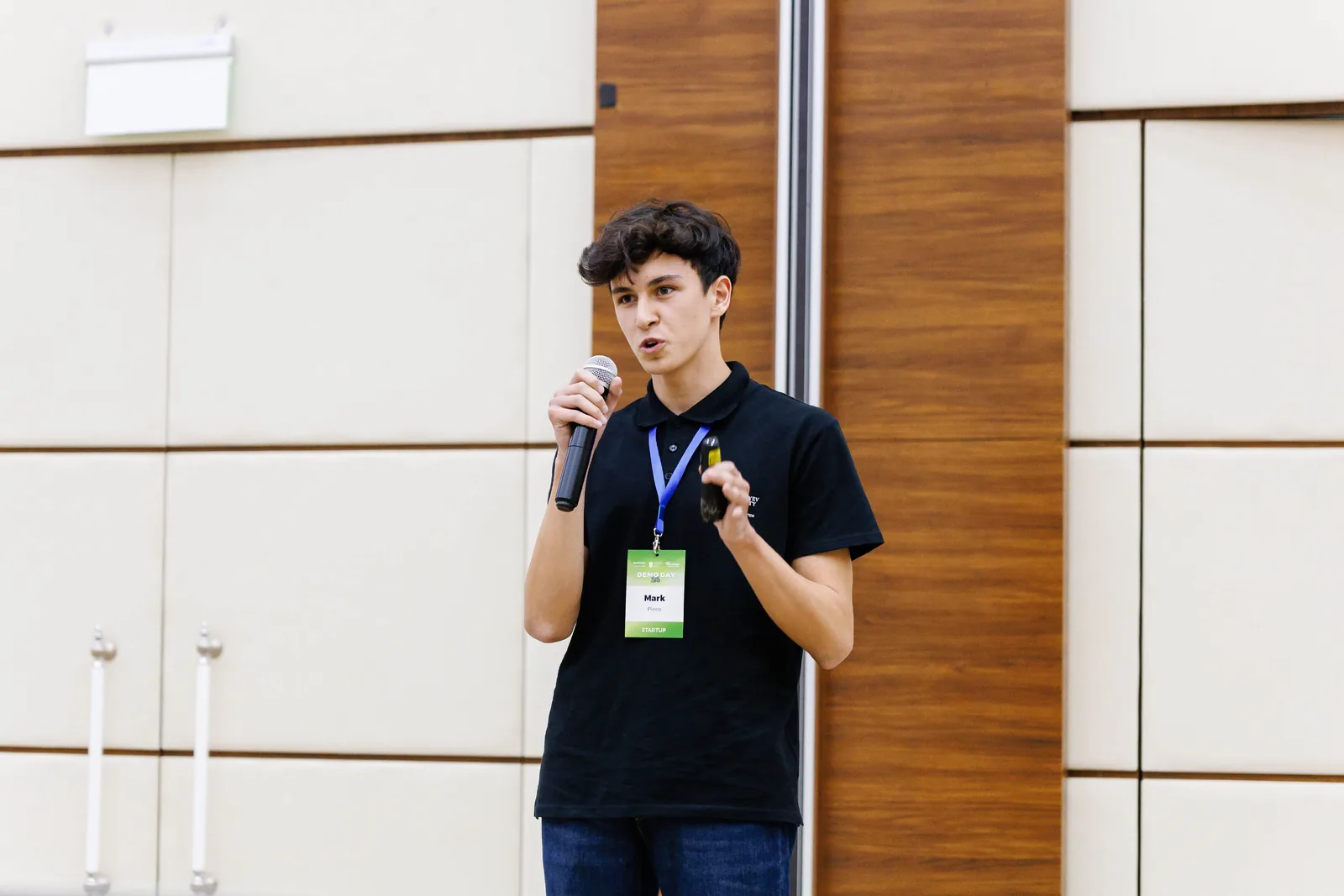
Young startup founder Inger Mark talked about his project, which has already achieved significant results, and about how his team creates AI assistants for businesses.
The Tech AI
Get the key points in seconds - a short summary from The Tech AI.
Inger Mark from Almaty founded Pleep — an ecosystem for creating AI assistants. In April, the team completed the NURIS accelerator, receiving 2 million tenge in investments, and in May, they joined the DOMiNO Ventures program. By August, the company had 17 clients and achieved 242% growth. The plan is to reach $15,000 MRR by November and begin scaling in Turkey in February 2025.
Inger Marx, City — Almaty, CEO, founder and ex-software engineer, Instagram, Linkedin
How it all started
I have been programming since I was 14. At 15, I began interning at a foreign company as a fullstack developer. A little later, I was transferred to part-time, and I received a new project where I first encountered machine learning and generative AI.
My first attempt to launch something similar to a startup happened in the eighth grade. My friend and I participated in the school incubator QADAM — there I learned what a startup is and how rapidly the Kazakh startup ecosystem is developing.
In March 2023, I created the HRTech B2B2C platform Jumify with an acquaintance from programming courses, which connected inexperienced specialists with young startups. At that time, we lacked an understanding of what business is and how to run it, so we simply focused on product development without trying to sell it.
At one of the pizza pitches, where I was presenting Jumify, the conversation turned to AI application builders. That’s when the idea to create Pleep was born in my head — initially, it was a builder for complex AI applications to automate business processes. Later, we pivoted, and now we are building an ecosystem for creating and managing next-level AI assistants.
The Team
Initially, we decided to code an MVP of our idea for fun in two weeks. I did this with the best coders we had found for Jumify. By mid-January, the MVP was ready. After that, I conducted CustDev with company owners to see how we could help them.
At that time, the team consisted of four people: me, Robert, Asan, and Nurken. We had all previously worked together on Jumify and were developers. I started looking for a product manager for the team, and in February, Zhenya joined as CPO at Pleep. Together, we conducted over 40 CustDev interviews to understand how our product could be used by companies. From the interviews, we realized that companies were mainly interested in AI assistants for automating communication with clients. In mid-February, we made our first pre-sale, and a company created an AI assistant for technical support. It was then that we began thinking about developing the service towards AI assistants.
In late March, we pivoted, and Pleep began transforming into an ecosystem for creating and managing next-level AI assistants. In early April, with the new idea, we started the acceleration program Quick Start from NURIS.
Target Audience
Our main goal is to make the creation, setup, and integration of an AI assistant into a company as simple and fast a process as possible. That is why we are building an ecosystem: one service has everything needed to fully integrate an AI assistant into a business.
Our target audience is small and medium-sized businesses. The average response time in such companies is 60 minutes, which significantly reduces the conversion rate for continuing the dialogue. Consequently, companies lose potential clients and earn less money. An AI assistant helps increase conversion and lose fewer potential clients by providing quick responses.
With Pleep, the creation, training, testing, and integration of an AI assistant takes an average of two hours. To do this, our client does not need to know anything about AI. To create an assistant, you only need to answer seven questions about the company.
Currently, we are working on enabling our assistants to do more things. For example, Pleep AI assistants can already receive data about free time from your Google Calendar and schedule clients for consultations, meetings, or other activities.
We entered the market in mid-May, made our first sales, and spent all of June refining the product. As of today, we have 17 active clients, and in August, we grew by 242%. One of our clients is nFactorial School.
Incubation Programs
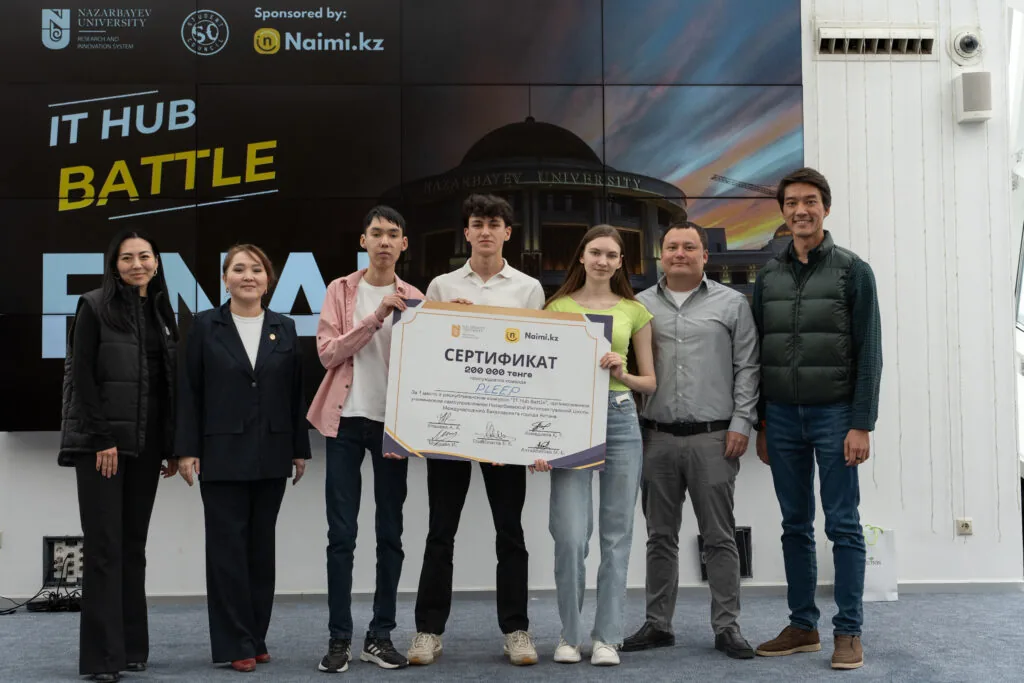
We obtained funding for startup development by taking first place in a project competition and first place in the IT HUB Battle, sponsored by Naimi.kz. We spent the received funds on launching advertising and testing hypotheses.
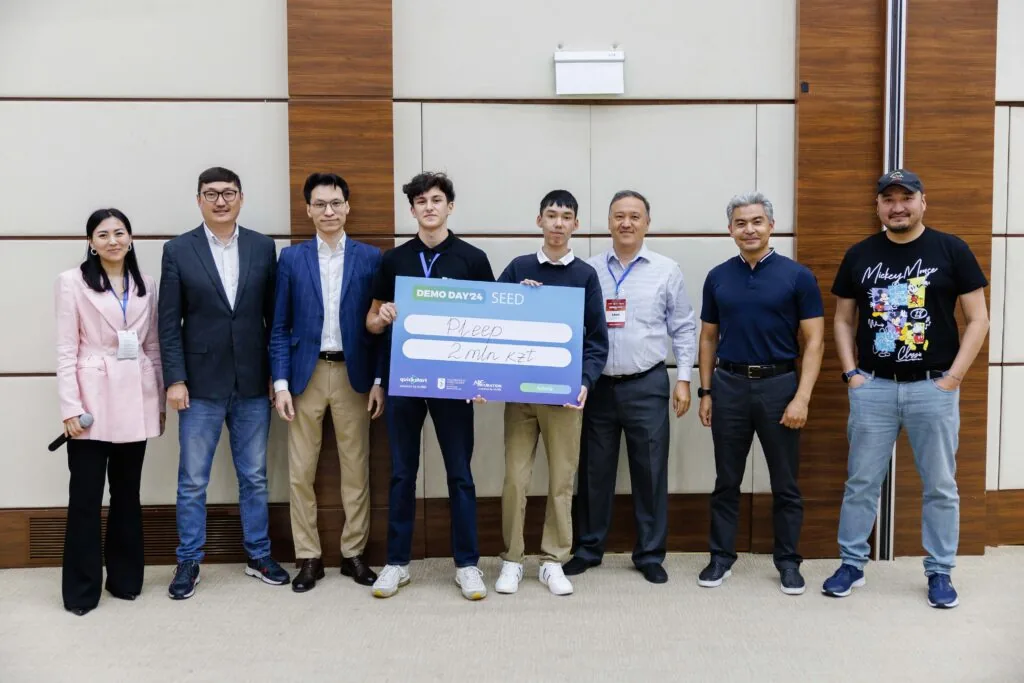
In April, we entered the Quick Start accelerator from NURIS. This program massively boosted Pleep and me as an entrepreneur. We entered with a raw idea and one pre-sale. I was a typical Tech founder who didn’t know how to develop the business and focused only on the product. In two months, I completely restructured my mindset, we made our first sales and gained traction, built sales funnels, and tested many hypotheses. I am grateful to our trackers — Evgeny Frolov and Nikolai Tyana — as well as the entire NURIS team for their support. Upon completion of the accelerator, we presented Pleep at the demo day in Astana and received an investment of 2 million tenge from NURIS.
In May, we joined the BetterFuture AI Acceleration Program from DOMiNO Ventures. From Kazakhstan, we were one of four startups selected. This program provided us with extensive networking, and now we are interested in the Turkish market, as thanks to DOMiNO Ventures, we gained useful contacts with people from that country. We successfully completed the program and presented Pleep at the demo day in July this year.
We are also graduates of Startup Garage. We completed the program in the list of the top 15 projects.

Challenges
Running a business is difficult. Many problems arose, but in my opinion, the hardest part is making quality decisions. But when you have little experience, it is difficult to do so.
I solved this problem by becoming maximally open to learning from the experience of others. I always listened to the advice of accelerators’ trackers because I knew they definitely knew more. I believe that largely thanks to having and maintaining good feedback loops, we were able to move faster.
To those who want to build their own startup, I can advise two things. First, you must be passionate about the idea, otherwise, it will be torture, and there is a high probability you will give up. The startup industry is cool, but despite its external beauty, it is difficult. Second, if you have no experience, set aside your ego. Develop the ability to listen to others’ opinions and draw your own conclusions.
Achievements
Our significant achievement is our excellent team and the fact that we are fully bootstrapped. We cover expenses with revenue. Our small team consists of five people, and every participant is passionate about the idea, as when we started, absolutely everyone worked for the idea without a salary.
Additionally, I am pleased that we managed to get into top accelerators. This means that our work does not go unnoticed.
Plans
Our immediate goal is to secure a strong position in the Kazakh market. We want to reach $15,000 in MRR and acquire 120 active clients by November.
First, we want to scale into Turkey, but we will not do this until we secure a strong position in the local market. We plan to start scaling in February 2025. By that time, we expect to attract 600 clients and reach an MRR of $90,000.
Currently, our main task is to increase the depth of query resolution by our assistants. For this, we are developing plugins that allow connecting calendar systems like Google Calendar or Teamup to the assistant. This will distinguish Pleep from other AI assistants.
We will continue constant iterations with clients and gathering feedback to keep improving the process of creating and integrating AI assistants, making it as easy and fast as possible.
In September, we will begin developing custom pipelines for LLM models from Anthropic. They will allow our assistants to perform their tasks better, reduce the probability of hallucinations, and improve their ability to find the necessary information. This will also reduce our dependence on third-party providers, as most of the fundamental logic will be under our control.
The Tech on Telegram Follow The Tech on Telegram
Keep up with the latest technology and startup news.
Related reading




More from this author

News IT
Google has solved one of the main problems in quantum computing
The Tech
News IT
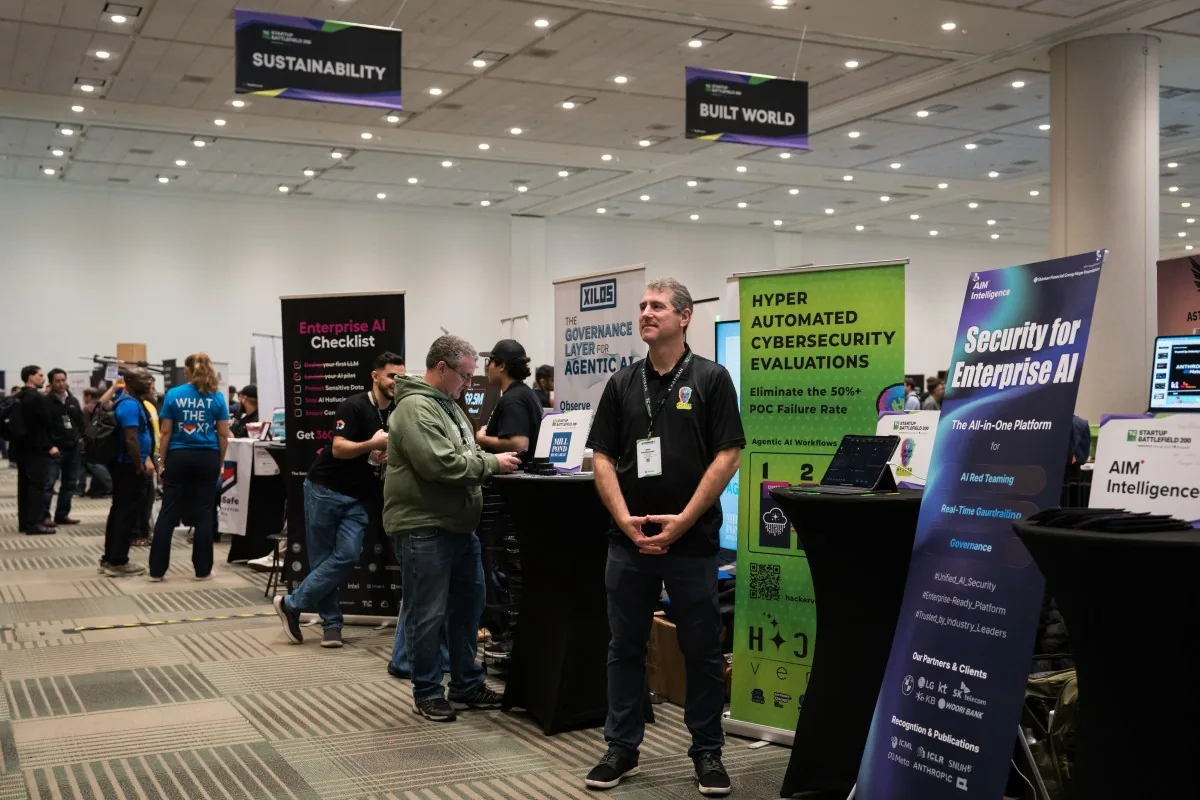
20 startups from Central Asia presented their projects at TechCrunch Disrupt 2026
The Tech

News IT
Kyrgyzstan and Armenia will consider the possibility of creating a joint AI enterprise
The Tech

News IT
Now on Kaspi.kz, you can trade in your old iPhone for a new one
The Tech

News IT
IT Park Uzbekistan became the best knowledge zone in the Asia-Pacific region
The Tech
Article Useful
How to protect your accounts from hacking: 8 settings you should check today
The Tech