Google has solved one of the main problems in quantum computing.
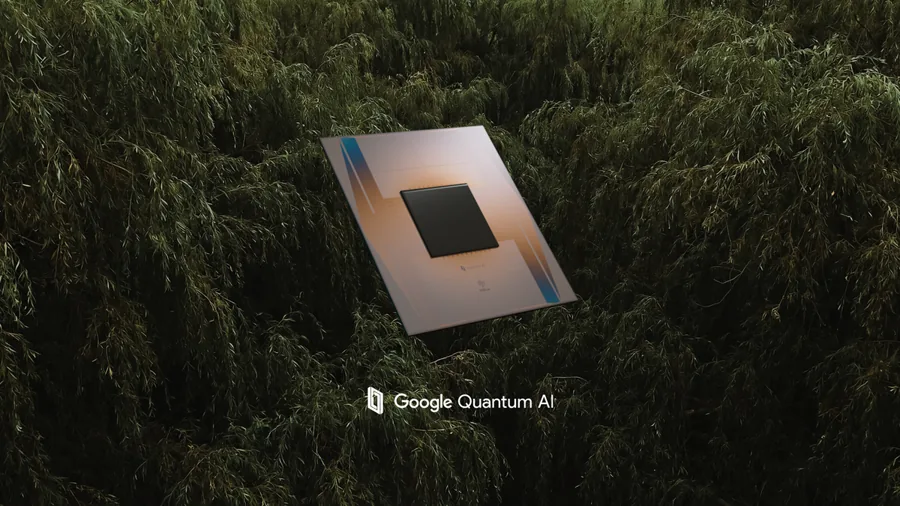
Google Quantum AI demonstrated on the Willow quantum processor the technology of growing magic states, which allows reducing the number of errors by approximately 40 times. The results of the study were published in the journal Science. The development may become an important step toward creating practical quantum computers.
The Tech AI
Get the key points in seconds - a short summary from The Tech AI.
Google Quantum AI has developed a "magic state distillation" technology to reduce resource costs in quantum computing. After addressing engineering errors, the method tested on the Willow processor reduced the error rate by a factor of 40 and achieved a logical T-state accuracy of 99.99%. The feasibility of transferring purified states between color codes and surface codes for error correction has also been confirmed.
The Main Challenge of Quantum Computing
To perform complex calculations, quantum computers must use special quantum states known as magic states. These states enable the implementation of operations necessary for universal quantum computing, going beyond the capabilities of classical computers.
However, creating such states with high precision and error correction requires significant computational resources. By some estimates, up to 95% of a quantum computer's power may be spent on their preparation. As a result, far fewer resources remain for the actual computations.
Another complication is that magic states cannot be reused after an operation is performed. Therefore, researchers have spent approximately 20 years searching for ways to reduce the costs associated with their creation.
How the New Technology Works
In 2024, researchers from Google Quantum AI, Craig Gidney, Noah Shutty, and Cody Jones, developed an approach called "magic state cultivation."
The method involves placing an initial quantum state containing errors into a small region of a quantum chip. The system then performs a series of coordinated measurements, which allow errors to be detected and unsuccessful attempts to be filtered out. This results in a cleaner quantum state with a low error rate, which can then be transformed into a larger structure for further computations.
Theoretically, this approach should significantly reduce the resources required to build a quantum computer capable of solving practical problems. However, implementing the method on real hardware required the team to address several engineering and research challenges.
For example, during early testing stages, Google Quantum AI researcher Emma Rosenfeld discovered measurement results that seemed to contradict the laws of physics. After several months of verification, the team determined that the cause was an error in the measurement method used.
The accuracy of the experiment was affected by electrical interference related to equipment instability and temperature changes in the laboratory. To resolve the issue, researchers improved the control system and developed a new method for verifying results, in which the magic state cultivation technology itself was used to assess its own accuracy.
What Results Did Google Achieve?
After implementing new algorithmic solutions and engineering improvements, the team tested the technology on the Willow quantum processor.
According to Google Quantum AI, the new method reduced the number of errors by approximately 40 times compared to magic states that did not undergo the cultivation process. Additionally, the researchers obtained T-states with a record logical accuracy of 99.99%.
The team also demonstrated the ability to transfer quantum states between two error correction approaches: color codes and surface codes. To do this, the researchers transferred states from a color code with distance 3 to a surface code with distance 5.
The experiment confirmed that purified quantum states can be preserved and transferred between different error correction schemes on real hardware.
What Does This Mean for Quantum Computers?
This research represents the first experimental demonstration of a practical solution to one of the most serious problems limiting the scalability of quantum computing. It showed that magic states can be effectively created directly on a quantum processor, rather than merely described theoretically.
However, the technology still requires further validation on a larger scale. Researchers will need to determine how effectively the method will perform in quantum computers designed to solve practical problems.
At Google Quantum AI, the team believes that this achievement brings the company closer to creating a useful, error-corrected quantum computer capable of solving tasks that remain beyond the reach of classical computing systems.
The Tech on Telegram Follow The Tech on Telegram
Keep up with the latest technology and startup news.
Related reading



More from this author

News IT
20 startups from Central Asia presented their projects at TechCrunch Disrupt 2026
The Tech

News IT
Kyrgyzstan and Armenia will consider the possibility of creating a joint AI enterprise
The Tech

News IT
Now on Kaspi.kz, you can trade in your old iPhone for a new one.
The Tech

News IT
IT Park Uzbekistan became the best knowledge zone in the Asia-Pacific region
The Tech

Article Useful
How to protect your accounts from hacking: 8 settings you should check today
The Tech

Article Useful
500 Global: How the Accelerator Works and Who Can Receive Investments
The Tech