From Junior to Manager: How Sergek Group Builds Its Culture
Career growth is one of the clichéd topics in corporate culture, especially when it comes to polished phrases used during job interviews. However, sometimes promotions take years to achieve—or may never come at all. At Sergek, a Kazakhstani group of IT companies, there are real-life stories of people who advanced within the organization because they worked hard, took responsibility, and at some point became indispensable. These are the stories we’ll explore in today’s article on meritocracy.
Author - Mansur Ismagulov

Meritocracy is a system where growth and advancement depend not on connections or age, but on a person’s actual contribution. In countries with a strong institutional culture, it is most often implemented through formalized procedures — career tracks, performance evaluation systems, and transparent competitions for leadership positions. Where personal connections still matter, meritocracy often manifests as the internal culture of individual teams. In Kazakhstan, where the “insider/outsider” principle remains strong, such examples are especially valuable. Using Sergek Group as an example, we will show that meritocracy is possible — in an environment that values initiative, responsibility, and professionalism.
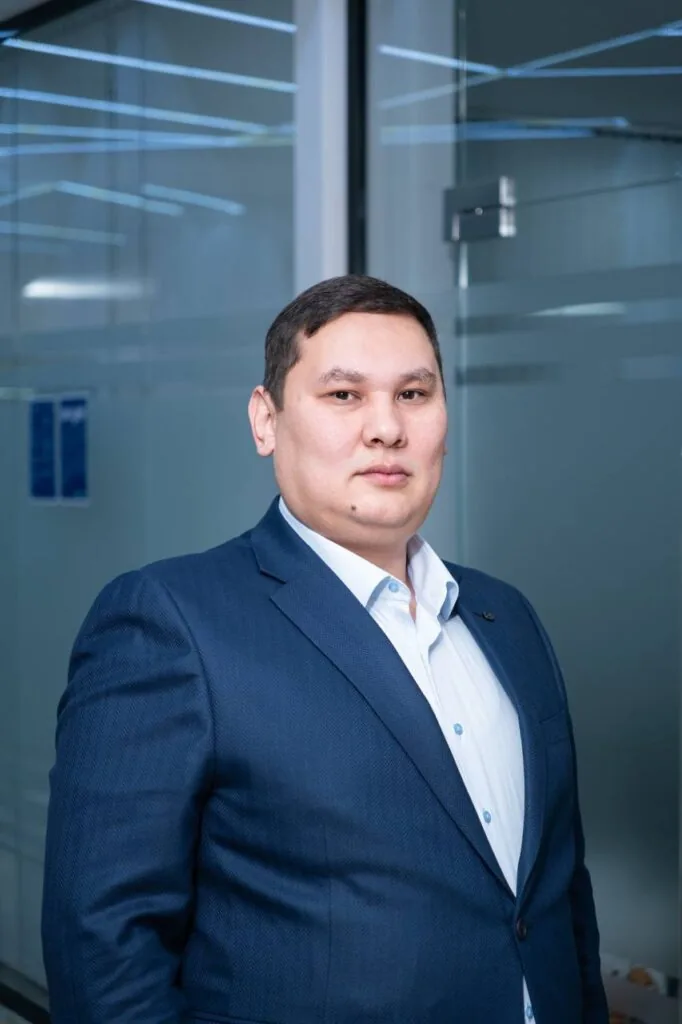
Abzal Sattarov: From Manager to Regional Director
Abzal Sattarov, Regional Director for Shymkent and Turkistan, started in 2018 as a Manager for Base Station Leasing. He did not actively seek a leadership position, but he consistently chose tasks with greater responsibility.
Sergek Group is a rapidly growing IT company expanding its presence across the country. With the opening of new branches, the team either hires specialists or reallocates resources. Abzal had to relocate from Almaty to Astana, then to Atyrau — this became a significant cultural and professional challenge. Later came Turkistan and Shymkent, managing multiple branches, and project management. With each new task, not only did his area of responsibility grow, but so did his confidence: being a leader is not about a job title, but about being ready to take responsibility for results before and after the deadline.
Abzal Sattarov
Growth is when you take on more than is expected of you, because you simply cannot do otherwise.
He recalls how, in one of the teams in the south, a specialist was missing at the start of a project — and how he temporarily filled that role while simultaneously handling management tasks. In his view, meritocracy means you give first, then you receive. According to him, loyalty to the place where you work, consistency, and an active stance are huge assets not only in his current company but also in other Kazakhstani companies.

Aisultan Baltabaev: From Junior Specialist to Head of Frontend
Aisultan, Head of Frontend, joined the company as a junior without an IT background or career benchmarks. At the start, he simply wanted to learn; he came for an internship, but over time he realized that “just doing your job” is not enough if you want to move forward. As he shares, the awareness of career opportunities likely came with experience, since at the beginning of his path he had just finished university and was glad to have found a job at all. His growth began with simple observation: those who advance do not necessarily know more, but they take on tasks they are not yet ready for more often. They are not afraid to make mistakes, step out of their comfort zone, ask for help when needed, do not refuse difficult tasks, and are not afraid to err.
Aisultan Baltabaev
I started growing when I stopped being afraid of tasks that scared me. When I began taking initiative in discussions. When I started doing not only what I was assigned, but also what I saw as important. I sometimes made mistakes. But there were people around who helped — without judgment.
Today, he leads his own team, helps junior specialists, and continues to follow the same approach: do not be afraid, do not stay silent, do not wait. The company culture, he says, is not about heroism, but about trust. Here, you can say “I don’t know” — and it will not be seen as weakness. Here, you can make a mistake — and it will not be grounds for dismissal.

Akzharqyn Izbasarova: From Computer Vision Engineer to Lead CV Engineer
Akzharqyn Izbasarova, today’s Lead CV Engineer, joined Sergek Group as a Computer Vision Engineer. At first, her path within the company seemed straightforward: working with recognition algorithms, technical tasks, and AI-related projects. But over time, it became clear that her strength lay not only in professional expertise, but also in her ability to see beyond narrow specialization. Her growth began when she stopped focusing solely on her own tasks and started thinking more broadly.
She was offered the role of team lead in her fourth year. Akzharqyn spent a year and a half on maternity leave, and the promotion came shortly after her return. Today, she leads a team of computer vision specialists, shares her experience, and helps newcomers enter the profession.
Akzharqyn Izbasarova
I realized that my decisions affect not only the quality of the algorithm, but also the efficiency of the entire system. This is a responsibility that requires both technical and management skills. For me, career growth is not just a new title. It is the opportunity to influence the product and how technology changes people’s lives.
Her story demonstrates another important element of meritocracy in Kazakhstani IT — growth is possible not only for those who work “in the field” or manage branches, but also for engineers creating complex technologies.
Of course, this system is far from perfect. The company does not yet have a unified promotion procedure like large corporations, but it does have something key — the ability to notice employees who do more than what is formally required. Team players who do not compete but lift each other up. Leaders who look not at how beautifully someone speaks, but at how resilient they are in difficult situations. Sergek is not yet Google or Facebook with American-style annual reviews, but here there is real human growth without corporate gloss. This is precisely why the stories of ordinary employees are so important: they show that in the Kazakhstani context, it is possible to build a culture that values your contribution.
The Tech on Telegram Follow The Tech on Telegram
Keep up with the latest technology and startup news.
Related reading







More from this author

News
zypl.ai begins operations in Japan and focuses on next-generation risk models
Mansur Ismagulov

News
Elon Musk's net worth has exceeded $700 billion for the first time
Mansur Ismagulov

Article Interviews
"Central Asian countries should build a joint ecosystem," — Bekhzod Ismoilov on the development of AI in the region
Mansur Ismagulov

Article Interviews
Bloom's Taxonomy and Engineering Levels: A Practical Growth Model
Mansur Ismagulov

Article Useful
How the IT industry in Azerbaijan developed in 2025: key events
Mansur Ismagulov

News
Tajikistan has become a new member of the regional innovation alliance Central Asian Innovation Hubs.
Mansur Ismagulov