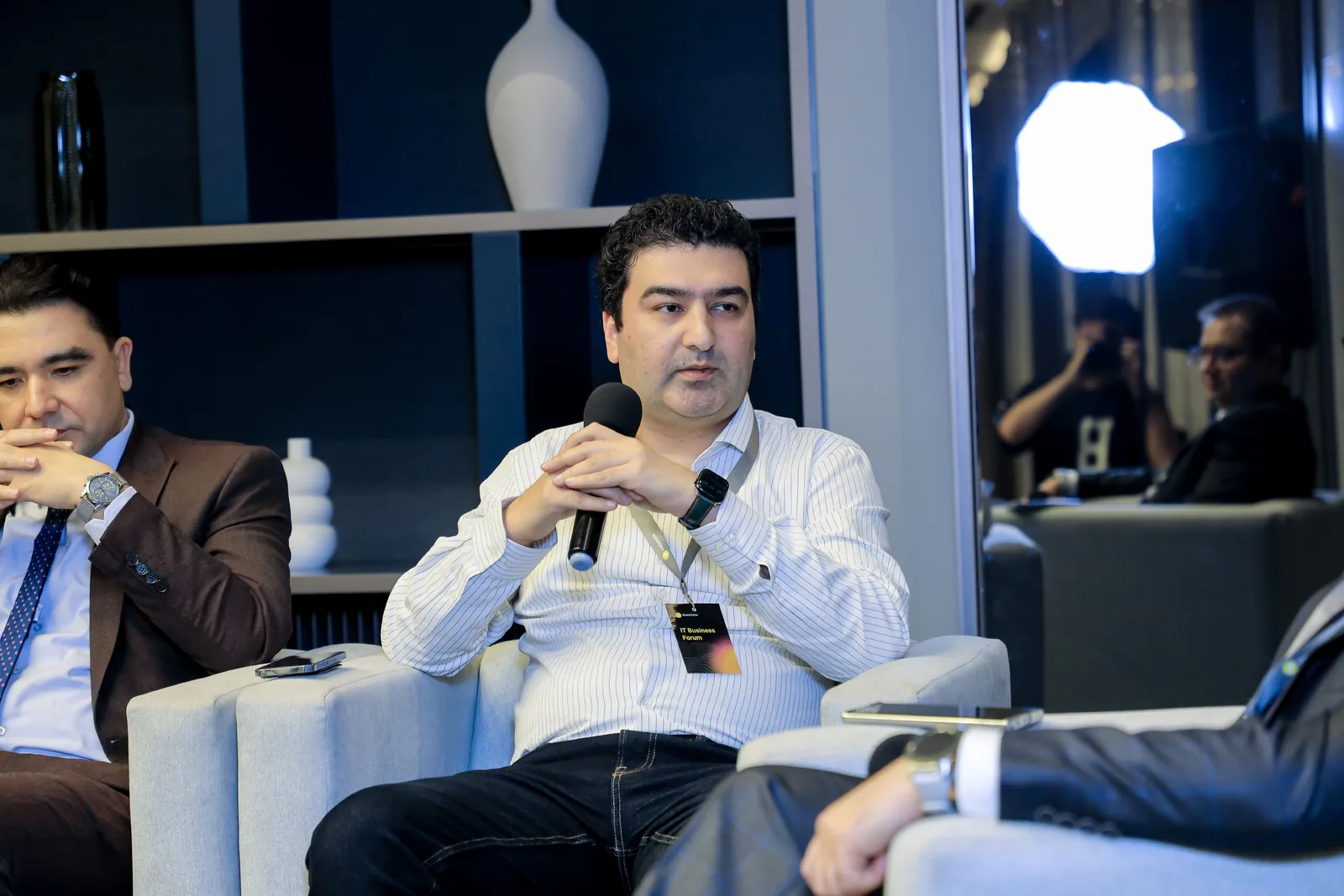
"Our goal is to create a space where users can solve their everyday tasks," — Nuriddin Lafizov on the role of Alif Uzbekistan in the future
The CEO of one of Uzbekistan's fastest-growing FinTech companies, Nuriddin Lafizov, shared insights on IT trends and the impact of global developments on the company's strategy. Read the full interview below.
Author - Mansur Ismagulov
The Tech AI
Get the key points in seconds - a short summary from The Tech AI.
Nuriddin Lafizov, CEO of Alif Uzbekistan (Tashkent), highlights the growing importance of digitalization and hybrid work. In 2020–2021, the company implemented AI technologies, including scoring and the GulChatAI chatbot, which resulted in savings of several million dollars. Alif is developing an ecosystem of services and aims to become a global fintech leader within the next 10 years.
Nuriddin Lafizov, city — Tashkent, Chief Executive Officer Alif Uzbekistan, Linkedin
On global changes and trends
The pandemic and economic crises have shown how important flexibility, digitalization, and company resilience are. We have significantly strengthened digitalization, which has made the importance of digital communication channels with customers obvious. If Zoom calls were rare five years ago, they are now the norm for many companies. Many companies have switched to a hybrid work format, which underscores the digitalization of the world. The pandemic taught us to account for “black swans” in forecasts and financial models, which helps us better predict challenges and risks.
On new challenges
The main challenges for the IT industry are global competition for talent and cybersecurity. Given that effective work can be done from anywhere in the world, competition for specialists has moved to the global labor market. For IT companies, this means the need to properly motivate and retain talent. Cybersecurity is also becoming an important challenge, requiring protection at all levels — in companies, processes, and for customers.
On the role of new technologies
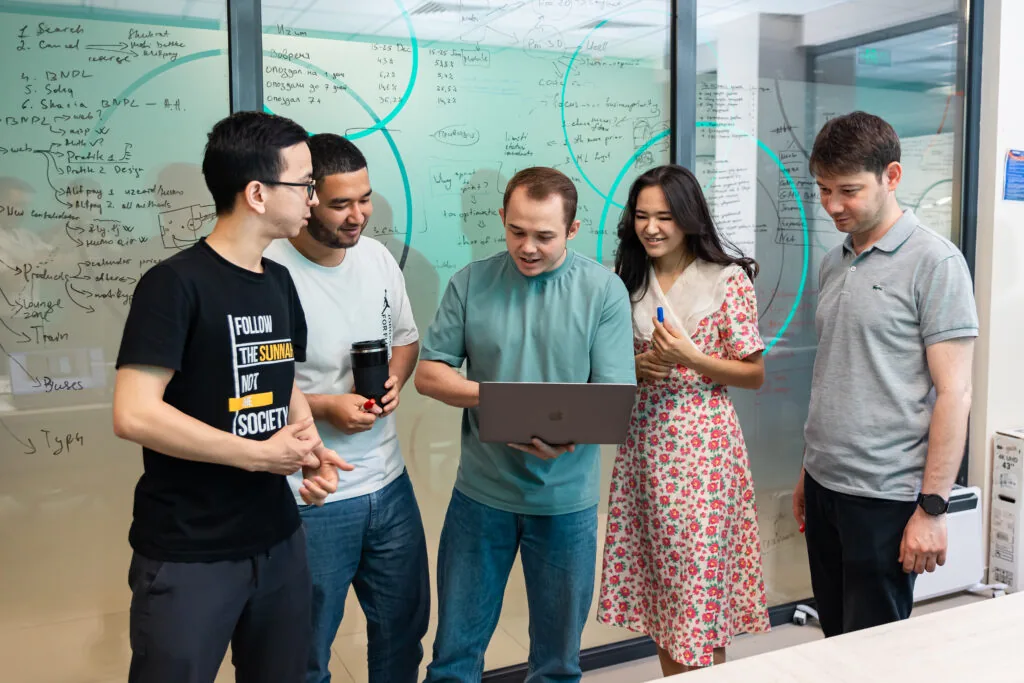
At Alif, we began implementing AI technologies even before it became a trend. In 2020, we started thinking about it, and in 2021, we began implementation, including scientific training as part of our scoring. Over several years, we have managed to significantly improve performance in AI models, especially in scoring. We also developed an AI chatbot, an AI recommendation system, and an AI collector for our marketplace. The chatbot is called GulChatAI — the name sounds similar to the Turkic name Gulchatai.
In the future, GulChatAI will become a voice assistant for the Alif call center, providing information about debts and answering customer questions in Russian, Uzbek, and Karakalpak. Currently, we are collaborating with engineers from Yandex to integrate this technology.
Today, we see that technologies such as artificial intelligence and machine learning help businesses build entirely new processes, maximizing the automation of certain tasks within the company. They allow for faster creation of innovative products, reducing risks, increasing sales, and making companies super-efficient. Within our company, we are already seeing the effect of implementing AI technologies amounting to several million dollars. This includes savings in scoring, where we have started issuing more accurate results, minimizing human error and mistakes. Recommendation systems that accurately suggest to customers which products to buy contribute to sales growth. Also, thanks to our services, we can significantly reduce the number of employees, as AI effectively replaces people in some areas.
On future employees
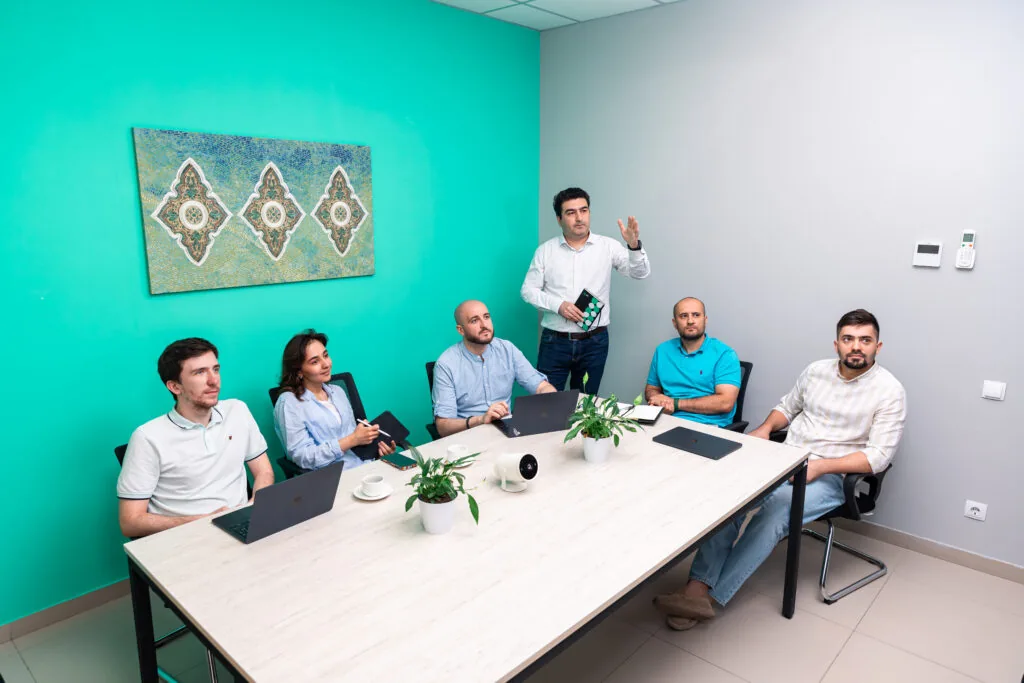
We are already seeing that an important skill for employees in IT companies and other industries is the ability to adapt to new technologies and use them effectively, including AI and analytical platforms. These skills will be key for future professions because success will depend on how well a person uses technologies such as machine learning and artificial intelligence. We notice that employees who actively use these technologies become more successful and in demand in the labor market.
Moreover, soft skills such as adaptability, empathy, project management, and good communication with colleagues are becoming important. These skills are also becoming increasingly important in our work environment.
On the impact of global trends on company strategy
In the era of globalization, we are increasingly dependent on global processes. What happens in one country can strongly affect others. This was shown by recent conflicts and the policy of the Federal Reserve Bank. All these factors directly affect the development of our business because we have become part of the global economy. We work with international investors and attract resources, and the influence of global factors affects the cost of funding in the market. These factors also affect the economy, the stability of currency markets, which in turn affects business.
If ten years ago such factors had less influence, now, given globalization and integration between countries, we see that global challenges significantly affect our countries, local companies, and the market.
As the head of Alif in Uzbekistan, I see many interesting directions for development in the country. Today, Alif operates in the consumer financing market, including installments, payments, transfers, and e-commerce. However, we understand the importance of expanding our services for customers. Our goal is to create a space where users can solve their daily tasks.
In this regard, we are moving towards creating a large ecosystem of Alif applications and services that will solve daily customer tasks, such as buying airline tickets and tours on installment, access to government services, online grocery shopping, and the ability to invest in stocks and bonds. We are also developing an online marketplace where various goods will be available, as well as the ability to pay for public transport and other bills. As part of our development, we will continue to work on creating an ecosystem of applications that will solve tasks and meet the needs of our users.
The company is constantly undergoing an R&D process. We test and verify hypotheses regarding product, market, and strategy development. We launch MVPs, conduct surveys to understand how much new products or services are in demand by customers, and make decisions on implementation or changing direction. This is a continuous process.
What a future leader should be like
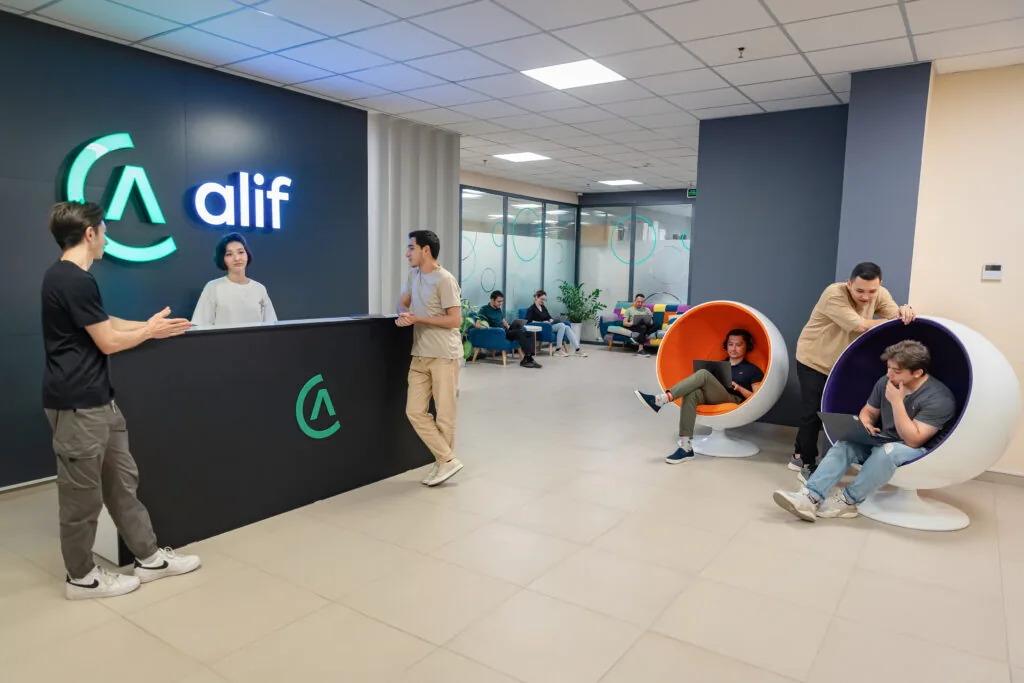
The key qualities of future leaders will be flexibility to changes and processes, the ability to inspire and motivate the team. As a leader, I must possess good digital literacy, especially in the IT industry. Strategic thinking is also important for development. In addition, leaders must ensure a culture of self-development and learning in teams, creating an open and inclusive environment for the development of talent within the company.
What the company will be like in 10 years
In 10 years, I see Alif as a global leader in the field of financial technology, combining both financial and non-financial services for customers. The company will provide services that cover most of the needs of our users. The future, in my opinion, belongs to companies that today invest in knowledge and innovation.
On the role of the company in the future
I see the role of our company in becoming an engine of innovation in the market, creating advanced technologies and ensuring access to them not only in large cities but also in regions. We strive to create an inclusive environment, making financial services, technologies, and services more accessible to all segments of the population. We are confident that in this way we will contribute to the development of society.
The Tech on Telegram Follow The Tech on Telegram
Keep up with the latest technology and startup news.
Related reading




More from this author

News
zypl.ai begins operations in Japan and focuses on next-generation risk models
Mansur Ismagulov

News
Elon Musk's net worth has exceeded $700 billion for the first time
Mansur Ismagulov
Article Interviews
"Central Asian countries should build a joint ecosystem," — Bekhzod Ismoilov on the development of AI in the region
Mansur Ismagulov
Article Interviews
Bloom's Taxonomy and Engineering Levels: A Practical Growth Model
Mansur Ismagulov

Article Useful
How the IT industry in Azerbaijan developed in 2025: key events
Mansur Ismagulov
News
Tajikistan has become a new member of the regional innovation alliance Central Asian Innovation Hubs
Mansur Ismagulov