The best is yet to come after the AI inflection point: investments, the superpower race, and new infrastructure for the AI economy
What awaits the AI industry in the coming years, where to find the main investment opportunities, and why human capital is becoming more valuable as artificial intelligence becomes cheaper? The Tech author Elmira Obri attended the World Artificial Intelligence Conference (WAIC) in Shanghai and gathered key insights from an interview with Esther Wong, founder of the venture fund 3C AGI Partners, on the future of AI infrastructure, the global competition between China and the US, and the new artificial intelligence economy.
Elmira Obry, City — Almaty, Founder of Foody AI, Instagram, LinkedIn
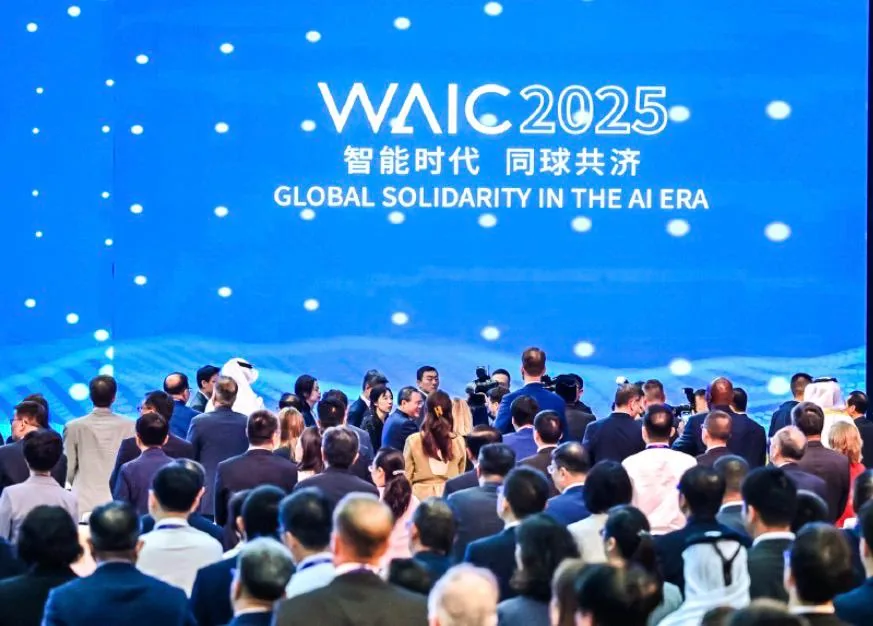
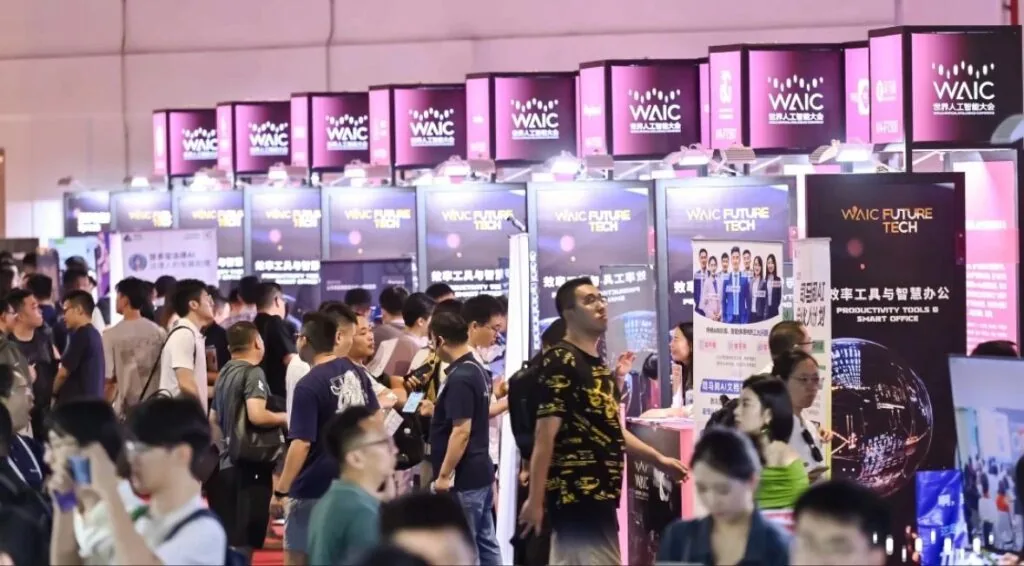
I attended the World AI Conference in Shanghai, and here is what I take away as a reflection.
Like any conference, WAIC was full of technological novelties and an abundance of experts from various industries, but the most interesting insights are usually not on the surface, but in discussions between experts and in the corridors of speaker lounges.
I present key points based on interviews with Esther Wong, founder and CEO of 3C AGI Partners, a Hong Kong venture fund and incubator specializing in AI infrastructure, computing technologies, and global investments in artificial intelligence.

AI is shifting from model training to mass adoption
The AI industry constantly creates new growth stories: models are becoming larger, inference costs are decreasing, and products are updating faster.
AI systems are becoming users of other AI systems. Therefore, future infrastructure will serve not only humans but also millions of interacting AI agents.
Future AI factories will be created by AI for AI. Old data centers and computing systems were designed by humans for human tasks. But AI agents can interact millions of times per second, requiring a different architecture. Speed and computing density, high throughput, energy efficiency, cooling infrastructure, and connectivity are coming to the forefront.
The main investment opportunity lies in infrastructure
The current infrastructure was created primarily to train a limited number of large models and does not well correspond to the future scale of AI.
According to Esther Wong, the market for applied AI products is becoming increasingly competitive: the cost of creating applications is decreasing, and solo companies can quickly launch products using Copilot, Claude, and other tools.
However, infrastructure remains a more stable investment direction because it is what powers the entire AI economy.
What to pay attention to:
— AI data centers
— energy-efficient computing
— biocomputing
— new types of processors
— space data centers
— nuclear fusion and new energy sources.

Invest before market consensus forms
Esther Wong evaluates a company based on three criteria:
1. Is the technology mature enough?
2. Is there a real market?
3. Does capital understand this market?
The best moment to invest is when the technology is already working, the market is preparing for rapid growth, but most investors have not yet realized its potential.
This is the strategy the fund used for early investments in Cerebras, Groq, and infrastructure projects.
In healthcare, value is shifting toward data and expertise
As AI models become cheaper, creating a standard application becomes easier. Therefore, long-term competitive advantage will be built around: deep industry knowledge, unique data, practical experience, specialized workflows, and access to real clinical or production cases.
In healthcare, companies owning large arrays of real data may be significantly more valuable than developers of universal white-label AI solutions.
Chinese and American AI ecosystems have different advantages
China excels in rapid product creation, a large number of users, short feedback loops, relatively low testing costs, and scaling applied solutions.
The US leads in developing frontier models, fundamental research, attracting global talent, and venture funding for advanced technologies.
China and the US: not competing copies, but different ecosystems
How to choose your blue ocean and not lose direction and focus?
Short advice for startups — consider the structure of each regional market and adapt the product, business model, and positioning.
Globalization should not be a simple copy of internal strategy. On the contrary, one should consider the specifics of each market and look for niches at the intersection of industries, cultures, and technologies.
Applied AI startups still have a chance against tech giants. Creating a new fundamental model and competing with global LLM leaders is extremely difficult. But at the applied level, innovation cycles are significantly faster.
Test hypotheses quickly and cheaply, find narrow industry tasks, accumulate and use your own data, change and adapt faster than large companies, build niche specialized products.
Esther Wong highlights two main qualities of a founder:
— optimistic thinking
— persistent problem-solving ability.
In his opinion, it is relatively easy to criticize an idea and explain why it won't work. It is much harder to take responsibility and find a practical solution.
For tech companies, it is also important to have an investor who understands the long-term vision, does not disappear during market downturns, has own operational experience, and is able to support the company through several cycles.
Human capital is becoming the most important resource. Human skills will become more expensive as intelligence becomes cheaper
When the cost of AI intelligence approaches zero, human qualities such as empathy, taste, ethics, emotional depth, critical thinking, interdisciplinary thinking, and expertise, as well as professional and personal responsibility, become especially valuable.
Esther also recommends studying history, philosophy, art, and natural sciences.
The Tech on Telegram Follow The Tech on Telegram
Keep up with the latest technology and startup news.
Related reading

More from this author

Article Useful
How to protect your accounts from hacking: 8 settings you should check today
The Tech

Article Useful
500 Global: How the Accelerator Works and Who Can Receive Investments
The Tech

Article Interviews
Game Development in Central Asia: Arkady Moldavski on Developing Reverb and the Growth of the Industry
The Tech

Article Useful
Google, Tesla, BlackRock, and the IMF: Where to Apply for an Internship in Fall 2026
The Tech

News IT
Tesla unveiled the flying electric car Roadster
The Tech

News IT
Intero Biosystems startup won the Startup Battlefield at TechCrunch Disrupt 2026
The Tech