Key trends in FinTech
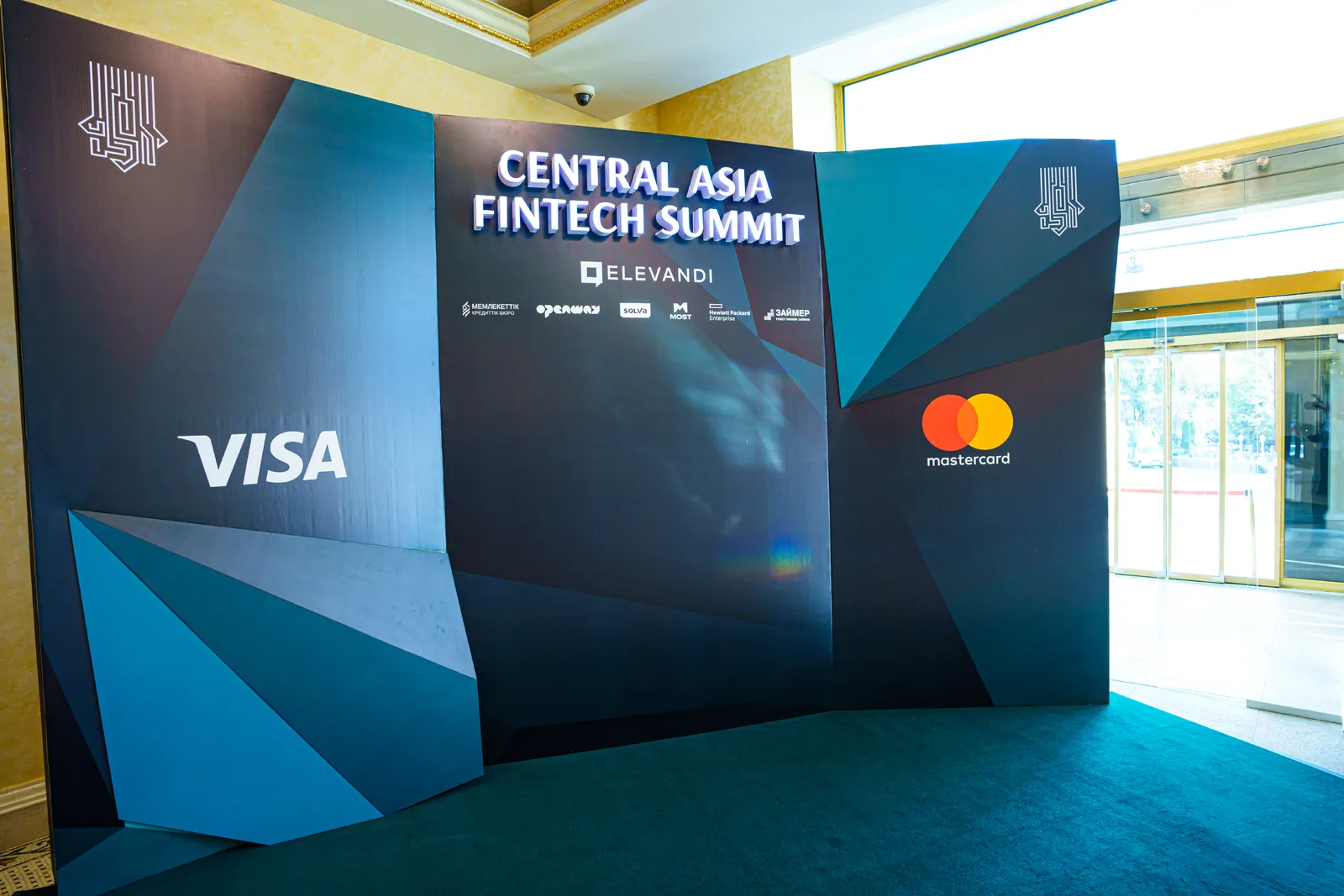
Recently, The Tech editorial team visited the Central Asia Fintech Summit, where they learned about key trends in the FinTech industry. For those who could not attend the event, we share the main points in text format.
Author - Mansur Ismagulov
The Tech AI
Get the key points in seconds - a short summary from The Tech AI.
In 2023, 64% of the world's population used FinTech services, and by 2030, the sector's revenues are expected to grow sixfold. Key trends include a shift toward emerging markets, consolidation, and the growth of embedded finance to $248 billion. Mastercard supports startups through its Start Path and Lighthouse programs to foster inclusive industry development.
Unal Yilmaz Esin, Head of Mastercard Advisors for CIS
The evolution of FinTech began in the 1960s with the advent of credit cards and ATMs, and in the 2020s it accelerated thanks to online platforms and mobile applications. In 2023, 64% of people worldwide use FinTech services, especially among young people—Generation Z and millennials—where this figure reaches 87% in China and India.
FinTech adapts to customer needs, striving to ensure simplicity and convenience. An example of this is the concept of the "15-minute city," where people can easily access the services they need. The sector is developing, expanding its customer base and attracting interest in digital services, which opens up new growth opportunities, especially given the large number of unbanked customers.
FinTech has long-term potential. Revenues are expected to grow sixfold by 2030.
Key trends in FinTech:
— cautious funding: venture capitalists are becoming more selective, especially towards early-stage companies that need to demonstrate strong revenue growth potential
— shift to emerging markets: investments are directed towards developing countries, although recent global events have slowed this process
— consolidation: an increasing number of mergers and acquisitions among large FinTech companies, as they strive to verticalize in niche markets
— new technologies: innovations such as FECTI and DeFi are becoming increasingly popular and attracting institutional capital.
The FinTech ecosystem is growing and includes new areas such as VALTECH, INSURETECH, and REGTECH. Consolidation is expected to continue, especially with the growth of embedded finance, which is projected to increase from $53 billion to $248 billion by 2030. For example, Starbucks has a mobile application that helps manage its loyalty program. Customers can preload money in advance, and Starbucks holds more than $1.6 billion in accounts—more than 85% of banks in the US. This shows that embedded financial solutions are becoming increasingly in demand.
A KPMG study shows that more than 400 digital banks serve millions of customers worldwide, but only about 10% of them are profitable. This leads to mergers and acquisitions in FinTech. Consumers, especially young people, want more control and flexibility in banking services. AI and machine learning are expected to improve personalized approaches and customer interactions.
Biometric security is important for protecting banking transactions on all devices, and the Internet of Things helps integrate banking services into everyday life. Quantum computing is changing the approach to data analysis, and augmented and virtual reality technologies, supported by 5G, create new experiences, such as VR glasses for discussing investments.
Support for small and medium-sized enterprises (SMEs) is important, as they account for more than 80% of businesses worldwide. SMEs often face difficulties in obtaining traditional bank loans and turn to microfinance organizations. FinTech companies help solve these problems. For example, Thai automates financial transactions for SMEs, and American companies are developing new projects. Technologies such as AI and blockchain make investments accessible to more people, as demonstrated by the example of Trolley Toot, which allows small investors to enter the stock market with low commissions and expands offerings in cryptocurrency.
Despite challenges in attracting high-end clients, FinTech has significant growth potential due to the expansion of services and integrated solutions. Mastercard's Start Path program supports promising startups and collaborates with more than 300 companies in 40 countries. Recently, the Mastercard Lighthouse program was launched in Turkey to identify local startups for the Mastercard ecosystem. The Coventry system has already attracted 3.5 million startup owners, confirming Mastercard's leadership in FinTech.
In conclusion, FinTech is poised for significant growth and is making financial services more accessible. Programs such as Mastercard Start Path help develop a new generation of FinTech companies and create a more inclusive future. By 2030, FinTech is likely to transform financial services and create a more connected world, anticipating collaboration between regulators, FinTech companies, and traditional financial institutions to ensure safe and ethical development.
The Tech on Telegram Follow The Tech on Telegram
Keep up with the latest technology and startup news.
Related reading






More from this author

News
zypl.ai begins operations in Japan and focuses on next-generation risk models
Mansur Ismagulov

News
Elon Musk's net worth has exceeded $700 billion for the first time
Mansur Ismagulov

Article Interviews
"Central Asian countries should build a joint ecosystem," — Bekhzod Ismoilov on the development of AI in the region
Mansur Ismagulov

Article Interviews
Bloom's Taxonomy and Engineering Levels: A Practical Growth Model
Mansur Ismagulov

Article Useful
How the IT industry in Azerbaijan developed in 2025: key events
Mansur Ismagulov

News
Tajikistan has become a new member of the regional innovation alliance Central Asian Innovation Hubs
Mansur Ismagulov