"Each rejection helped me identify my weaknesses," says Sardor Khudayberganov, team lead at Uzum, on starting his career in IT
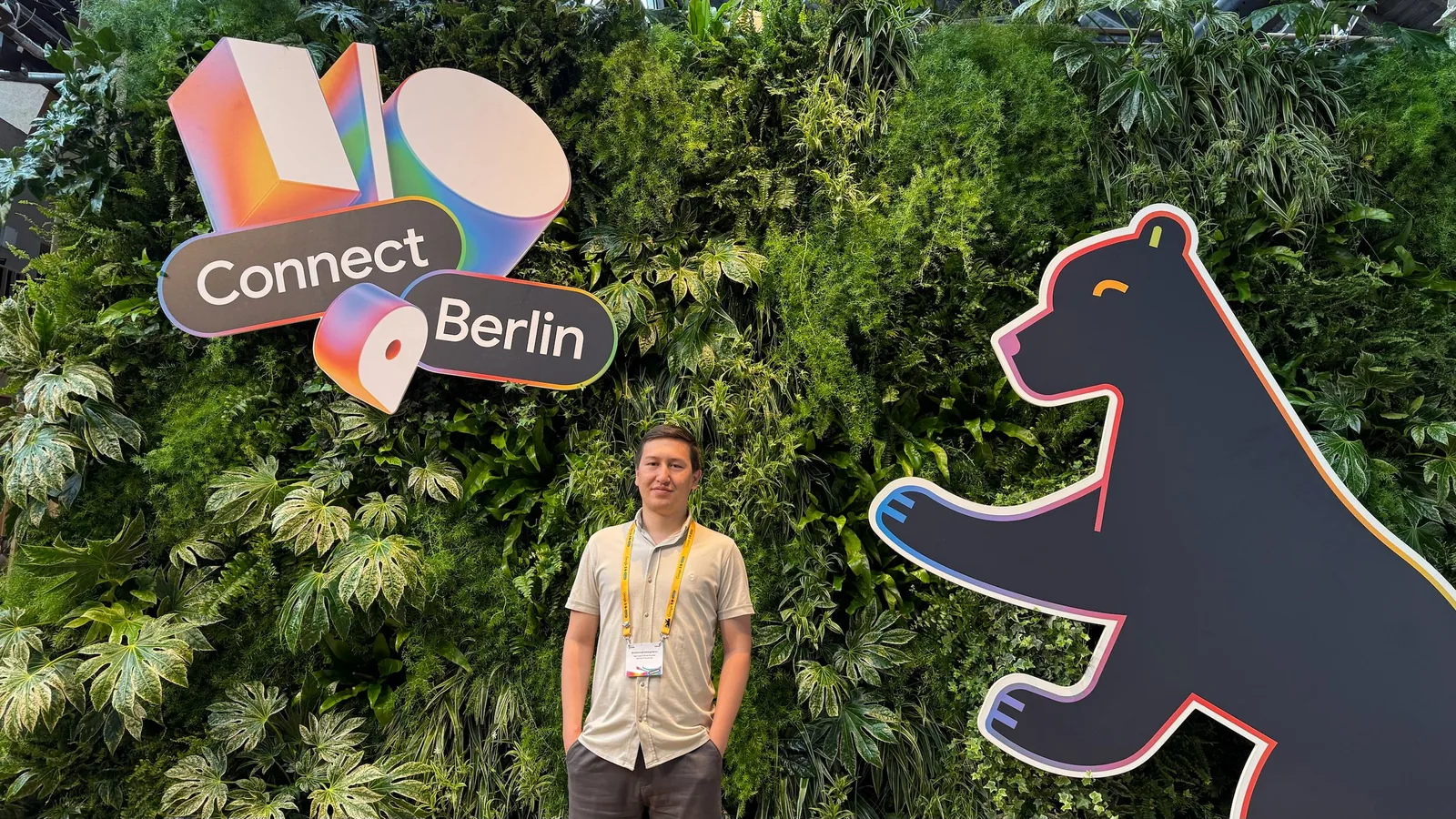
In an interview, Sardor Khudayberdiev talked about his journey in IT, the initial challenges he faced, and gave advice to beginners.
Author - Mansur Ismagulov

The Tech AI
Get the key points in seconds - a short summary from The Tech AI.
Sardor Khudayberganov, team lead of development at Kapital Lab (Uzum Technologies), received his education at the Turin Polytechnic University in Tashkent. He began his career at the age of 19–20 at the R&D center of Akfa, where he developed AGV robots and computer vision systems. In the project, he used Python, C++, and ROS, overcoming uncertainty through self-learning and participation in hackathons.
Sardor Khujaev, city — Tashkent, team lead of the ABC development team, Kapital Lab, Uzum Technologies, Linkedin
About me
I received my IT education at the Turin Polytechnic University in Tashkent. Currently, I hold the position of team lead for the development team in the Kapital Lab project at Uzum. We are engaged in the digital transformation of Uzbekistan's largest private bank, Kapitalbank.
Programming captivated me at the age of 15 or 16. It became a natural extension of my love for solving mathematical problems, just in a new format. I started by learning HTML, CSS, and PHP, then mastered C++ and tried my hand at competitive programming on the codeforces.com platform.
Over time, my interest shifted to robotics. The Turin Polytechnic University in Tashkent attracted me with its strong technical foundation in this field, and the scholarship I received for my studies made the choice obvious. Already in my first year, I was actively involved in robotics, participated in projects, and even attended a summer school in Korea. Later, I began sharing my knowledge by teaching robotics.
About my first IT job
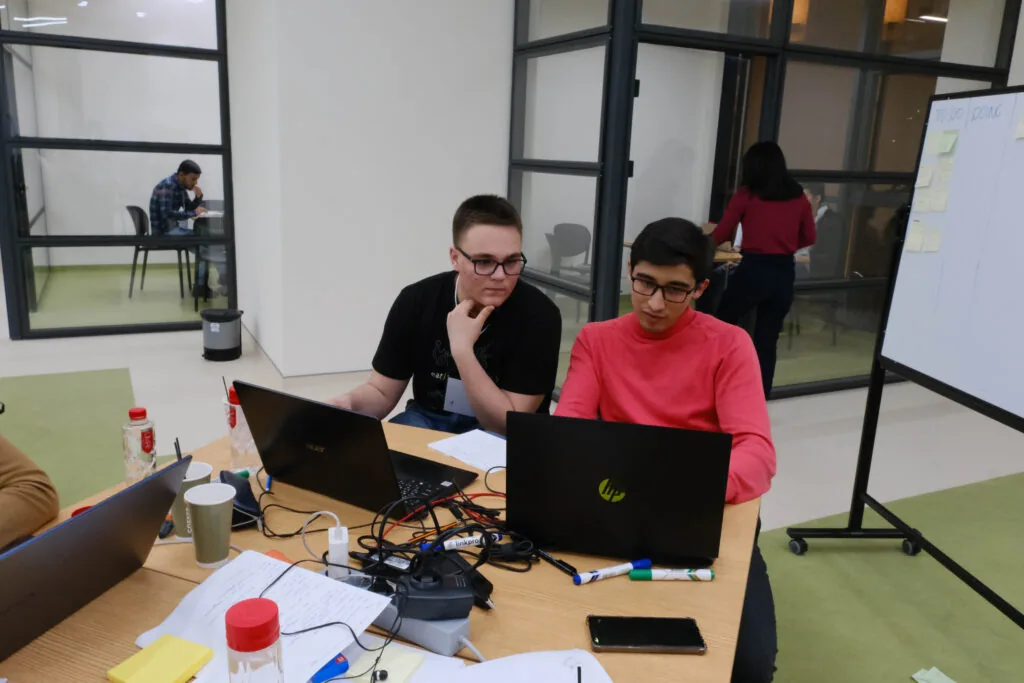
I started my IT career in my second year, joining the R&D center of Akfa. At the same time, I combined this job with teaching robotics at the high school associated with Westminster International University in Tashkent.
When I started working at Akfa, I was about 19-20 years old, and my position at that time was junior engineer. It was an incredibly rich and multifaceted experience: I worked on developing mobile applications for equipment prevention, computer vision systems for detecting production defects, as well as AGV warehouse robots. Tasks ranged from programming robot logic in Python and C++ to working with Robot Operating System and Android development. The Akfa R&D center became a real engineering laboratory for me, where I learned to take responsibility and master new technologies in the context of real projects.
My acquaintance with Akfa began thanks to a friend who received a scholarship from the company and worked in their R&D center. He told me about the exciting projects in robotics and automation they were working on. Such opportunities are rare in Uzbekistan, and I was immediately inspired. I asked my friend to recommend me. Honestly, after a couple of months, I had already forgotten about it, but unexpectedly I received a call and an invitation for an interview.
At that time, I knew Akfa as a manufacturer of windows and doors, so I was pleasantly surprised to learn that the company had a strong R&D direction. This became a decisive factor for me. During the interview, I spoke with the head of the engineering department of the R&D center, Denis Yermalayev, who subsequently became my manager. He asked questions about my robotics projects, the technologies I used, and how I approach problem-solving. I was also tested on my knowledge of programming, electronics, design, and working with CAD tools.
I didn't prepare specifically; I simply shared my experience, knowledge, and projects. I believe what mattered most to them was my enthusiasm and willingness to learn something new. I had no professional experience, so I "sold" my strengths: successful studies, robotics projects, participation in hackathons and competitions, and teaching experience. All these achievements became my "unique value proposition," which helped interest the employer and get the job.
Challenges
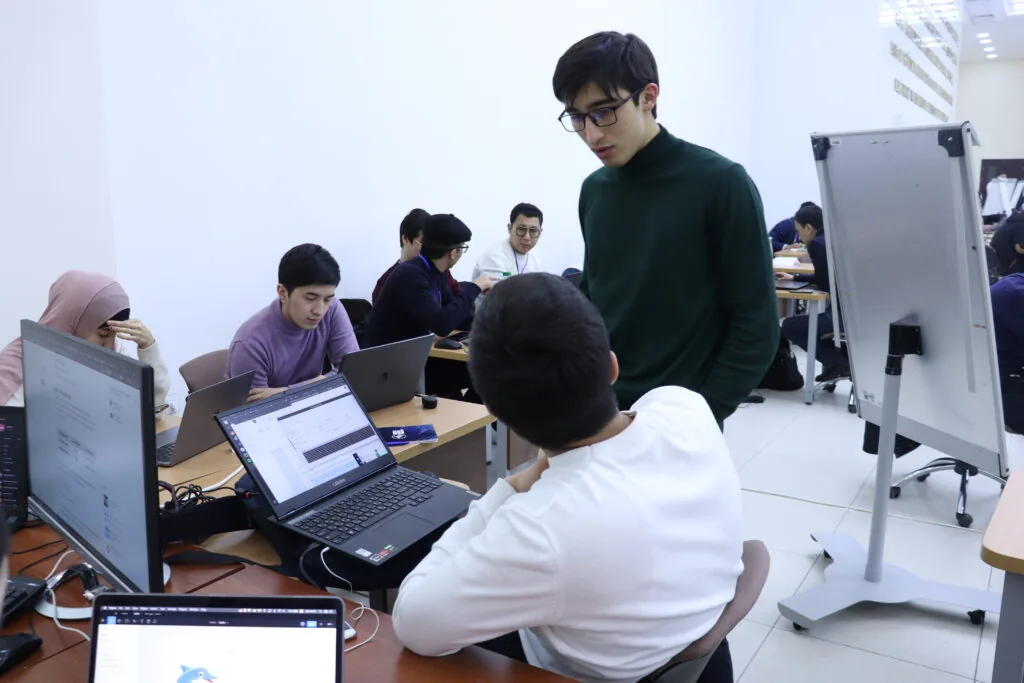
Honestly, my entry into IT was quite unexpected, so I didn't face serious difficulties in finding my first job. I think my active position at the university played a role: I not only studied diligently and developed technical skills but also actively participated in projects, competitions, and other initiatives where I could apply my knowledge in practice.
In the early stages, there were almost no rejections. But later, when I started trying out for middle-level positions and above, difficulties increased significantly. Failures in interviews were frequent, but I tried to perceive them as feedback. Each rejection helped identify my weak points, and instead of becoming demotivated, I focused on what needed improvement. This approach helped me grow and gradually raise my level.
At my first job at Akfa, the biggest challenge was uncertainty. Every new project required skills I didn't have at the time, and there were few mentors. For example, when we were developing an AGV warehouse robot, we had to invent everything from scratch: design, budget, technical solutions. There was no ready-made instruction, of course. We redesigned the robot three times before it worked. I gained most of my knowledge from forums like Stack Overflow, specialized chats, and advice from acquaintances. Gradually, I learned to cope with uncertainty and developed confidence: "Anyway, I'll manage!" This mindset became my key support in the future.
One of the main challenges at the start of a career is understanding what you want and being able to show it correctly. When you have no experience, it is difficult to prove to an employer that you can solve real problems. Companies often want to see experience in a candidate, even if the position is advertised as "open to interns." Hence the paradoxical job postings: they are looking for juniors, but with middle-level requirements and several years of work experience.
To overcome this, I focused on learnability and real activity: academic projects, hackathons, teaching, participation in competitions. All this helped me form a portfolio that demonstrated not only knowledge but also the willingness to learn, adapt, and bring things to completion.
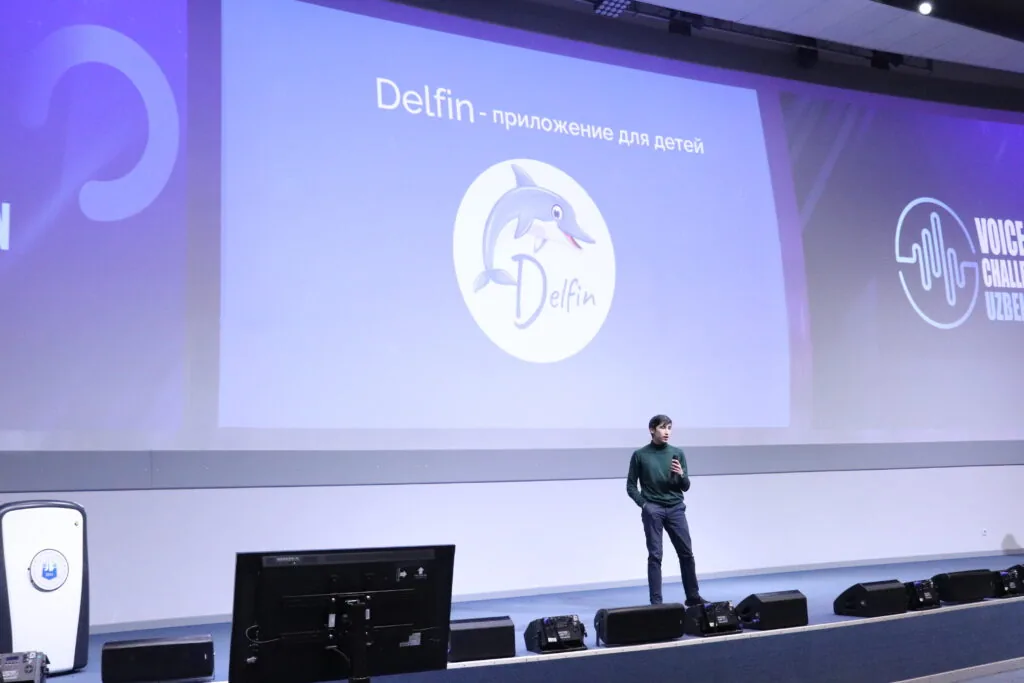
3 tips that will help you find a job in IT
— develop soft skills: teamwork, time management, the ability to learn quickly and adapt to new tasks
— expand your network: participate in hackathons, meetups, conferences, and don't be afraid to talk about your projects
— try to get your first job as early as possible. But don't agree to dubious conditions where they promise high mountains but keep you in an unfavorable position. And if you have no experience
— do pet projects, experiment with technologies, show that you are active and motivated.
The Tech on Telegram Follow The Tech on Telegram
Keep up with the latest technology and startup news.
Related reading



More from this author

News
zypl.ai begins operations in Japan and focuses on next-generation risk models
Mansur Ismagulov

News
Elon Musk's net worth has exceeded $700 billion for the first time
Mansur Ismagulov
Article Interviews
"Central Asian countries should build a joint ecosystem," — Bekhzod Ismoilov on the development of AI in the region
Mansur Ismagulov
Article Interviews
Bloom's Taxonomy and Engineering Levels: A Practical Growth Model
Mansur Ismagulov

Article Useful
How the IT industry in Azerbaijan developed in 2025: key events
Mansur Ismagulov
News
Tajikistan has become a new member of the regional innovation alliance Central Asian Innovation Hubs
Mansur Ismagulov