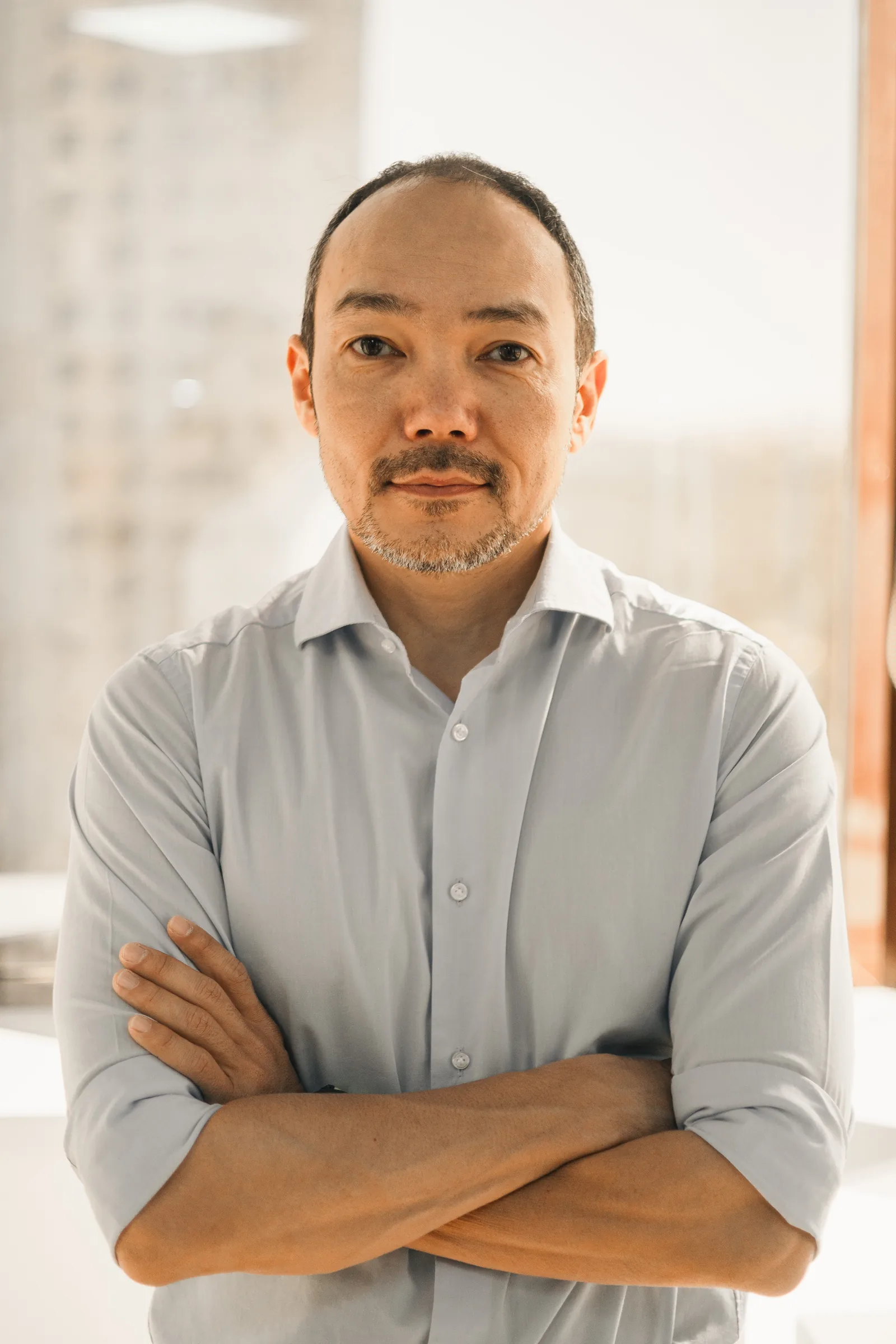
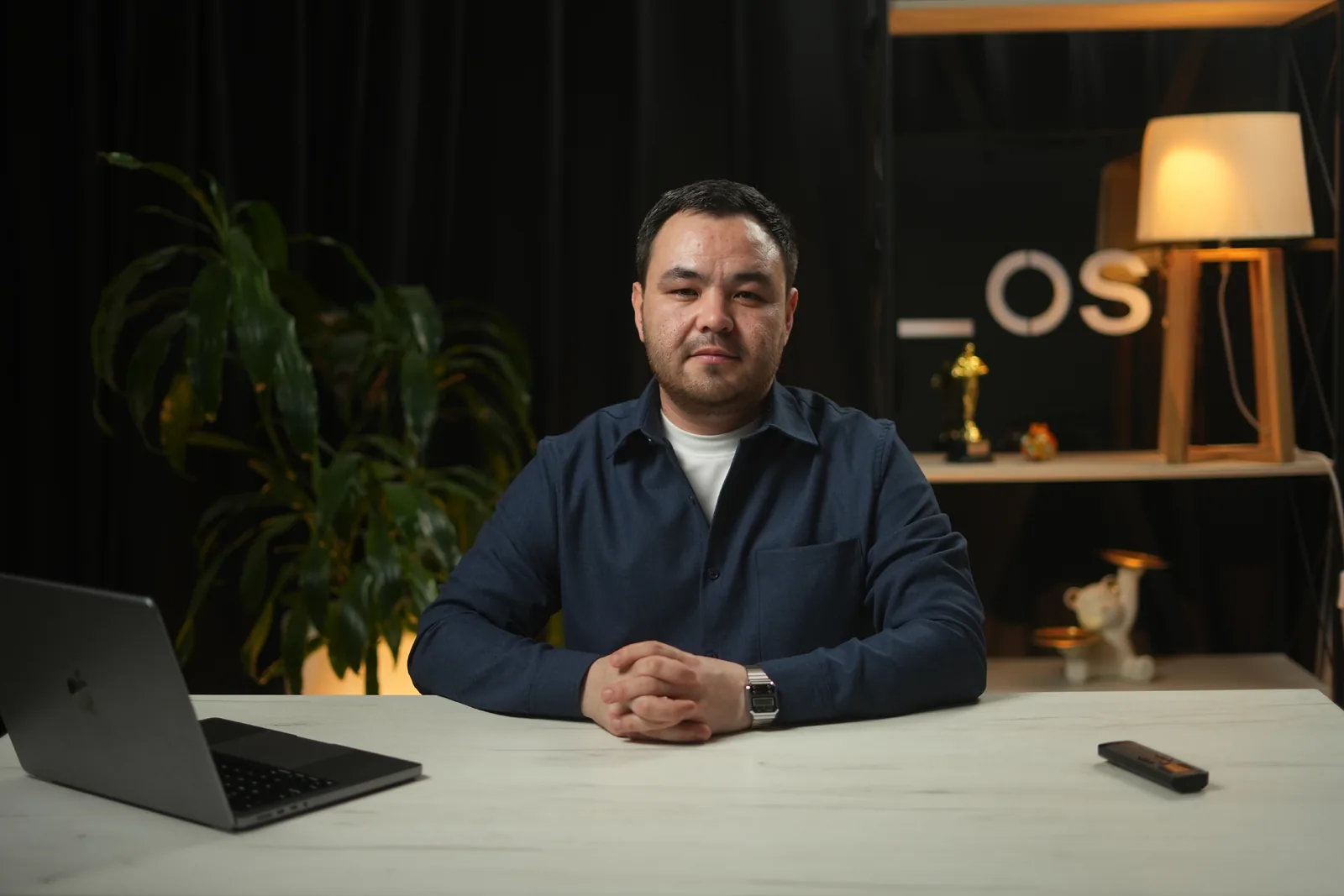
"Kazakhstan is a laboratory for us where we test and implement solutions," says Dauren Tulebayev on the implementation of new technologies
We continue our series of interviews with leaders of the IT industry in Central Asia. This time, we spoke with Dauren Tulebayev, who shared insights on the role of modern technologies and the company's plans. Read the full interview below.
Author - Mansur Ismagulov
The Tech AI
Get the key points in seconds - a short summary from The Tech AI.
Dauren Tulebayev, CEO of 7Generation Group (Astana), highlights the impact of the war on Kazakhstan's economy and the shift in IT trends toward data generation for AI. The company is expanding in Africa, the Middle East, and Southeast Asia, using Kazakhstan as a laboratory for testing solutions. The strategy emphasizes employee flexibility, the development of machine learning, and the establishment of international branches while maintaining the core team in the country.
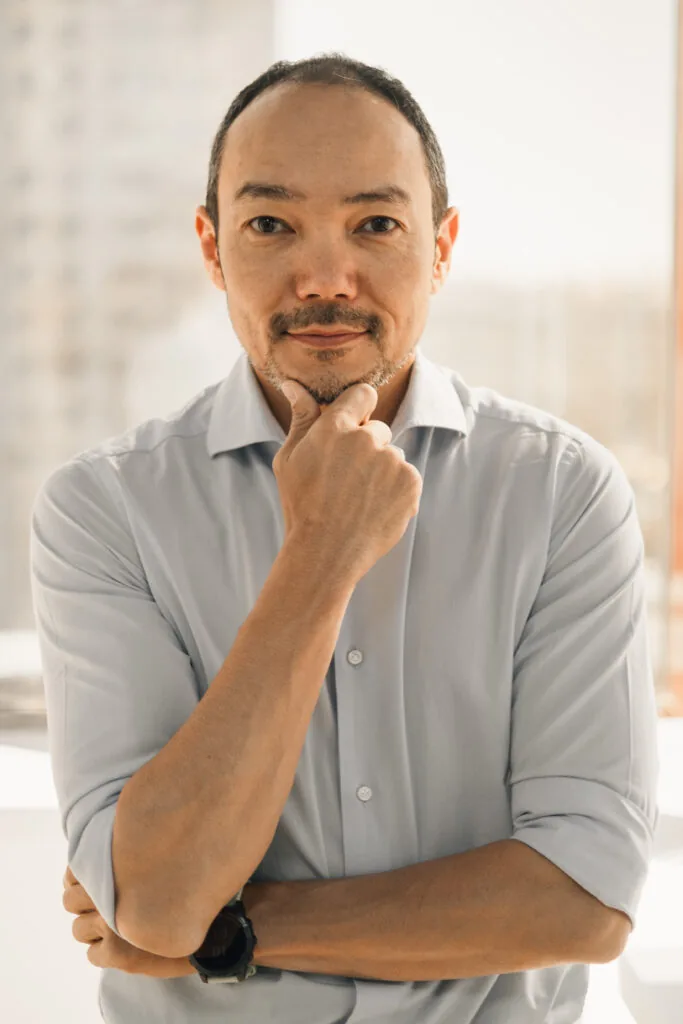
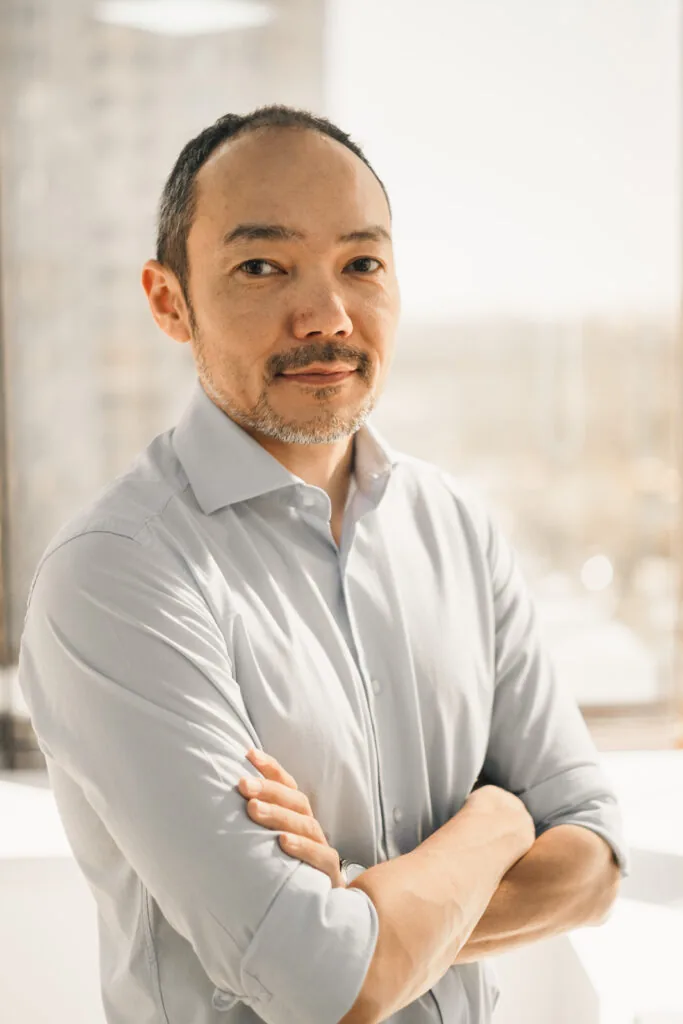
Dauren Tulebayev, city — Astana, CEO 7Generation group, founder Butterfly Effect Corporate Ecosystem, Instagram
On global changes and trends
The pandemic and economic crisis had little impact on us in terms of work—we were already accustomed to remote work. In the first couple of years, there were attempts to prepare for possible recurrences, but everything soon returned to its usual course, as if the pandemic had never happened. This is likely due to the brain's adaptation, which seeks to minimize stress by forgetting past difficulties. Therefore, I do not notice any drastic changes.
The military conflict between Russia and Ukraine has significantly impacted the economy. Some foreign companies avoid cooperating with Kazakhstan, considering us part of Russia, which creates problems for accessing international markets. However, this opens up opportunities for local developers: the departure of major vendors frees up space in the market. Nevertheless, difficulties with the perception of Kazakhstan abroad remain.

On new challenges
In the past, the main task in IT was the digitalization of offline processes: transitioning work from paper and pens to an electronic format to increase transparency, data tracking, analytics, and combat corruption. Today, the trend has changed: digitalization is now focused on data generation, as the future belongs to artificial intelligence, which relies entirely on data. For neural networks, data is the foundation, the "food" necessary for analysis, synthesis, and drawing conclusions.
The development of artificial intelligence depends on two key factors: computing power and data. The first is easier to solve—computing power can be purchased if funds are available. Data, however, is more complex: collecting, analyzing, developing, and implementing it requires time, resources, and a competent team.
Digitalization is now directed not only at transitioning offline processes online but also at generating data, which is critically important for AI. In Kazakhstan, the Smart Data Ukimet project has emerged within JSC "NIT"—a timely and important initiative for both the state and business. Today, companies that create data streams are winning, because flow is the trend.
An example is the Kompra.kz project, which not only aggregates data but also forms a stream, providing it in a convenient and useful format. It is precisely because of this that Kompra is considered a successful project.
On the role of new technologies
Machine Learning (ML) allows us to do things that are beyond human capabilities. It finds patterns in data that a person might not notice, whether with the brain or eyes. ML enables achieving maximum effect with minimal resources.
Take Kompra, for example. This system aggregates company data and helps create a detailed profile, assessing its reliability. However, there are factors we might overlook. Thanks to ML, we can obtain a more accurate and high-quality assessment, eliminating human bias. This makes the information more objective. Based on this objective information, someone can make a decision about cooperating with the company. It is especially worth noting the development of AI through Large Language Models (LLMs). This is a new stage that significantly simplifies many processes.
On one hand, this is a threat to some professions, as process simplification may eliminate them. On the other hand, it opens up new opportunities. For example, I can upload my financial spreadsheets to an LLM and receive an analysis and five-year forecast in five minutes for 10,000 tenge, instead of hiring an expensive analyst who would spend a month on this.
At 7Generation group, we deeply analyze telecom data, helping operators better understand their customers: why some stay and others leave. This allows us to offer customers more favorable and comfortable conditions. For operators, this is critically important, as their business depends on subscribers. We profile millions of customers, analyzing data on thousands of transactions for each of them. We work with billion-scale data volumes, which requires not only creating effective ML models but also the ability to quickly process large information streams and deliver results.
On future employees
For employees, both soft and hard skills are important. Among key soft skills, I would highlight flexibility and learnability. Flexibility allows one to view technology as an opportunity rather than a threat, adapting it into their work. Learnability is important because new technologies require learning and integration into processes.
Regarding hard skills, I would recommend focusing on areas that will remain with humans. For example, in programming, in 5-10 years, there will likely be solutions capable of effectively writing code, and some developers will not be able to compete with artificial intelligence. However, data architecture and similar fields will remain human domains. Also, in network engineering, such as in 7G, where traffic management requires unique knowledge that will be difficult for AI to master. Here, research and reverse engineering are important, where you acquire knowledge yourself, making you unique.
I recommend entering fields with little existing knowledge to become a source of knowledge. In such areas, AI will not be able to surpass you. In fields where there is already a lot of documented knowledge, AI will likely be more effective than humans.
On the impact of global trends on company strategy
Due to the devaluation of the tenge, we plan to switch to dollar payments in the coming years. To implement this, we need to earn in dollars, so we are expanding our activities into the African, Middle Eastern, and Southeast Asian markets. This makes us an attractive employer in the region, helping to attract top talent.
We invest heavily in corporate culture, but in terms of opportunities, we have unique advantages. Kazakhstan has many talented people, which we see in the olympiads and competitions we win, including in programming. If these smart individuals stay in Kazakhstan, earning as they would in an international company but with greater opportunities than in countries where everything is three times more expensive, we gain a significant advantage. This allows us to achieve greater results with fewer resources.
Our efficiency here is high because if we moved to the USA, we would have to reduce staff, which would lower productivity and opportunities for reinvestment. Kazakhstan is our laboratory where we test and implement solutions. If something works here, it will work in other countries as well.
We have three directions: the Middle East, Africa, and Southeast Asia. These regions have little local expertise and are at a level of development similar to where we were 15-20 years ago. They lack the experience we have accumulated, and they are satisfied with the price-quality ratio. We offer high-quality products at affordable prices.
Our competitors are mainly American and Israeli companies. It is difficult for Israeli companies to enter the market due to religious and ideological factors, while American solutions are too expensive.
In Africa, due to post-colonial psychology, there is a reluctance to work with former colonizers—European countries, the USA, and Turkey. However, they are willing to cooperate with Kazakhstan, perceiving us as "brothers." This facilitates market entry. For example, in Nigeria, with a population of over 200 million people, we see a huge growing market and significant opportunities for our company.
Southeast Asia is a region with a large population, where countries that were long under Chinese influence are now striving to develop their own products and expertise. We are flexible and offer them technology transfer so they can create national solutions. This is especially true in Malaysia, where the mentality is similar to Kazakhstan's, facilitating cooperation. We support them in developing their own products in the security sector and help create their solutions. When they start developing and selling, we earn through a Revenue Sharing model, which is our investment in their development.
What the future leader should be like
The future leader must possess a number of key qualities that will help them inspire and lead people. The main ones are:
- Bravery. Brave people break stereotypes and go beyond established systems. They inspire others by showing that situations can be changed and that what others consider impossible can be achieved. Bravery is the ability to go against the current and inspire change.
- Trust. A leader must inspire trust in others, and for this, it is important that they meet certain criteria. To lead, a leader must be an example, and their actions must align with their beliefs.
- Charisma. This is a special quality that is difficult to recreate or artificially develop. People are usually born with charisma. When a person has bravery, is ready to break stereotypes, inspires trust, and their charisma draws people to them and makes them want to work with them, charisma is the ability to influence people with just a glance.
- Vision. A leader must clearly understand where they are heading and be able to explain to their followers how they will get there. Without an idea and a clear plan to achieve goals, a leader cannot be effective. Vision must be concrete and inspiring. For example, our mission is creating technological solutions that ensure people's safety and justice in society. We have already ensured safety for 30 million people in Kazakhstan and Azerbaijan and aim to reach 400 million over the next five years.
It is important to understand the market, competitors, product, and potential. All this must be gathered into a vision that is so convincing that people believe in it and want to participate. When the team believes in the leader and their vision, success is already near.
What the company will be like in 10 years
One employee recently said that I have two qualities: I see what others do not notice, and I have a game-changer spirit. In 10 years, I want our company to be international, but with the main team, laboratories, and developers in Kazakhstan. This is my homeland, and I want our core team to remain here. I will live in Kazakhstan, although I will travel a lot, but the main base will be here.
Secondly, we cooperate with major telecom companies, as our products are successfully developing in this sector. Our key partners have also become states. With telecoms, we work with data, helping them increase revenue and improve subscriber service, while with states, we work on ensuring citizen safety and justice for people.
Thirdly, we have branches in the world's largest cities, and every employee can work from any country. This is similar to a Work and Travel program: if you want, travel through the branches and work. This helps resolve personal matters, see the world, change the environment, which positively affects creative potential. At the same time, you continue to work for the company and create new value for everyone.
Why game changer? Because when you become influential, you change the rules of the game. For example, by simply swapping a button, you change the entire system. The same applies to technology: you implement your system, then develop it, and everyone who works with it starts acting differently. This is the magic of IT—you first do what is needed, and then, having a vision, you change the system, and everything around changes. People's attitudes change, and they begin to feel freer.
For example, we are implementing smart gates at the border that automatically read faces and passports, eliminating communication with border guards and reducing stress. This changes the atmosphere, and even foreigners feel calmer. During the pandemic, border guards suffered greatly because many people passed through them, and they could get infected. Smart gates also solve this problem by eliminating contact and reducing risk. In addition, they help identify violators faster.
IT allows changing the rules of the game, and our team is ready to take responsibility for solving both state and business tasks. We have the bravery and maturity for this.
The Tech on Telegram Follow The Tech on Telegram
Keep up with the latest technology and startup news.
Related reading



More from this author

News
zypl.ai begins operations in Japan and focuses on next-generation risk models
Mansur Ismagulov

News
Elon Musk's net worth has exceeded $700 billion for the first time
Mansur Ismagulov
Article Interviews
"Central Asian countries should build a joint ecosystem," — Bekhzod Ismoilov on the development of AI in the region
Mansur Ismagulov
Article Interviews
Bloom's Taxonomy and Engineering Levels: A Practical Growth Model
Mansur Ismagulov

Article Useful
How the IT industry in Azerbaijan developed in 2025: key events
Mansur Ismagulov
News
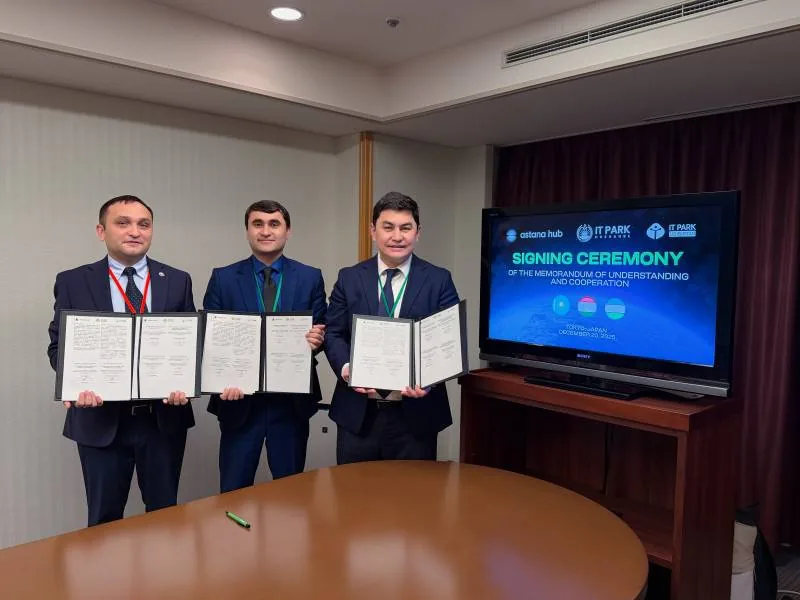
Tajikistan has become a new member of the regional innovation alliance Central Asian Innovation Hubs
Mansur Ismagulov