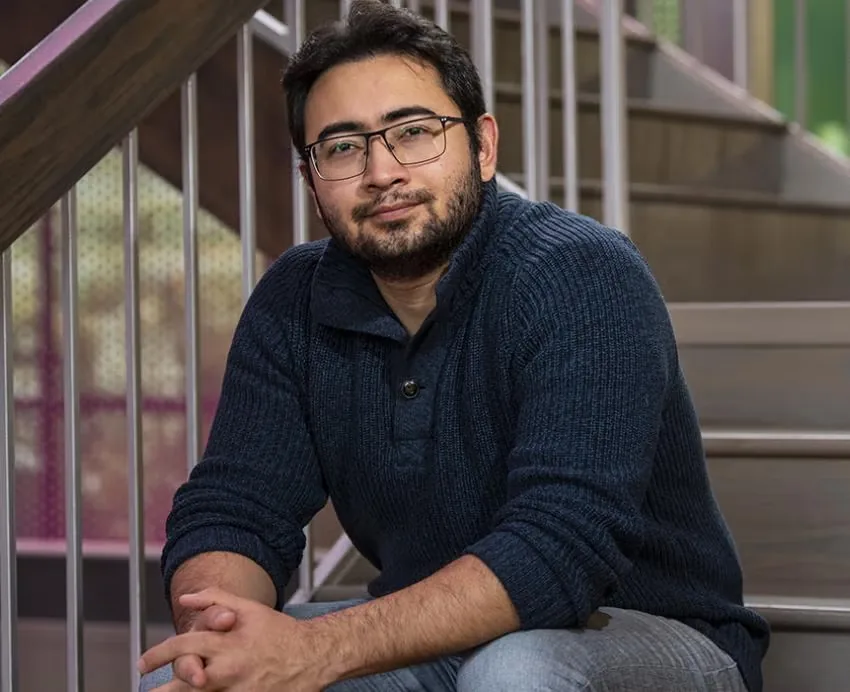
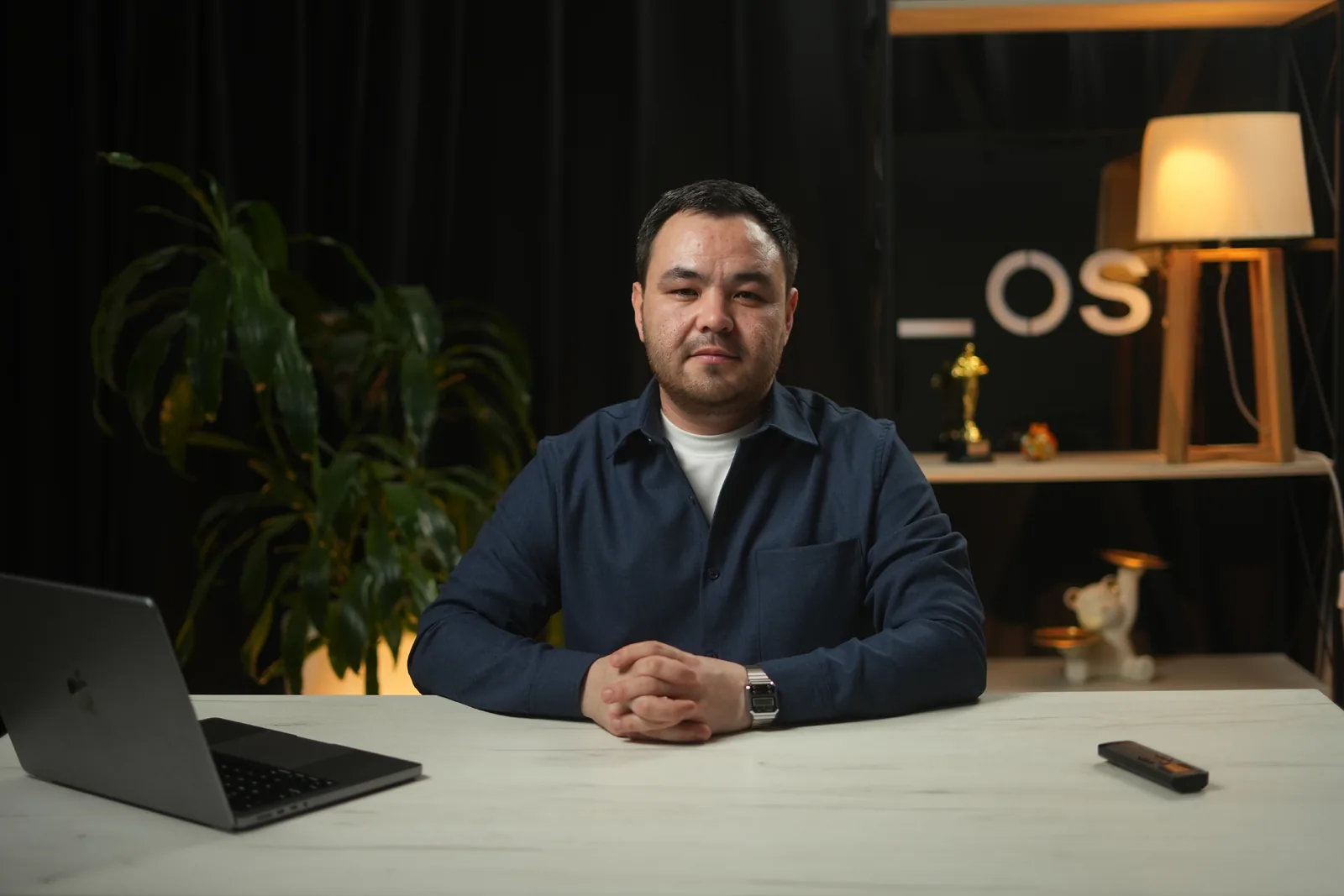
Kamron Khojaev on the Koop Technologies startup and the differences between the US and Uzbek markets
We found out how an Uzbek is building a startup in the US and what he thinks about the startup ecosystems of Uzbekistan and the US. Read more in our article.
Author - Mansur Ismagulov
The Tech AI
Get the key points in seconds - a short summary from The Tech AI.
Kamron Khojaev, co-founder of GTM lead company Koop Technologies based in New York, discusses the transition from insuring drone technologies to helping startups sell solutions to enterprise clients. The company offers cyber insurance, employee insurance, and SOC 2 audits, targeting high demand in the U.S. and growing interest in AI applications. Plans include hosting events twice a month for networking and fundraising to expand the team and services in security and HR.
Kamron Khojaev, City — New York, co-founder, GTM lead, Linkedin
About himself and the startup
I am from Tashkent and came to America in 2012 as a student. I studied at the University of Pittsburgh, after which I worked at a local venture fund. Later, my team and I founded Koop Technologies, starting our work in the insurance sector.
The company’s idea evolved gradually. We began working with unmanned technologies in Pittsburgh in 2010, when many research projects were turning into businesses like Uber, Argo, and Waymo. At that time, we decided to focus on insuring autonomous vehicles, drones, and robots, as traditional methods were unsuitable due to the lack of a driver and data.
However, we soon realized that the market for such technologies was quite limited. After raising our first round of funding, we decided to pivot and focus on the investment sector. Currently, our company helps startups sell their solutions to larger enterprise clients. Through our platform, you can purchase various types of insurance, including cyber insurance and employee insurance, as well as undergo a SOC 2 audit.
SOC 2 is an audit standard developed by the American Institute of Certified Public Accountants, which evaluates a company’s compliance with data protection and security management requirements. We offer joint audit and insurance services because these processes are closely linked and in high demand. Thus, we started by working in a small market with few clients, but they were all innovative and interesting. However, for further growth and fundraising, we decided to enter larger startup markets in the US.
About market differences
There are opportunities for startup funding in Uzbekistan. The market is developing dynamically, and I believe there are many opportunities to attract initial funding given a good idea and traction. However, the American market is much more diverse, and check sizes are significantly higher. Here, you can raise several million dollars at the idea stage for development and launch, whereas in Uzbekistan, investment amounts are typically smaller. This is the main difference between the markets, as well as differences in their scale and preferences.
I have not lived or worked in Uzbekistan since 2012, but I can note that obstacles exist both in Uzbekistan and in America. If your product is B2B, it must demonstrate good ROI. In the case of B2C, it is important to immediately determine why your offer will be interesting. If you find an answer to this question and see traction, there will be fewer obstacles. When we started, the market was niche, with unique clients and requirements, and we easily found solutions for them. Today, given the larger market, competition has increased, and there are more obstacles. Market conditions and access to capital for startup development are also important differences. There are fewer opportunities in Uzbekistan than in America, but the number of venture funds is growing, and new startups are emerging every day, which is encouraging.
About Uzbekistan’s startup ecosystem
Currently, the most popular sectors in Uzbekistan are FinTech and e-commerce, as well as industries where there is already a large number of users. However, I also see many opportunities in niche sectors such as EdTech, as well as in agrotechnology, transportation, logistics, and tourism. These sectors are not as developed as FinTech and education, but I am confident that in the near future they will present significant opportunities. The Uzbekistan ecosystem is currently dominated by startups in education, FinTech, and commerce, including companies like Uzum, as well as many more niche startups.
There are many development models, and it is important to look not only at US experience but also to borrow successful practices from neighboring and Asian countries. IT Park Uzbekistan, together with the Ministry of Innovative Technologies, is actively working on ecosystem development. Through IT Park Uzbekistan, significant opportunities are opening up, including tax benefits for startups working with foreign markets. I believe that local startups should not only focus on the domestic market but also develop expansion abroad. This requires connecting with various contacts, for example, through embassies, so that founders can meet directly with potential clients and investors abroad. Such opportunities would allow startups from Uzbekistan to sell their products not only within the country but also in international markets.
About the US market and its features
The US market is large, and depending on the type of startup, there are specific challenges, but also great opportunities. Purchasing power, both among individuals and B2B companies, is significantly higher, but competition here is also high.
In recent years, there has been a particular surge in interest in artificial intelligence. Many startups are creating AI agents to solve various tasks, which simplifies processes and opens up new opportunities. We are also leveraging this trend by providing SOC 2 certification and insurance for AI applications. For example, AI for accountants that automates routine tasks, or AI for doctors. These technologies are attracting significant investments and entering the market.
Recently, we held an event at the Silkroad Innovation Hub in California, where we met with many startups from Central Asia. For them, having this security certification was also important when entering the US market. It was a great experience, and it was pleasing to see such interest from startups in Central Asia, including from Silicon Valley. The US market is truly enormous, and I am confident that startups from Central Asia can successfully enter this market.
Competition in the US market helps to quickly identify a startup’s strengths and weaknesses. For example, we had an idea and reached a certain point, realizing that the market was too small for further development. This allowed us to pivot in time and focus on a different target audience. Competition helps to realize faster when something is not working, saving time and resources, and finding new sales methods, especially through partner channels. Direct sales can be expensive, and competition forces the search for more efficient methods.
Competition also helps startups find their path and better position the company day by day. The speed of change in the market is high, bringing new challenges and opportunities every day.
Plans
We actively organize various community events. Recently, as I mentioned, we organized an event at the Silk Road Innovation Hub, where startups from Central Asia participated. We also hold events in Boston for healthcare startups, as well as in New York, Miami, Texas, and Austin. We are observing a new trend of creating communities that allow people to interact, exchange information, and learn about the company and its products. This helps attract clients. We plan to scale these events and hold them at least twice a month over the next five years.
Additionally, in the new year, we plan to conduct fundraising. After raising funding, we will expand the team, primarily in marketing, sales, and development. We have already built an insurance company and are currently working on certification. In the future, we plan to expand our range of security services. We aim to become an analog of Rippling, which offers all HR and payroll solutions in one place. We also plan to become leaders in the security and insurance sectors, providing a full set of services for our clients. Our product portfolio will expand, and we are confident that with our rapid growth in a competitive field, our plans will be successfully implemented.
The Tech on Telegram Follow The Tech on Telegram
Keep up with the latest technology and startup news.
Related reading




More from this author

News
zypl.ai begins operations in Japan and focuses on next-generation risk models
Mansur Ismagulov

News
Elon Musk's net worth has exceeded $700 billion for the first time
Mansur Ismagulov
Article Interviews
"Central Asian countries should build a joint ecosystem," — Bekhzod Ismoilov on the development of AI in the region
Mansur Ismagulov

Article Interviews
Bloom's Taxonomy and Engineering Levels: A Practical Growth Model
Mansur Ismagulov

Article Useful
How the IT industry in Azerbaijan developed in 2025: key events
Mansur Ismagulov
News
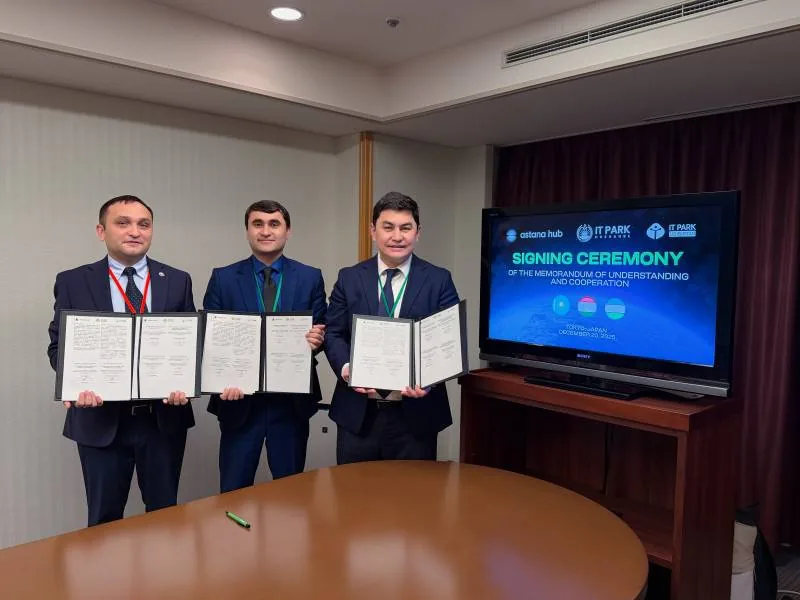
Tajikistan has become a new member of the regional innovation alliance Central Asian Innovation Hubs
Mansur Ismagulov