How to launch a startup in Saudi Arabia. The experience of Aidana Aytuarova
The CEO of Porte Tech live discussed how to launch a startup in Saudi Arabia and enter the Middle Eastern market. We have prepared a brief summary of the broadcast, and you can listen to the full recording via the link.
Author - Mansur Ismagulov
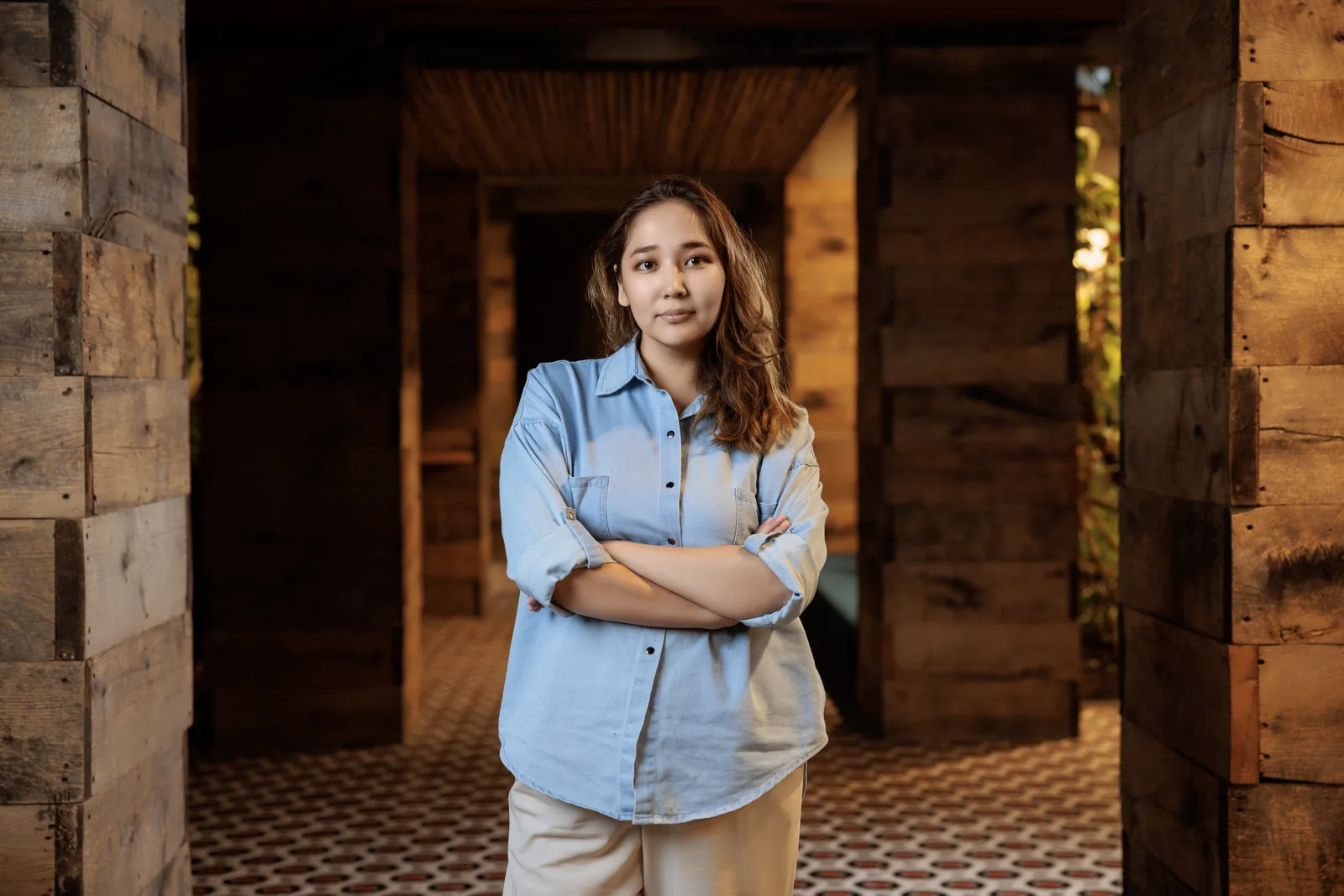
Aidana Aytuarova, city — Almaty, CEO Porte Tech, Instagram
Porte Tech is a digital reception for hotels. Our product is a B2B2C solution that allows hotels to provide online check-in and check-out, enabling guests to bypass the front desk, unlock their rooms with their phones, order food, amenities, spa services, and any other services that previously required a phone call or a personal visit to the front desk.
Currently, we work with 21 hotels, comprising approximately 3,000 rooms. We have launched in Saudi Arabia and Kazakhstan. In both countries, we are connected to mid-segment hotel chains. Among the well-known brands are Radisson, Renaissance, and Best Western. The rest are local hotel networks on these two markets.
On market differences
We understood that the tourism market in Kazakhstan is not as large. The average spending by guests within hotels—on restaurants and other services—is acceptable but not comparable to markets in the Middle East region. For comparison: the average food bill in Saudi Arabia is approximately five times higher. This means that providing the same services can generate significantly higher profits.
However, it was not just about financial indicators. We initially wanted to test the product in our home market and then expand to a larger one. While exploring opportunities, we saw that Saudi Arabia is in an active phase of transformation. Their Vision 2030 strategy assumes that the country will become a global leader in the hospitality industry.
If today, when talking about vacation, most people think of Dubai, then by 2030, Saudi Arabia will likely become that destination. They are moving at a rapid pace: they will build seven new cities, have secured the rights to host FIFA and EXPO, and have already launched a large-scale metro system this year. The country has a huge focus on tourism and hospitality. It is important to understand that historically, Saudi Arabia is effectively the originator of this direction: Mecca and Medina are visited by millions of people every year for centuries.

On the startup ecosystem in Saudi Arabia
The Saudi ecosystem is more developed. Specifically, in Kazakhstan, it is still possible to find VC and individual investors at the Pre-Seed and Seed stages. But starting from the Series A round, it becomes difficult to find anyone willing to invest at high valuations and with large checks. This applies not only to Kazakhstan—it is difficult to find such investors throughout Central Asia.
If we talk about the Gulf Region, the GCC includes Arab countries, including Saudi Arabia—there are investors from Pre-Seed and Seed through Series A/B up to IPO. This is a plus, but the market is young. There are more startups and investments in the US, but competition is also higher.
Startups from Central Asia often think: “We will go to Saudi Arabia, there is a lot of money there, and they will give it to us immediately.” But this is not the case. There is indeed more money there than in Kazakhstan, but obtaining it is not easy: local funds are flooded with applications from all over the world and select strong projects. At the same time, Saudis have resources for subsequent rounds, so truly promising startups go there.
I am often asked: how can a woman build a startup in Saudi Arabia? Honestly, it is more comfortable than in Kazakhstan—the issue of gender is hardly raised there. Moreover, there are support programs for women entrepreneurs. For example, we work with hotels where the owners’ children, including daughters, manage operations, and in many associations, the leaders are women. Personally, I have not experienced any problems with this.
On the startup ecosystem in Kazakhstan
In my opinion, the startup ecosystem in our region is strong; we simply started later. Saudi Arabia already has funds for late-stage investments, but initiatives are also emerging here—for example, a $100 million fund of funds for late-round VC.
Another issue is subjectivity. Startups often believe they were denied investment due to familiar experts, but on a small market, this is logical. If a startup has already received investment, it is likely stronger. At the same time, venture capital is not the only path. VC money is the most expensive because it involves giving up equity. If you are not getting investments, perhaps your product is simply not venture-backed but a traditional business—and that is normal.
Recommendations
For startups that want to develop in this region, it is important to become as “Arab” a startup as possible—however strange that may sound. We went through an acceleration program: besides us and one team from Germany that has lived in Saudi Arabia for 10 years, all participants were Arabs—not necessarily Saudis, but from Oman, Jordan, the UAE, and other countries. Therefore, the myth that “you will arrive and everything will work out immediately” does not correspond to reality.
On any market, the product must be adapted. In Saudi Arabia, the Arabic language is critically important: guests order in their own language, and employees see everything in Arabic, as many of them do not know other languages. Automatic translation is a key part of the product.
When launching in Mecca and Medina, we simplified the interface: large images for easy selection. Initially, this was localization, but it subsequently became a standard for all markets.
It is important to note: we localize the interface only through translation, as our users are foreigners accustomed to Western UX. For the Arab audience, everything changes: reading from right to left, swipes in the opposite direction. For local users, the interface needs to be completely rebuilt.
There are no noticeable differences in user behavior—the majority of our clients are not locals and use the services roughly the same way as in other countries.
Plans
We have already opened a company in Uzbekistan—an excellent market for development in Central Asia. The hotel room inventory is growing rapidly there, tourism is developing, and events with UNESCO and other organizations are actively held. A new airport is being built in Tashkent, similar to the airport in Istanbul.
Regarding GCC countries, we plan to enter Qatar, Oman, and Bahrain, and later the UAE. We will not enter the UAE immediately; first, we want to establish ourselves in other Arab countries.
The Tech on Telegram Follow The Tech on Telegram
Keep up with the latest technology and startup news.
Related reading







More from this author

News
zypl.ai begins operations in Japan and focuses on next-generation risk models
Mansur Ismagulov

News
Elon Musk's net worth has exceeded $700 billion for the first time
Mansur Ismagulov

Article Interviews
"Central Asian countries should build a joint ecosystem," — Bekhzod Ismoilov on the development of AI in the region
Mansur Ismagulov

Article Interviews
Bloom's Taxonomy and Engineering Levels: A Practical Growth Model
Mansur Ismagulov

Article Useful
How the IT industry in Azerbaijan developed in 2025: key events
Mansur Ismagulov

News
Tajikistan has become a new member of the regional innovation alliance Central Asian Innovation Hubs.
Mansur Ismagulov