How to Get Into Stanford University: Malik Kanatbek Kyzy's Experience
Our heroine from Kyrgyzstan shared her journey to working at one of the world's most prestigious universities — Stanford University, offering insights and advice for those aspiring to a career in the international academic environment.
Author - Mansur Ismagulov
The Tech AI
Get the key points in seconds - a short summary from The Tech AI.
Malika Kanatbek kyzy is a UX designer at Stanford University, where she has been working since February 2023. She is the lead designer on the Navigator project, which unites platforms for students. In her work, she uses Figma, Jira, and other tools to simplify educational processes for thousands of users.
Malika Kanatbek kyzy, city — San Francisco, UX Designer, @malikanatbek
About Me
I am a UX Designer at Stanford University. My job is to make complex systems simple and user-friendly. Interestingly, my journey into design began with personal experience. When I was a student at Stanford University, I had to use several disconnected platforms to schedule my classes, enroll in courses, or track my academic progress. It was inconvenient, and I thought, “What if this could be done more simply?” Today, I am turning that dream into reality by designing digital products for thousands of students.
I started working at Stanford University in February 2023. During this time, I have had the opportunity to be part of incredible projects aimed at improving the student experience. This is not just a job—it is a chance to make real changes in people’s lives.
How to Get Into Stanford University

My path to Stanford University is a story about how the desire to change the world can lead to a great goal. During my studies, I realized how complex some university systems are. Therefore, when I saw a UX Designer vacancy on the Stanford University website, I thought, “This is my chance to do something meaningful!” I applied through their career portal and then literally “lived” with this idea, preparing for the interview.
The process included four stages, each unique in its own way:
- Initial call with HR — it was a warm and friendly conversation where I was asked to tell about myself and my experience. For me, this was an opportunity to demonstrate how interested I was in the position.
- Technical interview — I was asked questions about my projects, approaches to UX design, and was also given a test task: to redesign one of Stanford’s websites.
- Task presentation — I prepared an interactive prototype in Figma, explained my decisions in detail, and offered ideas that, in my opinion, could improve the student experience. The team appreciated not only my skills but also my deep understanding of student needs, since I had gone through this myself.
- Behavioral interview — here it was important to show how I handle stress, resolve conflicts, and work in a team.
A week later, I received a call saying I was accepted. It was an incredible moment that I will never forget.
For those who want to work in an international company:
- Research the company. Find out what projects they are working on and think about how you can be useful. If possible, try to contact company employees via LinkedIn and ask for their advice.
- Develop your skills. Courses, books, articles, conferences — use all available resources to stay one step ahead.
- Practice your presentations. During the interview, it is important not only to show what you can do but also to explain why you made those decisions.
- Be confident. Companies are looking for people who know their worth and are ready to deliver results.

Work Features
I am the lead designer of Navigator, a large-scale project to create a centralized ecosystem for students. Imagine that instead of using five to seven different platforms to manage the academic process, you log into one system that combines everything:
— Navigate Classes — a platform for finding classes. We have already launched it, and it has become incredibly popular among students
— Navigate Enrollment — a platform for enrolling in courses with a convenient scheduling interface
— Navigate My Academic Path — a system for tracking academic progress
— Navigate Programs — a tool for finding educational programs
— Navigate Forms and Policies — platforms for working with documents and rules.
My task as a UX Designer is to create interfaces that not only solve tasks but also make the process intuitive. For example, in Navigate Enrollment, I developed a calendar that allows students to view their schedule in a convenient format. We conducted over 10 interviews to understand how students interact with the system and made the calendar as functional and accessible as possible.
In my work, I use various technologies and tools, including:

— Figma for designing and creating interactive prototypes
— Grain for analyzing user interviews: it helps quickly find key moments and share them with the team
— Notion for planning and managing tasks
— Jira and GitHub for organizing team work
— Google Analytics and Hotjar for studying user behavior.
The main challenge in my position is that every decision must be based on data and feedback. This requires deep research, constant communication with users, and iterations. Sometimes it is difficult to combine the needs of different stakeholders, but this makes the work even more interesting.
The most important skills for successfully performing my duties are considered to be:
- UX Research. The ability to ask the right questions and analyze answers.
- Visual Thinking. Creating designs that are not only functional but also aesthetically pleasing.
- Empathy. Understanding users is the foundation of good design.
- Communication. The ability to explain your ideas and defend your decisions before the team and stakeholders.
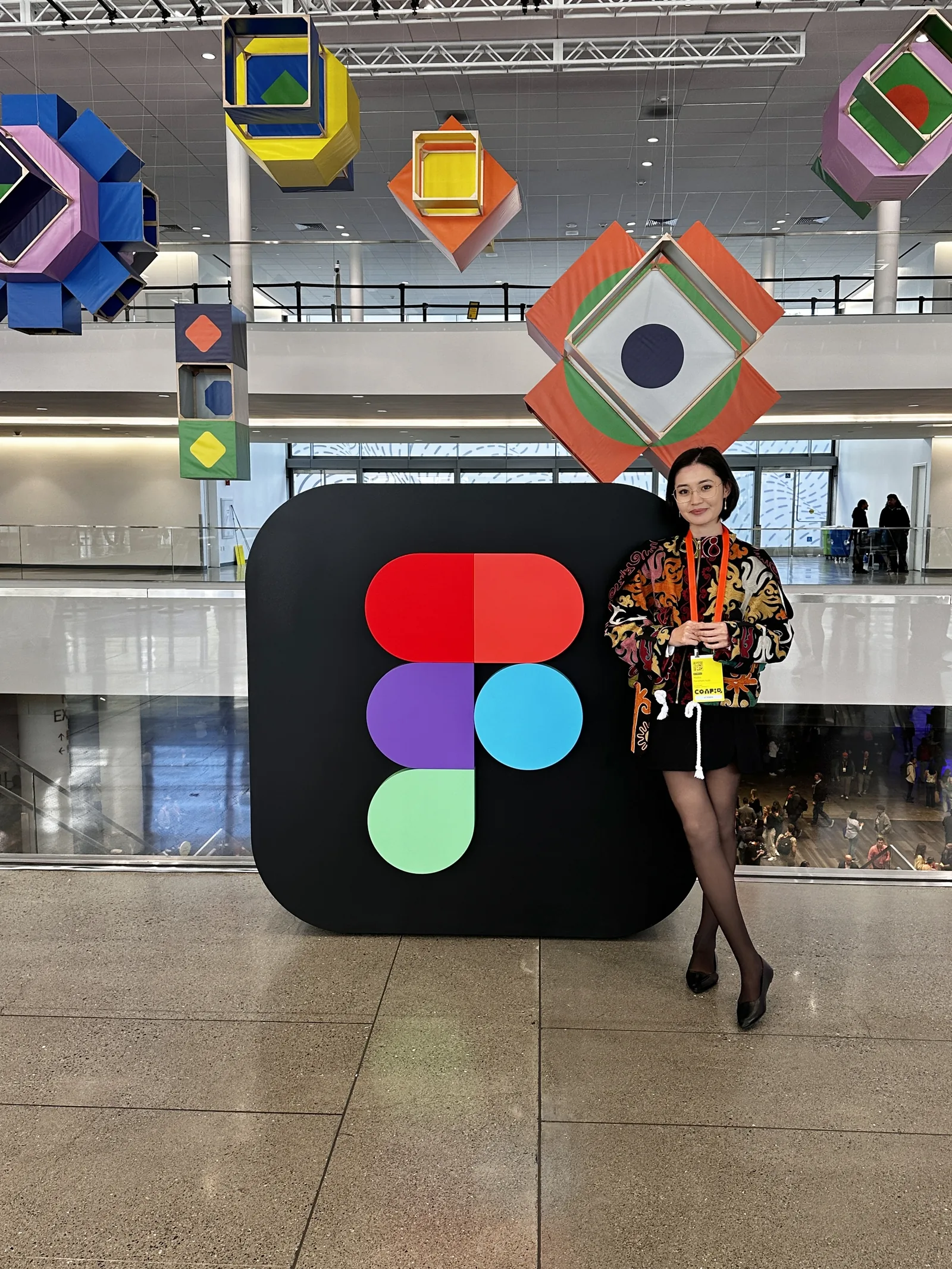
Stanford University is a wealth of opportunities. The company supports participation in conferences, pays for courses and training, and holds workshops. For example, I recently attended the Config conference by Figma, where I met designers from all over the world and learned about the latest trends in UX design.

About Life Abroad
I moved to the USA to study for a master’s degree at Stanford University. It was a big step that opened up many opportunities for me. After graduation, I was able to stay in the country thanks to the STEM visa and continue my career.
There are several differences in approaches to work and corporate culture compared to my home country. Here, great attention is paid to the process. You need not only to show the result but also to explain how you arrived at it, what became the basis of your decisions. This helps build trust and interaction within the team.
To those planning to live and work abroad, I advise:
- Prepare a clear plan: why you want to move, what you want to achieve.
- Research the labor market in your field and look for companies that are ready to support relocation.
- Be prepared for difficulties, such as high taxes and housing costs, but remember that this experience is worth it.
The Tech on Telegram Follow The Tech on Telegram
Keep up with the latest technology and startup news.
Related reading







More from this author

News
zypl.ai begins operations in Japan and focuses on next-generation risk models
Mansur Ismagulov

News
Elon Musk's net worth has exceeded $700 billion for the first time
Mansur Ismagulov

Article Interviews
"Central Asian countries should build a joint ecosystem," — Bekhzod Ismoilov on the development of AI in the region
Mansur Ismagulov

Article Interviews
Bloom's Taxonomy and Engineering Levels: A Practical Growth Model
Mansur Ismagulov

Article Useful
How the IT industry in Azerbaijan developed in 2025: key events
Mansur Ismagulov

News
Tajikistan has become a new member of the regional innovation alliance Central Asian Innovation Hubs.
Mansur Ismagulov