How to get a job at Google: Alexandra Bat's experience
Find out how to join one of the world's largest companies — Google. Alexandra has detailed the hiring process and interview experience.
Author - Mansur Ismagulov
The Tech AI
Get the key points in seconds - a short summary from The Tech AI.
Alexandra Bath, UX Program Manager from Mountain View, works at Google through the agency Akraya Inc. She manages projects for Pixel Watch and Nest, coordinating teams of over 30 people. In the US, she adapted to an innovative culture, improving the product NPS from -1 to +11 in just a few months.
Alexandra Bat, City — Mountain View, UX Program Manager, @sashaintech
About Me
I was born and raised in Kazakhstan, in the city of Taraz. Currently, I work as a UX Program Manager in Silicon Valley. A Program Manager is like a project manager but handles several large projects simultaneously. I specialize in managing projects related to user experience, coordinating cross-functional teams, and implementing processes to improve user solutions. My work involves organizing and systematizing processes, managing risks, and creating new programs to enhance team efficiency.
You can work in IT even if you don’t have programming skills or other technical skills. There are many departments where this is not required, such as project managers, marketers, finance specialists, and sales professionals.
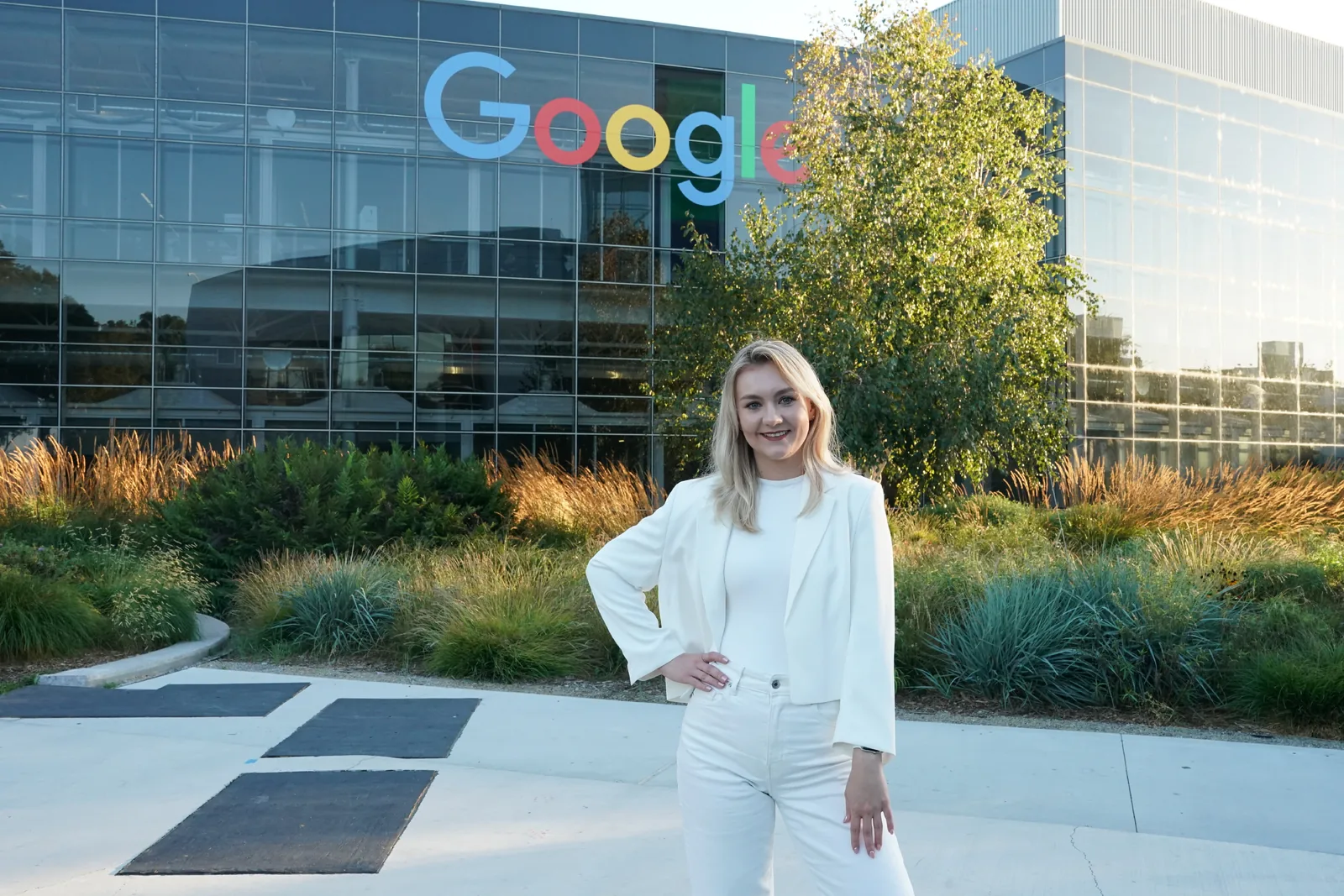
Currently, I work on a contract basis at Google through the staffing agency Akraya Inc. I have been managing UX programs for two years, and my work includes projects for products such as Pixel Watch, Nest, and other Google devices.
How to Get into Google
I had no prior IT work experience, and I was looking for opportunities to gain it in major companies like MAANG: Meta, Amazon, Apple, Netflix, and Google. I learned that it is possible to work on a contract basis. Contract work at such companies is an excellent way to gain experience, build valuable connections, and see how the company operates from the inside. In the future, this can help transition to a full-time position and receive an offer. I know many examples of people who entered BigTech exactly this way.
I went through four stages of interviews, and the process was standard for all BigTech interviews. First, there was a phone call with a recruiter, where we discussed my career goals and experience. Then, I had an interview with a manager, where I was asked questions about my work and approach to problem-solving. After that, there was an interview with the team, where I interacted with potential colleagues, answering questions about specific tasks and processes related to their current projects. This format helps assess both professional skills and cultural fit with the company and team.

To get hired by an international company, start by studying its corporate culture and values. In interviews, international companies often ask behavioral questions, so practice answering using the STAR method — Situation, Task, Action, Result. Also prepare for possible case studies by studying industry examples. Be sure to demonstrate your adaptability and ability to work with people from different cultures. Think of interesting questions for the interviewer in advance to show your interest in the company. If possible, request feedback after the interview to understand what you can improve.
Work Features
Currently, I am working on several UX programs at Google. One of my recent projects involved the Pixel Watch. I coordinated a team of over 30 people, including engineers, researchers, and other specialists, ensuring the implementation of critical user insights into the product. My role included creating efficient processes for research and testing, bug management, and improving device return rates.
In my work, I use various tools for project management, such as Gemini, Google Sheets, Looker Studio for data visualization, Jira for task management, and Google Workspace for documentation. For analytics, I often apply data collected through research and A/B testing, and use tools to evaluate user metrics.
A large part of my work consists of meetings and communication with the team, so Google Meet has become my best friend. Meetings take place almost every day — these can be short syncs to discuss current tasks, as well as longer strategic sessions with cross-functional teams. Importantly, these meetings help keep everyone informed, resolve operational issues, and exchange ideas in real time.
The main challenges are coordinating many cross-functional teams and timely implementation of all important user insights into the product. Sometimes it is difficult to balance short-term priorities with long-term strategy, as well as find ways to optimize processes to ensure efficiency without sacrificing quality.
Key skills for successfully performing my duties are the ability to effectively manage projects and processes, anticipate risks, communicate and negotiate with different stakeholders, analytical thinking, and the ability to quickly find solutions to problems. It is also important to be able to organize cross-functional teams and find a balance between different priorities.
Google and specifically my agency Akraya Inc offer many opportunities for professional development. This includes access to other training courses, upskilling programs, internal trainings, and mentoring programs. Additionally, I can always participate in innovative projects, which allows me to gain unique experience.
Working in an international team requires high flexibility and the ability to account for cultural differences. It is necessary to be sensitive to differences in work approaches, as well as different time zones, to effectively coordinate tasks and meet deadlines. Working in such a team also provides an opportunity to enrich oneself with new knowledge and best practices from around the world.
The advantages of an international team are access to diverse experience, innovative ideas, and different approaches to problem-solving. However, there may be difficulties with coordinating work, especially due to time differences and cultural features. Part of my team is in Europe, so sometimes I have to join meetings early in the morning at 7:00 AM. Sometimes more time is required for discussions and agreement on decisions.
One of the most memorable moments for me was when my team and I conducted UX research in real time when the Pixel Watch was released in the new Google Store near our office in Mountain View. We were able to significantly improve the Pixel Watch 2 product, reducing device returns and increasing user satisfaction. Thanks to our project and well-organized process, we managed to improve the NPS score from -1 to +11 in just a few months.
For success in my field, several factors are important: the ability to manage processes and teams, the ability to adapt to changes and be flexible, an analytical approach to problem-solving, and, of course, continuous development and improvement of one's knowledge and skills. It is important to be ready to work in a rapidly changing environment where priorities can change at any moment.
About Life Abroad
I first moved to the US and then started looking for work. The move was a challenge because it required adapting to a new environment and culture while simultaneously finding a job in a field that interested me. From my experience, if there is an opportunity to first find a job that will help with visa and adaptation, it will ease the process. But moving before getting a job also has its advantages, such as the ability to immerse oneself in the country's culture and better understand the local labor market.
BigTech companies offer many resources for those who relocate. They help with visas and legal aspects, as well as provide support with housing search. For a comfortable move, companies also offer financial support and access to special programs that help adapt to the new environment.
In the US, the work culture is more focused on innovation and quick results. There is more flexibility in work processes here, and employee initiative is encouraged. When I worked in consulting in my home country, the emphasis was more on hierarchy and traditional work methods. In the US, employees have more opportunities to influence processes and propose new ideas, making the work environment more dynamic and stimulating.
It is important to understand that there are no perfect places. I used to imagine the US as a place from the movies of my childhood, but upon arriving here, I realized that every country has its pros and cons — it all depends on your priorities. If there is an opportunity to live in a country for some time before making a final decision to move, it is worth taking this chance. This will help you better understand the culture, lifestyle, and evaluate whether this place suits you in the long term. I would also recommend preparing in advance for the job search process, studying the labor market, job requirements, and the interview process to integrate into the new environment faster.
The Tech on Telegram Follow The Tech on Telegram
Keep up with the latest technology and startup news.
Related reading







More from this author

News
zypl.ai begins operations in Japan and focuses on next-generation risk models
Mansur Ismagulov

News
Elon Musk's net worth has exceeded $700 billion for the first time
Mansur Ismagulov

Article Interviews
"Central Asian countries should build a joint ecosystem," — Bekhzod Ismoilov on the development of AI in the region
Mansur Ismagulov

Article Interviews
Bloom's Taxonomy and Engineering Levels: A Practical Growth Model
Mansur Ismagulov

Article Useful
How the IT industry in Azerbaijan developed in 2025: key events
Mansur Ismagulov

News
Tajikistan has become a new member of the regional innovation alliance Central Asian Innovation Hubs.
Mansur Ismagulov