How a startup by a Kazakhstani, Amurex.ai, is gaining popularity in Silicon Valley
The Kazakh startup Amurex.ai turned an idea into a prototype overnight and quickly attracted hundreds of users. Read our article to find out how they did it.

The Tech AI
Get the key points in seconds - a short summary from The Tech AI.
Arsen Kylyshbek, co-founder of The Personal AI Company, completed the Entrepreneur First program with $160 million in capital. The startup gained user attention through Hacker News and Reddit, after which it secured funding and relocated to San Francisco. Over the next 3–5 months, the team plans to expand the assistant's functionality for workflow processes and begin attracting new investments.
Arsen Klyshbek, 19 years old, city — San Francisco, co-founder of The Personal AI Company, Instagram
How it all started
I am from Astana and studied at RFMSH. Since the age of 14, I have been launching startups — there were successes and failures. I worked in various companies and countries. Two years ago, I moved to Silicon Valley, then returned to Kazakhstan, and later left for London for the Entrepreneur First program. It was there that I founded The Personal AI Company, where I am the founder and Chief Technology Officer.

Launching the startup
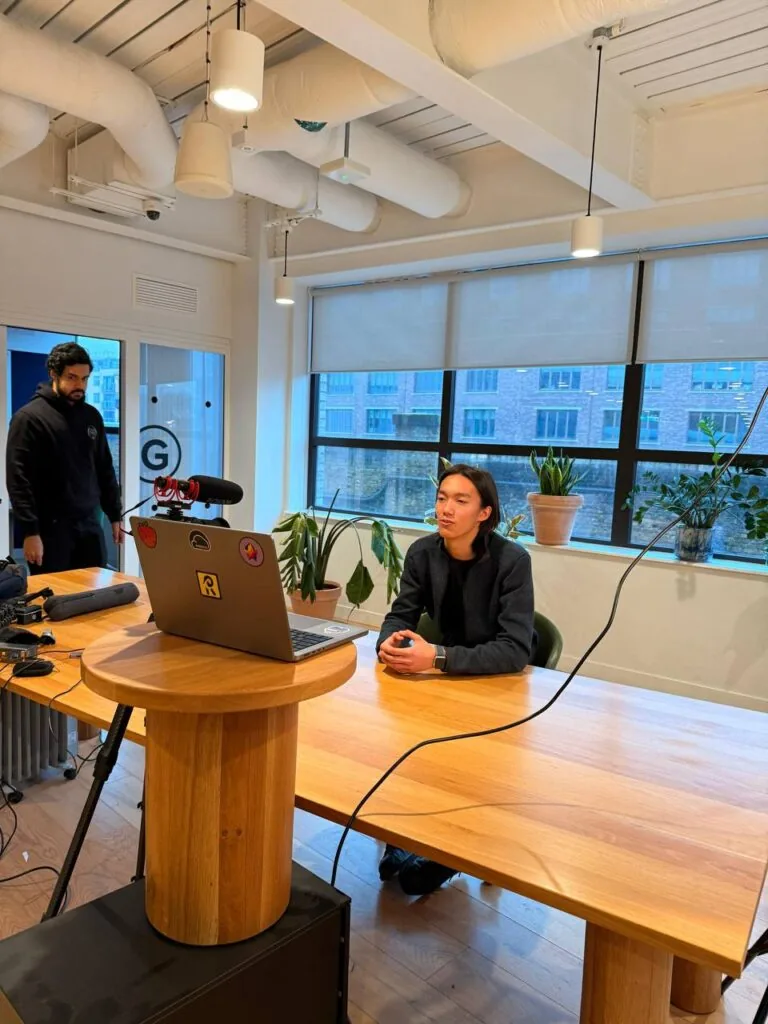
The Entrepreneur First program brings together specialists to launch startups. In September 2024, I became a participant, working in a team of 40 people, testing ideas and looking for a co-founder. That is how I met Sanskar Jeti, who proposed creating an AI assistant that anticipates user needs.
We built a prototype on the very first night. By morning, we already had a working version, which confirmed our compatibility. This experience showed that we have similar approaches to work and a shared vision for the project's development.
Promotion began with niche communities. We posted information on Hacker News, Reddit, and Y Combinator forums, asking users for feedback. Within one night, our user base grew from a few friends and relatives to hundreds of people, and our servers could not handle the load. This confirmed the high interest of the audience and the correctness of the chosen direction.
We began actively interacting with users, analyzing their requests, and improving the product. Gradually, a community of loyal users formed, for whom our tool became indispensable in their work. One of our advisors in London said that a successful startup must have users willing to defend it. We managed to achieve this — we created a community where the product evokes not just interest, but emotional attachment.
At this stage, we are not focusing on sales and partnerships, but continue to develop the product, which brings value and forms long-term audience loyalty.
Incubation programs
Entrepreneur First is not just an accelerator, but also a venture fund with $160 million in capital from investors such as Reid Hoffman, founder of LinkedIn, and the Collinson brothers, co-founders of Stripe.
The program lasts 12-13 weeks. The first eight weeks are for finding a co-founder, followed by about four to five weeks of working on the product and traction without outside interference. In January, an investment committee takes place, where startups present their progress. Successful teams receive funding and continue the program in San Francisco until the end of April, focusing on the next round of investment.
We received investment and are now preparing for the next round in San Francisco.
Difficulties
We faced many difficulties; however, technical tasks never caused us any doubts. Regardless of the complexity of implementation, we were always confident in our abilities and could quickly develop high-level functionality. Although some tasks required significant resources and time, we consistently implemented new features for users.
The main difficulty arose with audience growth. Different categories of users had different requirements, and at a certain point, we lost focus, trying to account for all requests. As a result, several weeks were spent developing functionality that was never launched because we realized it did not align with our key priorities. This led to a loss of time and resources and forced us to reevaluate our strategy.
Luckily, thanks to the support of advisors and careful analysis, we were able to emerge from the crisis. We spent up to 17 hours a day in the office, fully immersing ourselves in work and discussing possible development paths. This experience allowed us to clearly define priorities and focus on truly significant aspects of the product.
In the startup world, there is no universal advice for all founders — each niche is unique. We are developing an open-source B2C product aimed at the end consumer, whereas many startups create solutions exclusively for business.
The main conclusion we drew is that the product must be useful to the founders themselves first. At some point, we realized we were losing focus and returned to the question of why we started this project. The answer is simple: we are creating something we want to use ourselves.
This approach contradicts traditional startup doctrine, which assumes conducting interviews with potential customers, assessing demand, and only then launching the product. This method allows you to create a narrow solution but does not provide the opportunity to make a radical breakthrough in the industry. We adhere to the principle of rapid experiments: first, we create a product, no matter how raw it is, launch it, analyze feedback, and improve it.
If the product is not in demand, it is important to learn lessons and move on. Mistakes are inevitable, but it is through trial and analysis that one can arrive at a working model. It is important to first focus on creating value, and only then on building a business.
Achievements
At the moment, we have achieved significant growth in our user base.
We analyze the audience based on three key metrics: Daily Active Users, Weekly Active Users, and Monthly Active Users. The main focus is on Weekly Active Users, as this indicator most fully reflects audience engagement. We are observing steady growth and an increase in the number of users actively using our product every week.

Plans
In the next three to five months, we will continue working on product development. Currently, it functions as an assistant for video calls, but our goal is to make it more universal. Video calls are a narrow vertical, so we are expanding the assistant's capabilities by integrating it into professional workflows.
Our product will support work with e-mail, video calls, and knowledge management tools such as Notion, Obsidian, and Google Docs. We are creating an intelligent assistant that not only helps with tasks but also remembers information about the user, offering personalized recommendations.
At the moment, we have already implemented a number of new features and continue testing. Next month, we plan to start attracting investment, after which we will focus on scaling the team and further growth.
The Tech on Telegram Follow The Tech on Telegram
Keep up with the latest technology and startup news.
Related reading







More from this author

News IT
Google has solved one of the main problems in quantum computing
The Tech
News IT
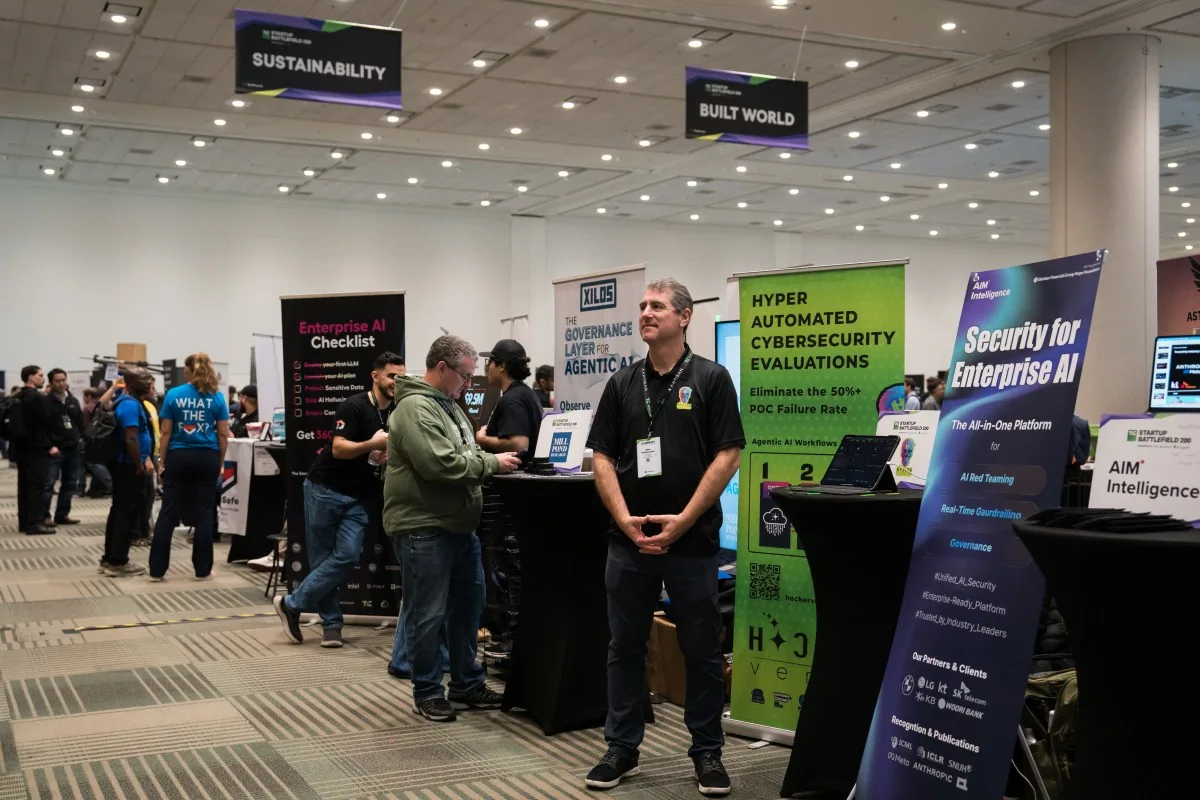
20 startups from Central Asia presented their projects at TechCrunch Disrupt 2026
The Tech

News IT
Kyrgyzstan and Armenia will consider the possibility of creating a joint AI enterprise
The Tech

News IT
Now on Kaspi.kz, you can trade in your old iPhone for a new one
The Tech

News IT
IT Park Uzbekistan became the best knowledge zone in the Asia-Pacific region
The Tech

Article Useful
How to protect your accounts from hacking: 8 settings you should check today
The Tech