How to develop Middle specialists: three main problems
One of the most common myths about IT is the difficulty of entering the field. However, once you're in, other challenges arise: it's unclear which direction to move in, how to work with imperfect processes, and how to take on more responsibility. red_mad_robot Central Asia shares its experience in overcoming these difficulties.
Author - Mansur Ismagulov
The Tech AI
Get the key points in seconds - a short summary from The Tech AI.
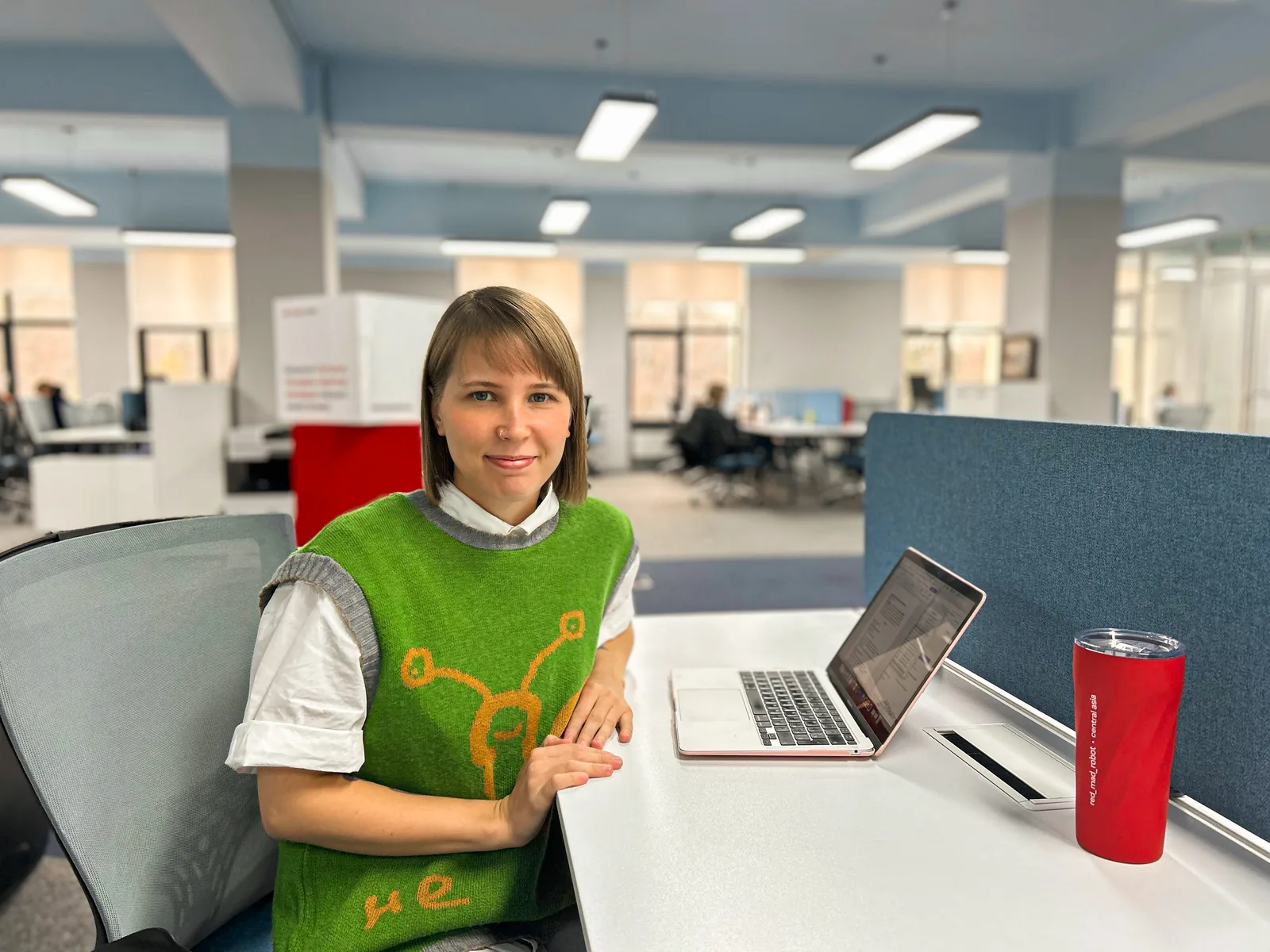
Dasha Izmodenova, Team Lead of Business Analysts at red_mad_robot Central Asia, describes three problems and their solutions. For setting SMART goals, it is recommended to fill out a competency matrix and conduct motivational sessions in Miro. When there is a conflict of expectations regarding processes, it is important to listen, discuss the pros and cons of experience, and decompose the problem to move toward solutions. Transferring responsibility to a lead specialist should be gradual: after assessing readiness, explaining the role and training plan without micromanagement, which helps the employee grow to the Senior level.
Dasha Izmodenova, Team Lead of Business Analysts at red_mad_robot Central Asia
Problem #1. Where to go next
Our company regularly conducts assessments for every employee. For these assessments, you need to formulate your development goals using the SMART model. However, not everyone knows how to set goals independently and correctly, and for some, it is even difficult to imagine which direction to move in. Feelings of guilt and fear that failing to achieve goals will negatively affect reputation and salary often get in the way.
Solution
Before setting a goal, an employee should assess their skills, strengths, weaknesses, and motivation. It is useful to undergo a skills review: for this, at red_mad_robot CA, we fill out a competency matrix. Based on it, you can create a development plan for the coming months.
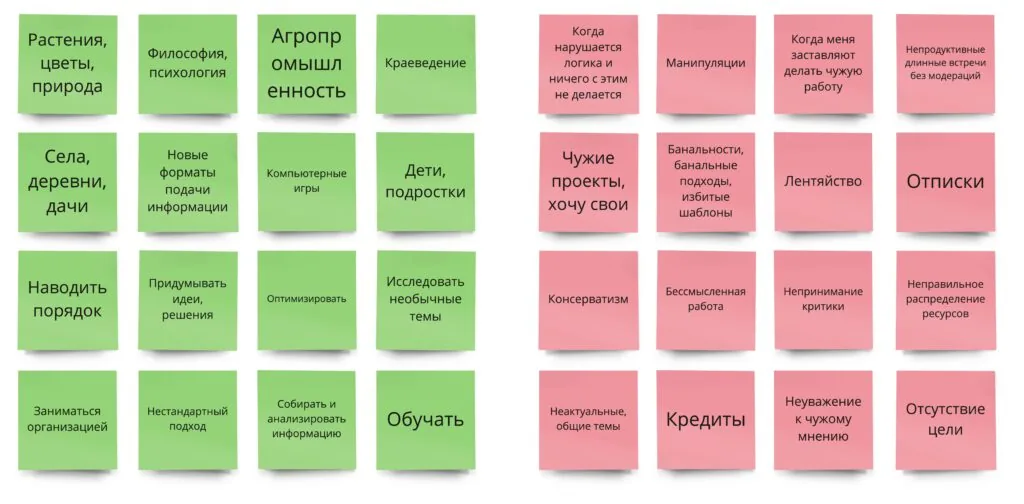
If an employee finds it difficult to determine their immediate goals, you can conduct a motivational session. Ask them to write down on sticky notes in Miro or any other convenient tool everything they like and dislike about their work and life outside of it. Discuss the sticky notes during the meeting — this way, you will get to know each other better and can jointly decide where to move next.
You can also offer the employee different tasks depending on their interests: writing an article, speaking at a webinar, or becoming a mentor themselves. They may feel resistance to new tasks — this is normal. Here, it is important to work well with motivation: some will be motivated by the prospect of a salary increase, others by the opportunity for development.
Goals can change, and there is nothing wrong with that. It is normal to want something, try it, and then change your mind. If you don't try, you will never know. So, gaining experience is in itself a significant achievement.

Problem #2. How to work with imperfect processes
A Junior specialist learns, absorbs information, and internalizes the image of ideal processes. But upon becoming a Middle specialist, they face reality, where few things are close to the ideal. The conflict between expectations and reality can be disappointing. And if the person is a perfectionist, this feeling becomes even stronger.

As a result, the employee spends a lot of energy resisting, and their productivity and motivation drop. They may even leave the team, but on the next project, everything will repeat itself.
Solution
Step 1. Remove the acute phase
First, listen to the person. Discuss the situation, record agreements, offer to share feedback and talk about problems with the team during the retrospective. The main thing here is to minimize emotions and move into a constructive channel.
Step 2. Discuss the pros and cons of the experience gained
It is not worth leaving the situation behind and simply continuing to work once negative emotions disappear. It is important to convey to the employee that difficulties occur in any project and ideal conditions do not exist. Discuss with your colleague that flexibility and the ability to adapt are valuable. Also, show similar situations from your own career and highlight what experience you gained because of them.
Step 3. Move to solutions
Discuss that the entire team is responsible for the result and that it is in everyone's common interest to make things better. Turn the problem into a task, decompose it, and offer the employee to take the first step to solve it. This approach will help accept personal responsibility for what is happening and move from a victim position to that of an adult person.
After overcoming this crisis, it will become easier for the employee to take on new tasks, communicate with people, and generally cope with difficulties.

Problem #3. How to take on more responsibility
Responsibility can be taken in different cases. For example, due to circumstances when a Middle specialist needs to urgently take over project management. Or sometimes the employee themselves wants more responsibility. However, they often have false ideas about the role and tasks of a lead specialist.
Solution
In all cases, it is important to transfer responsibility gradually. The approximate algorithm is as follows:
Step 1. Make sure the employee is ready to become a lead specialist
If they skillfully manage their own tasks, look calm and not overloaded, take on small additional tasks, and complete them on time, it means they have learned to be a good manager for themselves. You can gradually involve other people. Feedback from the team and people from adjacent practices, as well as one-on-one conversations, will help understand whether the employee has good basic hard skills.
Step 2. Explain to the employee what the role of a lead specialist entails
It is important to highlight that a lead does not just assign tasks to everyone. They manage processes, risks, the team, and work quality, becoming the entry point for solving problems within their practice.
For example, a lead specialist cannot take on large tasks that require deep elaboration. It is better to delegate them to regular employees. Task setting and execution control are another skill that must be learned through practice. More about the role of a lead and their areas of responsibility can be read here.
Step 3. Describe the new role and create a training plan
Help master new skills gradually: first, involve one person and gather feedback. If everything is fine, move forward. Try to avoid micromanagement and allow the employee to make mistakes, because a good lead makes decisions themselves and is responsible for them.
What is the result
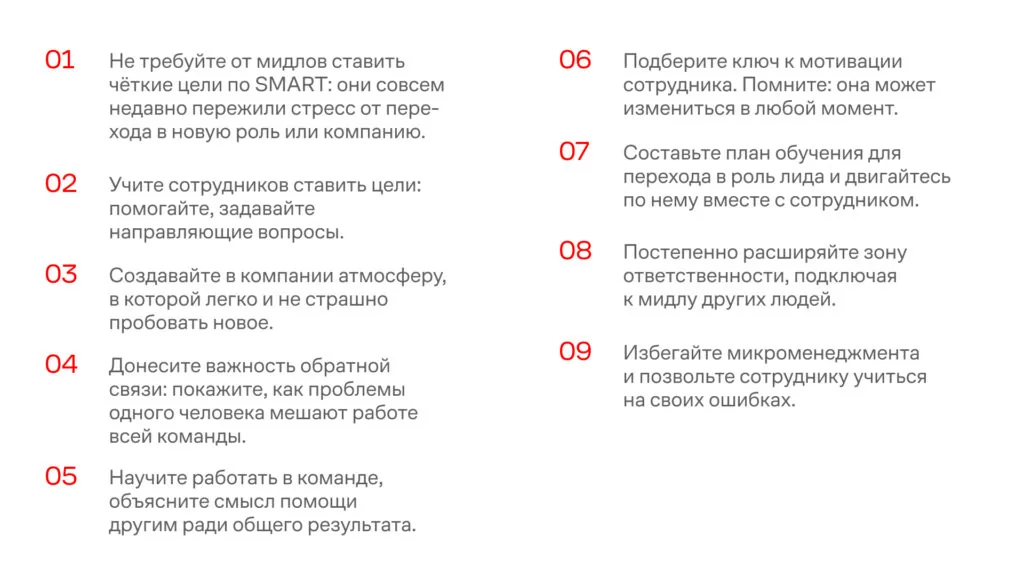
If you deal with these factors, a Middle specialist will be able to easily move toward becoming a Senior employee, who no longer needs to be told what and how to do.
The Tech on Telegram Follow The Tech on Telegram
Keep up with the latest technology and startup news.
Related reading







More from this author

News
zypl.ai begins operations in Japan and focuses on next-generation risk models
Mansur Ismagulov

News
Elon Musk's net worth has exceeded $700 billion for the first time
Mansur Ismagulov

Article Interviews
"Central Asian countries should build a joint ecosystem," — Bekhzod Ismoilov on the development of AI in the region
Mansur Ismagulov

Article Interviews
Bloom's Taxonomy and Engineering Levels: A Practical Growth Model
Mansur Ismagulov

Article Useful
How the IT industry in Azerbaijan developed in 2025: key events
Mansur Ismagulov

News
Tajikistan has become a new member of the regional innovation alliance Central Asian Innovation Hubs.
Mansur Ismagulov