How teenagers from Armenia created a platform for developing soft skills and successful interviews
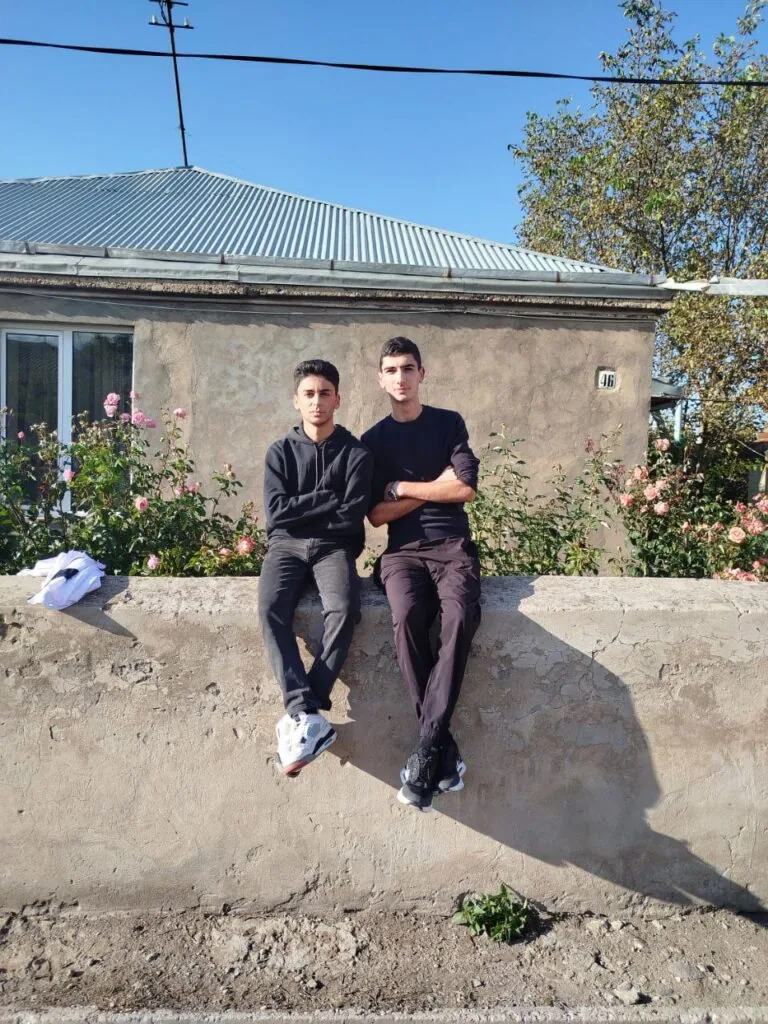
Narek Sargsyan, Eric Tonoyan, and their team developed Arminterview — a service that helps users develop communication skills, prepare for interviews, and build their careers. In an interview with The Tech, Narek discussed how the startup is evolving, the mistakes made in the early stages, and shared advice for aspiring entrepreneurs.
Author - Mansur Ismagulov

Narek Sargsyan, City — Martuni, Entrepreneur, Co-Founder & CEO, Instagram
How It All Began
I was born in Armenia in 2007. At the age of 10, I became fascinated with programming: first, I created simple websites, and then I started developing games. Even then, I was interested in creating something of my own, although I didn’t think about business at that time.
At 15, my friend and I took our first steps into entrepreneurship—we started selling courses on how to play the guitar. Eric played beautifully, and we decided he could teach others. We had one customer, but the project was quickly shut down. These were our first practical steps.
In 2024, at the age of 16, I continued programming and playing games. In one of the games, I met my future project manager, Kristina Margaryan, who introduced me to LinkedIn. I registered and started sending applications, but I couldn’t find a job: either I wasn’t accepted, or I didn’t pass the interviews. At that point, I realized this was a common problem—many people face rejections, and HRs often don’t provide feedback.
On July 19, 2024, I decided to create a platform that would help people find jobs. In four days, I developed the concept, and in eight hours, I built the first prototype. Thus, Grind Soft was born.
Launching the Startup
My co-founder Eric Tonoyan and I initially knew almost nothing about business. I understood that the service needed to be monetized, but this required registering as an individual entrepreneur and resolving legal issues. In the first week, I wrote to banks proposing partnerships, and they replied, “Let’s do it.” I didn’t realize that this would lead nowhere, but the opportunity to receive a response from a bank was inspiring.
Our team consists of seven people. The youngest are me and my co-founder; we are both 17 years old. I am in the 12th grade, and he is in his third year of college.
Target Audience
We help people enter professional fields and develop their soft skills. The problem many face is not a lack of technical skills, but an inability to demonstrate their value in the labor market. People lose jobs or get rejected during interviews precisely because they cannot talk about themselves, explain why they are needed by a company, and why they should be hired.
Our goal is to help people improve their communication, negotiation, and teamwork skills. We provide tools for confidently presenting oneself, effectively interacting with colleagues, and building productive communication.
There are products on the market that prepare candidates for technical interviews, but only a small portion of solutions focus on soft skills. Moreover, such products are often too generic: they provide generalized feedback, for example, at the A2 or T3 level, and it is unclear what data this feedback is based on.
We differ in that we provide detailed and personalized feedback. We analyze not only the content of answers but also voice, confidence, and speech speed, and then give a complete analysis of communication.
Currently, our main audience is individual users. After reaching 4,000 users, we plan to expand into B2B, so that companies can hire specialists with real skills rather than just mass-sending resumes.

Challenges
When we started, we knew almost nothing about startups, incubators, and accelerators. Everything was done from scratch.
Advice for beginner startuppers: live your project, don’t just treat it as a job. Even as a school student, I am constantly mentally focused on developing the startup and achieving results.
The most important thing is to start with the product and communication with people. Describe your project on a piece of paper, tell others about it, and try to “sell” the idea. If you can’t interest people from the very beginning, it will be difficult later.
We went through this ourselves: in the first few months, we didn’t give anyone access, calling the product a beta version. If we had started sharing it immediately, the process could have gone much faster. Now we actively engage users.

Achievements
We managed to get into the DigiTec exhibition—this was our first real success. There, we presented the product to people for the first time: three days, approximately 700 people per day. We talked about the project, and people showed interest—they wanted to try the service, go through an interview, and develop their skills.
However, we had our first major failure then: we didn’t give users access. We thought the project had to be perfect, so we simply handed out business cards, hoping people would come back later, but that didn’t happen. For several months, we tried to get investments, not quite understanding how to do it. Those five months became a period of validation: we collected feedback, added features, and developed the product. We participated in various events, pitched, but didn’t receive investments—there was no traction or users. We received many rejections, but we didn’t give up.
In May, we had our first official offline pitching session. Investors advised us to first build an audience: without users, all pitches are meaningless.
In September, we launched the Arminterview service. We started actively writing on LinkedIn, inviting people to try the service and develop their skills. Currently, we have more than 250 users, and one client has already purchased the premium version. During this time, we participated in international events: C Startup Summit, DigiTec, FinnoWay Armenia.

Plans
Currently, we have a clear fundraising plan, and we continue to develop the product, helping people improve their skills and successfully pass interviews. The main task at the moment is to maximize the number of users. By the end of the year, we plan to reach 500 users, and by summer 2026, 4,000 users and 50 companies on the platform.
We are not currently participating in accelerators and are fully focused on product development. After strengthening our position in the Armenian market, we plan to attract international companies and develop the project in Europe, particularly in Belgium. We consider the USA as a long-term perspective—in five to seven years.
The Tech on Telegram Follow The Tech on Telegram
Keep up with the latest technology and startup news.
Related reading







More from this author

News
zypl.ai begins operations in Japan and focuses on next-generation risk models
Mansur Ismagulov

News
Elon Musk's net worth has exceeded $700 billion for the first time
Mansur Ismagulov

Article Interviews
"Central Asian countries should build a joint ecosystem," — Bekhzod Ismoilov on the development of AI in the region
Mansur Ismagulov

Article Interviews
Bloom's Taxonomy and Engineering Levels: A Practical Growth Model
Mansur Ismagulov

Article Useful
How the IT industry in Azerbaijan developed in 2025: key events
Mansur Ismagulov

News
Tajikistan has become a new member of the regional innovation alliance Central Asian Innovation Hubs.
Mansur Ismagulov