How a Kazakh woman built an international business institute, YASSA EDU
Author - Mansur Ismagulov
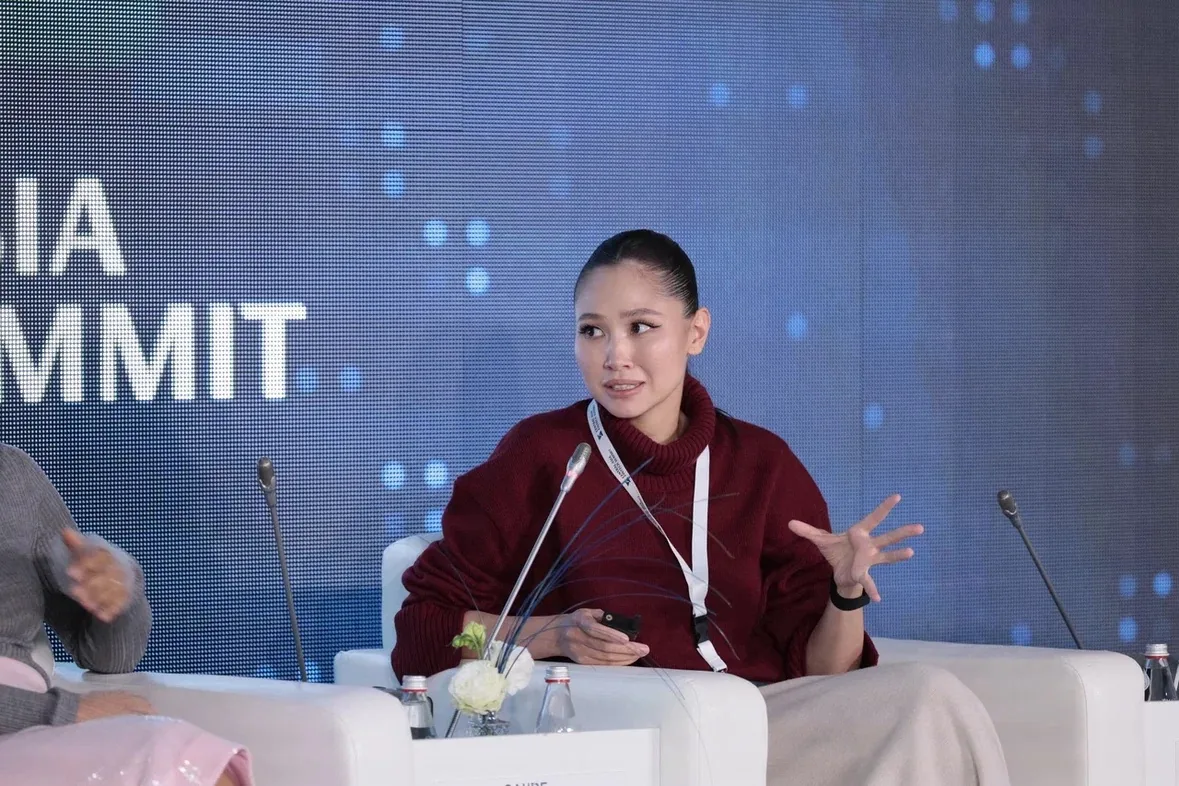
Today, she is building a business ecosystem that helps entrepreneurs learn, grow, and enter the global market.
Alina Abdrakhmanova, city — Astana, co-founder of YASSA EDU
How it all started
I am an entrepreneur in the education sector and have been working in EdTech for several years. My journey began in Switzerland, where I studied and launched my career. In 2012, I started working at Geneva Business School, and two years later, I brought its branch to Kazakhstan. We were among the first to launch an Executive MBA program without leaving your job in Astana and Almaty.
In 2021, I was also invited to lead the business school at Maqsut Narikbayev University. At the same time, I served as the executive director of the Q88 Urbanists Association and developed my own EdTech startup, IN VR, which focused on virtual reality-based learning.
Two years later, a period of change arrived in my life: I moved to the position of Managing Director at Astana Hub. This stage became a turning point for me. In the spring of 2023, we traveled with a large delegation to Stanford University, and there I remembered my long-held dream of creating my own university. This dream had faded somewhat due to life circumstances, but it was at Stanford University that I once again felt the inspiration that had driven me before. I realized it was time to return to my calling.
Launching the startup
In November 2023, we launched our international business institute, YASSA EDU. Our mission is to develop entrepreneurs from Central Asia and help them enter the global business arena. We do this through practical tools, as we ourselves have gone through the path where there is a lot of motivation but a lack of systematic approach.
Therefore, it is important for us to combine academic approaches with practice-oriented tools to help companies build operational efficiency, strategic vision, and a concrete action plan for its implementation.

Team
Today, the project is supported by a team of four key people. Besides me, there is Kristina Weber, CEO and co-founder of the institute, who moved from Moscow to Kazakhstan in 2023 when we were just launching the project. Thanks to her discipline and high performance, all operational processes are maintained.
This year, we formed a Board of Directors consisting of five people. Among them are Adil Nurgozhin and Zhan Karsybayev, co-founders of the Big Sky Capital fund; Regina Ryan, President of Harvard Alumni Entrepreneurs; and Amanat Moldokeeva, our Development Director in Kyrgyzstan and a member of the Board of Directors.
Who studies at YASSA EDU
YASSA EDU is not business training, not an MBA, and not a traditional university. It is an ecosystem. A person coming to us receives a solution that suits them specifically. We form a full range of tools and partnerships based on this principle.
At YASSA EDU, we launch both short intensives and long-term programs. Over two years, about 1,000 people have gone through our courses and events. Currently, about 60 students are enrolled in the Executive MBA program.
We have organized several successful business visits abroad: we went to China twice, where participants signed export-import contracts, and conducted visits to Singapore, Malaysia, Thailand, and Europe, including Spain. All trips are tailored to the requests of students and industries.
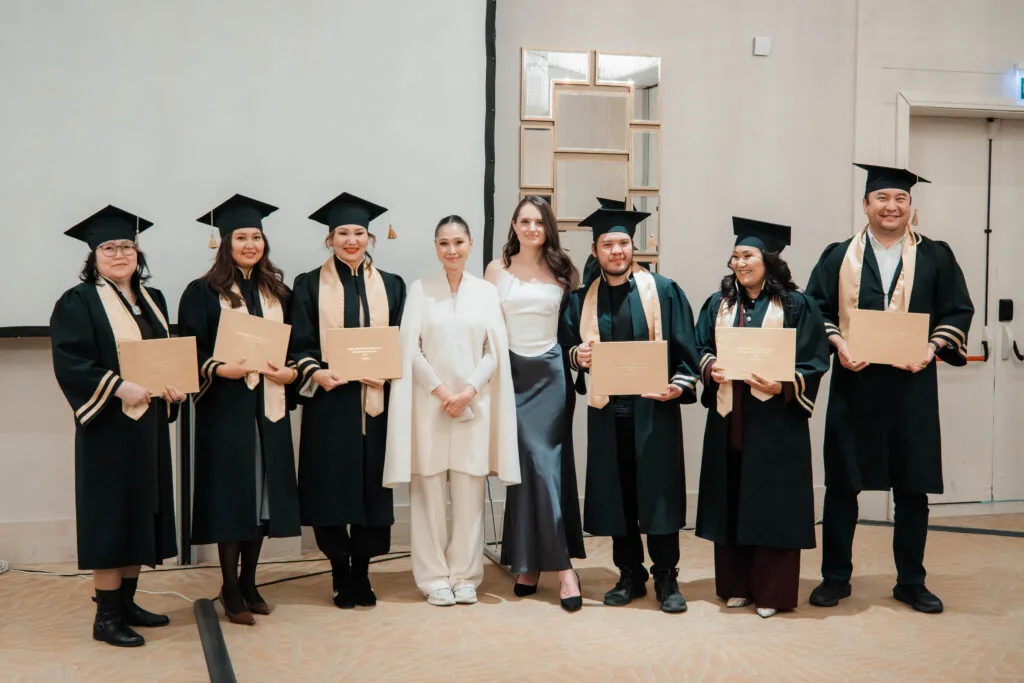
In October, the first cohort of the Executive MBA graduated. Leading entrepreneurs from Kazakhstan and international speakers from Amazon, NASA, Meta, and other companies spoke at our venue — largely thanks to the support of our partners.
This year, we focused on international experts and began working in the Kyrgyzstan market: we presented the program in Bishkek and are already enrolling the first MBA group.
We also hold closed lectures and regular networking sessions once a quarter. Each meeting is structured: participants introduce themselves, state their requests, and explain how they can be useful to others. The format of mutual support is important.
Additionally, we organize informal events and collaborate with our sister project, The Boardroom, which trains in corporate governance. YASSA EDU students can attend these events and expand their network.
Today, graduates of our one-year Executive MBA program receive a Swiss diploma issued by the Swiss Institute of Entrepreneurship Technology. We are actively expanding our pool of partners: we are negotiating with Washington University of Science and Technology and Rutgers University, as well as developing cooperation with universities in Latin America — a region that is growing rapidly and facing similar challenges.
We have also signed an agreement with Harvard Alumni Entrepreneurs. The organization's president, Regina Ryan, recently visited Almaty and held open lectures. Together, we have developed certification programs for our students and partners.
The program with Alibaba has been finalized — an intensive on AI transformation in China with participation from the company's top managers.
We cooperate with the China-SCO Trade and Economic Institute and have organized business missions to China several times. Participants signed contracts and memorandums in the field of import and export and are already implementing major deals.
Furthermore, we have become exclusive representatives of LANCE, an AI HR consultant — an American development created by former NASA consultant Robert Abbanat. This is a tool for team diagnostics and competency development that we have integrated into our programs.
Challenges
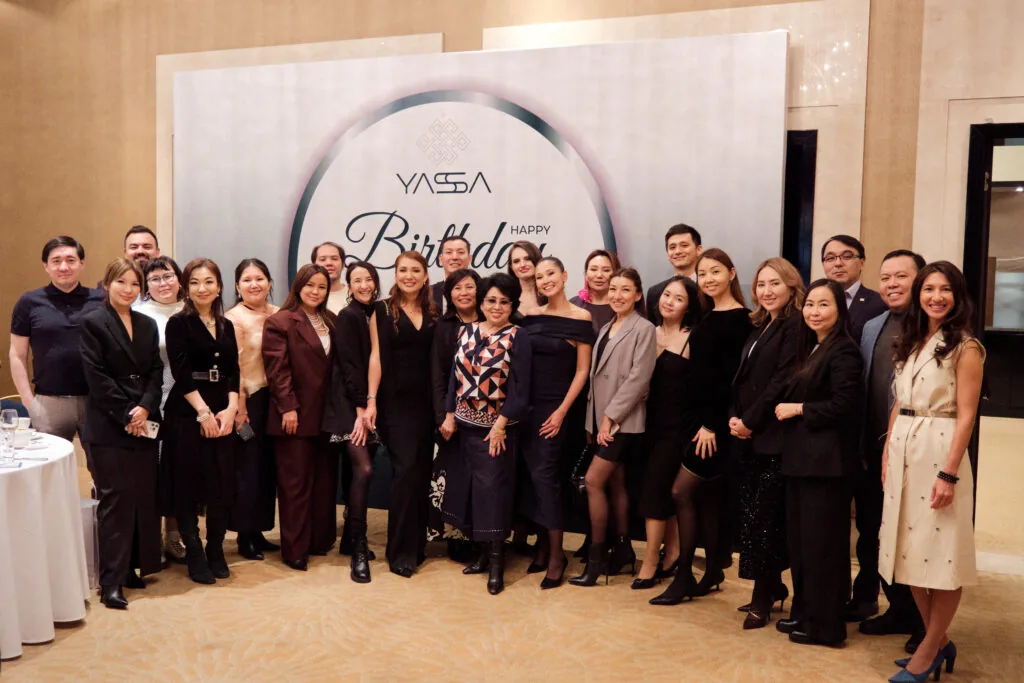
We are not a traditional university with extensive infrastructure — the project is young. We launched in 2023, and in November, we will celebrate our second anniversary. Therefore, skepticism at the start was expected from both partners and students.
Much was resolved thanks to reputation. I have been working in Kazakhstan's education sector for over 12 years, and many of our first partners and students knew me personally. They saw my previous projects and trusted my experience — this greatly helped in building trust in YASSA EDU.
Of course, the initial stage was difficult: we had to assemble a team, build processes, strengthen our reputation, and show initial results. Now it has become easier — we understand the market, have strong momentum, and real success stories from graduates and partners.
How business education will change in the coming years
Today, people have become much more demanding regarding the effectiveness of education. Learning is no longer perceived as a goal for the sake of a certificate or diploma — the practical result that can be applied immediately is what matters.
The second noticeable trend is personalization. People want to learn not by template, but through programs adapted to their goals and tasks. We see this demand and structure our courses to deliver specific results for individuals or companies.
The third trend is offline as the new luxury. Against the backdrop of the mass shift to online, live meetings and learning have become especially valuable again: they are more complex, more expensive, but provide a much deeper effect.
Moreover, education is becoming global. It is no longer enough to be a strong player in the domestic market — it is important to have international connections, access to rapidly developing regions, and the world's best experts.
Finally, the self-study format is developing. But its approach is changing: simple access to video lectures is no longer enough. It is necessary to create interactive, engaging formats that truly help people learn and maintain motivation.
Plans
Our current goal is to become a full-fledged ecosystem, not just a business institute. We are creating a space where an entrepreneur, top manager, or middle manager can find the necessary tool: training, skill enhancement, or networking. Key tasks include refining flagship programs and expanding the circle of global partners, so that YASSA EDU becomes a one-stop shop for business education.
We are developing individual learning tracking: each student works with a personal tracker. We are also actively implementing AI — analyzing profiles and career tracks to adapt programs to real market demands.
The next step is scaling into global markets.
Recommendations
My main advice is not to be afraid to try and make mistakes. Fail fast works: it is better to quickly test an idea, understand what worked, draw conclusions, and move forward.
Entrepreneurship is like sailing in the open sea: if you stand still, you will not advance. Waves, storms, and rocks are part of the journey. A true entrepreneur is created for challenges and learns to navigate them, becoming stronger.
This is hard work, especially in the first years, with sacrifices of time, energy, and emotions. But the result is worth it. Entrepreneurship is not for everyone. It is not a universal path to success, but a path full of pain, doubts, and blows to self-esteem.
The Tech on Telegram Follow The Tech on Telegram
Keep up with the latest technology and startup news.
Related reading







More from this author

News
zypl.ai begins operations in Japan and focuses on next-generation risk models
Mansur Ismagulov

News
Elon Musk's net worth has exceeded $700 billion for the first time
Mansur Ismagulov

Article Interviews
"Central Asian countries should build a joint ecosystem," — Bekhzod Ismoilov on the development of AI in the region
Mansur Ismagulov

Article Interviews
Bloom's Taxonomy and Engineering Levels: A Practical Growth Model
Mansur Ismagulov

Article Useful
How the IT industry in Azerbaijan developed in 2025: key events
Mansur Ismagulov

News
Tajikistan has become a new member of the regional innovation alliance Central Asian Innovation Hubs.
Mansur Ismagulov