How two girls from Almaty created an AI platform for marketing analytics that is used in different countries

The Tech AI
Get the key points in seconds - a short summary from The Tech AI.
Kazakhstani startup pwron.ai, founded by Tanya Plotnikova and Natalia Demchenko, has created an AI platform for market analysis. The team has completed four accelerator programs, including Hero Training from Draper University, and secured investments: an angel check from Evgeny Matveev and their own funds exceeding $30,000. The product is targeted at the construction and finance sectors, contracts have already been signed, and a Pre-seed round has been opened for scaling.
Discover how the Kazakh startup pwron.ai enables market analysis, trend tracking, and data-driven decision-making in just a few minutes.
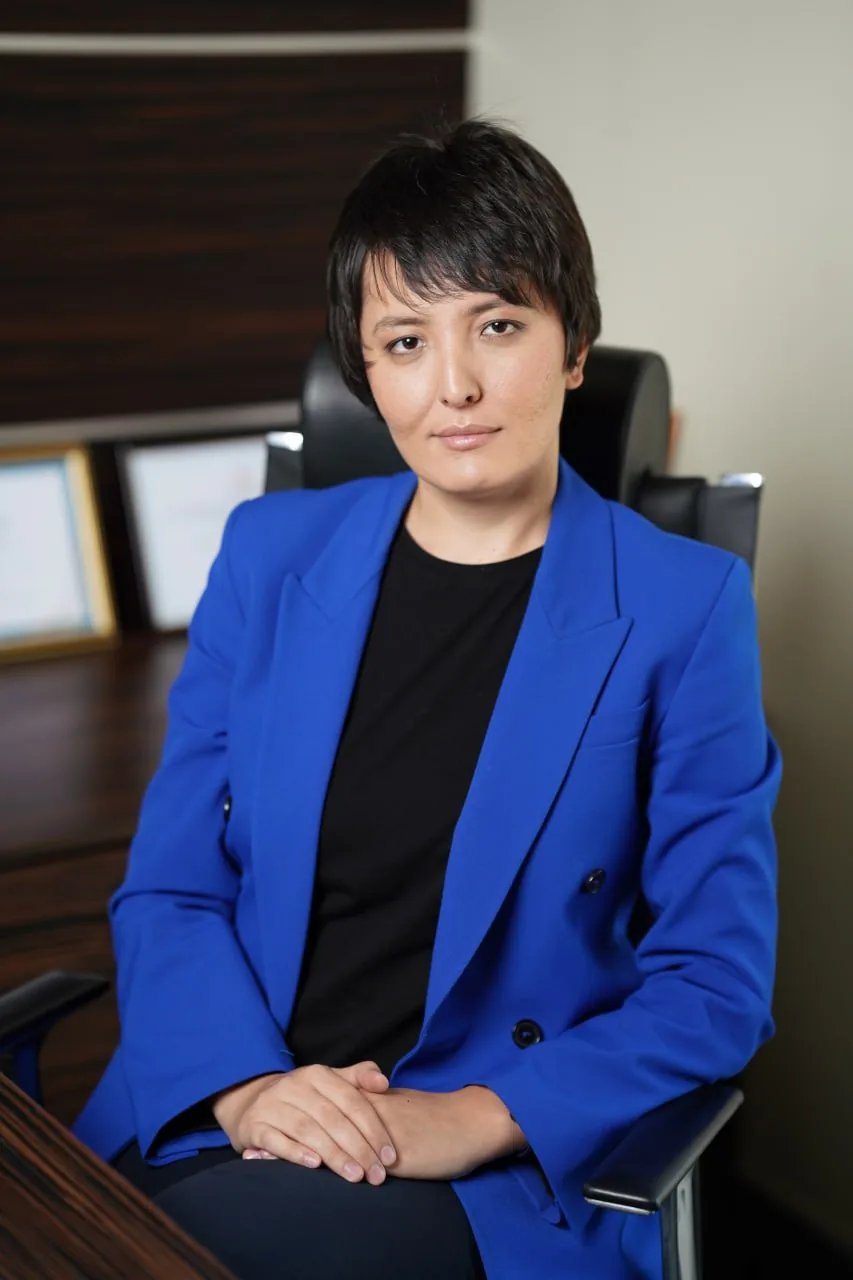
Tanya Plotnikova, City — Almaty, CEO, Founder, Instagram, LinkedIn
How It All Began
I am a marketing strategist specializing in the creation and promotion of high-tech products. By my first degree, I am an electronic systems engineer, but in my final year of university, I joined the commercial department of a telecommunications company and fell in love with technology marketing. For over 10 years, I managed the development of B2B segments in major telecom operators across several countries—I launched new services and streams, identified growth opportunities, and tested new approaches. I have cases of multiple product growth, as well as instances where a service had to be shut down. Of course, daily decisions required data—both internal and external. There were times when information was critically lacking, leading to errors such as entering the market too late.
I embarked on part of this journey with my co-founder, Natalia Demchenko. Unlike me, she is a marketer not only by passion but also by education. Her main strength is her ability to manage customer bases—from building knowledge to the point when a customer stops using the product for various reasons. Natasha launched and developed large-scale loyalty programs that brought companies millions of dollars in additional revenue.
At some point, we both "outgrew" corporations. It was a wonderful school with a familiar scale and flawlessly streamlined processes, but large companies have their own limitations—cultural, strategic, and financial. Startups also have plenty of constraints, but you feel that everything depends solely on you and the market. No intermediaries.
The idea was born from experience—an AI-powered marketing analytics platform is exactly what we always lacked! Thousands of hours spent searching, comparing, verifying, and interpreting information is madness. Even when these are not hours spent by executives but by junior employees. We would be happy to use a platform that had already collected and visualized the necessary information on trends and competitors, and even better, provided several forecasts for market developments and offered strategic options.
But we didn’t arrive at this idea immediately…
The Team
I started with my long-held dream—a consulting marketplace called poweron.space. The demand for consulting and strategic projects was high. However, as I delved deeper into this field, as my entrepreneurial vision and network expanded, I increasingly realized that scaling such a project would be difficult, and it certainly wasn’t about exponential growth.
Just at that time, Natalia joined me. We discussed extensively, communicated with mentors and advisors, and convinced ourselves that the model needed to change. Why not create a researcher and strategist based on artificial intelligence? We ourselves had spent many years conducting research and writing strategies; we know how difficult, long, and expensive it is, and we understand how to help businesses navigate these processes more efficiently.
Incubation Programs
The idea ignited not only us but also attracted the attention of accelerators, clients, and investors. Within a few months, we were accepted into seven programs. Initially, we participated in all of them, but later we started selecting and sometimes declining offers.
In the end, we completed four programs—one offline in the US—Hero Training from Draper University, and three online—from Silkroad Innovation Hub, IT Park Uzbekistan, and MOST. The last one was a program for AI startups from the venture fund Domino Ventures.
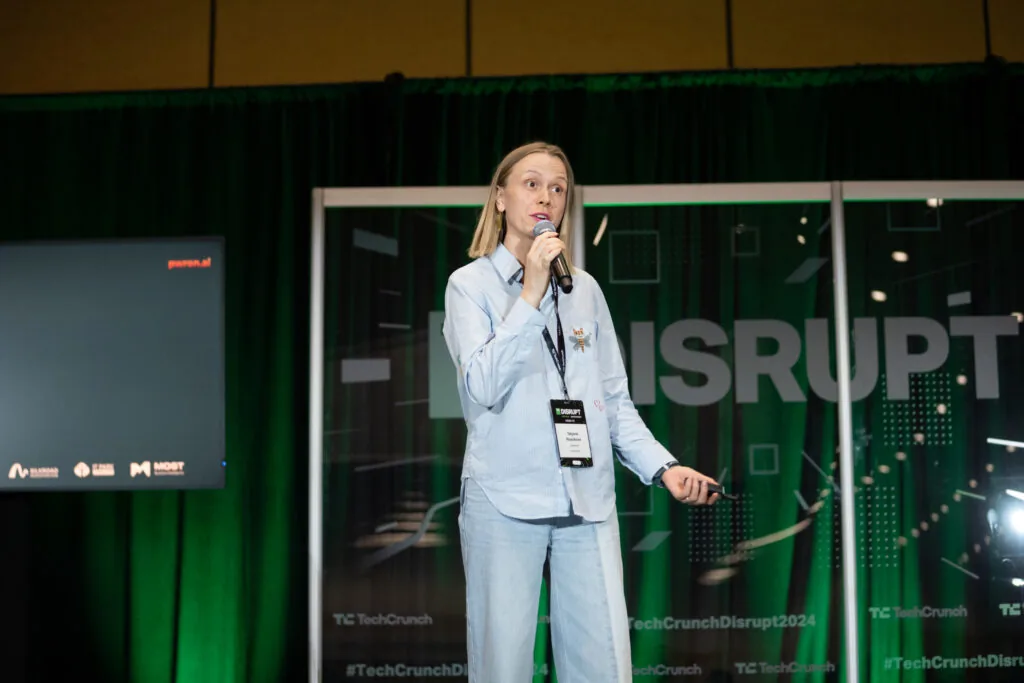
We also represented our country at the largest event in the startup industry—TechCrunch Disrupt in San Francisco—and were participants in the first Central Eurasia Summit in Silicon Valley—Central Eurasia @Silicon Valley.
In terms of financial resources for launching the project, we were somewhat lucky—even at the idea stage, we received support from Angel Check by Evgeny Matveev, co-founder of Aviata. We also invested over $30,000 of our own money—both savings and income from consulting projects. During all this time, we didn’t pay ourselves anything, and it was difficult. However, we were able to attract experienced experts to test the hypothesis and build an MVP. Part of this amount was needed for a trip to the US to participate in Hero Training and TechCrunch Disrupt.
I smile when asked: “Did someone pay for this trip for you?” because everything has a price. The price of our trip and MVP was empty personal accounts and a lifestyle of extreme frugality. We went all-in on our idea, as they say in English, but it was worth it.
Target Audience
We got lucky a second time when a major client became interested in the product, which didn’t even exist at that moment. The interest was so great that the client allocated employee time for us to jointly develop the functionality. Since this is a huge company represented in several countries, for us, this meant scale and global development almost from the first day of existence. As soon as we implemented the MVP, we signed the first contracts and started receiving payments. Today, we are signing three new contracts, and this is already a turnover that will allow us to cover the team’s costs and show potential investors detailed forecasts.
Currently, we work with two industries—the construction and development sector, and financial institutions. Requests often come from other industries, but we are convinced that our key competitive advantage and point of differentiation from existing neural networks are meticulously developed methodologies for specific verticals. It is better to be an ideal solution for three or four selected industries—those to which we can provide the most value and where we see significant potential—than to be a mediocre product for everyone.

Challenges
Perhaps the most difficult part is finding the first employees for the team. You have nothing yet except an idea, belief, and burning eyes, but you need to find not just people, but the best people in the world. It is easy to push a cart once it is built and already moving, but building a spaceship on the fly and then jumping into it is something few can manage. The first people must be exactly like that. They are not easy to find. There is no schedule, no processes, no guarantees, but you must find the strength to keep running.
The founder must be a source of strength and calm for their team. It is they who risk their reputation and money, but at the same time, it is important to radiate confidence and care.
This is not easy: the founder must have a support point—internal and external. A financial cushion is an excellent option. Family support is even better. And don’t forget about your body: physical resources must withstand a tight schedule, flights, and stress management.
Advice #1: Evaluate your resources in advance and prepare for the workload.
Finding our first clients was helped by our established network and good reputation. Therefore, advice #2: Work on your reputation and expand your circle of useful contacts every day. Keep your promises, build relationships, and strive for quality communication.
If this is difficult for you, consider a co-founder with strong communication skills. But you still won’t be able to completely avoid interaction, so develop your communication skills—they will definitely come in handy.
Achievements
We are proud of two achievements:
1. Only one month passed between the MVP and generating revenue of several thousand dollars. Moreover, our first paid order from a client was placed long before the prototype appeared. We executed it manually as market experts, and this experience became part of testing our hypothesis.
2. Incredible people, professionals of international level whom we deeply respect, are ready to work with us. This applies to both our team and clients’ side.
Plans
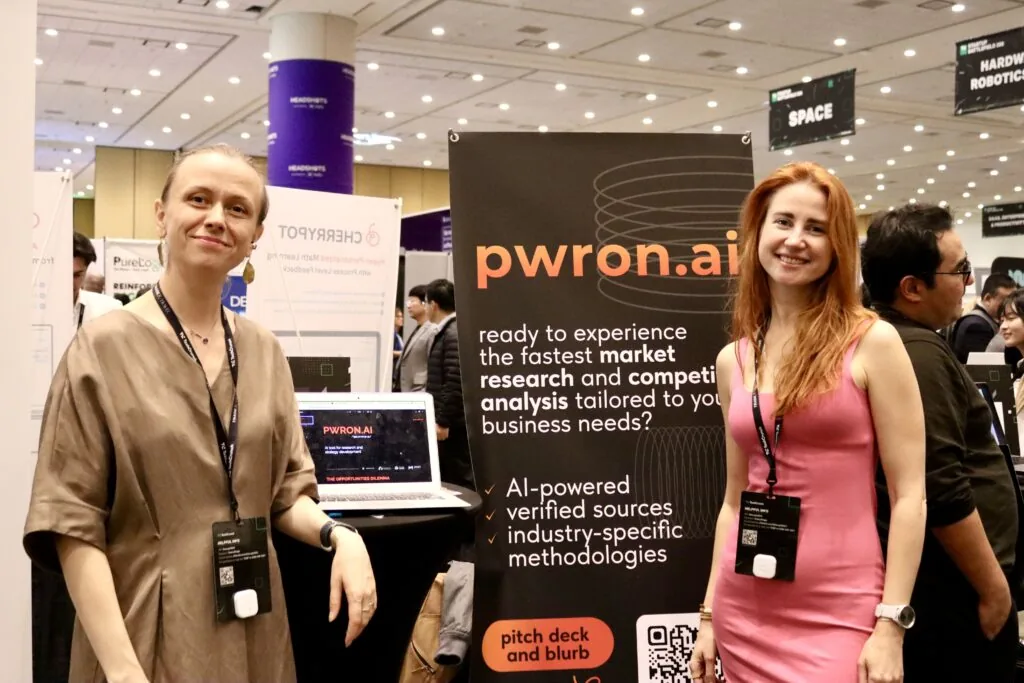
We found ourselves in a situation that many startups dream of: demand for our product already exceeds our current resources, and this is without any advertising. At the moment, our main task is to expand the team and accelerate development to provide the product to customers on the waitlist as quickly as possible.
Next, we plan to test hypotheses for scaling—both geographical and industry-wise. For this, we have opened a Pre-seed round, which will allow us to move the product from the MVP stage to a full-fledged business solution ready for scaling and active growth.
The Tech on Telegram Follow The Tech on Telegram
Keep up with the latest technology and startup news.
Related reading



More from this author

News IT
Google has solved one of the main problems in quantum computing
The Tech
News IT
20 startups from Central Asia presented their projects at TechCrunch Disrupt 2026
The Tech
News IT
Kyrgyzstan and Armenia will consider the possibility of creating a joint AI enterprise
The Tech

News IT
Now on Kaspi.kz, you can trade in your old iPhone for a new one
The Tech

News IT
IT Park Uzbekistan became the best knowledge zone in the Asia-Pacific region
The Tech

Article Useful
How to protect your accounts from hacking: 8 settings you should check today
The Tech