How Beeline Uzbekistan is building the ecosystem of the future — an interview with Andrey Pyatakhin
Andrei Pyatakhin, CEO of Beeline Uzbekistan, in an interview with The Tech, spoke about the company's strategic priorities — from digital transformation to the development of local IT talent.
Author - Mansur Ismagulov

The Tech AI
Get the key points in seconds - a short summary from The Tech AI.
Andrey Pyatakhin, CEO of Beeline Uzbekistan, notes the narrowing of planning horizons due to global instability and the growing role of digital. The company is focusing on the localization of personnel and technologies, investing $100 million in 2024. In the long term, a seamless digital ecosystem is being created, operating on the principles of VEON's DO1440 and AI1440 strategies.
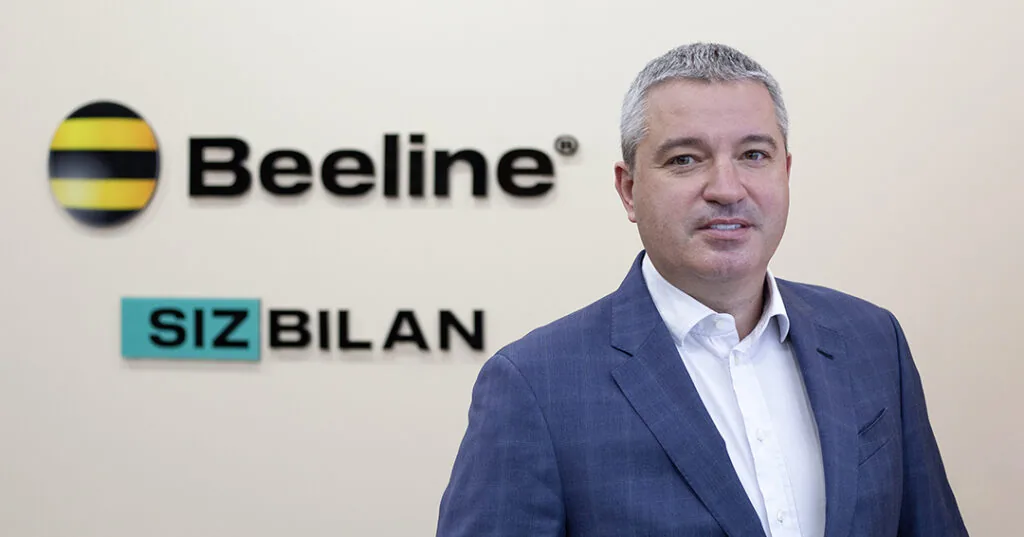
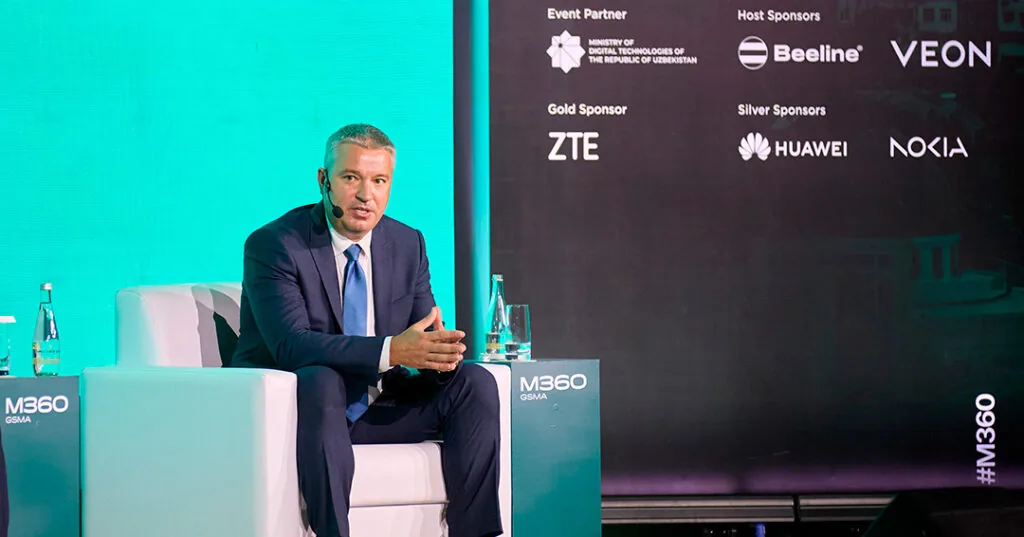
Andrey Pyatakhin, CEO Beeline Uzbekistan
On Global Changes and Trends
Global events of recent years — the pandemic, economic instability, and shifts in the global agenda — have changed the strategic approach to business and taught us to look at the future in new ways. When it is difficult to predict what will happen in the world in a year and how this, for example, will affect the cost of equipment and technologies, the horizons of strategic planning inevitably narrow. At the same time, we see how much the role of the digital sphere is growing — especially under conditions where familiar life scenarios are changing.
Digital services allow us to maintain communication, continue doing business when personal meetings become impossible, and even expand the boundaries of freedom — including the freedom to make decisions “here and now.” It is this reality that Beeline Uzbekistan helps to shape.
The second important point: global challenges have taught us to value markets with a high degree of stability — for example, Uzbekistan. We observe predictable state policy here and a real willingness to create conditions for successful digital transformation. This allows us to confidently follow a strategy of long-term investments in the country’s economy.

On New Challenges
A serious challenge is the problem of personnel. A few years ago, it was obvious to any attentive observer that Uzbekistan urgently needed its own IT specialists. Therefore, VEON Group and Beeline Uzbekistan, as a subsidiary of the holding company, have managed to do a lot to develop the national pool of “IT specialists.” Yes, our company has many employees who came from abroad; we have an international, multi-national team. But it is here, in Uzbekistan, that the creators of digital services intended for the country’s residents should live and work. Such a specialist better understands local specifics and feels the market. In essence, they create products for themselves and their loved ones.
This is also a matter of sustainability: a company that relies on local personnel is less dependent on foreign political conjuncture. At the same time, this does not prevent us from going beyond the borders of one country. Thus, our new business Veon AdTech creates digital advertising not only for Uzbekistan but also sells it in Bangladesh, Pakistan, and Kazakhstan. This already indicates that Uzbekistan is increasingly relying on its own resources for digital development.
The second challenge, closely linked to the first, is the localization of technologies and digital products. Almost all AI tools today support only the English language, which creates certain barriers. Adapting such solutions for users whose native language is Uzbek requires not only technical efforts but also an expansion of the pool of local specialists.
On the Role of New Technologies
New technologies were and remain the key driver of Beeline Uzbekistan’s development — even back when we were “just a telecom operator.” Today, we are creating a full-fledged digital ecosystem, and the significance of innovations is growing manifold. The logic is simple: whoever first offers a convenient and accessible solution to everyday tasks in a single digital space will become the market leader. We are making maximum efforts to ensure that this status is firmly ours.
On the Employees of the Future
Important are the qualities that helped overcome the global challenges of the past and, I am sure, will be in demand again: flexibility, the ability to transform quickly — including by mastering new skills. Responsibility, courage, and independence in decision-making are also necessary.
I am not a supporter of a rigid management model: a specialist should propose something new themselves, care about the result themselves, and not just follow orders. And the manager’s task is to monitor the team’s overall course and intervene only in critical situations.
On the Impact of Global Trends on Company Strategy
VEON’s priorities coincided with a number of key processes. For example, the group began actively developing assets in Uzbekistan even before the centers of the world economy started shifting towards Asian countries, the so-called “Global South.” The trend towards business localization, greater independence, and orientation towards national interests also fits perfectly with the decisions we have made and are making in Uzbekistan. This indicates that VEON’s analytics has always correctly assessed prospects and future changes.
Beeline Uzbekistan has been successfully implementing digital innovations in the country for about 10 years, but we are still at the beginning of a major “digital leap.” We face huge opportunities for further development. The potential of AI tools is far from being fully realized, and user interest in them is growing rapidly — we see this from download statistics in app stores.
We prefer the term “augmented intelligence” rather than “artificial,” because, in our opinion, it will never replace a person but will enhance their capabilities and remain an assistant.
We see great prospects for cashless payment systems. Thus, over the past two years, our payment system Beepul has increased its user base by more than three times, and the volume of transactions grew even faster. Today, we are working to give users of our FinTech services even greater “digital freedom.” There are many promising areas. E-government, e-commerce, online education, telemedicine — all of this should enter a unified ecosystem and become available to every resident of Uzbekistan.
This is why we continue to actively invest in the infrastructure on which these solutions are built. In 2024 alone, the volume of investments amounted to $100 million.
Everything available to our clients, including services based on Big Data and Data Center capabilities, we use ourselves daily. This allows us to have up-to-date insights into the market and the needs of the country’s residents. As for operational processes, each functional area within the company uses its own innovations. Otherwise, products like the super-app hambi would simply not have appeared.
What Will the Company Be Like in 10 Years
It will be a powerful, seamless digital ecosystem within which almost any task can be solved, easily transitioning between sections. Although I believe that the smartphone owner may not even have to press buttons themselves — they will have an AI-based voice assistant at their disposal. And I am confident that thanks to our solutions, Uzbekistan will become an example of how new technologies stimulate economic growth and help surpass other countries in development speed.
On the Company’s Role in the Future
The company’s principles are embedded in the VEON DO1440 and AI1440 strategies: our services must meet customer needs 1440 minutes a day. Because it is in this that lies the guarantee of the success of the “digital leap” initiated by our country.
The Tech on Telegram Follow The Tech on Telegram
Keep up with the latest technology and startup news.
Related reading







More from this author

News
zypl.ai begins operations in Japan and focuses on next-generation risk models
Mansur Ismagulov

News
Elon Musk's net worth has exceeded $700 billion for the first time
Mansur Ismagulov

Article Interviews
"Central Asian countries should build a joint ecosystem," — Bekhzod Ismoilov on the development of AI in the region
Mansur Ismagulov

Article Interviews
Bloom's Taxonomy and Engineering Levels: A Practical Growth Model
Mansur Ismagulov

Article Useful
How the IT industry in Azerbaijan developed in 2025: key events
Mansur Ismagulov

News
Tajikistan has become a new member of the regional innovation alliance Central Asian Innovation Hubs.
Mansur Ismagulov