"Innovation is not a separate part of our activities, but the foundation of everything we do," — CEO of QazCode on trends and scaling strategy
From super apps and educational AI platforms to export strategies and large-scale pilots, QazCode is betting on artificial intelligence and transforming Kazakhstan into a hub for AI solutions in emerging markets. Details in an extensive interview with the company's CEO, Alexey Sharavar.
Author - Mansur Ismagulov
The Tech AI
Get the key points in seconds - a short summary from The Tech AI.
Alexey Sharavar, CEO of QazCode (Almaty), highlights the rapid development of AI and generative models as key business drivers. The company focuses on creating localized LLMs, such as KazLLM, and AI agents for markets in Central Asia, Eastern Europe, and Africa. QazCode aims to become an international IT leader, supporting Kazakhstan's ambitions to export IT services worth up to $1 billion by 2026.
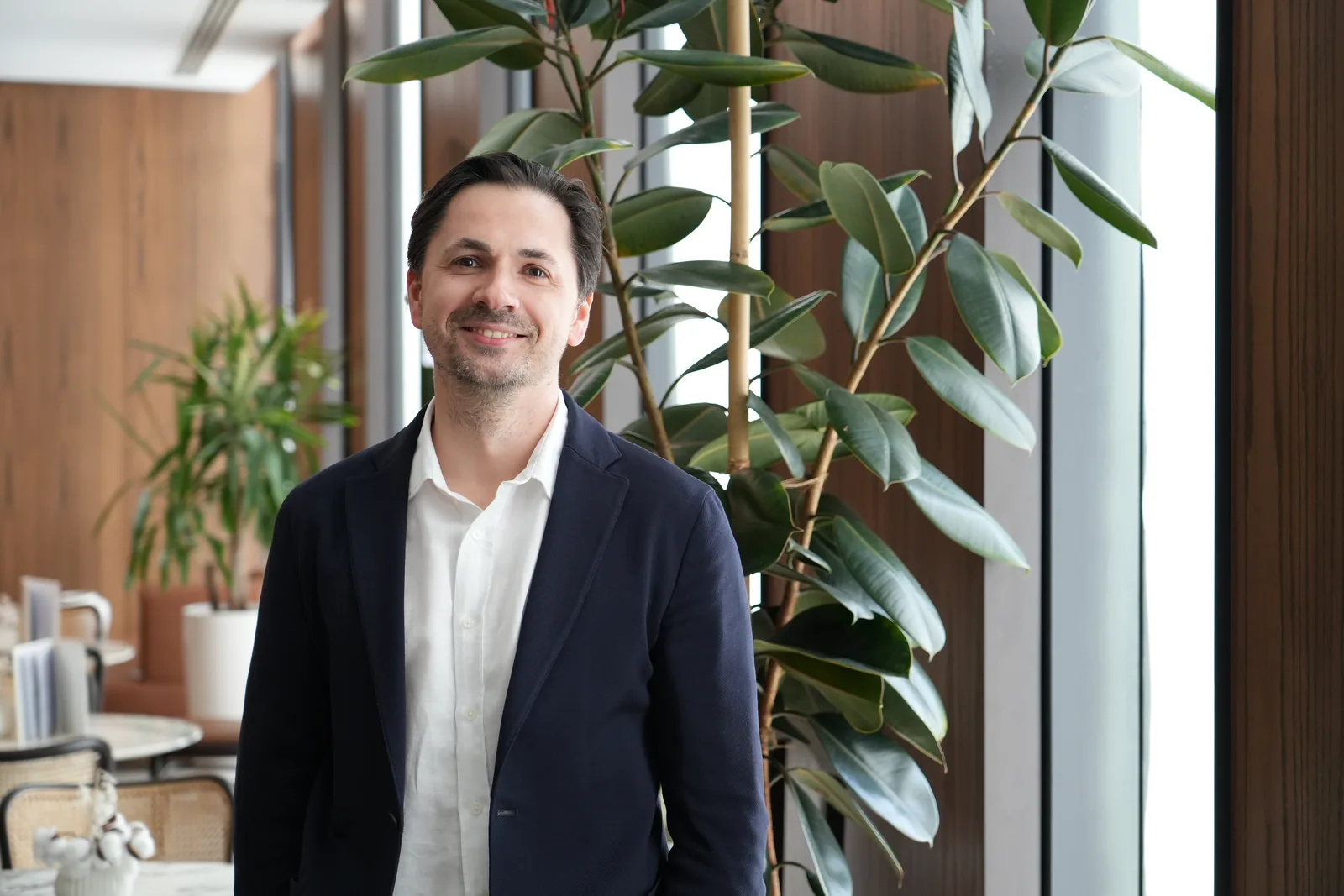
Alexey Sharavar, city — Almaty, CEO QazCode
On global changes and trends
Although the basic principles of doing business have not changed, global events have forced a reconsideration of approaches. Expectations that everything would be fully online did not come true, but this gave a boost to digitalization — now it is not just a trend, but an important part of a successful business strategy.
But perhaps the biggest change we have seen in recent years is the rapid development of artificial intelligence. It is particularly interesting to see how generative AI and large language models are becoming real players, opening up new opportunities for business. Leading global BigTech companies are actively investing in these technologies, which significantly accelerates innovation and changes the market. Over the past three years, AI has become a real catalyst for change, shaping the future of business and opening up new paths for growth and scaling.
On new challenges
The first challenge is the decreasing cost of development. With the emergence of language models capable of generating code, IT companies will have to adapt to a new economy where routine tasks are increasingly automated. This will require rethinking team structures and development approaches.
The second is security. As AI systems become more autonomous, managing them requires new approaches. Companies do not yet fully understand how to effectively and safely implement such technologies, which increases risks.
The third is data quality and result reliability. Models are prone to hallucinations, and it is the specialists' task to learn how to verify facts, filter information, and correctly interpret AI conclusions. They will not be able to completely replace humans in the coming years, but everyone must know how to work with them.
On the role of new technologies
One of the priority areas we will continue to focus on and that we can offer to business and the industry as a whole is RAG models — functional agents that solve specific tasks. They can significantly improve processes in a wide variety of fields — from customer service to financial and legal services. The roles these agents can perform are diverse, and they are capable of significantly speeding up operations, as well as increasing productivity and work efficiency.
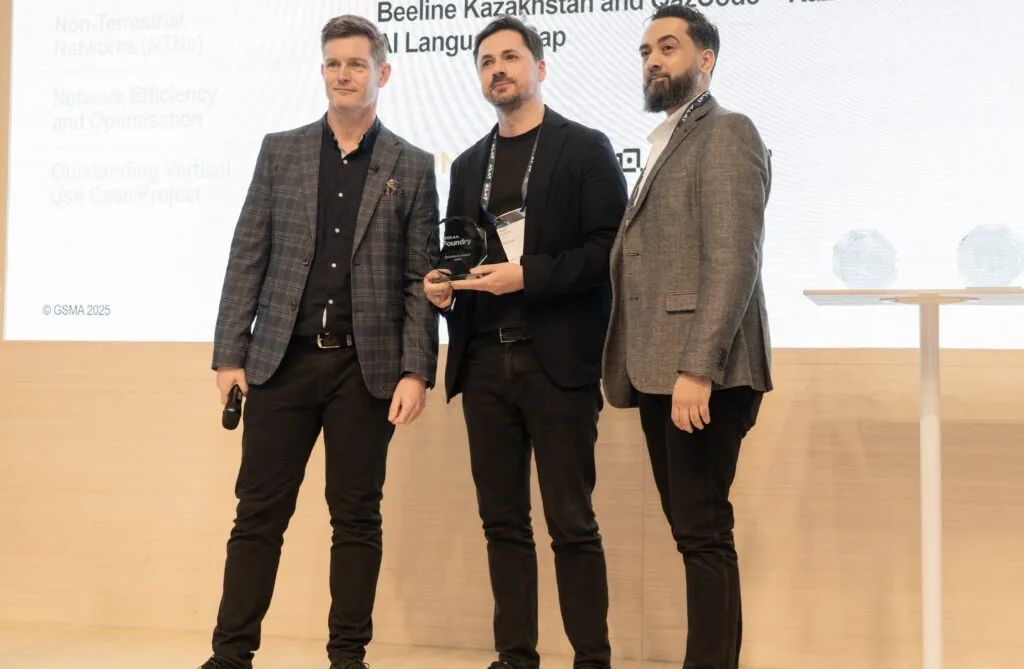
At QazCode, we also pay special attention to the localization and development of large language models. Our goal is to eliminate the language barrier by creating models for different markets, thereby supporting linguistic and cultural diversity in the digital world. The example of the national model KazLLM has already demonstrated the effectiveness of this approach, and we plan to expand it to other regions, providing personalized and localized content.
Another important general trend is hyper-personalization. In our products, such as the superapp Janymda, we strive to make communication with customers as individual as possible. In a world where more and more people use applications for entertainment, games, music, and movies, it is important not just to provide services, but to make them as personalized as possible. We see how telecom companies, banks, and retailers are beginning to implement gamification and rewards for using their applications, but it is important not to overload users with unnecessary advertising and information, as happened with websites 20 years ago.
The main task for us as a company operating in the field of artificial intelligence is to make AI and language models an integral part of customer interaction. AI agents will become personal assistants who can offer users relevant services and solutions tailored precisely to their interests and preferences.
On the employees of the future
Without a doubt, now and in the future, the main thing is deep knowledge and the ability to work with AI tools. At QazCode, we are already hiring developers who confidently master GenAI technologies, because without these skills it is simply not possible to compete today. But AI is not a replacement for a person, but a tool that must be used correctly.
In addition to technical skills, personal qualities are also important. Critical thinking, the ability to verify facts — these are the skills that help avoid mistakes when working with AI and make the right decisions. The ability to analyze information and draw conclusions is useful everywhere and always.
Another aspect is the ability to work with large volumes of tools and data. Almost every month new models appear that are better than the previous ones. Instead of reinventing the wheel, it is important for specialists to know how to effectively apply these solutions in practice. These are exactly the hard skills that help solve tasks quickly.
Success will come to those who know how to combine flexibility, adaptability, and good technical knowledge. Such a combination of hard and soft skills makes it possible to keep up with new technologies and remain competitive.
On the impact of global trends on company strategy
The influence of the global economy on our strategy is noticeable. The demand for AI solutions and agents is growing day by day, and companies around the world are looking for ways to either earn money on these technologies or use them to improve processes. This trend fully coincides with our development course.
When we were just starting, we focused on billing systems and developed products for “Beeline Kazakhstan” that contributed to improving customer engagement through personalized offers and communications. At that time, the demand for AI was not as high. Today, the situation has changed radically: with the growing popularity of large language models, interest in AI has increased significantly. For example, at the largest international exhibition MWC Barcelona 2025, where we represented Kazakhstan, more than 70% of requests from participants concerned AI solutions, while a year ago there were about 50%. This clearly shows how quickly the market is developing.
In response to these changes, we are expanding our product line and actively developing expertise in the field of AI. We already have successful experience in implementing AI in Kazakhstan, and it helps us confidently adapt to new conditions.
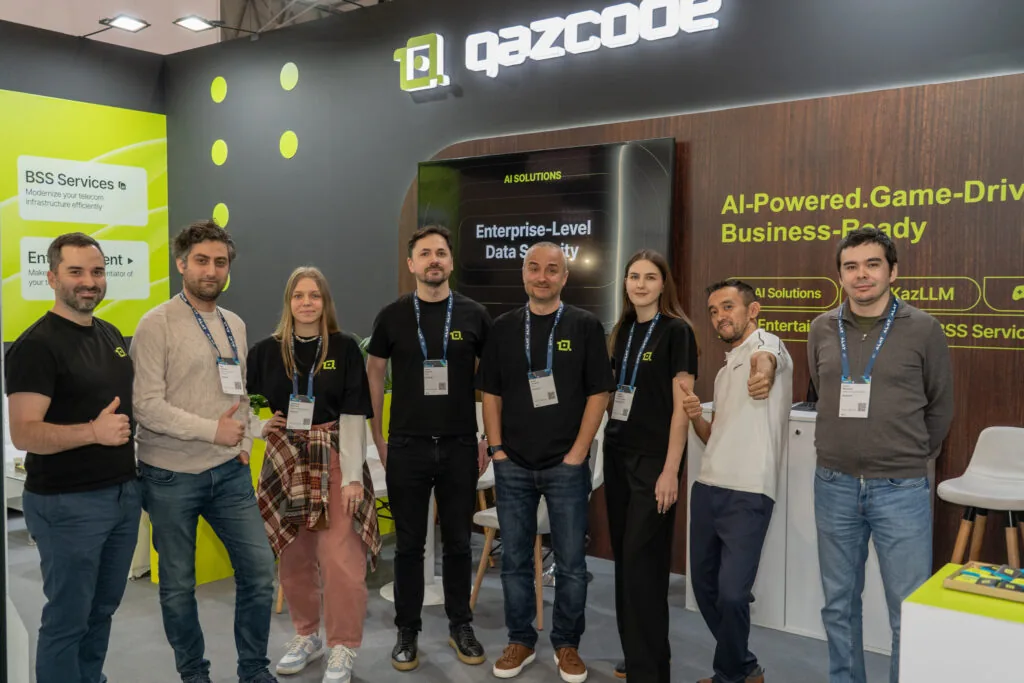
Our key areas are the creation of localized language models, the development of AI agents and assistants, as well as the implementation of AI in education and healthcare. These are exactly the areas where AI can really improve people's lives, from increasing access to knowledge to improving service quality.
In addition, we are actively developing entertainment platforms, including games and music. Our successful experience in Ukraine, where the gaming platform showed more than 20% growth in monthly users over three months, inspired us to launch a similar project in Kyrgyzstan. We expect similar positive results.
We are also conducting pilot AI projects in Kazakhstan and other countries, including AI Tutor — an educational AI solution in the Janymda superapp, which is already showing excellent user growth. Within a month of using the platform, tens of thousands of users left their feedback, and the NPS indicator reached 58, which confirms a high level of satisfaction. The positive feedback from teachers and schoolchildren is especially pleasing.
As for geographical priorities, we focus on developing markets with growing populations and economic potential. Regions such as Central and Southeast Asia, Eastern Europe, and African countries still represent special interest for us. In many of these countries, there is a shortage of high-quality AI models adapted to local languages and realities, which creates demand for our solutions. We are confident that with the increasing need for native language content and improving economic conditions, our product will become in demand.
Innovation is not a separate part of our activity, but the foundation of everything we do. We create software and digital solutions, so we are essentially already in the zone of constant technological experimentation.
At QazCode, we focus on rapid iterations: from hypothesis to prototype, from test to scaling. Kazakhstan has turned out to be an excellent platform for launching new products, thanks to the digital maturity of the market and high user engagement. We start with pilot projects, collect feedback, make adjustments to the product, and only then expand it to other markets.
This is not a classic situation with long and endless research — our goal is to test the hypothesis as quickly as possible. If something does not work, we minimize testing costs. If the solution proves its effectiveness, we expand the team and scale the product or service.
What the leader of the future should be like
It is important to have the right to make mistakes, experiment, and quickly learn from errors. It is better to try immediately, even if it does not work out and then correct the course, than to spend a long time convincing yourself that everything is being done correctly, and in the end, just pour money, hoping for luck.
Leadership should be built on teamwork. It is impossible to know everything and be an expert in all areas. It is more important to support the team, help it work better, than to try to do everything yourself. The leader's task is not to be smarter than everyone else, but to create conditions under which the team will work effectively. His main role is not to hinder people, but to help them. And, of course, it is important to guide the team in the right direction, leading it where, in your opinion, there will be success.
To be successful, you need to be able to make decisions quickly and change course. Therefore, pilots and experiments are the foundation. The old economy no longer works, and the new one is only being tested, and we live in a world of high uncertainty. But if you are flexible and change course quickly, your chances of success and survival will be much greater.
What the company will be like in 10 years
The ideal scenario for QazCode in 10 years is to be an international player with a wide presence in different markets, including Central Asian countries, Eastern Europe, and other developing regions. We remain the main partner for the VEON group, but at the same time we are actively developing in external markets.
We are proud that we helped implement localized language models that take into account the cultural context and specifics of each region, unlike large Western models that often do not take local realities into account. We saw this when comparing KazLLM with other well-known language models.
From a business perspective, we see an increase in the company's capitalization due to expansion into new markets and an increase in the number of satisfied customers. The NPS level and user loyalty will continue to serve as the main indicators of success. We continue to work to ensure that partners — from telecom companies to banks and retail — have quick access to innovative solutions that they could create themselves, but longer and more expensive. In short — we shorten their path from idea to product.
Inside the company, we are already integrating AI into daily work processes. Because a company creating AI products must be its best user — otherwise it simply does not work.
In 10 years, we see QazCode as an international technology company with leading positions, products that change the market, and a team that integrates advanced technologies into every process.
On the role of the company in the future
The Head of State has strong ambitions — to turn Kazakhstan into a world-class IT leader with IT service exports amounting to up to $1 billion by 2026. And our mission as QazCode is not just to develop AI, but to contribute to the establishment of Kazakhstan as a full-fledged player in the global technological ecosystem. We want Kazakhstani technologies to be not only competitive within the country, but also recognizable abroad. In this direction, we strive to create a unique “craft code” that will be in demand worldwide.
Many foreign companies operate in our market, and we are also focused on ensuring that Kazakhstani products are popular abroad.
At the same time, we actively support the development of the local IT community. We are not limited to just hundreds of specialists, but are focused on creating millions of highly qualified personnel who will work in such advanced fields as artificial intelligence, biotechnology, and others. We hold meetups, participate in educational projects, and every year organize a large-scale IT conference, beetech conf by QazCode, to interest young people in new technologies and engage them in the industry.
Our long-term goal is to create an IT community that will not only meet internal needs, but also be ready to compete at the global level. We are confident that a strong technological environment is the foundation for a sustainable economy and the country's future.
The Tech on Telegram Follow The Tech on Telegram
Keep up with the latest technology and startup news.
Related reading







More from this author

News
zypl.ai begins operations in Japan and focuses on next-generation risk models
Mansur Ismagulov

News
Elon Musk's net worth has exceeded $700 billion for the first time
Mansur Ismagulov

Article Interviews
"Central Asian countries should build a joint ecosystem," — Bekhzod Ismoilov on the development of AI in the region
Mansur Ismagulov

Article Interviews
Bloom's Taxonomy and Engineering Levels: A Practical Growth Model
Mansur Ismagulov

Article Useful
How the IT industry in Azerbaijan developed in 2025: key events
Mansur Ismagulov

News
Tajikistan has become a new member of the regional innovation alliance Central Asian Innovation Hubs.
Mansur Ismagulov