"AI is a powerful tool in the hands of a knowledgeable person," — Margulan Seysembay on how to preserve humanity in the age of AI
Margulan Seyssembay, businessman and investor
Author - Mansur Ismagulov
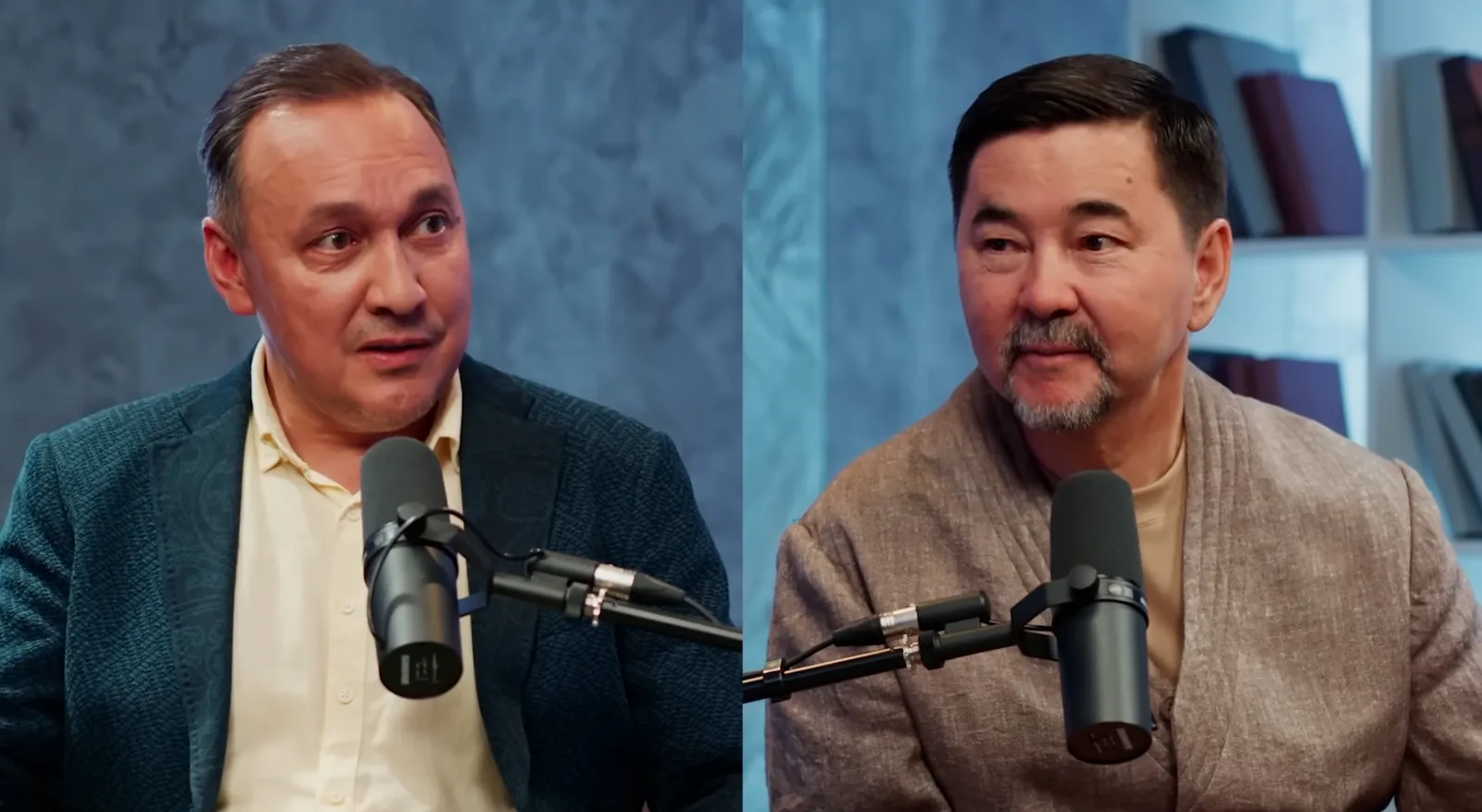
We share the most interesting insights from the podcast between Margulan Seyssembay and Ilyas Minubay, where they discuss the impact of AI on life, love, and human individuality, as well as questions about the future, humanity, and technology.
AI, Love, and Fears of the Future
With the development of artificial intelligence, a question arises: will this lead to the disappearance of the very idea of love? Already today, algorithms analyze data on preferences, habits, and compatibility, helping people find partners. Choosing a partner is increasingly delegated to digital tools.
Technology is moving toward the emergence of personal digital assistants that know everything about the user: from habits and desires to contact lists. Their recommendations may become so accurate that ignoring them would be irrational, creating a risk of blind trust in machines.
Research shows that excessive comfort leads to a loss of interest in life. If AI removes the element of struggle and uncertainty from human life, society risks becoming hedonistic and losing its sense of existence.
Impact on Society and Demographics
In business, there are only two strategies for success:
- Cost Leadership: make it cheaper than everyone else.
- Differentiation: make it unique, different from everyone else.
It is pointless for people to compete with AI and robots in the first strategy. Robots will always do it faster, cheaper, more accurately, and more neatly. We have no place there.
The only loophole for humanity is uniqueness. People are created differently: from the pattern of the retina to temperament traits. In the future, finding themselves in a world of perfect mass-produced goods, society will create its own scarcity. People will inevitably get bored living in conditions of absolute abundance and perfection.
The future belongs to masters and craftsmen. People will value "roughness," failures, and human errors. This trend is already noticeable on social media: the higher the quality of the image in a video, the more people write: "This is AI." But when a video is shot handheld, with poor lighting, the audience trusts it.
People are starting to look for proof of life, proof that they are not facing an algorithm.
Artificial intelligence makes smart people smarter and dumb people dumber. And, unfortunately, since the majority of people use artificial intelligence simply as a replacement for Google. Instead of searching, they prefer to receive a ready-made answer. Consequently, people no longer search, and because of this, they become dumber, especially if they are children. Artificial intelligence itself becomes dumber because its algorithms take into account previous questions.
AI is a powerful tool in the hands of a knowledgeable person. It is important to set the context correctly and understand the levels of memory it has, as different levels are suitable for different purposes.
The weakness of AI is that, knowing everything, it is unable to take a side: for any argument, it has a counterargument. To force it into a position, you need to create roles for it.
Unpredictability as a Human Resource
Human nature is contradictory: the more external order there is, the stronger the desire for chaos. If AI optimizes everything to maximum efficiency, the natural reaction of humans will be rebellion. Among young people, this manifests in the rejection of the latest technologies, the use of feature phones, or second-hand clothing. The goal of such behavior is to create discomfort and preserve autonomy.
AI represents structure and logic, while humans are generators of chaos. As long as people are capable of irrational actions and experiencing emotions, algorithms will not be able to fully predict societal behavior.
Why Brands Will Become Irrelevant
There is a forecast that may disappoint marketing specialists: classic marketing will disappear with a 90% probability in the next 10 years. The reason lies in the change of the subject making purchase decisions. We are transitioning to an economy of interaction between digital agents.
Consumers will no longer have to independently search for products or shoes on websites. A personal digital assistant will connect with a seller's algorithm. The digital assistant is indifferent to beautiful website design, persuasive copy, and logo colors. It only cares about dry data: price, availability, composition, and logistics.
Future websites will lose their familiar screens and turn into simple data protocol exchanges. Marketing as the art of emotional persuasion will survive only in the niche of luxury, unique, and craft goods. The rest of the space will be taken over by the realm of algorithms.
What Jobs to Pursue in the Age of Algorithms
Artificial intelligence will take over five elements of work: resources, results, internal actions, time, and part of the technology. Humans will be left with three key areas of responsibility: defining goals, process architecture, and choosing technologies and metrics.
The labor market will change radically. Future professions will include process architects, specialists in data center configuration, traffic and AI control, and infrastructure designers for autonomous systems. Creativity with a pronounced individuality will remain valuable. Spheres requiring live participation will gain special value: offline communication, coaching, psychotherapy, partnership in games, and travel.
The Main Strategy
In an era when technology changes processes and ensures results, the most valuable resource is the ability to remain human. There is no need to fear a machine uprising — one should fear losing one's own essence.
Economics and technology are merely tools. The human element remains in values inaccessible to algorithms: in love, empathy, the ability to understand another person, and, most importantly, — in the right to make mistakes and create chaos. Artificial intelligence is perfect order. Humans are creative unpredictability.
Those who preserve these qualities will pass the test of the new world. Everything else — education, adaptation, and skill development — is merely a technical aspect of the issue. Those who will find their place in the future are those who do not turn into a function but continue to feel.
You can watch the full episode at the link.
The Tech on Telegram Follow The Tech on Telegram
Keep up with the latest technology and startup news.
Related reading







More from this author

News
zypl.ai begins operations in Japan and focuses on next-generation risk models
Mansur Ismagulov

News
Elon Musk's net worth has exceeded $700 billion for the first time
Mansur Ismagulov

Article Interviews
"Central Asian countries should build a joint ecosystem," — Bekhzod Ismoilov on the development of AI in the region
Mansur Ismagulov

Article Interviews
Bloom's Taxonomy and Engineering Levels: A Practical Growth Model
Mansur Ismagulov

Article Useful
How the IT industry in Azerbaijan developed in 2025: key events
Mansur Ismagulov

News
Tajikistan has become a new member of the regional innovation alliance Central Asian Innovation Hubs.
Mansur Ismagulov