Cofilm AI — a startup for automating content creation based on transcribed video and audio
Cofilm AI startup founder Evgenia Gorbunova explained how her project helps bloggers and content creators process video and audio faster, turning them into texts and posts for social media.
The Tech AI
Get the key points in seconds - a short summary from The Tech AI.
Evgenia Gorbunova founded Cofilm AI, which has around 15,000 users and supports over 60 languages. The startup grew organically without investment, using a referral program that pays bloggers 30%. The target is to reach $20,000 in monthly revenue by the end of the year and grow the user base to 100,000.
Evgenia Gorbunova, CEO, @getcofilm, @evvgeniag, @cofilmai
How It All Started
I have been fully dedicated to the Cofilm AI startup for over six months, primarily focusing on its marketing aspects and Product Vision.
The idea for Cofilm AI stemmed from my personal experience. Last year, I started consistently creating Shorts for YouTube and encountered a problem: writing compelling scripts for videos to drive views. I decided to use a strategy that seemed genius to me: I took videos from successful accounts, manually transcribed them, and then adapted the text for my own use. This was time-consuming, but my views began to grow.
Then, I spoke with over a hundred content-creating bloggers I knew. It turned out that many used a similar approach: they drew inspiration from other people's videos, changed key elements such as hooks and calls to action, and filmed their own videos based on adapted scripts. This confirmed the problem I had faced and made it clear that it was not just an issue unique to me.
I discussed this with programmer friends, and we quickly built an MVP. As a Webflow developer, I took on the frontend and UX/UI, handling the design and branding, while the guys helped with the backend. Within a week, we had a minimally viable product that transcribed and paraphrased texts. I started using this tool on my videos, and suddenly my clips began to garner millions of views.
Our product can be tried absolutely free—we provide free credits to every user, which refresh monthly. The functionality is not limited, and credits represent the number of minutes or words that can be transcribed.
Our pricing is simple: just two plans. The first is $20 for approximately five hours of content, and the second is $40 for fully unlimited access.

Launching the Startup
The startup is a little over six months old, and throughout this time, we have grown entirely organically without raising external investments. Our primary growth driver is collaboration with bloggers through a referral system. Bloggers created videos about us, and we paid them 30% of the sales. This referral program is active and currently open—anyone can join and start earning with us.
There are examples of bloggers who earn up to $600 per month through our program. A key advantage is regular payouts. Every month, bloggers receive money for the users they bring in. For example, if a blogger brings in 100 people, they will continue to receive payouts as long as those people use the product.
Thanks to the referral program and my own videos, we grew organically without significant financial investment.
Target Audience
Today, we are actively working on automating processes for podcasters and creators of long-form content. To give an example: after recording a podcast, you need to prepare announcements for Twitter and Telegram, come up with headlines, and do much more. However, the first step is usually transcription, and we offer not just raw text, but a high-quality, structured, cleaned, and paragraph-separated transcript. This is convenient for any purpose—from personal notes to transcribing lectures or lessons.
The second area we are currently focusing on is creating multiple pieces of content from a single source. That is, from one podcast or long video, we help generate up to ten other formats. This process is integrated into our tool, where you can easily edit text using built-in AI—paraphrasing, changing tone, text length, and headlines.

Next comes content creation: from the transcribed text, we automatically generate headlines, scripts for short videos and Reels, hashtags, and ready-to-post content for social networks like Twitter or Telegram. These posts can also be regenerated for different purposes.
The third key feature is an AI chat that works like ChatGPT for your audio files. You can upload a lecture or podcast and ask questions, such as requesting a quiz, highlighting key points, or identifying trigger phrases. The chat allows for deeper and more flexible interaction with the content.
Thus, our tool combines three important functions: transcription, content creation, and dialogue via the AI chat.
The Team
Our team is small—up to 10 people. It includes several programmers and a small marketing team that actively works on promoting the product.
Incubation Programs
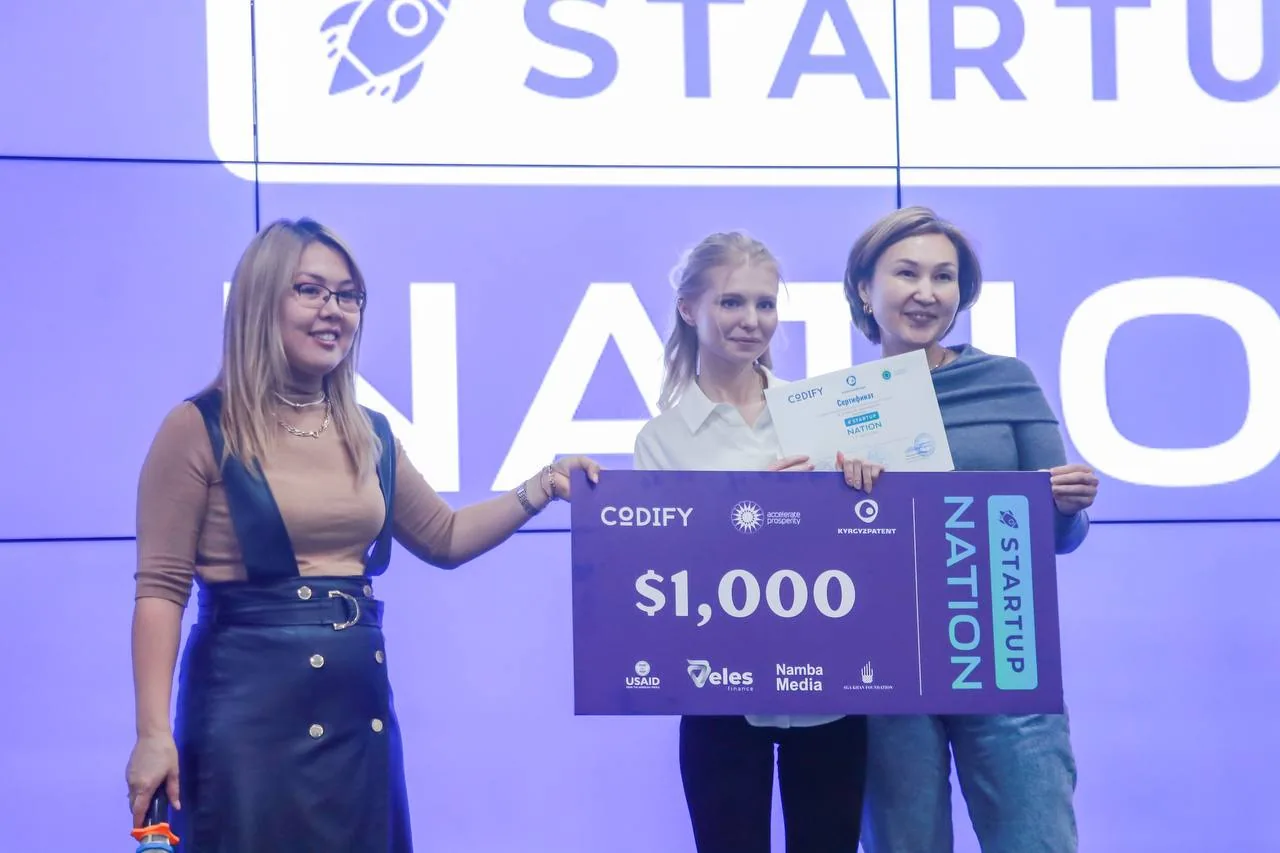
The only accelerator I participated in was "Startap-Natsiya" (Startup Nation). We took first place there and received $1,000. Since then, I have not participated in other accelerators or won competitions. Many might think that startup success lies in winning accelerators or raising investments, but I see it differently.
A successful startup is one that can develop independently, without investments. It is to such startups that investors come, not the other way around. I believe that a startup capable of self-funding its growth and expanding organically is a true success. Therefore, I prefer to focus on the product and real users rather than spending time participating in accelerators. This may not be for everyone, but at this stage, our priority is creating a useful product and solving our users' problems. Accelerators and investments can come later.
Regarding funding, we raised a small amount through our minimally viable product and have some minor investments. However, these were not official accelerator investments. We also self-finance through startup revenue.

Challenges
One of the biggest challenges we faced was finding product-market fit, as well as understanding which user pain points we could solve in a way that makes the product an organic part of their daily lives. Our goal is not simply to create a tool that people use once a month. The most difficult aspect for us at the moment is understanding exactly what product people need so that it fits perfectly into their workflow. We strive to make our product an indispensable tool that users will use regularly.
Advice for Those Launching a Startup
The first and simplest advice is to just start. Many think that success requires lots of money, a large team, or programming skills, but this is not true. The most important thing is to find a problem that people experience and solve it. Today, there are many tools, such as Bubble and Webflow, with which you can build an MVP alone, even without a team.
You can build a working product as a solo founder or indie founder and test it on real users. The key is to bring the product to a stage where people are willing to pay for it. The book *The Mom Test* can be helpful here, as it teaches how to communicate correctly with users and avoid mistakes where people, inspired by your product, promise to buy it but do not follow through.
My advice for those starting out: create something simple, minimal, but viable—a "quick and dirty" product. Try to get at least 10 people to pay for it. If this happens, you will get confirmation of your hypothesis: the product works, and people really need it. In our case, this is exactly what happened—we made something simple, and people started paying. This gave us the confidence to develop the project further.
Therefore, there is no need to think for too long; you need to act quickly and test your ideas in practice. Create, try, make mistakes, and, most importantly, move forward.

Achievements
Currently, we have about 15,000 users, and we are actively working with major bloggers worldwide. Our product supports over 60 languages, allowing us to reach a wide audience and diverse markets.
Plans
By the end of this year, we have set a goal to reach a monthly revenue of $20,000, and I share this process in my Instagram, discussing marketing strategies and promotion. In the near future, we plan to actively scale and increase our user base. We have an optimistic goal of reaching 100,000 users in the next couple of months.
We are working on expanding functionality and improving the user experience, as well as continuing to expand our geographic and demographic reach.
The Tech on Telegram Follow The Tech on Telegram
Keep up with the latest technology and startup news.
Related reading







More from this author

News IT
Google has solved one of the main problems in quantum computing
The Tech
News IT
20 startups from Central Asia presented their projects at TechCrunch Disrupt 2026
The Tech

News IT
Kyrgyzstan and Armenia will consider the possibility of creating a joint AI enterprise
The Tech

News IT
Now on Kaspi.kz, you can trade in your old iPhone for a new one
The Tech

News IT
IT Park Uzbekistan became the best knowledge zone in the Asia-Pacific region
The Tech

Article Useful
How to protect your accounts from hacking: 8 settings you should check today
The Tech