CEO of Documentolog on the barriers and growth prospects for IT companies in Kazakhstan
Author - Mansur Ismagulov
The Tech AI
Get the key points in seconds - a short summary from The Tech AI.
The head of Documentolog, Bayzhan Kanafin, noted that the company serves over 130,000 corporate clients and established an AI department in 2024 to implement agents and algorithms. In March 2025, the launch of a free IT solutions marketplace is planned. Kanafin also announced a republican competition with scholarships of 150,000 tenge per month for three winners.
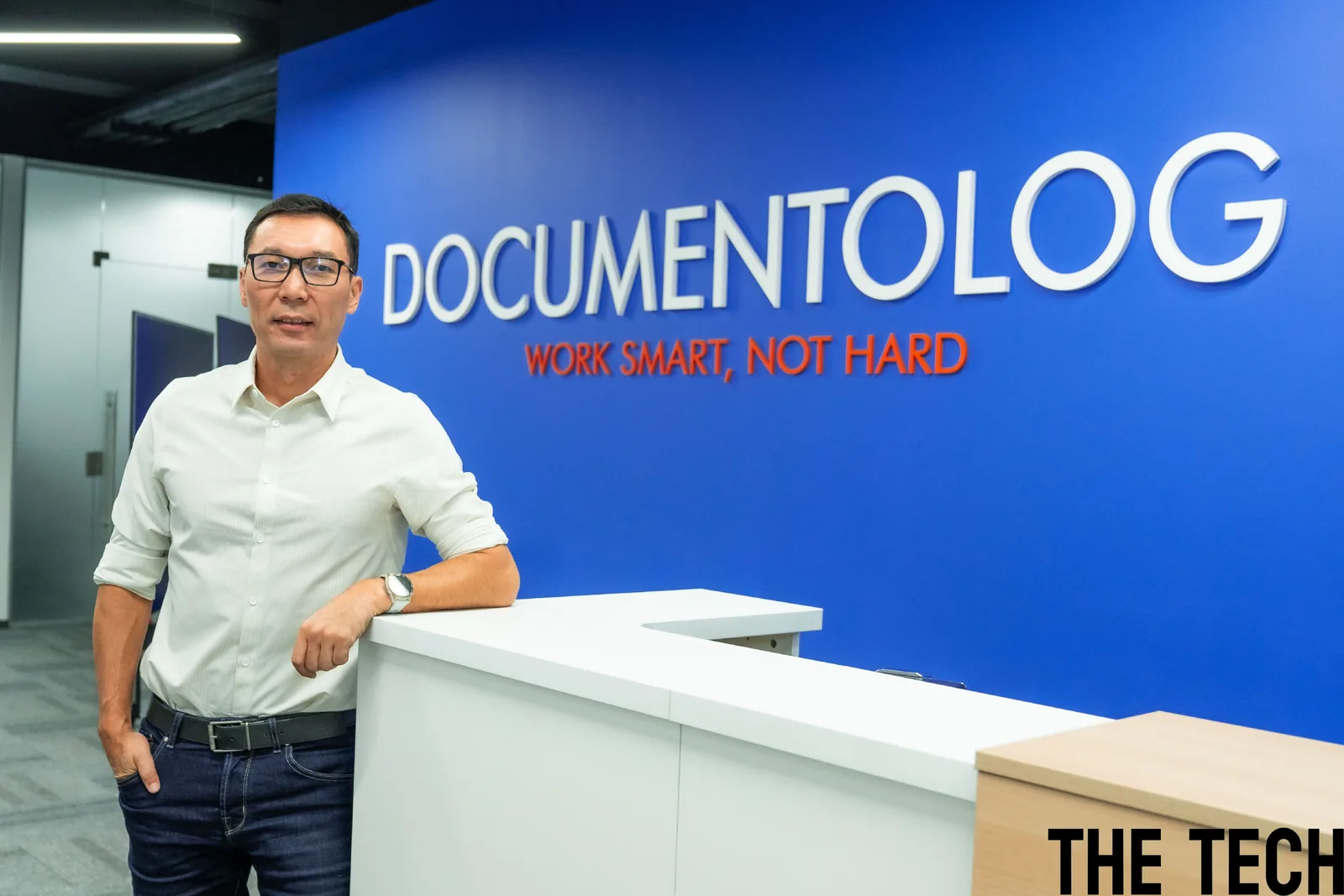
Baizhan Kanafin, CEO of Documentolog, shared his perspective on the development of the IT industry in Kazakhstan, the impact of global trends, including artificial intelligence, and the company’s strategy in a rapidly changing market. Read the full interview below.
Baizhan Kanafin, Astana, CEO of Documentolog, Instagram
On Global Changes and Trends
COVID-19 is in the past, but in just these four years since the pandemic began, the world has changed multiple times. Looking objectively, the pandemic became a catalyst for growth for us, as during lockdowns, the population was forced to stay home while businesses needed to continue their operations. Therefore, the realities of the pandemic forced businesses to actively adopt new digital tools for remote work, which is exactly what our company offers. I would also like to share a significant event for our company. With the introduction of the state of emergency due to COVID-19 in March 2020, the government decided to transition civil servants to remote work. The Minister of Digitalization, Askar Zhumagaliyev, asked us to urgently ensure online document processing, as Lotus did not allow this. We took on the data migration and temporarily connected all government agencies to Documentolog.
Thus, we became part of this large-scale project. On one hand, it placed a heavy load on the company, remaining free for another three years; on the other hand, it became a source of pride and inspiration for us. I am confident that without the state of emergency, such an important decision would hardly have been made.
This was only five years ago, and today we see a new revolution—the rapid growth of artificial intelligence, which is changing work and efficiency. This is also a kind of “pandemic,” but voluntary and not available to everyone. Just as in 2020, we see this not as a problem, but as an opportunity: to develop ourselves and help clients utilize AI to the fullest.
On New Challenges for Kazakhstan’s IT Industry
Kazakhstan’s IT industry has several characteristics defined by the structure of the country’s economy. A relatively small population distributed over a large territory, where the state directly or indirectly influences approximately 80% of the economy. These factors significantly impact the structure of our IT industry. Companies operating in the B2B or B2G segments have a higher chance of success and financial stability, whereas successful B2C IT companies are practically non-existent, with the exception of retail. Therefore, over 34 years of independence, no large IT companies on a global scale have emerged in the country. Our financial institutions have demonstrated success by positioning themselves as IT companies. However, their main source of income is banking activities, not IT development, which distinguishes them from classic IT companies.
Due to the strong influence of the state on the IT industry, I believe Kazakhstan needs a clear development strategy for the next three years. The market needs to know the state’s priorities in IT and the economy: where support will go and where it should not be expected. In which economic sectors and which IT solutions will be in demand and funded? For example, it can be said with certainty that they will not create their own servers or their own Facebook, but a domestic accounting system and AI models could become priorities. Currently, solutions from major international IT corporations such as Google, Microsoft, Yandex, Apple, Samsung, and “1C” are used almost monopolistically in Kazakhstan. Due to the small market size and limited resources, domestic IT companies cannot plan long-term investments, unlike large foreign players who quickly conquer our market. Domestic developers will always find it difficult to develop and invest in science and research without a long-term planning horizon. At the same time, attempts to enter the global market without stability in the local market often lead to a loss of focus and failure.
In my opinion, we need to analyze the current IT market, determine the export potential of our companies, and support them by incorporating this into the state strategy. In the modern world, not only companies but entire countries compete. We should set an ambitious goal—to become a global leader, for example, in corporate solutions, MedTech, or analytics—and fix this in the strategy.
It is also important to implement the principles of Yellow Pages Rules at the state level. Within three years, it is necessary to completely change the approach of the public sector to developing its own IT solutions using budget funds, especially in the quasi-public sector. It is necessary to completely prohibit even the possibility of creating anything independently, relying only on the market. This approach is not new; South Korea once supported leaders of its industries by stimulating their export growth. Kazakhstan could use a similar approach by supporting companies that have proven their competitiveness in the local market.
On the Role of New Technologies
As a leader and successful product company in the market, we are proud that we have been able to build a large business with more than 130,000 corporate clients. In 2007, when the company was just starting its journey, the document management market was already a “red ocean” with major foreign players such as Lotus or Microsoft. We are very proud that over 17 years of operation, we have not only survived but also defeated global giants in our market, becoming a serious product company. Our success is based, first of all, on the high trust of clients, founded on the high quality of our products and a responsible approach to our duties. Secondly, it is due to our constant striving for self-analysis and development.
Today, one of the key challenges for the industry is the development of AI tools, which are radically changing familiar work processes. Modern LLM models open up new opportunities. This is why in 2024 we created a research department in the field of artificial intelligence, which studies advanced developments and implements them in Documentolog. Our task is to integrate AI tools so that their use is natural and organically fits into the familiar work process of our user.
We have already achieved significant success by implementing several AI agents and algorithms in Documentolog. Our AI can analyze the meaning of documents and automatically assign performers. It can also compose letters taking into account the company’s specialization, find related documents, and interact with the user via voice through the application.
We see great potential in interactive analytics: managers will be able to request data in text form, generate, and analyze reports. The results already achieved confirm that artificial intelligence can significantly increase the efficiency of both our business and our clients. We will continue to develop this area.

On the Employees of the Future
Critical thinking remains a key skill. In addition to it, skills in the effective use of tools and interaction with AI are important. Traditional prompts are no longer relevant, as modern artificial intelligence models are so developed that one can have a dialogue with them and obtain relevant results without the need to formulate requests in a strict format. However, despite the capabilities of AI, the final decision always remains with the human.
The main question lies in the specialist’s competence: how capable they are of evaluating, trusting, or verifying information obtained from AI using alternative sources. The future belongs not to AI as an independent entity, but to professionals who know how to effectively apply these tools in their work. AI will not replace a person but will be able to significantly increase their productivity and value in the market.
One of the key problems in the development of Kazakhstan’s IT industry remains the shortage of qualified specialists. At the same time, there is a gap between the knowledge provided by universities and the real needs of business. Solving this issue could also be enshrined in the state strategy for the development of the IT industry. Several directions can be identified in solving this problem:
— state initiatives for the development of IT education and targeted training of in-demand specialists;
— private educational projects from IT companies, which can offer retraining programs and specialized courses;
— partnership between business and universities to create applied training programs, internships, and real-world cases.
At Documentolog, we recognize the importance of our own participation in preparing young personnel. We cooperate with universities, offer internships, and train developers to work with modern technologies. This year, together with the Federation of Sports Programming, we plan to hold a republican competition among students and developers and form the first national rating. Being present in this rating for students is a guarantee of employment and a good salary. Documentolog will award annual scholarships of 150,000 tenge per month to the three winners.

On the Impact of Global Trends on Company Strategy
The influence of the global economy is felt by us primarily through the general news background, political events of global scale affecting macroeconomic parameters of Kazakhstan, such as the tenge exchange rate and sanctions imposed on neighboring countries. As part of the Eurasian Economic Union, Kazakhstan faces the risk of additional scrutiny from international partners, which complicates work in the global market.
In the global economy, several key trends can be identified for our industry:
- Trends toward protectionism of local companies;
- The race for AI investments among global players;
- Short planning horizons and uncertainty about the future.
Competition and uncertainty are growing, and the gap between technological nations and developing countries is accelerating at an incredible pace. Our country needs to analyze all these facts and make decisions that will allow our IT industry to be competitive.
What Will the Company Be Like in 10 Years?
One of the key factors of our success over the last 17 years has been focusing on one product—the development of the Documentolog platform for automating business processes. This strategy implied refusing significant income in other areas of the IT industry, but it allowed us to become the best in our field. We also painstakingly built our company brand, putting in a lot of effort to make our company name, Documentolog, synonymous with document management. Many of our users often even confuse the two. At the moment, we are proud of the fact that approximately 80% of new clients come to us through word of mouth. These are people who previously worked in the Documentolog system and, upon moving to a new company, recommend our process automation solutions there.
Last year, we revised our development strategy and added several directions that, in our opinion, will enhance the value of our solutions for clients. Thus, in addition to the active use of AI tools in our solutions, another strategic direction we chose was the launch of a catalog and marketplace for IT products, solutions, and services, which will be freely available to both IT companies and our current clients.
Our key clients are IT directors and company executives. Often, they turn to us for IT solutions that we do not provide. To help them and support the market, we are creating a platform for Kazakhstani IT companies where they can offer their B2B solutions to more than 130,000 corporate clients. This will be a win-win approach for all parties. The project launch is planned for March 2025. We invite all IT companies in Kazakhstan to place their services and solutions on the marketplace. Placement is free, and applications are accepted on our website.
On the Role of the Company in the Future
In 10 years, we see the company as a leader in the digitalization of business and government structures, having a significant impact on economic development. We strive for our products to become key tools for the growth of our clients’ businesses, process automation, and international interaction.
We plan to strengthen our positions in Asia and Europe by offering innovative solutions in the field of business process automation, actively using AI tools. Documentolog will become a platform facilitating trade between countries by providing convenient and secure digital services.

What Should the Leader of the Future Be Like?
The main task of a leader is to make difficult decisions and take responsibility for their consequences. There is no ready-made recipe for success; each case is unique. However, several key qualities characteristic of successful people can be identified:
1. Constantly develop, engage in self-improvement, and strive for new knowledge.
2. Quickly transition from idea to implementation, reducing the time between planning and action.
3. Do not be afraid of mistakes and view them as part of the learning process.
4. Make decisions and take responsibility—one of the most difficult tests.
The Tech on Telegram Follow The Tech on Telegram
Keep up with the latest technology and startup news.
Related reading







More from this author

News
zypl.ai begins operations in Japan and focuses on next-generation risk models
Mansur Ismagulov

News
Elon Musk's net worth has exceeded $700 billion for the first time
Mansur Ismagulov

Article Interviews
"Central Asian countries should build a joint ecosystem," — Bekhzod Ismoilov on the development of AI in the region
Mansur Ismagulov

Article Interviews
Bloom's Taxonomy and Engineering Levels: A Practical Growth Model
Mansur Ismagulov

Article Useful
How the IT industry in Azerbaijan developed in 2025: key events
Mansur Ismagulov

News
Tajikistan has become a new member of the regional innovation alliance Central Asian Innovation Hubs
Mansur Ismagulov