CEO BILLZ on global challenges for the IT industry and qualities of a strong leader
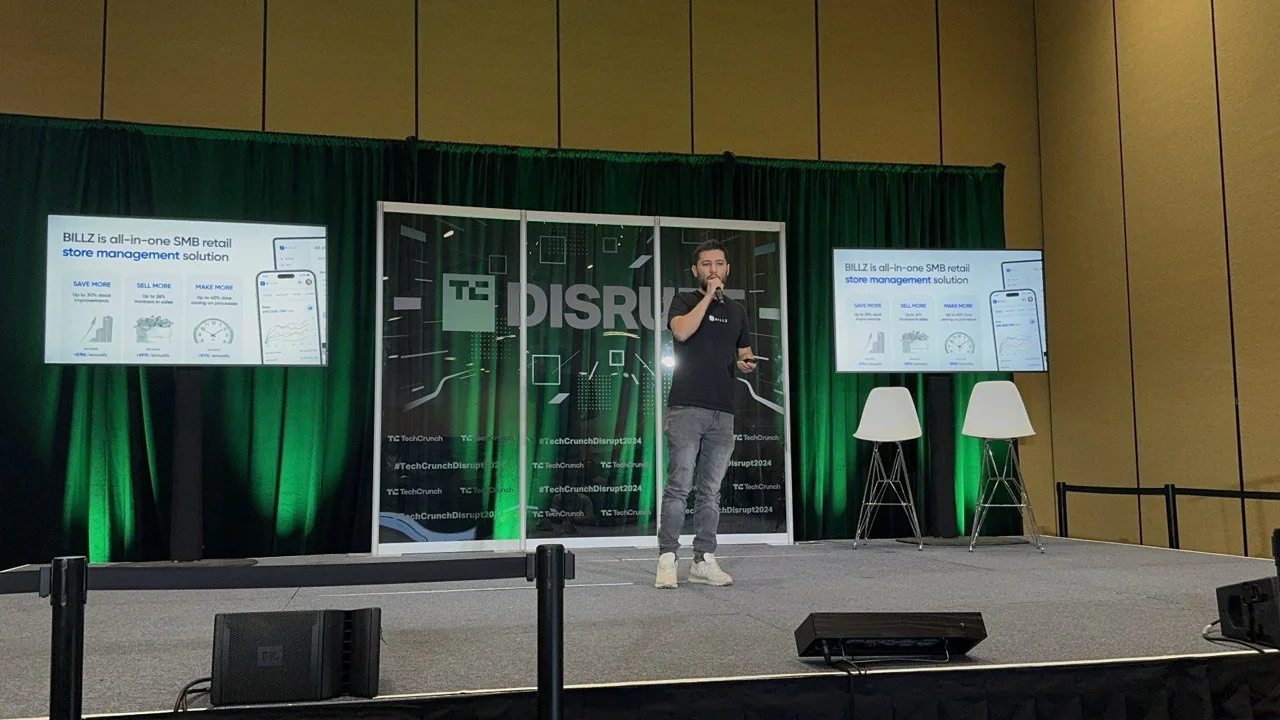
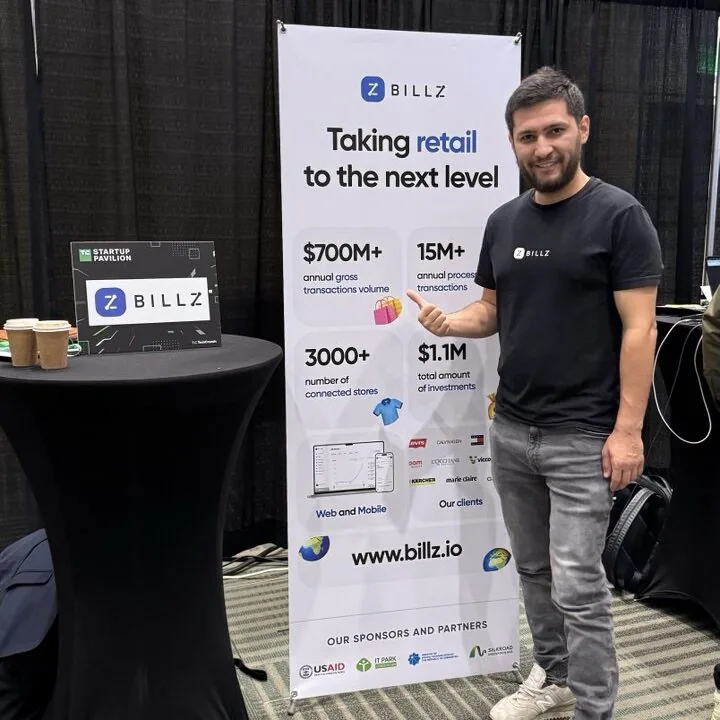
Co-founder and CEO of the Uzbek startup BILLZ, Rustam Khamdamov, shared his vision of how global trends, including artificial intelligence, are shaping the company's strategy and its future. Read the full interview below.
Author - Mansur Ismagulov
The Tech AI
Get the key points in seconds - a short summary from The Tech AI.
Rustam Khamdamov, CEO of BILLZ, highlighted the impact of the pandemic and devaluation in Kazakhstan on the business. The company operates in Uzbekistan, Kazakhstan, Kyrgyzstan, and Tajikistan, with plans to become a FinTech company for small businesses within 10 years. The strategy includes developing verticals, integrating with the online ecosystem, and leveraging AI.
Rustam Khamdamov, city — Tashkent, CEO and co-founder of the BILLZ startup, @rustamkhamdamov
About global changes and trends
The pandemic significantly impacted our business since we work with offline retailers. When they closed, we lost our revenue and subscriptions. In response, we quickly began developing online solutions. This was a temporary measure while the pandemic lasted. After it ended, we returned to our previous strategy and once again focused on developing the offline segment. However, the market has changed: everyone realized the importance of online commerce and learned how to order goods via the internet. This opened up new opportunities, and now we are actively integrated into the online sales market.
We do not feel the economic crisis fully because our region is not so deeply integrated into the global economy. However, events happening in neighboring countries have a significant impact on our activities. For example, from the perspective of hiring talented employees, the current situation has worked in our favor. Many people, for understandable reasons, began moving to other countries or quitting their jobs, which opens up new opportunities for us. This is especially noticeable in Russia, where there is an increase in the influx of new specialists. In terms of business strategy, no changes have occurred, but the situation may change in the future.
Recently, there was a devaluation in Kazakhstan, and this affected us greatly. We attract venture capital in foreign currency, but we conduct our business in local currencies. When a devaluation occurs, our revenue in dollar equivalents drops sharply, creating the impression that we are not growing.
Changes will undoubtedly affect the long-term development of the IT industry. In times of crisis, new opportunities arise: some lose out, while others find a chance. From 2023 to 2024, the volume of venture investments in IT decreased; however, companies focused on profitability survived, and investments were concentrated mainly in the fields of AI and startups that can achieve profitability and demonstrate quality growth. This changed the approach to financing: companies began to pay more attention to efficiency. With new tools, especially in the field of AI, companies strive from the very beginning to optimize and reduce costs. However, recently we have observed a return of growth to the market. This may lead to an increase in startup valuations and a greater number of deals.
About new challenges
The main change I observe is the growing popularity of low-code and no-code platforms, as well as the implementation of AI, which poses a risk to established companies. New startups will be able to develop with fewer resources but with greater efficiency, while existing companies may face difficulties in the transformation process. Next-generation startups, created by small teams, will use AI for automation and increased productivity, and this will likely become the main trend for the next five to seven years.
Data accumulation and the development of systems that process it will open up new opportunities for startups that can effectively apply AI in their niche. In the future, AI will not only change the industry itself but also influence how startups operate.
About the role of new technologies
We plan to implement new technologies, including AI, to improve data processing. Currently, our product generates a large amount of information about sales, products, and business efficiency, which already helps retailers make more informed decisions. However, with the implementation of AI, we expect the process of extracting insights to become much simpler.
In our field, AI will significantly transform software operations, not only automating processes but also proactively offering recommendations. It will not just perform actions upon request but will train retailers, suggesting what is best to do. Knowing data about 3,000 retailers allows us to accurately determine which ones are the most efficient and use this information to increase productivity, boost sales, and improve overall operational efficiency.
About future employees
In the next five to seven years, the most important skill for employees will be adaptability. New technologies and tools appear every day, which can be both a threat and an opportunity. It is important to be able to quickly master new tools, such as chatbots or AI agents, to increase one's productivity. Those who learn to use AI correctly in their work will be able to significantly improve their efficiency and integrate new technologies into their work environment.
Secondly, soft skills. The ability to solve problems, work in a team, and think correctly will always be in demand.
In the future, an important hard skill will be the ability to work with big data. The key skill will be the correct use of tools for extracting data, as there is more and more of it, and many companies still do not know how to apply it effectively.
As for the work format: we tried remote work and hybrid models, but for us, the office works better. In the office, a culture is created, there is personal communication and interaction, which increases productivity and output. However, the new generation we are hiring prefers to work hybrid or remotely. Therefore, it is likely that the boundaries between these formats will gradually blur, and requirements for constant office visits will become less relevant. All this also depends on the region: if your business is oriented towards Central Asia, it is important to periodically meet with clients in person, hold meetings, and visit sites.
The younger generation has grown up in a safer environment, and for them, there are no barriers to quickly changing companies. They want to realize their potential, not just work for a salary. Companies must adapt and create conditions for such employees to attract those who strive for development. Old approaches, where work was reduced to just receiving a salary, are already outdated.
About the impact of global trends on company strategy
In the next two to three years, I see one key event that could significantly affect our activities — the accession of Uzbekistan to the World Trade Organization, WTO. Negotiations are already underway, and several countries have confirmed their support. When this happens, trade in the country will begin to develop much faster, new markets will open, and with the growth of competition, there will be a need for automation. This will create growth stimuli.
Recently, there has been strong integration of Central Asian countries, especially between Uzbekistan and Kazakhstan. They are actively exchanging technologies, Kazakh companies are opening in Uzbekistan and vice versa. This is blurring barriers for business and opening up new opportunities. We operate in Kazakhstan, Uzbekistan, Kyrgyzstan, and Tajikistan, and we do not feel any significant obstacles in these markets — on the contrary, business conditions here are excellent.
The integration of Central Asian and Caucasian countries creates a larger market where more large-scale projects can be built. In this regard, I see only positive trends.
E-commerce is also developing actively, which strongly influences the market. For example, in Kazakhstan, major players such as Kaspi, Wildberries, and Ozon have been working for a long time, forming new consumer habits and forcing business to move online. And when business goes online, there is a need for automation.
What happened in Kazakhstan with e-commerce five years ago is happening in Uzbekistan today. I think this will open up new markets for us, expand our audience, and increase demand for our products.
Our current strategy focuses on Central Asia and the Caucasus. We have abandoned testing other markets, such as Saudi Arabia and East Asia, realizing that they differ greatly from ours. Given the scale of our work and available resources, it is important for us to focus on Central Asia and develop there.
We have decided to develop vertically. Currently, we mainly work with fashion retail, but next year we plan to launch products for convenience stores, and then expand into other verticals, such as hardware stores. Our goal is to capture the maximum market share.
The second stage of the strategy is the creation of FinTech tools. We already provide loans; on our platform, you can get up to $120,000 in just one hour. Currently, this product works only in Uzbekistan, but soon we will enter the Kazakhstan market, where we are negotiating with banks and microcredit organizations. Our goal is to collect data, attract retailers, create distribution, and build financial services for them, providing working capital and installments. We want to combine all this into one super app, where all financial tools for small and medium-sized businesses will be available, some of which will be provided by partners, and some by us.
The third stage is integration with the online ecosystem, which includes social commerce: Instagram, WhatsApp, Telegram, marketplaces, and own websites or bots. We plan to develop in this direction, actively participating in integration and helping offline retailers go online.
We support innovation in the company. But recently we have not had the resources and time for their development. Our roadmap is planned for a year and a half ahead, and problems with technical debt and adaptation to different regions took a lot of time. Nevertheless, we have projects with partners, for example, with the Lithuanian company Inopter, with which we launched a product for automatic prediction of stock and sales. This product is already actively used by our retailers.
The second point is the limitation of resources. For example, implementing AI requires a team with high competencies, and we realized that we cannot handle it with our current forces. We tried to launch this project last year, but to implement it, separate resources need to be allocated. When new technologies appear, we always study them and try to implement them, but at the moment, we cannot actively launch them. The team is overloaded with current tasks. I think this is a matter of time — when we raise the next round, we will definitely allocate funds for more promising projects. At the moment, we are working with what is effective, but not at a level to bet on something more innovative. Moreover, we have covered only 1-2% of the market, and a large part of it is still untouched.
We are building a company that will be able to quickly capture the market. In marketing, sales, and other areas, we actively use technologies to save time and automate processes. In this process, we use AI, chatbots, and various tools for effective marketing launches.

What the future leader should be like
The main skills of the future leader are adaptability, the ability to present information to the team, see future technological transformations and opportunities. Leaders must be able to assess where technology is moving and understand how the company should integrate into this environment to not fall behind. Another important skill is emotional intelligence, which helps to communicate effectively with people of different types and convey important information.
Also, a leader will need the ability to take risks. Risk can lead to good results because during changes, it is important to correctly assess potential development and bet on small products that can grow in the future.
What the company will be like in 10 years
In 10 years, we will become a FinTech company serving small and medium-sized businesses, providing services to save time, increase sales, and trade effectively online. We will provide not only automation tools but also financial resources and payment solutions. Our company will focus on emerging markets such as Central Asia and the Caucasus, with the potential to connect two to three million merchants.
About the company's role in the future
Our slogan is "Superpower for stores." We position ourselves as an assistant for retailers who are always busy and do not have time for additional tasks. We want to provide them with this "superpower," help them use our product effectively to get significantly more benefit than if they acted alone or used other solutions. Our goal is to become a powerful tool that helps save time, increase sales, and improve productivity.
Basic values will remain unchanged because any retailer in the trade sector will always strive to earn more and work less. Trade will always exist, the exchange of goods is inevitable. We will help do this with less time investment and with greater opportunities to increase sales and improve efficiency.
The Tech on Telegram Follow The Tech on Telegram
Keep up with the latest technology and startup news.
Related reading




More from this author

News
zypl.ai begins operations in Japan and focuses on next-generation risk models
Mansur Ismagulov

News
Elon Musk's net worth has exceeded $700 billion for the first time
Mansur Ismagulov
Article Interviews
"Central Asian countries should build a joint ecosystem," — Bekhzod Ismoilov on the development of AI in the region
Mansur Ismagulov
Article Interviews
Bloom's Taxonomy and Engineering Levels: A Practical Growth Model
Mansur Ismagulov

Article Useful
How the IT industry in Azerbaijan developed in 2025: key events
Mansur Ismagulov
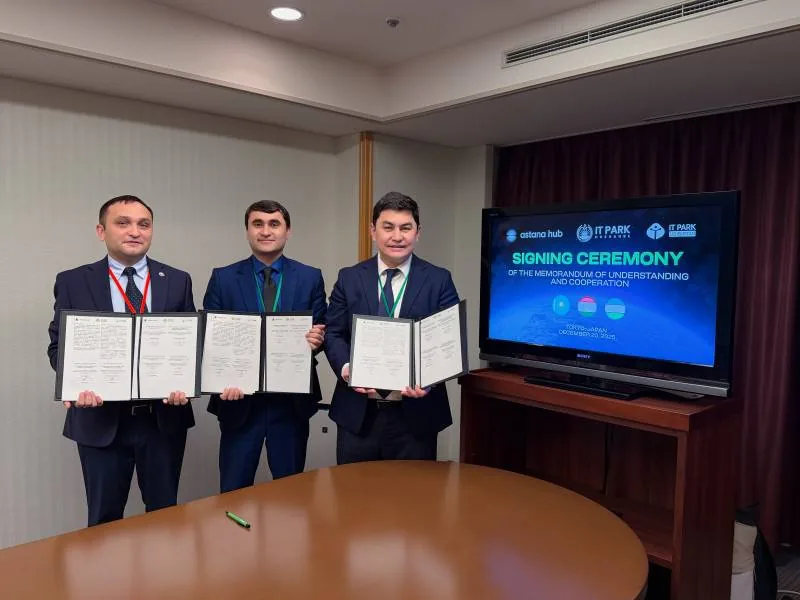
News
Tajikistan has become a new member of the regional innovation alliance Central Asian Innovation Hubs
Mansur Ismagulov