Azizjon Azimi on the development of the AI industry in the world and Tajikistan
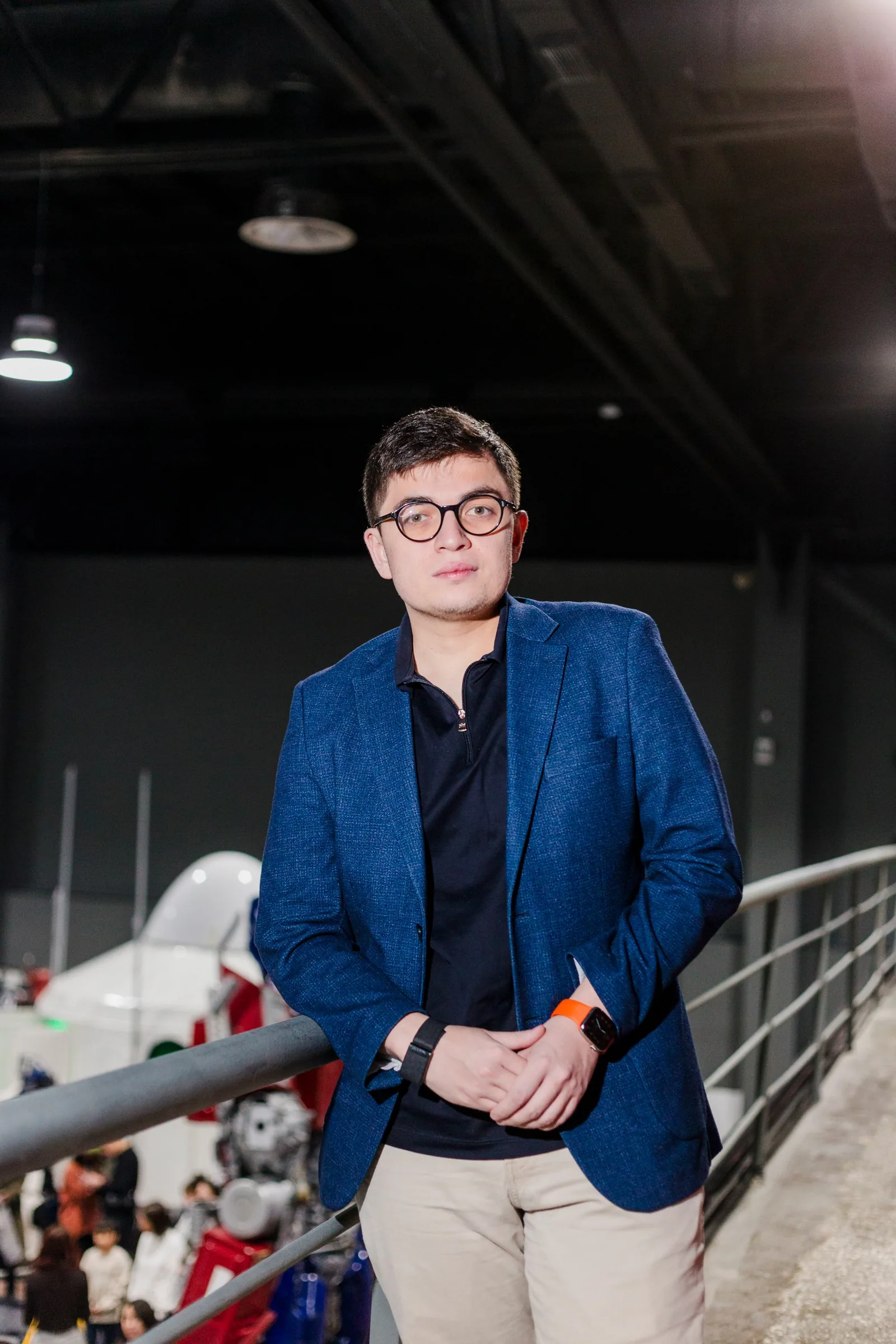
The Tech editorial team spoke with Azizjon Azimi, founder of the A7Sigma holding company, which includes zypl.ai, about the development of the AI industry in Central Asia and globally, scaling strategies, and the role of new technologies. In the interview, he explained how an artificial intelligence ecosystem was created in Dushanbe within three years and what goals the company sets for itself.
Author - Mansur Ismagulov
The Tech AI
Get the key points in seconds - a short summary from The Tech AI.
Azizjon Azimi, CEO of A7Sigma and zypl.ai, founded a company to deal with unpredictable events ("black swans"). The Area AI project in Dushanbe received support from President Emomali Rahmon, and the board of directors includes investor David Halpert. The company's goals are to achieve $30 million in revenue by 2026 and dominate the Central Asian AI market.
Azizjon Azimi, city — Dubai, CEO A7Sigma, zypl.ai, Instagram
On global changes and trends
Ray Dalio has an interesting principle regarding the cyclical nature of economic events, which last on average about 80 years. Within these cycles, there is a moment often discussed by Taleb — a person who greatly inspires me and my team. He constantly mentions the concept of the “black swan” — events that meet three conditions:
1. They are inherently unpredictable.
2. They have a massive impact on the course of events.
3. After they occur, they are perceived in hindsight as obvious.
An example of such an event was COVID-19, which radically changed the world. Digitalization became a necessity, laying the foundation for the future.
During the pandemic, my friends and I sat at Stanford and discussed how AI possesses powerful algorithms, vast computational resources, and colossal volumes of data. Yet, no algorithm could predict the next variant of the pandemic.
These reflections led to the creation of zypl.ai. We wondered how to work with “black swans,” which by definition are impossible to predict. Ultimately, COVID-19 became my personal catalyst for creating zypl.ai.

On new challenges
If we consider the Central Asian region in the context of AI, two aspects stand out: significant opportunities and considerable risks.
The only region in the world with a unified AI policy is the European Union, which adopted the AI Act. Recently, I met with a senior executive from an international financial institution in Central Asia, originally from Europe. Even he, familiar with the bureaucracy of the global financial system, admitted that the AI Act is ineffective.
Why? Because AI startups are forced to undergo additional audits, validations, and certifications, despite already facing numerous difficulties in implementing algorithms. For example, if we were selling a product to banks in the EU, the approval process would take two years. Now, an additional certificate confirming the correctness of the algorithm’s operation is also required.
However, this also presents an opportunity for Central Asia. Recently, we signed an open letter from the regional AI community, involving Kazakhstan, Uzbekistan, Kyrgyzstan, and Tajikistan.
Our goal is to offer an alternative to the EU’s strict regulation and create a system of self-regulation for AI in Central Asia. This will make the region attractive to startups from America and Europe, allowing them to develop their algorithms here using local talent. This opens up enormous opportunities for both the region and my company.
On the role of new technologies
A7Sigma is a holding structure in the field of artificial intelligence, operating in the areas of fundamental and applied AI models, green computing, and specialist training in this field. We have offices in Tajikistan and the UAE.
We are one of the few companies in the region and beyond that develops its own algorithms. One of our key projects is zGAN, a technology that helps banks, government agencies, telecom companies, and other industries adapt to unpredictable events, so-called “black swans.”
It analyzes historical data and generates missing synthetic anomalies, allowing systems to better handle rare but significant events.
Our goal is to achieve multimodality for zGAN by 2025. Currently, it works with tabular data, but in the future, we plan to add processing of audio, video, and text, including deepfake detection in these formats.
In the field of LLMs, we already have significant developments. We are starting a collaboration with a major LLM company in the UAE and hope to launch projects in Kazakhstan.
Ultimately, we are creating technologies that allow for better handling of outliers in multimodal data.
On the employees of the future
Recently, over dinner, I was asked: “What will be at this table in 100 years?” I answered practically. Currently, restaurants have high operational costs: long menus, complex choices, waiter errors. What will it be like in the future? Cameras will analyze your gait, height, physiology, and manners. Algorithms will determine your character, take into account cholesterol and blood glucose levels, and offer a personalized menu. Service will be provided by robots, and payment will be made with a glance. And this is not in 100 years, but in just 10.
In such a world, the ideal employee is not one who manually performs tasks, but one who understands technology, knows how to delegate, and manages processes. Employees must build the architecture of actions. The programmer of the future is an architect who determines what types of code need to be generated using AI.
On the impact of global trends on company strategy
Today, we are already present in 13 markets and cooperate with more than 50 banks. These include the world’s largest banks, regional financial institutions, as well as microfinance organizations.
2025 will be a key year for us, as real spending on AI budgets will begin. Banks and insurance companies have already allocated funds, and now we need to demonstrate business scalability.
Initially, zypl.ai was created as a national-scale company in Tajikistan. In September 2022, Tajikistan became the first country in Central Asia to adopt a national AI strategy. I made a small contribution to this document, which sets ambitious goals.
To develop the AI industry, it is important to create support mechanisms, as Astana Hub does. The platform supports startups, and examples of successful companies like Higgsfield AI and Grand Mobile confirm its effectiveness.
We proposed creating an artificial intelligence technopolis, Area AI, in Dushanbe, where zypl.ai will develop the entire AI ecosystem — from academies to a regional AI self-regulation center for Central Asia. The idea received support from the President of Tajikistan, Emomali Rahmon, and the project is currently in the approval stage. The President actively supports zypl.ai and has tasked the company with becoming a leader and vanguard of the AI industry in the region.
Over three years, zypl.ai has created an artificial intelligence ecosystem in Dushanbe oriented toward a global sandbox. We develop, test, and implement algorithms in Tajikistan, exporting them to other countries.
Our new projects are AI initiatives that grew around zypl.ai and are now developing independently. This gives us greater motivation for further work.
Furthermore, we have been lucky with the composition of our board of directors. One of them, David Halpert, is a legendary American investor who has five unicorns in his portfolio. He created Prince Street Capital with a capital of $2.2 billion. When we discuss projects with David, he sees opportunities and risks that we do not notice.
zypl.ai has launched a mechanism for cryptocurrency guarantees, which is already being piloted. We issued $1.5 million from the portfolio and $300 million through AI algorithms. David proposed scaling this with global partners, such as Qatar National Bank. By guaranteeing 1% of their portfolio, we can generate $30-40 million in annual revenue and become a unicorn. This approach helps transition from revenue to valuation and build a strategy.
My advice to startups is to choose the right board of directors.
What the company will be like in 10 years
Our goal is to reach an annual revenue of $30 million by the end of 2026, which will bring us closer to unicorn status. This is considered a key milestone, as there is an acute need for unicorns in Central Asia.
We will soon announce a new round — a global venture fund will make its first investment in Central Asia. They already have significant holding investments, but this will be a venture investment.
On the company’s role in the future
If artificial intelligence accounts for 5% of Tajikistan’s GDP by 2040, it will lead to billions of dollars in the economy. zypl.ai should capture a significant share of this market.
Our goal is to become the leading national company. zypl.ai already has a global headquarters in Dubai, demonstrating the successful implementation of a Tajik startup on the international stage.
One of our ML engineers, who started as an AI academy instructor in 2021, is now a senior ML engineer with a corresponding salary and company stock options. He moved to Abu Dhabi and will soon move to Dubai.
There should be more such stories so that young people from Tajikistan’s villages understand that successful AI algorithms can be created not only in Silicon Valley but also in Dushanbe.
What the leader of the future should be like
I am inclined toward uncertainty. My entire company is built with the ability to work in uncertain conditions, and I am generally like that in life. I truly love risk.
Harvard Business School studied the effectiveness of teams in uncertain conditions. The results showed that the most effective are special response groups, such as Navy SEALs. Despite practicing various scenarios, there is always ambiguity in real situations.
During hostage rescues, soldiers understand that the situation is uncertain. They have a clear commander, but also horizontal leadership, where everyone is ready to take responsibility if the commander goes down. This is a combination of vertical authority and horizontal responsibility.
Our company operates on the principle of horizontal leadership: everyone in the team is the CEO of their direction. For example, my CTO is the CEO of the product, and the Vice President of Strategy is the CEO of strategy. I believe it is important for employees to take responsibility and become the CEO of their part of the work, whether it is frontend development or a part of the algorithm. My leadership principle is a clear vertical structure with the possibility of horizontal leadership.
The Tech on Telegram Follow The Tech on Telegram
Keep up with the latest technology and startup news.
Related reading




More from this author

News
zypl.ai begins operations in Japan and focuses on next-generation risk models
Mansur Ismagulov

News
Elon Musk's net worth has exceeded $700 billion for the first time
Mansur Ismagulov
Article Interviews
"Central Asian countries should build a joint ecosystem," — Bekhzod Ismoilov on the development of AI in the region
Mansur Ismagulov
Article Interviews
Bloom's Taxonomy and Engineering Levels: A Practical Growth Model
Mansur Ismagulov

Article Useful
How the IT industry in Azerbaijan developed in 2025: key events
Mansur Ismagulov
News
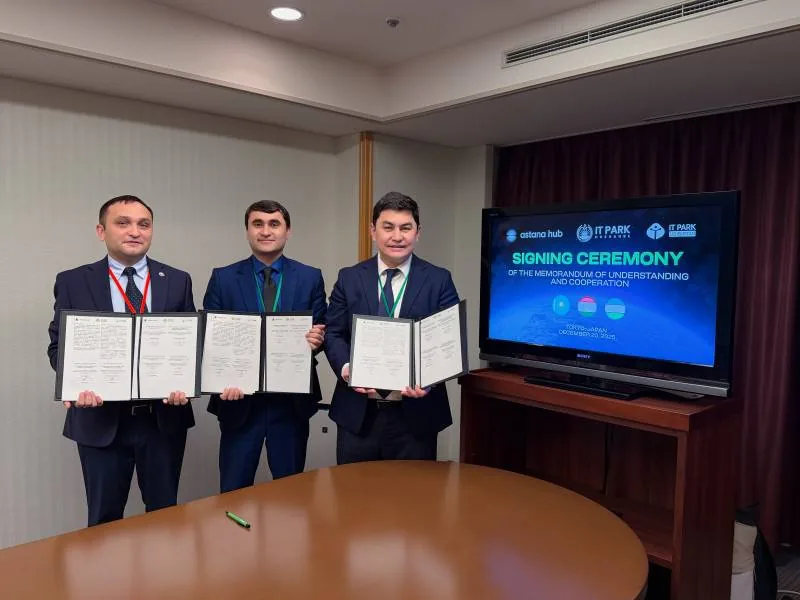
Tajikistan has become a new member of the regional innovation alliance Central Asian Innovation Hubs
Mansur Ismagulov