Business Process Automation Using Camunda: The Experience of Reunico and Freedom Telecom
Freedom Telecom became the first company in Kazakhstan to implement Camunda 8 Enterprise, thanks to its collaboration with Reunico. We learned how business process automation helped the company accelerate processes and reduce costs.
Author - Mansur Ismagulov
The Tech AI
Get the key points in seconds - a short summary from The Tech AI.
Reunico LLP (20 employees, a Camunda partner since 2019) implemented Camunda 8 Enterprise at Freedom Telecom. The project started in September 2024, using Agile and Kubernetes. The buyer achieved a 15% acceleration in the procurement process, cost reduction, and operational transparency.
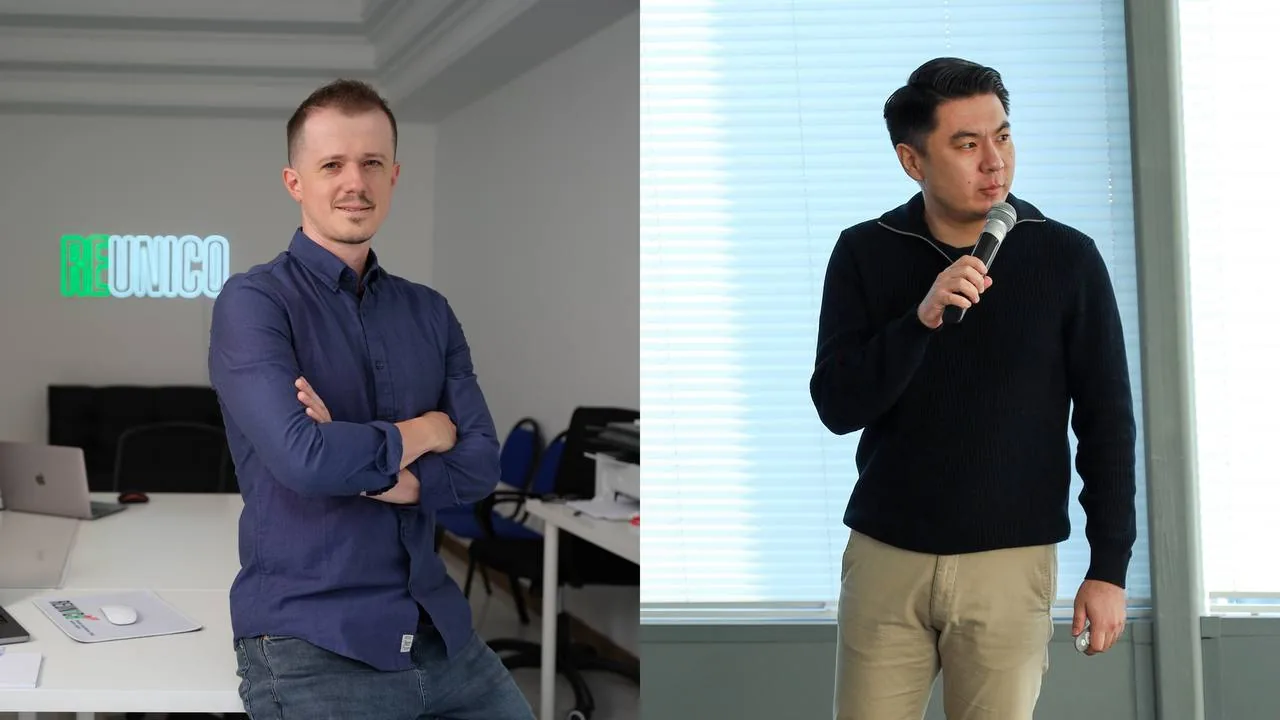
Vsevolod Martyniuk, General Director of Reunico LLP
Zhanbek Darzhanov, Product Owner at Freedom Telecom
How It All Started
Vsevolod. Reunico has been operating in the software development field for 11 years. The core of our team consists of specialists from the banking sector and developers of banking software. Currently, our main area of activity is custom development of corporate web applications and automation of complex business processes. For five years, Reunico has been a certified partner of the global company Camunda. This status allows us to offer consulting, implementation, development, and reselling services for their solutions, including assistance in selecting and implementing Camunda licenses.
Reunico works with large and medium-sized businesses, automating processes with multiple levels of approvals and complex algorithms. Key clients include banks and companies from Central Asia, including Freedom Telecom, which became the first official client of Camunda Services GmbH in the region.

Our company’s staff in Kazakhstan numbers around 20 people and is gradually growing. Reunico forms small, flexible project teams, enhancing employee competencies through internal training, complex projects, and Camunda certification. The company is actively developing, offering custom development services to our clients and creating its own product.
Zhanbek. I met the Reunico company in December 2022 at a conference organized by them as a certified Camunda partner. I was already familiar with Camunda before, but at the event, I wanted to learn more about the latest innovations and how other companies use them. At the conference, we met Vsevolod.
Why Camunda
Vsevolod. Implementing Camunda differs from other solutions on the market, partly due to support for international process modeling standards such as BPMN 2.0. If an analyst is familiar with the BPMN notation, they can model processes and then automate them on Camunda together with developers.
Camunda is developer-oriented: it has detailed documentation, good tools for work, and many ready-made solutions “out of the box.” This saves time and money that would otherwise be spent on development. The system is universal and integrates with any technologies, whether .NET, Java, or Python, ensuring automation of complex end-to-end processes. For example, in the banking sector, it can integrate the work of CRM, banking systems, ERP, and others, providing full visibility of processes. Camunda is suitable both for local automation of several processes and for corporate Enterprise-level solutions.
It is important to note the global Camunda community, which already numbers over 100,000 participants. The community actively supports the product, holds meetups and conferences where implementation experiences are shared, difficulties are discussed, and solutions are found. We also organize such events; for example, this year we plan to hold Camunda conferences in Tashkent and Almaty.
Zhanbek. Freedom Telecom became the first company in Kazakhstan to implement Camunda 8 Enterprise. We chose the eighth version because it is the latest and most advanced at the moment. Version 7 will cease to be supported from November 2025, and we decided to invest immediately in an up-to-date product that will be supported by Camunda itself. The choice of the Enterprise version is due to the availability of support not only from Reunico but also from Camunda itself, which is important for long-term stability and development.

In addition, the Enterprise version offers extended capabilities, such as Optimize — a tool for visualizing business processes as a heat map. This allows even people unfamiliar with technology to see where bottlenecks occur in processes and helps identify areas requiring improvement. Such an analytical tool is extremely useful for all users in our company.
Furthermore, the Enterprise version provides real-time process monitoring, giving us greater control and transparency over current operations. An additional advantage is access to Camunda Academy, which allows us to train our employees and improve their qualifications in working with the system. These capabilities significantly accelerate implementation and allow us to use Camunda most effectively for automating business processes.
Implementation Process and Results
Vsevolod. The Camunda implementation project was comprehensive, including the development from scratch of a web interface application for the customer: front-end and back-end development, as well as integration with Camunda 8 Enterprise.
Collaboration began with a pre-project phase, during which the customer’s and contractor’s teams established communication, analyzed business needs, and prepared requirements for implementation. The main challenges were related to infrastructure preparation: deploying Kubernetes, Docker, Elastic, and other components. Since development was carried out on the customer’s testbeds, involvement of DevOps specialists was required. These tasks were successfully solved thanks to the professionalism of the team.
Work was conducted using the Agile methodology, specifically Scrum. The project was broken down into two-week sprints: the first week was planning with the business, preparing and validating requirements; the second week was development and demonstration of results. Regular demos allowed the customer to promptly receive feedback and see progress. This approach ensured high speed and adaptation to changes, minimizing the risk of requirements becoming outdated.

Zhanbek. The main tasks during implementation were: digitalization of processes, automation of operations, and reduction of operational costs. We wanted processes to be trackable in a digital environment, with the ability to see start and end times, as well as who spent how much time on each process. The second task was automation, replacing manual operations, and the third was cost reduction.
We achieved our goal in the area of digitalization: the procurement process now fully goes through the system, and we can see its duration and time costs. The overall process has accelerated by approximately 15%. In the near future, we plan to launch a new process — “Fuel and Lubricants Accounting,” in which we expect a significant reduction in operational costs.
Vsevolod. Camunda implementation usually begins with small processes, which allows the team to master the system and test the product. This stage is important to better understand how the system works and to establish interaction within the team. The result can be successfully scaled to more complex and important processes, automating them one by one.
Camunda’s licensing policy also plays an important role in reducing costs: at the initial stage of implementation, a small license is used, which becomes more cost-effective as usage increases. The more processes run on Camunda, the cheaper the cost per process run becomes.
Zhanbek. We started using Camunda in September 2024, and within a few months, the system showed good results. Thanks to automation, processes have become more transparent, which has simplified employees’ work. Now we can track who spends how much time on each task, which contributes to better time management and process improvement.
Prospects for Cooperation and Development
Zhanbek. We expect that the long-term implementation of Camunda will affect the satisfaction of our clients. In March-April of this year, we plan to implement customer processes, which, according to our expectations, will increase customer satisfaction and improve NPS. This, in turn, should lead to an increase in the number of clients and company profits. We are confident that automating these processes will improve the customer experience and be beneficial for both us and our clients.
Overall, we are satisfied with the use of Camunda and cooperation with Reunico, appreciating their professionalism. Representatives of Camunda themselves highly evaluate their work, and we confirm this.

Vsevolod. For us, cooperation with Freedom Telecom is valuable experience. This is not just one project, but an entire program involving many different solutions and automated processes. Work on the project was carried out remotely with teams in Astana and Almaty, which proved the success of working in an online format. This experience also helped us better understand market needs and those of large companies, as well as confirmed the importance of integration with various systems. We plan to use this knowledge for development and scaling, continuing cooperation with Freedom Telecom and expanding our presence in Kazakhstan and the region as a whole.
The Tech on Telegram Follow The Tech on Telegram
Keep up with the latest technology and startup news.
Related reading







More from this author

News
zypl.ai begins operations in Japan and focuses on next-generation risk models
Mansur Ismagulov

News
Elon Musk's net worth has exceeded $700 billion for the first time
Mansur Ismagulov

Article Interviews
"Central Asian countries should build a joint ecosystem," — Bekhzod Ismoilov on the development of AI in the region
Mansur Ismagulov

Article Interviews
Bloom's Taxonomy and Engineering Levels: A Practical Growth Model
Mansur Ismagulov

Article Useful
How the IT industry in Azerbaijan developed in 2025: key events
Mansur Ismagulov

News
Tajikistan has become a new member of the regional innovation alliance Central Asian Innovation Hubs.
Mansur Ismagulov