AMD, Nvidia, and Microsoft will create optical connections for future AI clusters
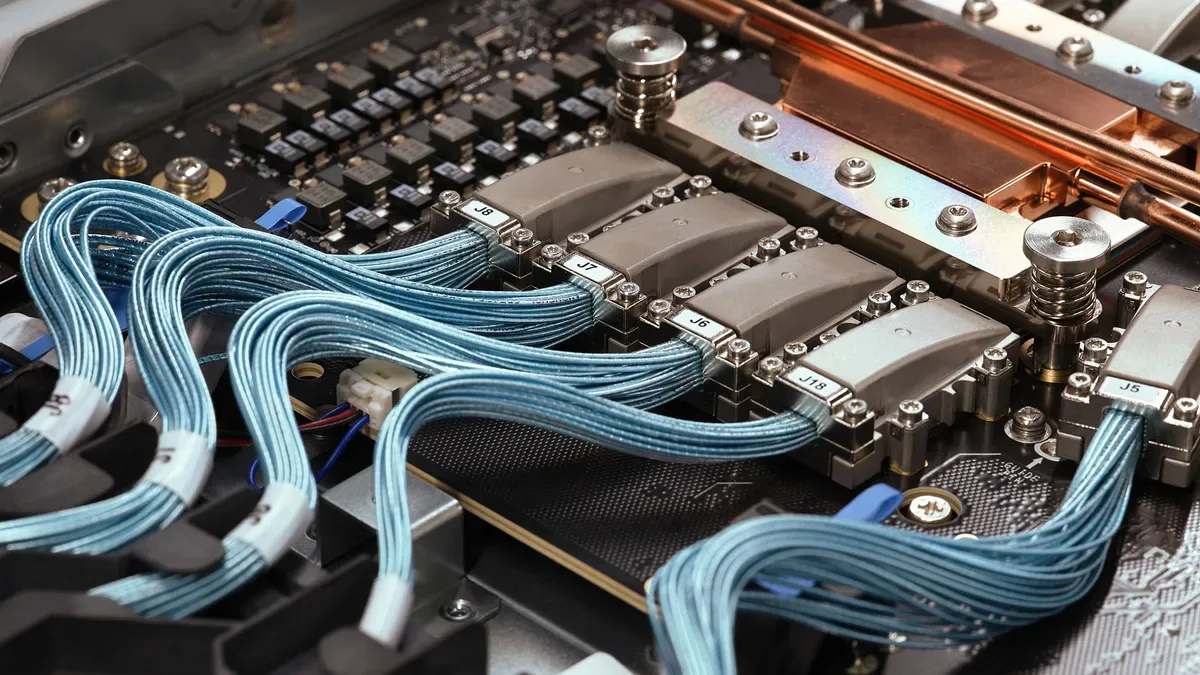
AMD, Broadcom, and Nvidia, along with technology giants Microsoft, Meta, and OpenAI, have announced the creation of an initiative to develop next-generation optical interconnects for large-scale artificial intelligence systems. To this end, the companies have formed the Optical Compute Interconnect Multi-Source Agreement (MSA), which will be responsible for creating an open specification for optical infrastructure for AI clusters.
As the scale of AI systems grows, so does the number of accelerators within servers and racks. Today, copper cables are widely used to connect such devices, but over time they begin to limit data transfer speeds and increase power consumption. The new initiative aims to prepare for a transition to fiber-optic connections within the computing systems themselves, enabling faster data transmission and the connection of more accelerators.
The OCI MSA plans to define a unified optical physical layer that will operate over various interconnect protocols. This will allow different types of processors and accelerators to exchange data through the same fiber-optic infrastructure. In particular, the technology will be compatible with solutions such as Nvidia's NVLink and UALink, used by AMD and Broadcom.
In the first stage, the technology will be designed for short-range optical connections within racks using multi-wavelength data transmission. The initial configuration assumes four wavelengths at 50 Gbit/s each, providing approximately 200 Gbit/s in each direction. In the future, bandwidth is planned to be increased to 800 Gbit/s per fiber, and ultimately to 3.2 Tbit/s and beyond.
Support for various types of optical solutions is also planned: pluggable optical modules, optics mounted directly on the board, and co-packaged optics—optical components integrated directly with computing chips. This approach should ensure higher efficiency and reduce power consumption during data transmission.
Developers note that a unified optical infrastructure will simplify the integration of equipment from different manufacturers, reduce risks in the development of new systems, and accelerate the deployment of the next generation of AI clusters. Unlike traditional standardization organizations, the new OCI MSA group is created primarily at the initiative of major cloud companies, which require such technologies for future large-scale AI platforms.
Source: Tomshardware
The Tech on Telegram Follow The Tech on Telegram
Keep up with the latest technology and startup news.
Related reading





More from this author

Article Useful
How to protect your accounts from hacking: 8 settings you should check today
The Tech

Article Useful
500 Global: How the Accelerator Works and Who Can Receive Investments
The Tech

Article Interviews
Game Development in Central Asia: Arkady Moldavski on Developing Reverb and the Growth of the Industry
The Tech

Article Useful
Google, Tesla, BlackRock, and the IMF: Where to Apply for an Internship in Fall 2026
The Tech

News IT
Tesla unveiled the flying electric car Roadster
The Tech

News IT
Intero Biosystems startup won the Startup Battlefield at TechCrunch Disrupt 2026
The Tech