3 countries, 1 profession: how product managers live and work in Berlin, Cyprus, and Uzbekistan
We spoke with three specialists about how approaches to work, career expectations, and conditions differ depending on the country.
Author - Mansur Ismagulov

The Tech AI
Get the key points in seconds - a short summary from The Tech AI.
Mizha Pulodi (Berlin) works as a senior product manager at CoachHub, with a salary of up to €100,000. Ksenia Mayorova (Limassol), Head of Product at inDrive, received the Stevie Awards 2025; the median salary in Cyprus is around €73,457. Alina Alieva (Tashkent) is developing the Super App hambi at Beeline Uzbekistan; senior salaries reach $5,000.
Germany
Mizha Pulodi, city — Berlin, senior product manager, Instagram
About me
I have been living with my family in Berlin for 10 years and work as the head product manager at the tech company CoachHub. I have been in product management for over eight years, during which time I have worked in both startups and large corporations. My main area of responsibility is creating and developing digital products that bring real value to users.
After graduating from university, I had two businesses of my own. I have always enjoyed being an entrepreneur — identifying problems and finding solutions for them, learning new things, switching between different tasks while keeping the strategic picture in focus. When we moved to Berlin, I wanted to build a career in a more structured environment but maintain an entrepreneurial approach. With the help of a business coach, I realized that product management perfectly combines strategy, analytics, user empathy, and flexibility — everything I love.

About the profession and work specifics
I live and work in Germany, and I see that the work culture here is strongly oriented towards balance: quality of life is valued, there are clear boundaries between work and personal time, and respect for colleagues' time is emphasized. In Berlin, as a multicultural city, the work environment is international and quite open.
We use flexible methodologies, primarily Agile and Scrum. We work in cross-functional teams where product managers, developers, designers, and analysts collaborate closely. The main tools are Jira, Figma, Miro, and Slack. We also actively use AI tools, such as built-in assistants in these platforms, as well as Gemini, ChatGPT, and Claude. They really speed up many processes: from idea generation to data analysis.
One of the largest projects I implemented was when I worked at Zalando — Europe's largest online retailer. We created a system for automatic ordering and distribution of goods to warehouses using machine learning. The program analyzed sales, built forecasts, and automatically formed purchases six to eight weeks in advance. This not only saved up to €1-2 million per week but also significantly reduced the error rate and the team's workload.
Industry and career
Berlin is one of the most active technology hubs in Europe. Startups are constantly opening here, and large international companies are opening offices. Product managers, like developers, designers, and analysts, are in demand. After the pandemic, competition has intensified, especially due to the development of remote work and the growth of IT specialist migration from all over the world.
The market has become more competitive than before, and the search can take several months. One of the main barriers is language knowledge. Although many companies work in English, knowing German can significantly ease adaptation and expand opportunities. In addition, employers value European experience, but this can be compensated by a strong portfolio and good communication skills.

Salary and cost of living
The average salary in Berlin ranges from €50,000 to €60,000 per year before tax. For specialists with a higher level and experience, the salary can reach €80,000-€100,000 and above.
In addition to salary, in Germany, state insurance and pension contributions are mandatory. Companies also offer additional bonuses: options, travel passes, sports budgets, psychological support, training courses, discounts on products, and corporate events. For example, at CoachHub, we have access to personal coaching and internal educational programs, which is valuable for personal and professional growth.
Tips
The main thing is to be patient. The search can take from several months to a year. It is important not to chase the perfect position from the very beginning, but to use the first opportunity as a springboard. Rejections are part of the journey. Learn, develop, communicate with people from the industry, try. It is important not only to find a job but also to understand how you can grow in a new environment.
My most valuable advice is to pay attention not so much to the company name or job title, but to the manager. A good leader will give you confidence, direction, support, and the opportunity to grow.
And if you are already an experienced specialist — it is important to understand at what stage the company is: startup, scale-up, corporation, what its goals, financial situation, culture, and values are. Do not be afraid to ask and learn as much as possible. And most importantly — rely on your strengths and interests, instead of trying to compensate for weaknesses.
Cyprus
Ksenia Mayorova, city — Limassol, Head of Product, LinkedIn

About me
I am a product manager with over five years of experience launching and developing digital products in international markets. My professional development began during my master's studies at Skoltech, where I immersed myself in the startup environment and entrepreneurship. Later, I completed training at a venture academy and taught a course on venture capital for students.
I started my career with data analysis and visualization, was interested in design, but over time realized that strategic work — product management — was closer to me.
Among key projects — the launch of the communication platform "Sferum" from "VKontakte," which became Startup of the Year, a flagship cloud product for doctors at Align Technology, with FDA certification, intercity delivery in "Yandex Go," scaled launch in more than 100 cities. Currently, I work at an international ride-hailing company with colleagues from more than 15 countries, developing products in a complex multicultural environment.
Also, I won the prestigious American award Stevie Awards for Technological Excellence — Employee of the Year 2025 in the Software and Logistics categories.
About the profession and work specifics
Work processes and cultures differ in different countries. Currently, I manage products at inDrive, which operates in 48 countries. Accordingly, our product functions in 48 different cultural contexts. The difference between regions — the Middle East, Latin America, Asia — is indeed noticeable. This is reflected both in communication with colleagues and in interaction with users.
The most important thing is to understand cultural differences. The book The Culture Map helps to figure out how to communicate with people from different countries. The main thing is to ask questions in time, not to guess for others, and to be open in communication to avoid misunderstandings.
In just six months, I initiated and implemented a product transformation at inDrive — from a taxi-focused service to a full-fledged Super App, which is used by millions of people in almost 50 countries today.
We work according to Scrum, approaching processes flexibly, which is quite standard. However, today we are actively optimizing processes using AI tools — such as Gemini, ChatGPT, Claude AI — to simplify various tasks: writing product requirements, processing large amounts of information, and data analysis.
Also, the no-code/low-code approach is becoming increasingly popular. I am not talking about the hype around this term on Twitter, but about real practice, when a product manager can quickly create a prototype using tools like Cursor, Replit, or LlamaIndex and use it to present to the team or management. Especially in American companies, this is becoming a more normal practice — even Google is already implementing such approaches.

Industry and career
Both in Cyprus and in the EU, good specialists are in demand. If you are strong and prepare for every interview, your chances of getting hired are high. But it is important to understand: in developed markets today — it is an employer's market, and you need to adapt to this.
I think the main barrier for a foreigner is legalization in the country. Currently, in many countries like Germany, Spain, or the UK, there is an opportunity not only to depend on the employer for a visa but also to do it independently — by obtaining a talent visa or a job search visa. This definitely simplifies the search. Currently, many companies are relocating worse, and there are fewer vacancies overall than in 2021, so I recommend relying on yourself, at least as a Plan B.
Salary and cost of living
Most companies have bonuses, many have options or stocks. There is a social package with medical insurance. Often, companies offer allowances for kindergartens and schools, apartment or car rent.
In Cyprus, there is a tax discount similar to the ruling in the Netherlands. The median for product managers in Cyprus is approximately €73,457 according to Levels.fyi, most salaries are between €62,062 and €82,723.
Industry distribution: https://t.me/cyprusit/770.

Tips
Do not hesitate to apply for vacancies, build a network with people in the country — through LinkedIn or mentoring platforms. Be sure to compare with your long-term career goals, think several steps ahead in terms of developing your skills, this protects against any layoffs and allows you to build a career controllably.
When getting a job, pay attention to the situation in the company — what are its indicators, is it growing or trying to optimize. To the team and project you are invited to — how important it is for the company. To the relocation package, of course, and its terms.
Uzbekistan
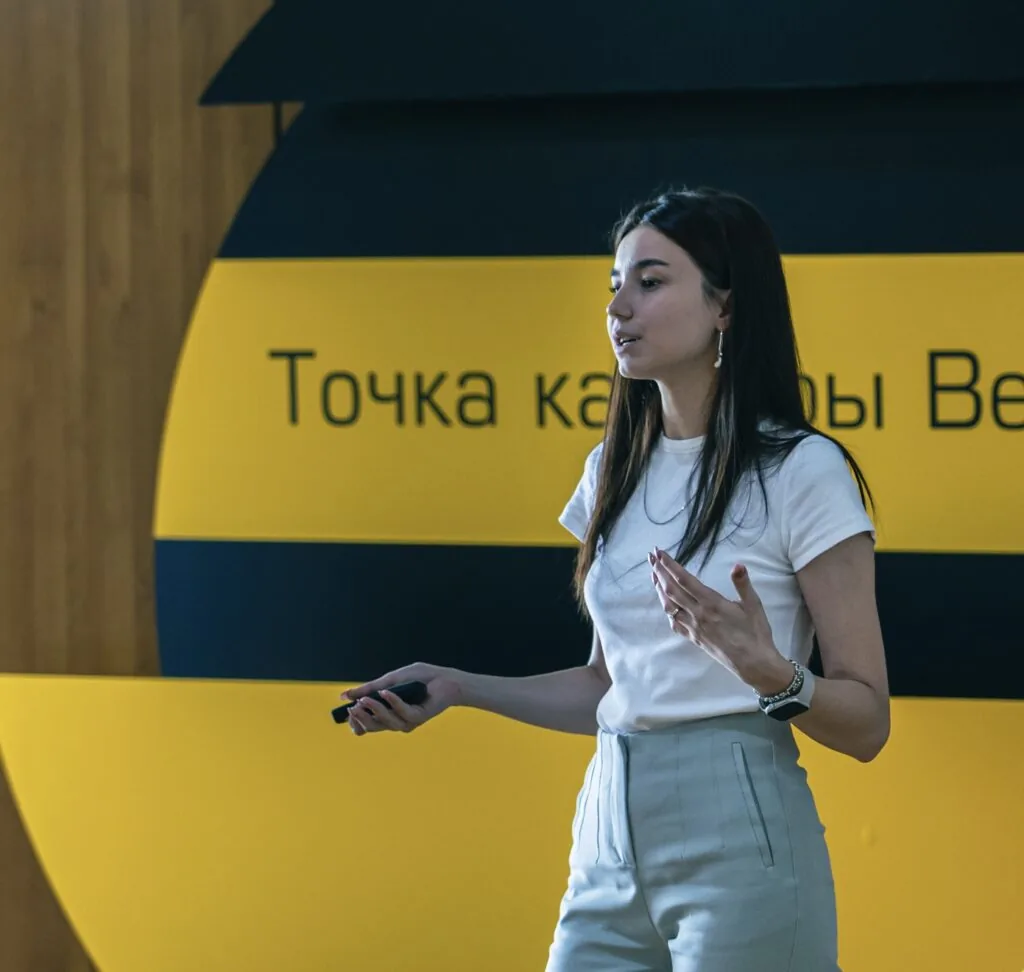
Alina Alieva, city — Tashkent, product manager, LinkedIn
About me
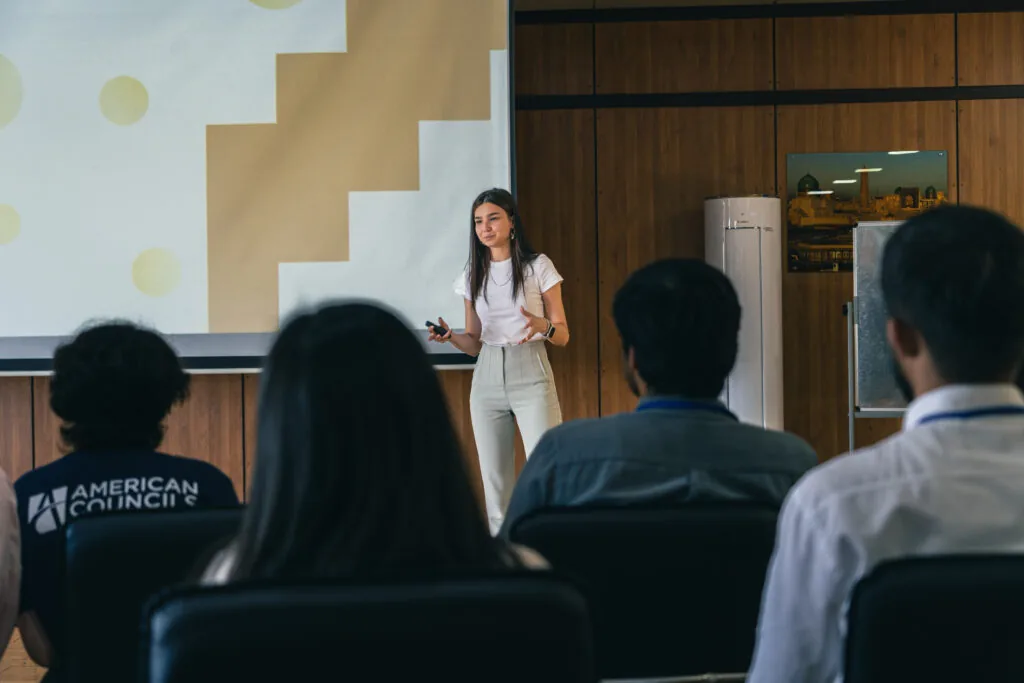
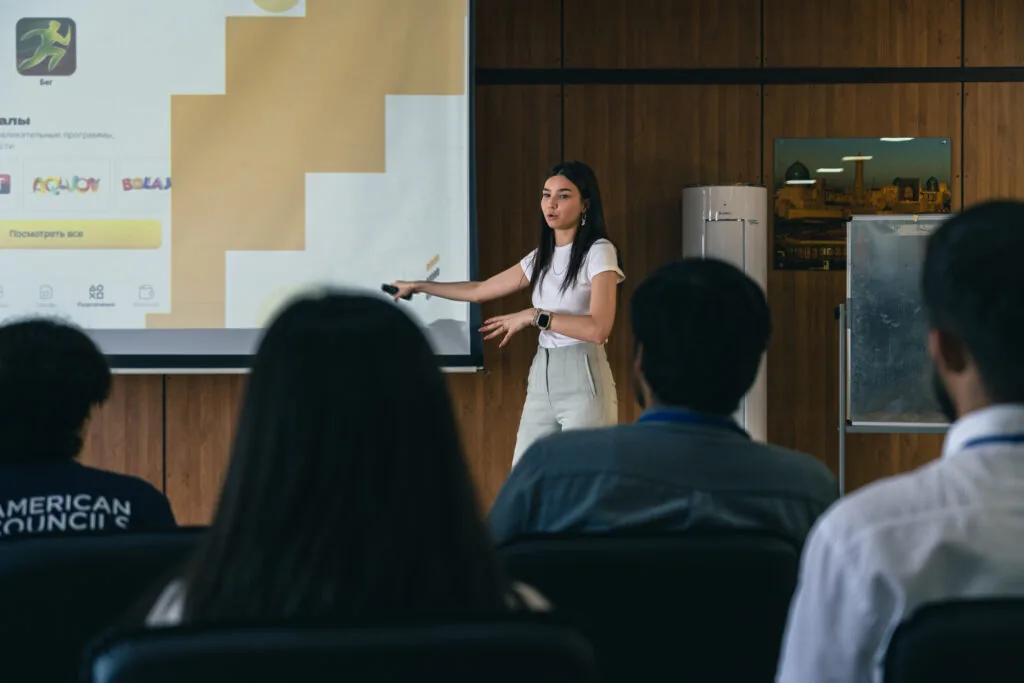
I have been working in product management for about a year, before that I was a project manager. I am developing the Super App hambi at Beeline Uzbekistan — previously it was a telecom app, but now we have scaled it to a payment platform and services. The app became available not only to Beeline subscribers but also to users of other operators in Uzbekistan.
We are building an ambitious product and believe in its potential. I chose the IT direction because it is the only field where you can realize anything. Without boundaries.
About the profession and work specifics
Functional interaction is more important than formal acquaintances. Good relationships with lawyers, accountants, and the tax service help to quickly solve problems, compensate for gaps, and prevent errors. In Central Asia, attention to detail and the ability to build contact are of key importance.
Perhaps the main difference of our culture is openness, honesty, and even conflictuality. Uzbekistan is warm and friendly, and any conflict here is perceived painfully. In our culture, conflicts are avoided, even when they are necessary.
Agile often does not work — we rather "run ahead of the train," constantly adapting to changing requirements. Long-term planning is difficult to implement. In work, I use Jira, Firebase, Miro, and Excel.
I put my full effort into every project, so each one becomes special to me.
Industry and career
Product managers are in demand today: for example, SQB Bank has about seven vacancies open, payment systems have up to eight. Banks are launching new directions and actively looking for product specialists.
There is competition, but mainly among specialists with more than six years of experience. In my category, I almost do not encounter competitors — I easily pass interviews, I am confident. Foreigners are gladly hired. More and more IT companies are open to candidates from other countries.
Skills matter. Soft skills are important, but do not forget about hard skills. Sometimes it is exactly the knowledge of the business that keeps a person in the position, even if the person has a difficult character.
Salary and cost of living
Salaries in IT in Uzbekistan are decent. Junior — from $700 to $900, middle — $1000 to $1500 and senior up to $5000. If you have strong soft and hard skills and you know how to strengthen the team — this is quickly reflected in income.
Companies offer additional forms of encouragement. For example, employees may have DMS, voluntary medical insurance, or a gym membership. Developers have quarterly and annual bonuses, managers have annual bonuses tied to goals. This helps to work in a stable atmosphere, without panic over KPIs and with the understanding that efforts are valued.
Tips
Product and project — are not for the anxious. It is important to understand the product, use it, and see how others use it. Without this, it is impossible to develop it qualitatively.
It is best to work on projects that interest you. It is difficult to make a product if you do not understand anything in it.
When getting a job, I look at several key things: the presence of overtime, the composition of the team, and the leadership style. Sometimes a strong team can compensate for a weak leader — and this is normal. As a product manager, it is important for me that the team includes a marketer, analyst, developers, team lead, QA, and designer. Especially a designer — because UX/UI should be done by someone who understands the product, not just draws posts.
The Tech on Telegram Follow The Tech on Telegram
Keep up with the latest technology and startup news.
Related reading







More from this author

News
zypl.ai begins operations in Japan and focuses on next-generation risk models
Mansur Ismagulov

News
Elon Musk's net worth has exceeded $700 billion for the first time
Mansur Ismagulov

Article Interviews
"Central Asian countries should build a joint ecosystem," — Bekhzod Ismoilov on the development of AI in the region
Mansur Ismagulov

Article Interviews
Bloom's Taxonomy and Engineering Levels: A Practical Growth Model
Mansur Ismagulov

Article Useful
How the IT industry in Azerbaijan developed in 2025: key events
Mansur Ismagulov

News
Tajikistan has become a new member of the regional innovation alliance Central Asian Innovation Hubs.
Mansur Ismagulov