WomenInTech. "We live in a world of immense opportunities and information abundance," — young women discuss careers, stereotypes, and growth in IT
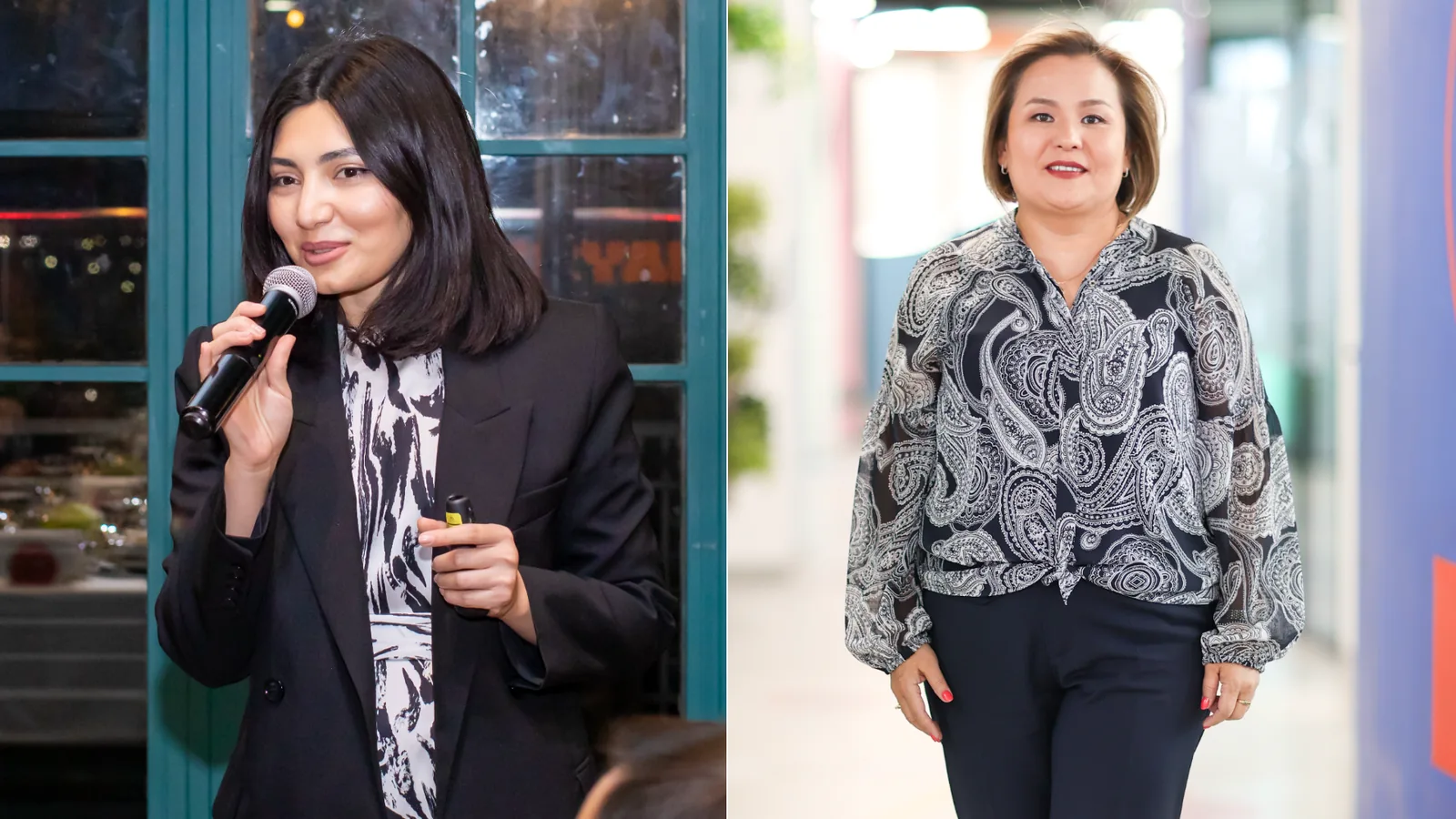
Two female representatives from the IT industries of Azerbaijan and Kazakhstan shared their career stories, views on the development of women in the tech sector, overcoming stereotypes, and key skills that help build a successful career in a rapidly changing industry.
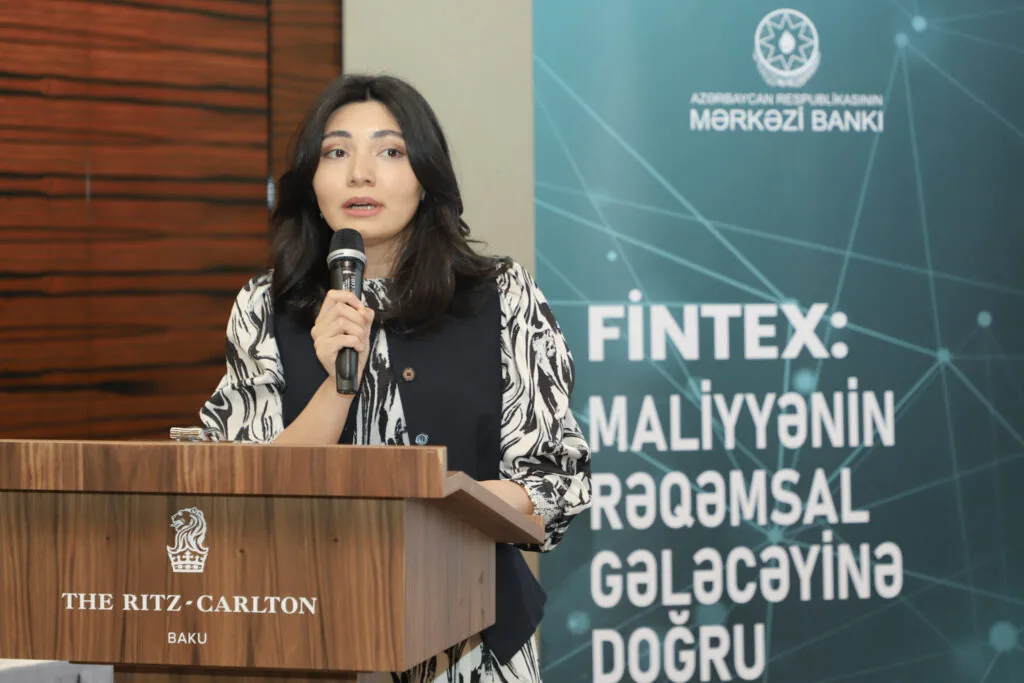
Leyla Aliyeva, city — Baku, product manager at Kapital Bank, LinkedIn
About Me
Currently, I hold the position of product manager for the development of acquiring products at Kapital Bank, one of the leading banks in Azerbaijan. My work involves creating and developing digital payments and solutions aimed at simplifying business interactions with financial tools and supporting the growth of entrepreneurship.
I follow the development of the Women in Tech community worldwide with great interest and attention. The conditions and opportunities they create for women in the IT sector, including in our country, deserve recognition. I would also like to note that 2025 was particularly significant for me. I became the winner in the Most Distracted Award category.
How I entered the IT profession
You could say that my professional career is closely tied to the Central Bank of Azerbaijan. I started my journey there as an intern and over nine years grew into the head of the stakeholder management department in the FinTech sector. During this time, I participated in key projects for the modernization of payment instruments, as well as in the development of digital payments and the fintech industry. Later, I decided to move to the commercial sector, where today we create digital solutions for entrepreneurs and corporate clients. Our goal is to simplify the lifecycle of interacting with payment services as much as possible and to contribute to the development of their businesses.
Since an early age, I was drawn to mathematics and exact sciences. An analytical mindset led me to Baku State University, where I studied computer science. Immediately after graduating from university, I began working in a bank in the payments and settlements department. You could say I was lucky — I found early on a profession that I love. But, unfortunately, not everyone is able to define their professional direction so clearly at the age of 17. And that is normal. I think that over time, one can come to this realization.

About Stereotypes
I was lucky that in the organizations where I worked, great attention was paid to supporting young specialists and the development of women in the profession. Thanks to this environment, I was able to unlock my potential at an early age, learn to take responsibility, and grow professionally. For this, I am sincerely grateful to my mentors and managers.
Barriers for Women in IT
I have not personally encountered harsh barriers, but that does not mean they do not exist. I regularly see how women in our field face distrust, the need to prove themselves more, and fight for the same opportunities.
The main barrier is not always open discrimination, but rather hidden biases. This can be distrust of young specialists, doubts about women's competence, or the expectation that a woman will be less engaged due to family or children.
Sometimes a woman has to prove her expertise twice as hard as a man in the same position. Equal opportunities are not about words, but about the practice we create every day. And this is the reality that many of us face today.
On the other hand, we see how the situation is gradually changing. Women today demonstrate a high level of resilience, leadership, and professionalism, especially under stressful conditions.
In my case, I worked in male-dominated teams, and my main conclusion is that over time, everything falls into place. When you consistently deliver results, take responsibility, and are confident in yourself, any stereotypes begin to crumble.
But it is important that not only the attitude of individuals changes, but the system as a whole.
Recommendations for Those Just Starting Their Path
The most important thing is to find a profession that truly ignites you from within. Something you do with interest and love, rather than out of a sense of duty. This sounds like a simple truth, but not everyone follows it in their life.
We live in a world of vast opportunities and information abundance. On one hand, this can be confusing, but on the other, it gives us the chance to shape ourselves as we wish. It is important to be able to filter information, set goals, and move towards them.
It is also important to distinguish between toxic ambitions, which can burn you out from the inside, and healthy determination based on hard work and development.
Do not be afraid to take responsibility, do not be afraid of mistakes and failures — these are an inevitable part of the journey, but they are also part of growth. There are always ups and downs in life, and it is important to perceive them as experience and lessons for the future.
I believe it is important not only to adapt to the system we are in but also to be able to change it partially, creating an environment where talent and professionalism are more important than any stereotypes.
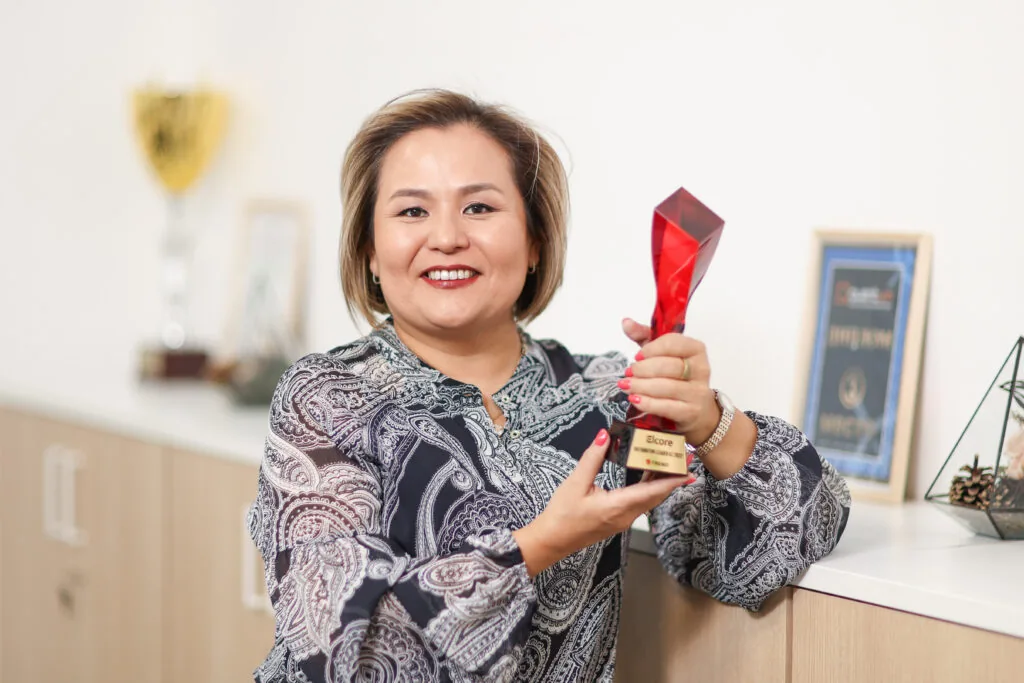
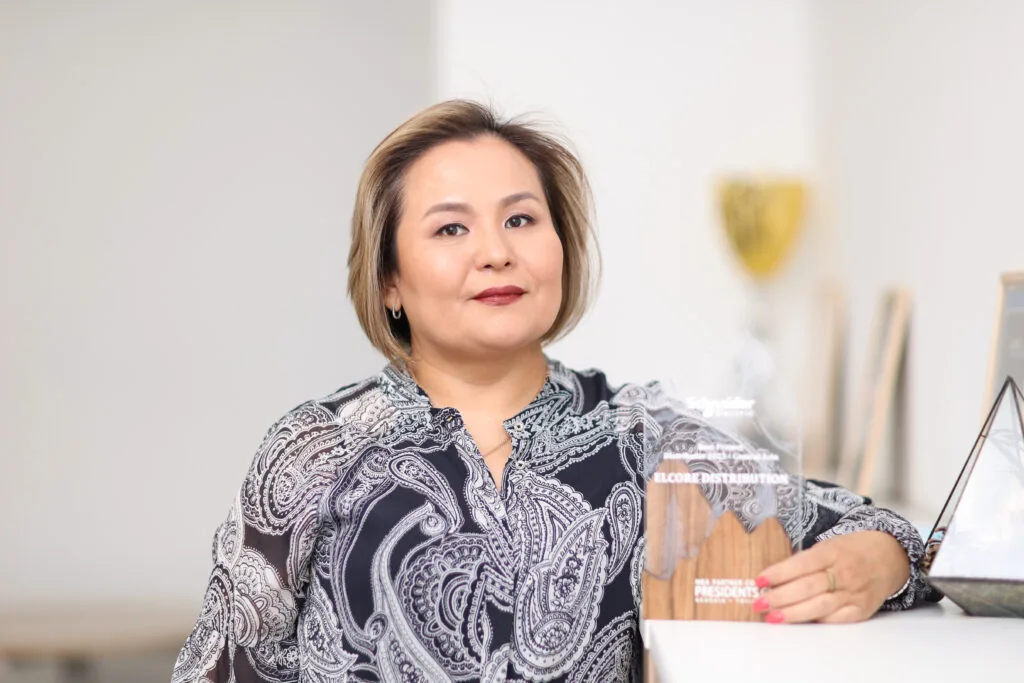
Nazgul Taimova, city — Almaty, Country Director of Elcore Distribution Kazakhstan, IT Sales Professional, LinkedIn
About Me
I am the director of the IT distributor for the Kazakh office of Elcore. This is a European distributor that has offices in 12 countries. To date, I have been leading the office in Kazakhstan for over seven years.
How I entered the IT profession
I started my career back in the 20th century, in late 1999. At that time, I joined a small IT company in Aktobe as an assistant to the manager.
I ended up in IT more due to circumstances: in the late 90s and early 2000s, it was difficult to find work in my specialty. I graduated from the Faculty of Turkish Philology at Istanbul University, meaning I was not originally an IT specialist. But it turned out that IT became my professional field for many years.
I got my first job through connections — my mother's friend was the manager and owner of that company. She offered me a job "until better times" while I looked for something related to my specialty. But in the end, I stayed there for a long time.
Already after six months, I began to go beyond the role of assistant and started working in sales, procurement, and business development. This marked the beginning of my real professional growth in the IT sector.
Later, I was invited from this company to Microsoft, where I was responsible for business development in Western Kazakhstan. I am from Aktobe and worked for nearly three years as a Business Development Manager.
Then I moved to Almaty, to Microsoft's headquarters, where I was already involved in developing the partner network and scaling the business across Kazakhstan.
After that, I moved to Oracle, where I worked with software-hardware solutions and large-scale infrastructure — server equipment, data storage systems, and enterprise solutions, including Sun Microsystems.
Later, I decided to join Elcore. I started literally alone — I was the only employee at the beginning. Now the company has 22 people.
We work with vendors such as Microsoft, Google, Amazon Web Services, Hewlett Packard Enterprise, ABC, Schneider Electric, and others. Today, we are one of the key IT distributors in Kazakhstan.
Currently, I lead the office and the company at the Kazakh branch of Elcore. My work includes both administrative and financial matters, as well as making strategic decisions — approving discounts, configurations, and key business decisions.
I work both within the team and with external partners. I am no longer immersed in operational details, but I am responsible for the company's strategic direction and final decisions on key issues.
In essence, this is a full-fledged CEO position: I take full responsibility for the business and everything that falls under the functions of a company leader.
About Stereotypes
I have not encountered stereotypes because I am more involved in sales and marketing.
I would also like to note that in this context, in this particular direction, girls are perhaps even valued more, because it is work that requires patience, creativity, and other skills.
Therefore, I do not feel any discrimination.
But for girls who are just about to enter IT: it is not necessary to be a coder or a technical specialist. There are many directions in IT where one can come, develop, and strengthen their skills.
Barriers for Women in IT
First of all, this is a common but underestimated opinion that a girl cannot be a tech specialist.
There are women in my company who handle technical tasks and are strong specialists in the field of network solutions.
And, in general, I would say that the main stereotype is that girls cannot work in technical positions and technical professions, or if they can, they are more like theorists rather than practitioners.
Such stereotypes need to be broken because in the IT sector, gender does not matter.
Of course, there are exceptions in the form of specific physical tasks, but in general, this is intellectual and mental labor that is available to all people regardless of gender.
Recommendations for Those Just Starting Their Path
Three main pieces of advice for those starting their career:
The first is courage. Do not be afraid of anything; you need to move forward. This always bears fruit.
Secondly, do not limit yourself to the knowledge you already have. It is important to constantly improve your qualifications and stay in a state of learning. We are living in such a time when you need to be always educated and one step ahead of others to build a proper career. Lifelong learning has not been canceled — on the contrary, it is one of the key principles today.
And thirdly, remain human and do not lose empathy. In the modern world, this is especially important. It is our relationships with each other that resolve many issues that may arise.
Many professions may disappear due to artificial intelligence, but human empathy will always be valued. Therefore, it is important to develop not only hard skills, which can be transferred to robots or artificial intelligence.
The main thing is to develop soft skills: the ability to interact with people, communicate, lead, and show leadership. As I already said in the first point, this should be the foundation.
Today and in the next 5-10 years, the market will demand those people who know how to interact effectively with others.
The Tech on Telegram Follow The Tech on Telegram
Keep up with the latest technology and startup news.
Related reading






More from this author

Article Useful
How to protect your accounts from hacking: 8 settings you should check today
The Tech

Article Useful
500 Global: How the Accelerator Works and Who Can Receive Investments
The Tech

Article Interviews
Game Development in Central Asia: Arkady Moldavski on Developing Reverb and the Growth of the Industry
The Tech

Article Useful
Google, Tesla, BlackRock, and the IMF: Where to Apply for an Internship in Fall 2026
The Tech

News IT
Tesla unveiled the flying electric car Roadster
The Tech

News IT
Intero Biosystems startup won the Startup Battlefield at TechCrunch Disrupt 2026
The Tech