WomenInTech. How girls from Uzbekistan build successful careers in IT
Author - Mansur Ismagulov
The Tech AI
Get the key points in seconds - a short summary from The Tech AI.
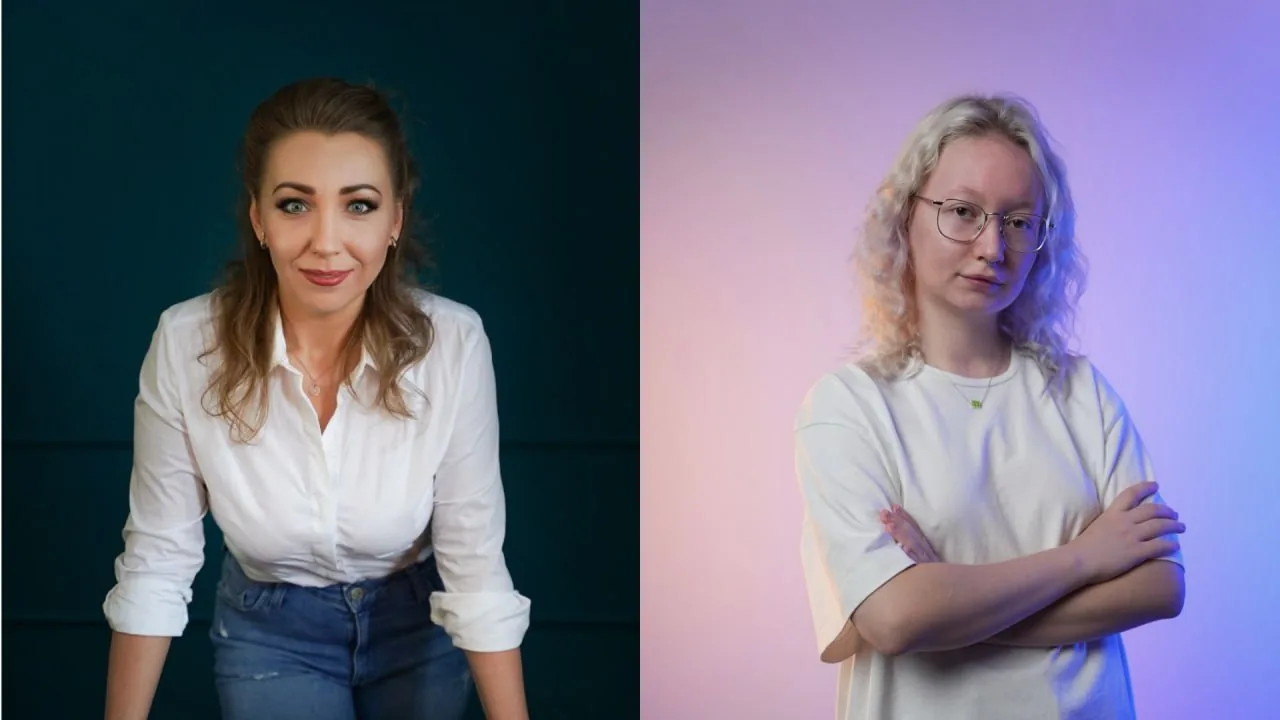
Ekaterina Nikolaeva, co-founder of the AMEGA group of IT companies in Tashkent, created the IT-ladies women's community with the support of the Ministry of Digitalization; currently, there are 195 members in the chat. Evgeniya Subbotina, 20 years old, an Android developer from Tashkent, has three years of experience and is studying at HSE University. Both specialists emphasize the importance of choosing a profession based on interest, developing networking skills, and overcoming stereotypes about age and gender in the IT field.
We spoke with representatives of the IT community in Uzbekistan and asked them to share their work experience.
Ekaterina Nikolaeva, city — Tashkent, co-founder of the AMEGA IT companies group @neidealnyi_blog
About myself
I lead the AMEGA group of IT companies. We are represented in Kazakhstan and Uzbekistan. Our main segment is ERP projects based on "1C".
The second area of activity is a company that deals with BI systems based on the Qlik Sense software product. We also represent IDentomat in Uzbekistan — a system for document and face recognition.
I am also the author of the book "Secrets of Successful Implementation of ERP, EAM Systems. A Guide for the Client." Currently, I am finishing my second book, which is a collection of success secrets for women in Central Asia.

How I entered the IT profession
I came to IT by chance. During my school years, this field did not interest me. At that time, I did not know what I wanted to be and enrolled in philology. Knowledge of English helped me support myself. As a student, I started working part-time: writing articles for magazines, participating in promotional events, tutoring children, and so on.
After graduation, I wanted to become a school teacher, but I was not hired. Two weeks after receiving my diploma, my father's friend offered me the position of head of a company. So I moved to Tashkent for an internship, after which I began representing the company's products in the Kazakh market as a director.
Later, I moved to a friend's outsourcing IT company and helped develop it. In 2010, I moved to Almaty. I joined a company engaged in franchising and implementing "1C". This is where my career growth peaked.
In 2021, I came to Uzbekistan to implement projects that were later canceled. Our team of 30-40 people looked for a solution — we even considered the Russian market. Then, a large Russian integrator offered us a subcontracting project in Uzbekistan. We evaluated the economic prospects and the friendly attitude towards IT partners in the country and decided to move our headquarters here.
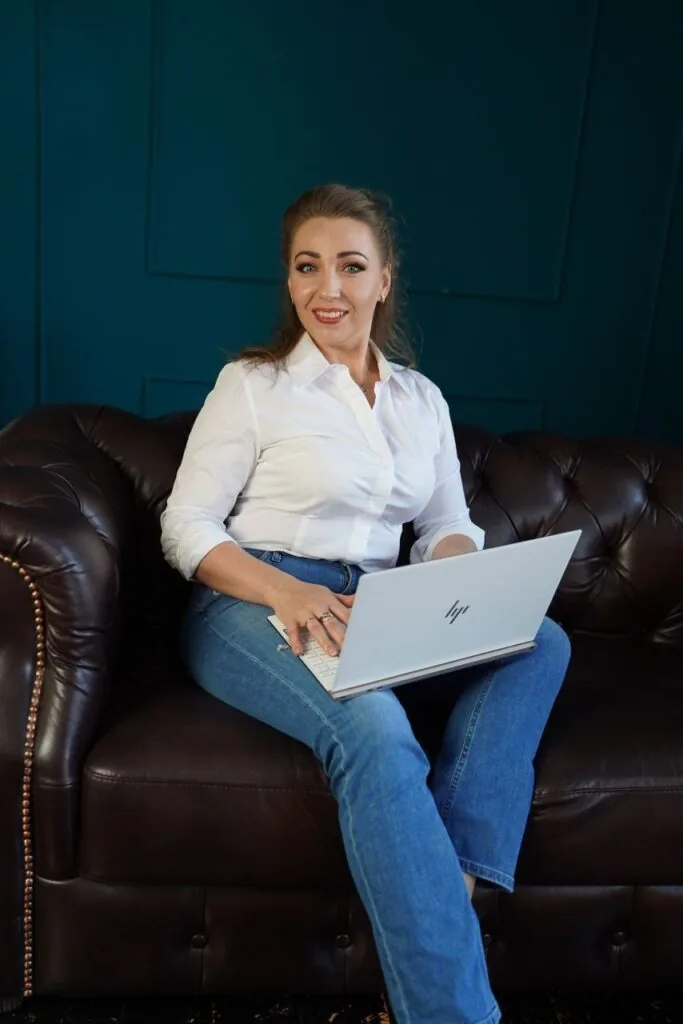
In Uzbekistan, I felt the need for socialization. I realized that I needed to communicate with women, but there was no women's business community in the country. So I decided to create one. I contacted the Ministry of Digitalization: Kamola Shavkatovna, the Minister's Advisor for Digital Industrialization, supported the initiative to open a women's IT community.
On November 10, the IT-ladies community was launched. Currently, 195 women are members of the closed chat. We received support from the UN, the Ministry of Digitalization, IT Park, and several private investors. We have signed preliminary agreements with marketing companies, and we are negotiating with Skillbox and other educational centers that are ready to provide support and offer discounts to our participants.
About stereotypes
The first stereotype is age. I had a client with whom we worked on five contracts. After completing the work, I received a gift and congratulatory calls. They said they were surprised how a young 24-year-old girl could launch such a system in such a short time. This attitude continued for a long time, so I tried to appear more serious: I wore glasses, heavy makeup, and strict clothing.
The second stereotype is gender. Some men are uncomfortable seeing a woman succeed. I think such people feel vulnerable themselves. Confident men do not care about gender.

Obstacles for women in IT
Women have a major mission — family. Most of them manage household affairs, which takes a lot of time. They need to maintain relationships with relatives, remember everyone, and show respect.
Recommendations for those just starting their journey
— find your "role model," understand where you want to go and in which aspect to develop
— create a list of competencies and skills you need to master
— start your business as early as possible and monitor its results
— you will make mistakes. The sooner you learn from them, the faster you will achieve success.
Evgeniya Subbotina, 20 years old, city — Tashkent, Android developer, @jenyasubbotina
About myself
I was born in Tashkent. I lived in this city until I was 18, until I moved to Moscow for studies. I study at HSE University (Higher School of Economics) at the Faculty of Computer Science. My major is "Software Engineering." Currently, I have three years of experience in Android development.

How I entered the IT profession
I started my path in IT even in school, when a new teacher came to our school. He sparked a great interest in programming and the current profession in me. I participated in olympiads, attended a computer science club, and in my senior years, I even prepared younger students for olympiads.
In the beginning of the 11th grade, I got my first job — I taught frontend and backend development at a private school. A couple of months later, I was invited to work at an outsourcing company, where I deepened my knowledge of Android development.

After my first year of university, a turning point occurred in my life. I decided to move to Germany for studies. I enrolled at RWTH Aachen University in the Faculty of Computer Science. Due to the specifics of the market, I changed my development stack to Flutter and found a job at a small startup. After a year, I realized that I was developing too slowly, so I returned to Moscow.
About stereotypes
No one ever directly expressed doubt in my skills. At my first job, there were minor conflicts. There was no obvious disrespect towards me as a female specialist, but I think gender and age played a role.
No one in my circle is surprised that I work at large companies and study to be a programmer. Among my acquaintances, it is not customary to mention gender when discussing professions.
For me personally, a profession is "genderless." At work, you are primarily a specialist.
Obstacles for women in IT
When applying to large companies, no one pays attention to gender. There is a need to find a good engineer with strong Soft Skills. However, there can be problems with the latter. In the beginning of my career, it was difficult for me to express ideas or insist on my solution among older men — usually 80% of them. It is a matter of self-confidence and time. At some point, I relaxed and got used to it, starting to feel equal to everyone.
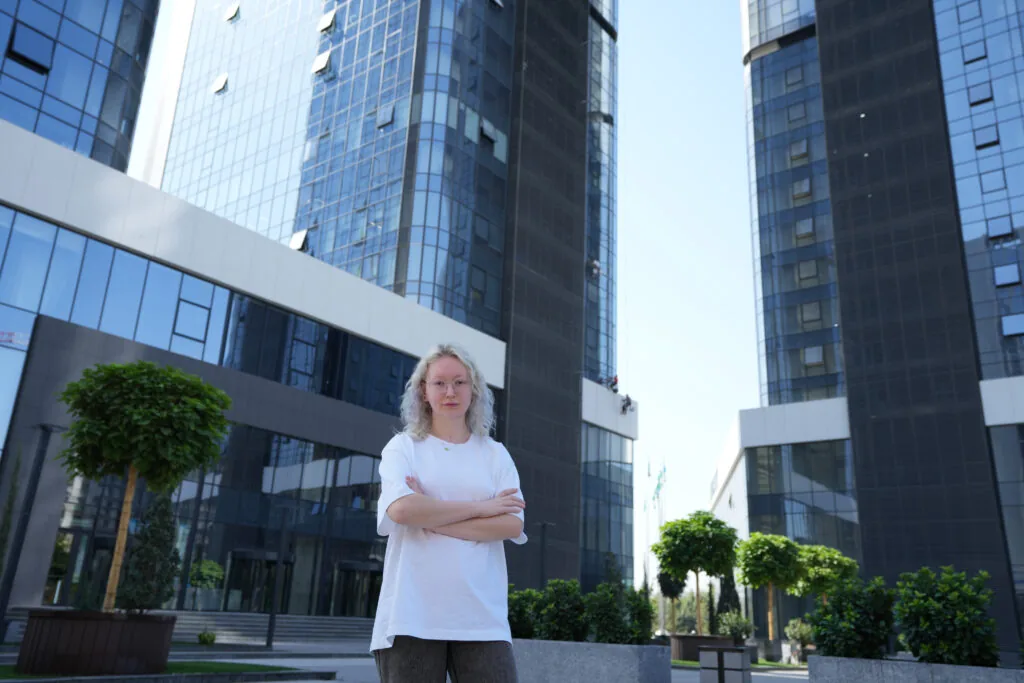
But there are other obstacles that women face. For example — questions about personal life and plans for pregnancy and maternity leave, disrespect and offensive condescension from colleagues. I know about this only from stories on the internet: neither I nor my friends have encountered this.
I was lucky. I ended up in the best teams and companies. Although, in Russia and Germany, almost all big tech is progressive. In these countries, it is not customary to indicate gender and photos in resumes — this is a good trend.
Recommendations for those just starting their journey:
— do not go into IT just because it is popular and profitable. Do what you truly love. Choose a profession based on interest
— start with an internship at companies with transparent and clear career growth and a large number of excellent specialists. This way, you will strive for their level and develop faster
— develop networking. Constant presence in the IT community provides useful connections. You will be able to find friends with similar interests and create cool projects together.
The Tech on Telegram Follow The Tech on Telegram
Keep up with the latest technology and startup news.
Related reading







More from this author

News
zypl.ai begins operations in Japan and focuses on next-generation risk models
Mansur Ismagulov

News
Elon Musk's net worth has exceeded $700 billion for the first time
Mansur Ismagulov

Article Interviews
"Central Asian countries should build a joint ecosystem," — Bekhzod Ismoilov on the development of AI in the region
Mansur Ismagulov

Article Interviews
Bloom's Taxonomy and Engineering Levels: A Practical Growth Model
Mansur Ismagulov

Article Useful
How the IT industry in Azerbaijan developed in 2025: key events
Mansur Ismagulov

News
Tajikistan has become a new member of the regional innovation alliance Central Asian Innovation Hubs.
Mansur Ismagulov