WomenInTech. How girls from Uzbekistan overcome stereotypes and build careers in IT
In the WomenInTech section, we share stories of those who boldly entered IT and challenged stereotypes. In the new episode — heroines from Tashkent.
Author - Mansur Ismagulov
The Tech AI
Get the key points in seconds - a short summary from The Tech AI.
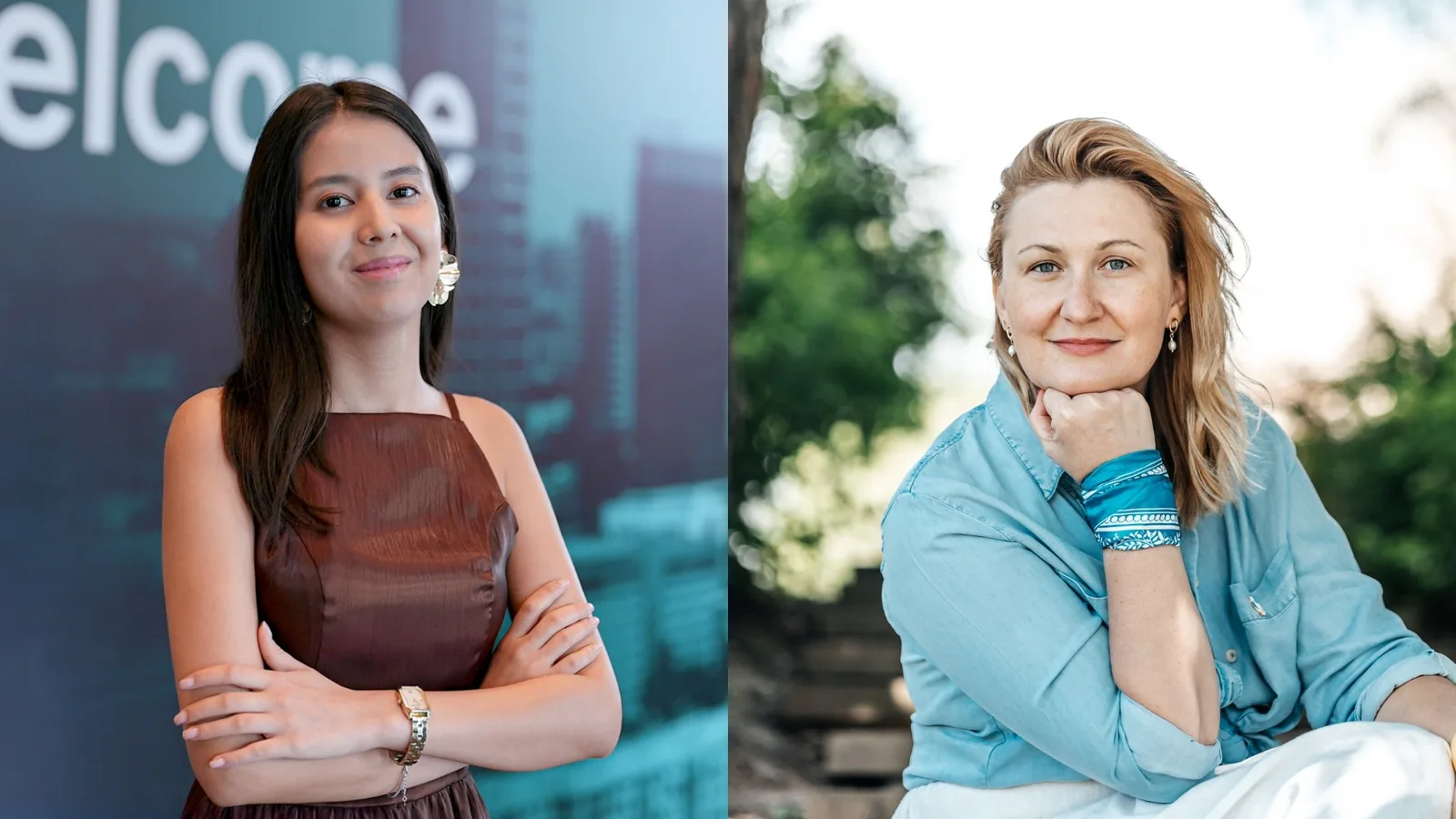
Zainab Atabaeva (21 years old, Tashkent), an investment manager at IT Park Ventures, and Anna Ambrozevich, director of Women in Tech Uzbekistan, share their experience in the IT sector. Atabaeva began her career at the age of 17, attracted Plug and Play Tech Center, and invested over $2 million in startups. Ambrozevich emphasizes the importance of personal branding, multipotentiality, and cross-cultural communication in overcoming barriers for women in technology.
Zaynab Atabaeva, 21 years old, city — Tashkent, Investment Manager at IT Park Ventures, LinkedIn, Instagram
About Me
I work as an investment manager at IT Park Ventures. I entered this field at the age of 17. At that time, I was preparing to study abroad in “International Business” — I needed to build a portfolio, participate in events, volunteer, and try myself in fields that truly inspired me.
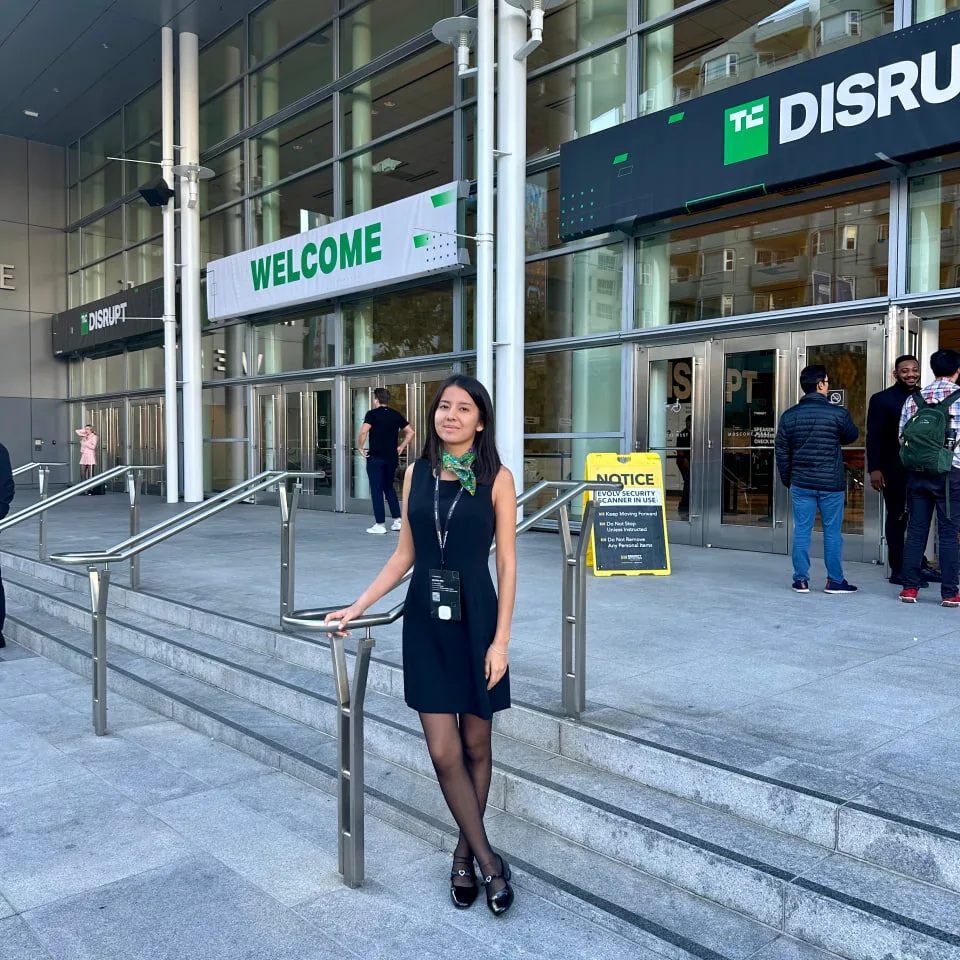
That’s how I started volunteering actively — especially at events related to IT, startups, venture capital, and education. Over the course of a year, I participated in organizing TEDx in Uzbekistan, youth festivals hosted by the Agency for Youth Affairs, and other events. It was then that I met the leadership and team of IT Park: I helped them with events, worked with the community, and gradually immersed myself deeper into the ecosystem.
They noticed my engagement and offered me an internship. They said, “We know you want to study abroad, but we like your activity and community work — we think you’ll find it interesting and beneficial to work with our team.” At the time, it seemed like just an inspiring opportunity, but over time I realized: their trust became a turning point for my growth and a support system — it gave me space for professional and personal development.
Due to personal circumstances, I decided to stay in Tashkent and enrolled in the branch of American Webster University, where I began my undergraduate studies. At the same time, I received a part-time offer from IT Park. One of my first projects after the internship was bringing in Plug and Play Tech Center — a global accelerator and investor that opened an office in Uzbekistan in 2022 and became one of the first international players in the region.
Over time, my role expanded: I began overseeing partnerships with international organizations — including Alchemist Accelerator, StartX, Silkroad Innovation Hub, 500 Eurasia, Draper University, DOMiNo Ventures, and others. Together, we launched joint programs, supported startups at TechCrunch Disrupt, InMerge Innovation Summit, Japan IT Week, Central Eurasian @ Silicon Valley, and other international platforms. At the same time, I built connections with investors and tech companies from Central Eurasia, MENA, the US, and Asia — and drew their attention to Uzbekistan.
After three and a half years working at IT Park, I increasingly thought about focusing on venture capital — and at that moment, the fund’s leadership offered me a chance to join the IT Park Ventures team. This became a continuation of my journey and an opportunity to dive deeper into a field that truly resonated with me. To date, we have already invested over $2 million in regional startups — and continue to actively grow our portfolio. At the same time, I continue to oversee international partnerships on behalf of our organization, to open up more global opportunities for the local community.

About Stereotypes
In a way, I’ve been lucky with stereotypes. I’ve never faced direct criticism — neither regarding my age nor my gender. This is a great fortune, because I know that in many places, women, especially young ones without a degree or experience, are still viewed with prejudice.
I entered this field in 2021, when IT Park was already a large organization — under the Ministry of Digital Technologies, with a team of over 100 people. From the very first interview, I felt support from the leadership: everything went in a warm, open atmosphere, and I was immediately offered an internship — invited to join the events department.
In the department I joined, most employees were men — among the women, there was the department head and a few managers. But from the very beginning, the atmosphere was respectful and supportive. There were no gender biases, no informal division into “key” and “support” staff. On the contrary — there was a sense of equality, professional trust, and willingness to work together, regardless of age or experience. This gave me confidence that in such a field, there really is space for growth — if you are ready to learn and take responsibility.
Barriers for Women in IT
Obstacles for women in IT are often related to bias regarding age. In Central Asia, the majority of the population is young. Often, girls start interning and working at an early age, and they are mainly trusted with auxiliary tasks: assisting, office work.
At first, this is normal. But I believe: if girls are trusted, they can achieve much more. When their ideas are supported — they get passionate about it, invest 200%. But if they are limited only to routine work, their potential fades, motivation drops, and the desire to grow disappears.
As for gender — I have noticed certain imbalances. In some organizations, there are few women in leadership positions. Especially among those who make key decisions — decision-makers.
But over the last five years, the situation has begun to change. To date, almost every organization has at least one woman who leads a department or holds a high position. This is encouraging — and gives hope that equality in leadership is becoming the new norm.
Recommendations for Those Just Starting Their Journey
Don’t be afraid to take initiative — it is precisely what drives growth. There are many opportunities, and there are plenty of people around who are ready to share knowledge, support, and open doors. At the start, I focused on developing social networks — LinkedIn, Facebook, Instagram — and actively participated in events. This helped form a professional community where people exchanged experiences, inspired each other, and grew together.
LinkedIn played a special role for me — both in building a personal brand and in establishing international connections. I shared my experiences there, published useful opportunities, and reached out to professionals from all over the world. This platform unites: even if you are in different corners of the world, you can start a dialogue, ask a question, get advice, or launch a partnership project.
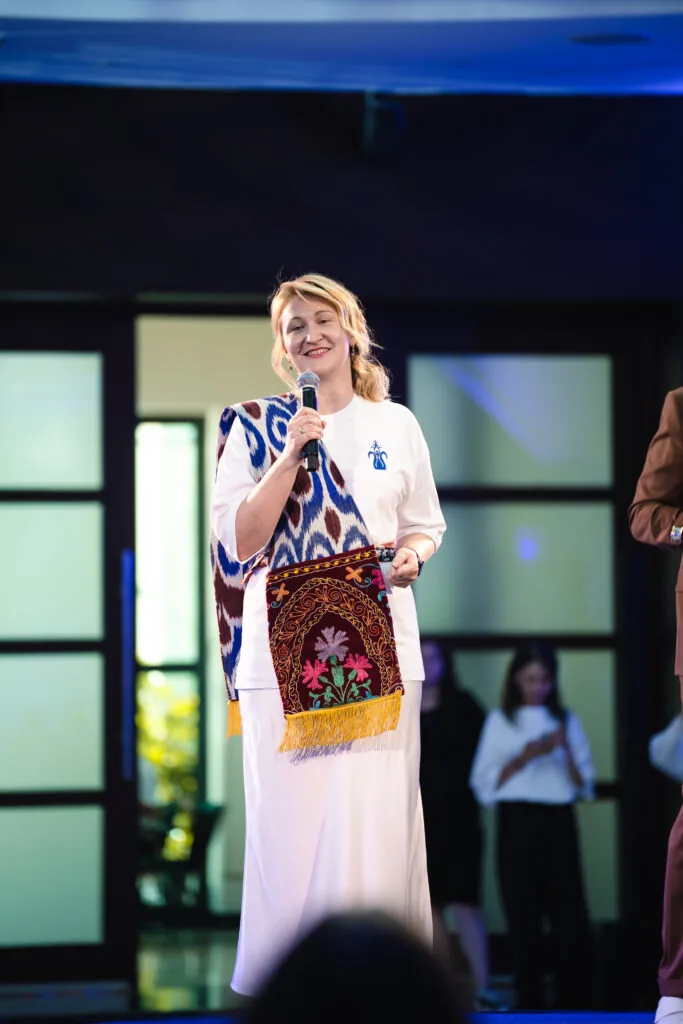
Anna Ambrozevich, city — Tashkent, Director of Women in Tech Uzbekistan, Personal Brand Consultant, Expert in MarTech, LinkedIn
About Me
I call myself a multipotentialite — a person who does many things at once. Currently, I have eight parallel projects: both business and volunteer. Many think that because I volunteer, I don’t work — but that’s not true. I have been working for myself for about three years.
Previously, I collaborated with large international companies — such as Pepsi, Alibaba — in Russia and on various markets. I also have experience in IT consulting. My main expertise is in the field of marketing technologies.
After working in corporations, I decided to go independent. Currently, I have several businesses in different fields: education, personal brand promotion, and other projects. My key volunteer initiatives are Women in Tech Uzbekistan and the IT Community of Uzbekistan.
How I Entered IT
I am a biotechnologist by education, but this field did not captivate me. In 11th grade, I accidentally opened a computer science textbook, tried HTML — and made my first website with photos. Since then, I realized that IT is my thing.
My first jobs were very diverse: I was a translator, courier, sent faxes. So, when I now hear from young people that they want comfortable conditions right away — I remember how I went through all of that.
Eventually, I entered IT at the intersection of several fields: I am close to an international environment, the English language, working in global teams, and cross-cultural interaction. It is precisely the joint creation of projects with people from different countries that truly inspires me.
I started working at a German company, where I worked for seven years — from an entry-level position to serious projects. Then, thanks to my reputation and connections, I moved to other international companies.
Among them — German brands, the Alibaba office, Philip Morris, and IT consulting with American and French companies. I worked with CIS and Eastern European markets. I have always been drawn to an international environment — I am interested in different cultures and the joint creation of something new.
When I left employment, I developed a strong desire to share knowledge. This is my inner need — to teach. Currently, I give free lectures at universities on various topics: personal brand, productivity, collaborations, career. I speak in both Russian and English — and I truly enjoy it.
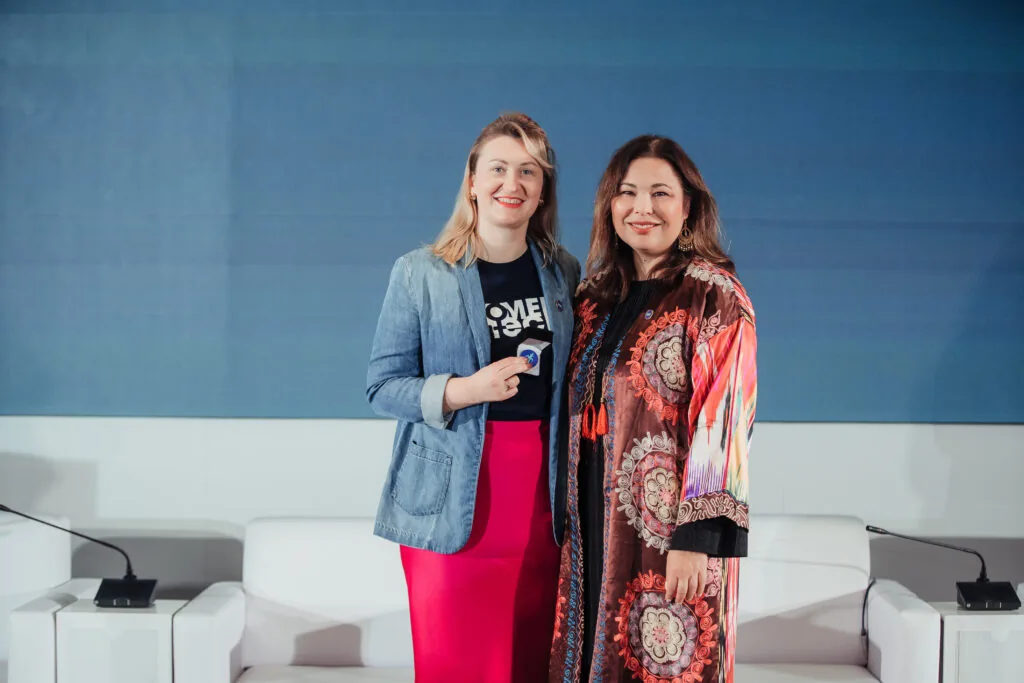
About Stereotypes
As my mom says, I have “a man’s head and a woman’s soul” — and in work, I really do have more of a male mindset.
From my experience, I received more support from men. Discrimination, on the other hand, I more often saw from women. Especially among those who themselves had a difficult path to leadership — such women often become harsh and unwilling to help others. I had cases where I offered help, but was refused specifically by women. Therefore, I have formed a different view on gender stereotypes.
For example, it is often said that women are more emotional. But from my experience — that is not true. Around me, there were many emotional men: in management, in family. And it was often I who remained calm, suggesting we discuss everything rationally.
Two years ago, I studied at the University of Cambridge in a women’s leadership program. I liked that at some point we completely moved away from terms like “female” and “male” leadership. We simply discussed leadership qualities, without gender attachment. Currently, soft power can be a trait of any leader — regardless of whether it is a man or a woman.
The second stereotype is the expectation of support from a certain type of people or organizations. We often think that those who we believe should understand and support us will do so. But in reality, everything can turn out differently — support often comes from those you least expect it from. This applies to both education level and progressive views — we never know for sure how a person relates to a particular topic.
I do not deny that discrimination exists, and we always try to help. But it is important first of all to deal with your own internal beliefs.
There were situations when I was the only woman in a male team, and even managed men older than me. At first, there was distrust, but when you speak as an expert, without offense or expectations — you begin to be respected even more.
I am convinced that the strongest teams are mixed, where men and women support each other. Because my experience working in teams consisting only of women was difficult: lots of gossip, tension, hidden conflicts.
Therefore, everything starts with your own stereotypes. First, look inside yourself, and only then — around you.
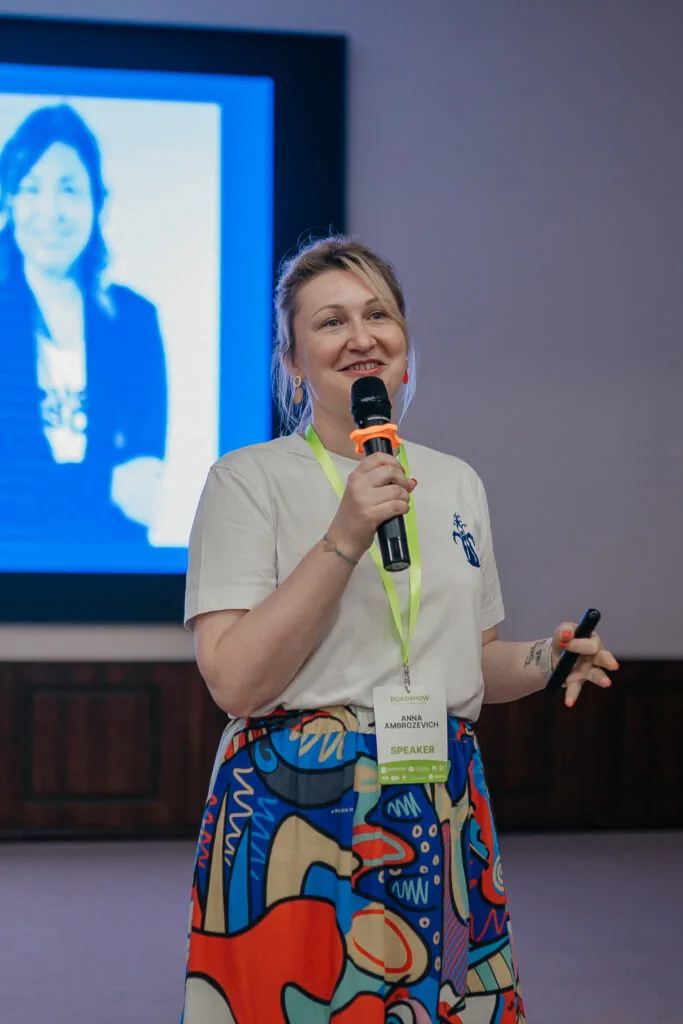
Barriers for Women in IT
Much depends on the country, but stereotypes and barriers for women exist everywhere — not only in Central Asia, but also in Europe. When I joined the leadership team of the Women in Tech community, we noticed: at technical events in Europe, only about 10% of speakers are women. We began asking organizers: why is this? The answer was simple — “we don’t know where to find them.” Women are less likely to engage in personal branding, less likely to enter the public sphere.
We compiled a simple database of female speakers and started sending it to organizers. Within five months, the share of women among speakers grew to almost 50%. The problem is not that women are not allowed in — they are simply less visible. Moreover, companies are increasingly paying attention to personal branding. Furthermore, studies show that women receive 30% fewer recommendations during hiring. Therefore, everything starts with oneself: talking about your path, experience, mistakes — and being part of the professional space.
There is another important barrier — recommendations. Women are often shy about asking for them, especially from management. I even launched a challenge on LinkedIn: “Today, write a recommendation for three women — a colleague, a female boss, an acquaintance.” It takes 10 minutes, but provides huge support. A recommendation increases trust, affects salary, and opens new opportunities.
The second barrier is balancing: career, family, children, appearance, self-realization. Women still strive to be equal at work, while remaining mothers, housewives, and maintaining balance. Because multitasking is literally a biological skill. And I increasingly hear from women in high positions not the question “how to grow,” but “how to combine all this and not go crazy.” Because the higher you climb, the more responsibility you have.
Recommendations for Those Just Starting Their Journey
- There is no need to choose just one profession. This is the time of multipotentialites — people who combine different roles. The coolest products are created at the intersection of different fields. Try 10-20 directions, keep 2-3 that you like, and develop in them.
- Learn languages. In Russia and Uzbekistan, many young people speak English fluently. It seems to me that this has already become our common language. When I don’t speak Uzbek, the girls — Russian, someone — Tajik, we simply switch to English. The more languages, the better. Even if English is not needed right now — learn it, and even better — learn other languages too.
- Study the cultures of different countries. It is important to be able to understand people’s culture — how to approach, what to talk about, where it is appropriate to eat together. In Uzbekistan, without tea, you are still an outsider; in China, without a shared lunch — no business; in France — you need to drink. Cross-cultural communication is the foundation for future leaders. Read about religions, traditions, the history of different countries — this is the base that everyone needs to know.
I have been reading and talking about collaborations for many years. I always advise: if you are afraid — find a partner. Afraid to speak alone — speak in a pair. Want to write, but afraid — take a co-author. Collaboration helps overcome fear and provides support.
It is important not to perceive failure as a catastrophe. It is part of the journey. The main thing is to try. The ability to work together, seek win-win solutions, and not be afraid of mistakes is one of the key skills of the future.
The Tech on Telegram Follow The Tech on Telegram
Keep up with the latest technology and startup news.
Related reading







More from this author

News
zypl.ai begins operations in Japan and focuses on next-generation risk models
Mansur Ismagulov

News
Elon Musk's net worth has exceeded $700 billion for the first time
Mansur Ismagulov

Article Interviews
"Central Asian countries should build a joint ecosystem," — Bekhzod Ismoilov on the development of AI in the region
Mansur Ismagulov

Article Interviews
Bloom's Taxonomy and Engineering Levels: A Practical Growth Model
Mansur Ismagulov

Article Useful
How the IT industry in Azerbaijan developed in 2025: key events
Mansur Ismagulov

News
Tajikistan has become a new member of the regional innovation alliance Central Asian Innovation Hubs.
Mansur Ismagulov