WomenInTech. How girls from Tajikistan are developing EdTech
Author - Mansur Ismagulov

The Tech AI
Get the key points in seconds - a short summary from The Tech AI.
Firouza Safarova (director of ITRUN in Dushanbe) and Lolita Yuldasheva (head of "Humo Academy") shared their experiences in the EdTech sector of Tajikistan. Safarova, after returning from abroad, has been coordinating school projects since January 2024, including training for Afghan refugees and 120 women through grants from the UN and the Russian Embassy. Yuldasheva, who began her career at the age of 17, has worked in FinTech for three years, launching free courses and the ICode project in collaboration with American Space Dushanbe.
Women developing EdTech in Tajikistan shared their journey to success, overcoming barriers, and fighting stereotypes. Their stories are about determination, persistence, and the desire to change the world through education.
Firuza Safarova, city — Dushanbe, director of ITRUN programming school, Instagram
About myself
I am the director of the ITRUN programming school branch in Dushanbe. ITRUN is an innovative center for additional education. Our children start learning programming at the age of seven or eight. We develop logic and programming thinking. We teach adults from scratch and help them enter the world of programming. Along with this, our team successfully launches courses for adults with subsequent employment. More than 200 of our students are already employed in leading IT companies in Tajikistan. It is gratifying to see our graduates get their dream jobs and start their journey in IT.
Our goal is not only to impart up-to-date knowledge but also to help determined young people confidently enter the IT industry and establish themselves there. In addition to hard skills, we conduct soft skills training. The ability to explain complex ideas in accessible language, work in a team, and resolve conflicts — all of this is of great importance in professional growth.

How I came to the IT profession
I graduated from the branch of Moscow State University in Dushanbe with a degree in "International Relations." After graduating from MSU, I continued my studies in China, diligently preparing for the Chinese Proficiency Test to enter master's programs. However, in 2020, due to the pandemic, all exams were canceled, and a quarantine was declared. Returning to Dushanbe, where I stayed for a short time, I flew to St. Petersburg. I started my journey by teaching English to children and working as a translator from Chinese. My last place of work was the company "Tsifra Broker," formerly Freedom Holding.
I entered the IT sector in January 2024 when I was hired by the ITRUN programming school. In our work, we place great emphasis on ensuring that everyone has access to obtaining their dream profession. Collaborating with international partners and implementing grant projects, ITRUN also conducts free training courses with subsequent employment.
In partnership with the International Organization for Migration, we implemented a social project to teach IT skills to Afghan refugees. The project lasted almost a year, during which participants, along with mastering basic skills such as working with Word and other programs, also learned to create their own web pages. The training was conducted in English and Persian.
Furthermore, as part of one of such initiatives in 2024, 120 girls from the cities of Dushanbe and Khujand completed three-month courses in QA testing, data analytics/Power BI. We implemented this project with the support of the United Nations Development Programme and the Embassy of Russia in Tajikistan.
Living abroad, I missed my homeland, even though my family was with me. I decided to return. When I started looking for a job, many vacancies were related to IT. This field attracted me more than others due to its prospects and growth potential. At the beginning of last year, I joined the ITRUN team. Now I coordinate educational projects at our school. We teach various relevant IT specialties. Gradually, I became part of the IT community of Tajikistan.
Working as the director of the programming school, I had to learn the basics of IT to better understand all the important information in this field of activity. Recently, I completed a course in data analytics and am starting to learn Python.
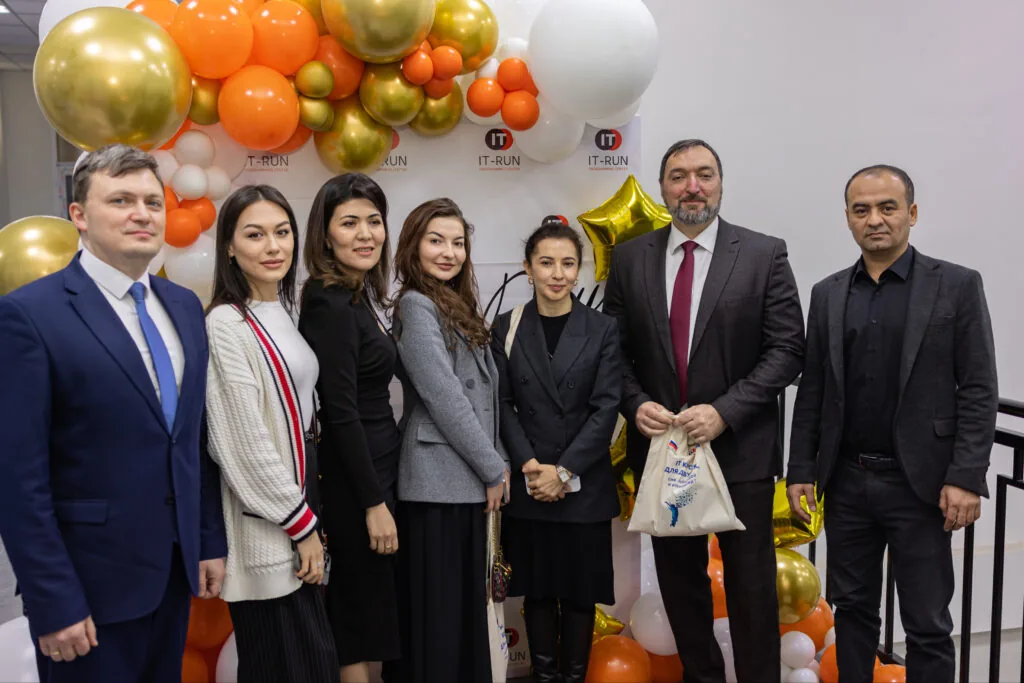
About stereotypes
I have encountered stereotypes related to gender and age. In a society where it is easier for boys to build a career, girls have to work twice as hard to be taken seriously. It may be more difficult at the start due to bias, but everything depends on knowledge, skills, and diligence. There are now many initiatives helping women build careers in IT. Some of them I implement within ITRUN.
Barriers for women in IT
Unfortunately, stereotypes about girls still exist in IT, but I will not talk about the banal "IT is not for girls." Let us remember that the first programmer was a woman — Ada Lovelace. These are relics of the past that do not correspond to modern realities.
I will tell you about what I personally encountered — the "imposter syndrome," when doubts arise about oneself and one's abilities. One of the reasons for this was the lack of female role models and mentors in IT. When a person does not see examples of successful representatives of their gender in the chosen field, it is harder to believe in their ability to succeed. Understanding this situation helped me reduce anxiety.
There is an opinion that a successful career requires sacrificing personal life. Indeed, it is more difficult for women to combine career with family responsibilities, as many additional tasks often fall on their shoulders. However, much depends on the support of relatives and loved ones. Their help can play a key role in creating a harmonious balance between work and personal life.
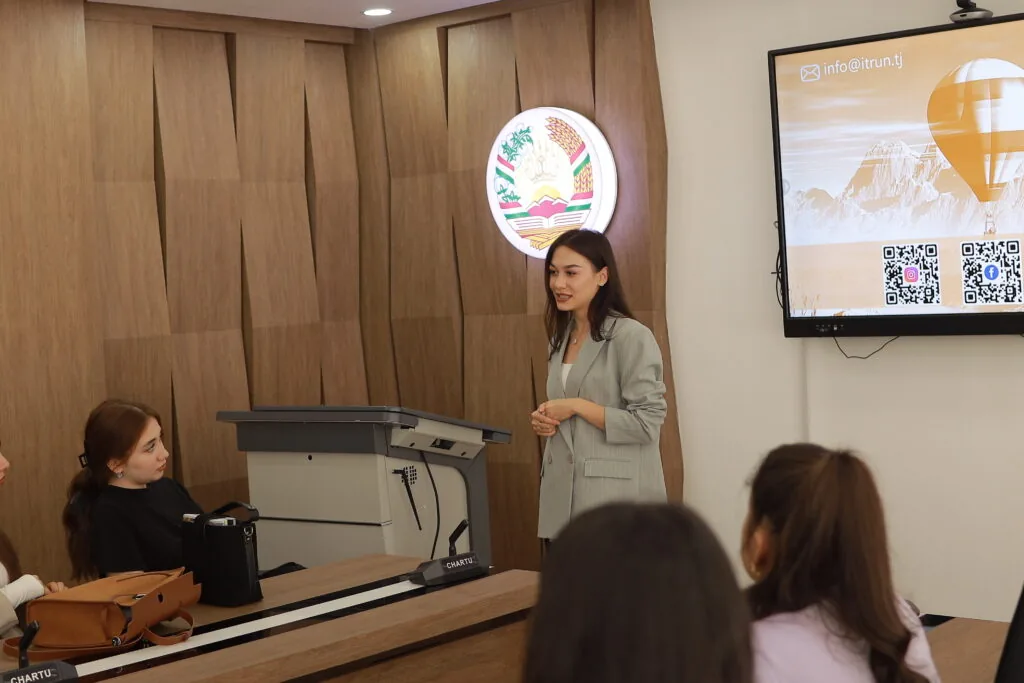
Recommendations for those just starting their journey
If you are a girl and just starting your journey in IT, look for role models and inspiration in the stories of women who have already achieved success in this field. Many successful women work in various fields: from development to project management. This helps to see that your goals are achievable.
Do not be afraid of mistakes! Mistakes are not a sign of incompetence, but experience and a chance for growth. The faster you learn from your mistakes, the faster you will move forward.
The most important thing — do not be afraid to start from scratch. IT is a huge and diverse field, and there is no need to be an expert from the very beginning. It does not matter at what level you start, the main thing is to start. Be open to learning and mastering new skills.
Lolita Yuldasheva, city — Dushanbe, head of "Humo Academy", LinkedIn

About myself
I am an economist by education with diverse professional experience. I started my career path at the age of 17, working as an archivist at the Embassy of the Republic of Uzbekistan in the Republic of Tajikistan. This position allowed me to acquire valuable skills in data organization and document management. In parallel, for a year, I engaged in volunteer activities with the United Nations Development Programme (UNDP) in the HR department, where I gained practical experience in recruitment and personnel management.
After graduating from university, I moved into the telecommunications sector and worked with large corporate clients. This stage of my career helped me develop strategic thinking, build effective communication, and manage large-scale projects.
For the last three years, I have been working in FinTech and heading "Humo Academy." My main task is to launch free IT courses and assist graduates in getting employed at JSC MDO "Humo." It is important to me not only to teach students but also to provide them with real career opportunities in the rapidly growing IT industry.
How I came to the IT profession
A few years ago, I learned about a vacancy at JSC MDO "Humo." At that time, my understanding of IT was limited to basic knowledge of system administration and technical support. However, after successfully passing the interview, I realized that a much deeper understanding is necessary to work effectively in this field.
From that moment, I began to actively study the IT industry: I studied specialized materials, read forums, and familiarized myself with IT culture. The turning point was the realization that I started to understand memes about programmers — for me, this became a kind of indicator of immersion in the field.
Now IT continues to remain a field for me that requires constant learning. I read articles daily, track trends, and study new technologies. The dynamism of this field inspires me, motivating me for continuous development.

About stereotypes
One of the most persistent stereotypes is that IT is not quite for girls. I believe it is important to break this myth. A significant achievement for me was launching the ICode project together with colleagues from American Space Dushanbe, Ilmhona, and "Alif Academy" — programming courses for girls.
In a comfortable and supportive environment, they can delve deeper into their chosen direction and, after completing the courses, start a career in IT. I am especially proud that four amazing graduates of the project became part of the "Humo" team. This is an inspiring example of how girls can successfully realize themselves in IT.
Barriers for women in IT
IT is a dynamic field where something new constantly appears and requires continuous learning and professional growth. However, for women in this industry, there are specific features: we usually have less free time. After work, it is not always possible to rest or dedicate the evening to self-development — many combine career with family responsibilities.
Often, additional roles fall on women: daughter, sister, mother, and household chores become another work shift. While men can without hindrance devote time to learning, for us this requires more careful planning.
Personally, clear organization of the evening helps me. Soon I will be able to write a book titled "101 Recipes for Dishes in 30 Minutes" — because the skill of effective time management extends not only to career but also to everyday life.

Recommendations for those just starting their journey
- Do not be afraid to try. IT is a huge world with many directions. Here everyone can find their place.
- Learn at your own pace. Do not compare yourself with others — everyone has their own path and speed of mastering new knowledge. The main thing is to move forward.
- Practice solves everything. Work on pet projects, participate in hackathons, try to find an internship. The more practical experience, the more confident you will feel in your profession.
- Ask questions. Do not be shy to ask for clarification, discuss unclear topics, and seek advice. This helps to grow faster.
- Girls in IT — believe in yourself. This field is for everyone, and your contribution to it is important.
- Maintain balance. Work and learning are important, but do not forget about yourself. Overload leads to burnout, and rest leads to productivity.
- And most importantly — learn to Google. A correct query is already half the solution to the task.
The Tech on Telegram Follow The Tech on Telegram
Keep up with the latest technology and startup news.
Related reading







More from this author

News
zypl.ai begins operations in Japan and focuses on next-generation risk models
Mansur Ismagulov

News
Elon Musk's net worth has exceeded $700 billion for the first time
Mansur Ismagulov

Article Interviews
"Central Asian countries should build a joint ecosystem," — Bekhzod Ismoilov on the development of AI in the region
Mansur Ismagulov

Article Interviews
Bloom's Taxonomy and Engineering Levels: A Practical Growth Model
Mansur Ismagulov

Article Useful
How the IT industry in Azerbaijan developed in 2025: key events
Mansur Ismagulov

News
Tajikistan has become a new member of the regional innovation alliance Central Asian Innovation Hubs.
Mansur Ismagulov